
Translated material
The stump of voting
In what conditions the regional elections will be held on September 19. Study
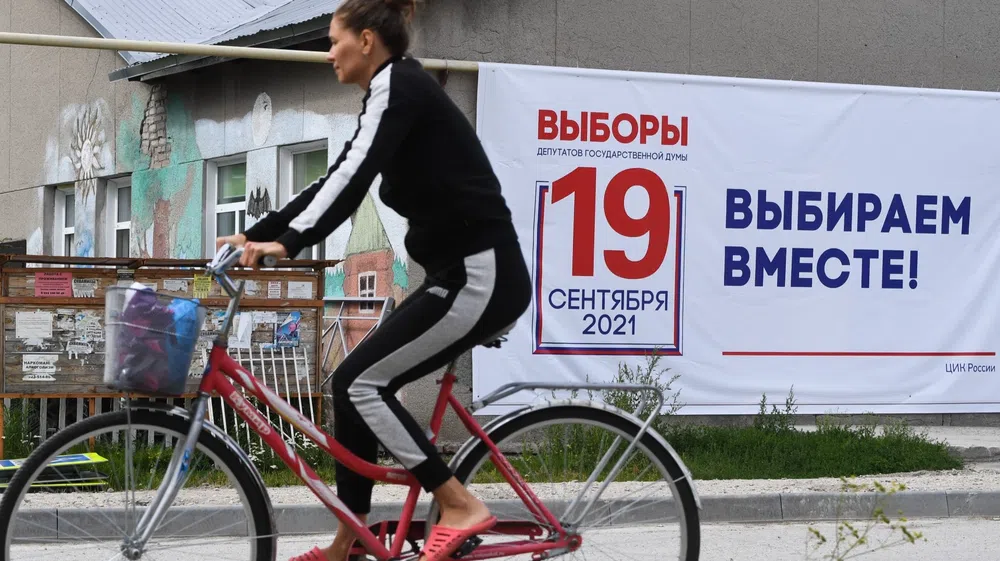
The experts of the Voice movement analyzed in what conditions the regional elections will be held on a single voting day. Date-department collected all the most important from the report.
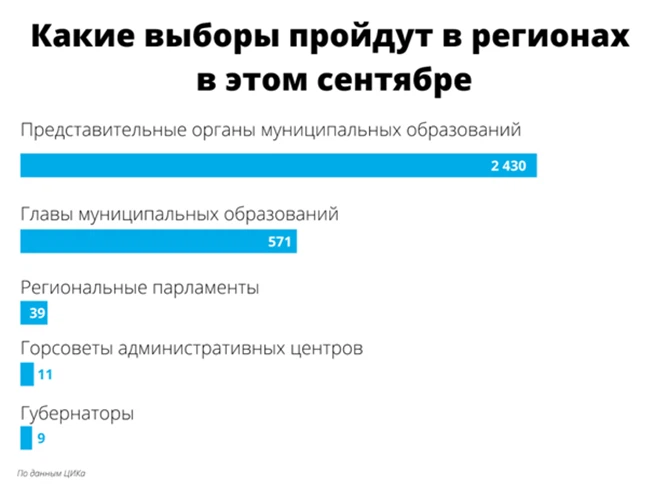
Together with the elections to the State Duma on September 19, another 4370 elections of different levels and referenda will be held. In nine regions they will choose new governors, four of them are announced ahead of schedule. In 39 regions, regional parliaments will be selected, in 11 administrative centers - city councils.
Brakes for the opposition
According to the law, for the appointment of elections by deputies there are 10 days: 90-100 days before the date of voting for regional and 80–90 days for municipal. If the deadline is missed, then the election is appointed by the local election commission. This year, deputies of the Duma of the Tomsk Region missed the established deadline, so there, the Tomsk Electoral Commission made a decision there on the re -rational only on June 21.
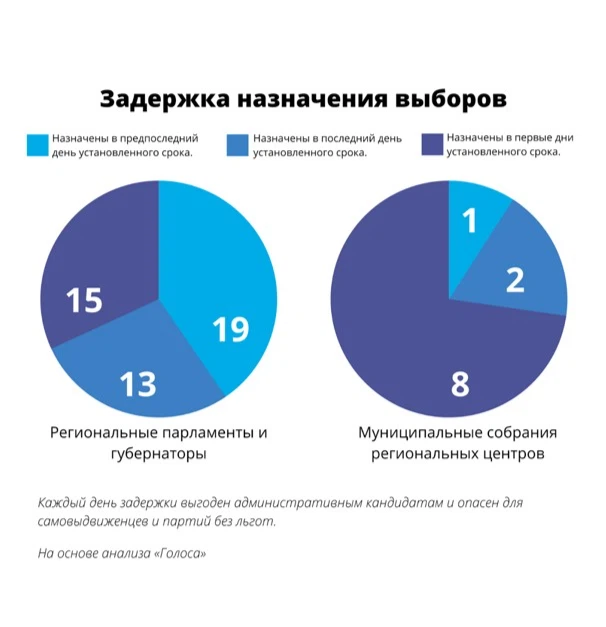
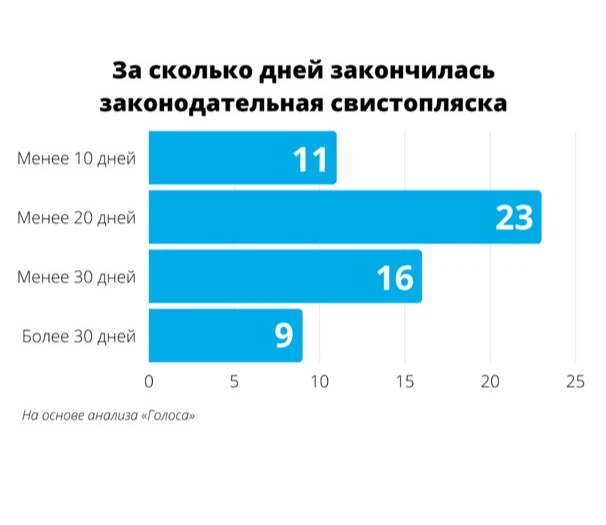
Most of the regional parliaments tried to delay the appointment of the elections -
In 32 out of 48 regions of the campaign, they were appointed in the last possible two days.
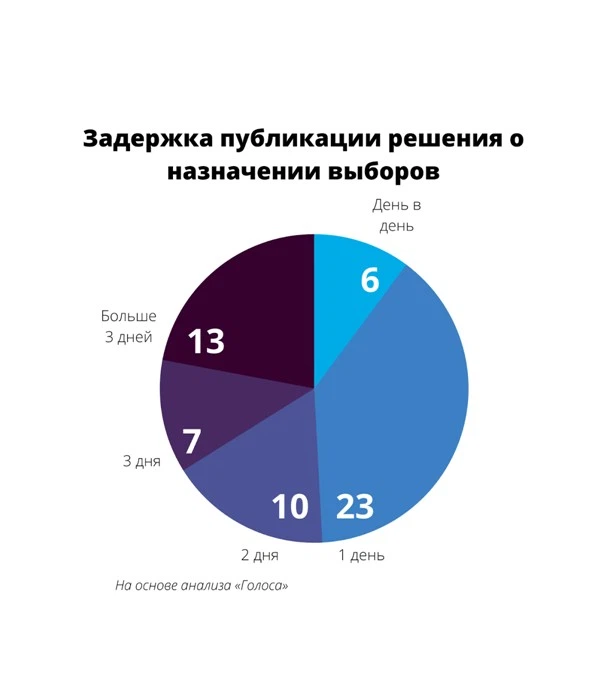
The deputies have five days to publish a decision on re -election, formally this date gives the start of the campaign. According to the experts of the Voice, in 20 regions artificially delayed the beginning of the campaign. This reduces the chances of self -nominated and parties without benefits to get to the ballot - they have less time to collect signatures.
Only in nine regions the final editions of the elections were adopted more than a month before the start of the campaigns. Not in all regions, the latest legislation changes are related to new federal norms. In the Nizhny Novgorod region, the Krasnoyarsk and Altai Territories, Chuvashia changed the size of the electoral funds, St. Petersburg changed the rules of division on lists, and in the Leningrad Region they allowed the collection of signatures for public services and changed the number of candidates in the central part of the list.
“Despite the significant number of nominated self-nominated people in the districts of the SKS,” says Polina Kostyleva, the coordinator of the Voice in St. Petersburg, “only four candidates and Dmitry Pavlov from the“ new people ”(the collection of signatures is required). Dmitry Pavlov [removed] using the administrative resource, Fedor Grudin on July 24 withdrew from the election, motivating this by not having time to collect signatures. Irina Fatyanova, ex-coordinator of Navalny’s headquarters* in St. Petersburg, on July 27, Tick “ recognized Irina Fatyanova who had lost the status of a candidate in the elections in the SKS of St. Petersburg” by decision of the Ministry of Justice. Marina Matsapulina, candidate from the LPR Mikhail Svetov, continues to collect signatures, Savva Fedoseyev from the Movement “Society. Black” (supported by information and Roman Uneman) continues to collect signatures.
To the collectors of Fedoseev, Matsapulina and Fatyanova, law enforcement agencies and provocateurs presented claims and actually broke the collection of signatures for several hours. The situation was publicly commented on by the head of the CEC Ella Pamfilova after direct appeals.
It is likely that Dmitry Pavlov, Savva Fedoseev will collect the necessary number of signatures. Nonal probability that both will be in the ballot.
Of the media figures, Maxim Shugaley collects from the Playan party , this is the creature of Evgeny Prigozhin. There are chances that he will be in the Bulletin according to Prigozhin’s patronage. There are no traces of public collection of signatures. Candidates in the SKS from the Rodina party and the Russian Party of Freedom and Justice also collect signatures, but this fee is conducted non -publicly. If there is political will to register candidates for signatures from these parties, they will be registered.
The daughter of Speaker ZakS Vyacheslav Makarova, the head of United Russia in St. Petersburg, Marina Lybaneva also collects signatures as a self-nominee with the use of an admin resource , and she will be registered with a high degree of probability.
In the 2nd constituency, the technology of “doubles” is used-two candidates with the surname Vishnevsky were registered , here is the deputy B. L. Vishnevsky. Most likely, all three Vishnevsky will be in the ballot. "
The pre -election governor
This year, nine governors should be elected in direct elections, three more should choose deputies.
According to the plan, elections were expected only in seven of nine regions. Two elected governors in the last elected cycle liberated their posts ahead of schedule, but from last July the governors were removed in five more regions.
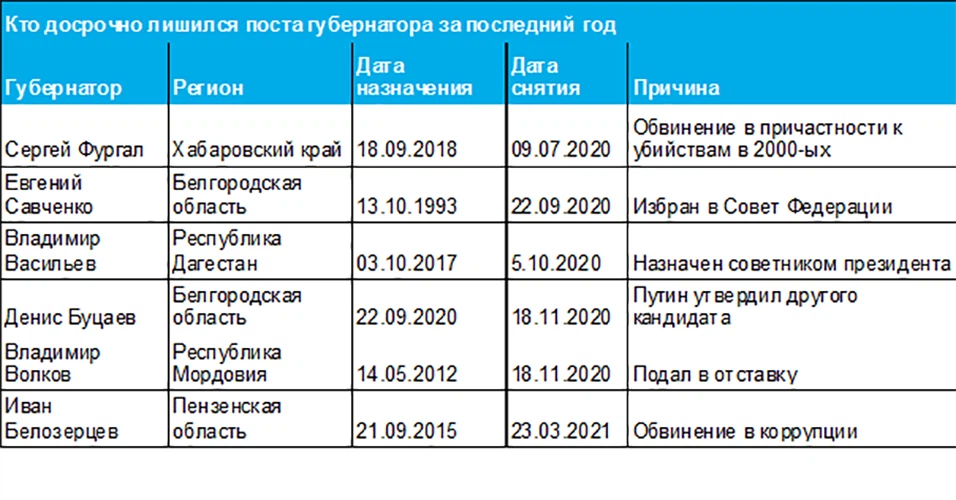
In three regions, where planned elections were originally appointed on September 19, the governors voluntarily resigned in April. The head of Tyvs Sholban Kara-ool, the head of North Ossetia-Alania Vyacheslav Bitarov and the Governor of the Ulyanovsk Region Sergey Morozov refused their posts.
Only four heads of regions retained the posts: Ramzan Kadyrov in Chechnya, Rashid Temrezov in Karachay-Cherkessia, Igor Rudenya in the Tver region and Alexei Dyumin in the Tula region.
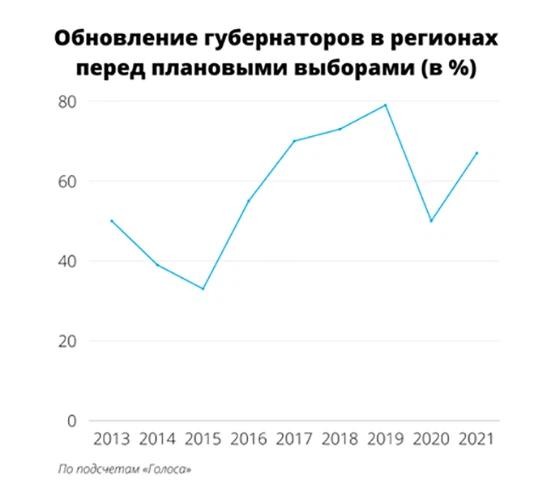
According to the “Voice” estimates, at the stage of appointment of the elections, 67% of the heads of regions were updated, six out of eight appointments have no experience in their regions. In North Ossetia, the head of the acting head was appointed the former Governor of Sevastopol Sergey Devyailo, in the Ulyanovsk region-the ex-deputy of the State Duma from the Moscow region of Alexei Russians, in Khabarovsk-Mikhail Degtyarev, partner Sparring Sergey Sobyanin in the mayor's elections. Among the new acting, only Oleg Melnichenko from the Penza region and Vladislav Khovlyg from Tyva are familiar with their region.
Of the nine regions, you can go to a self -nominated person only in the Tula region, but to register a candidate, except for the support of deputies, you need to collect signatures of 23,363 voters, up to 25% of them can be taken on public services.
In terms of regions, the municipal deputy corps was reduced, although this did not affect the percentage of signatures for the nomination.
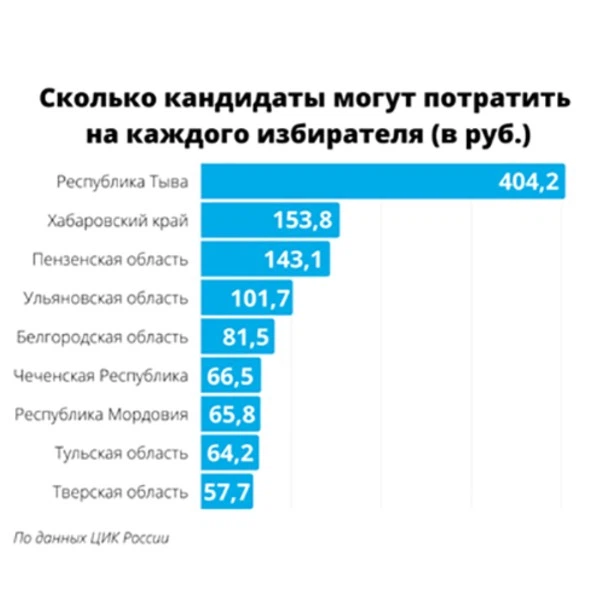
The most money for one voter can be spent candidates for the post of head of Tyvy, where the limit amounted to 80 million for almost 200 thousand voters living in the republic. In the Tver region, a candidate can spend 60 million on a million registered voters, and in Mordovia - 40 million for 600 thousand voters. The regions independently set the ceilings of the electoral funds.
Elections to regional parliaments
Elections to regional parliaments will be held in 39 regions. In Chechnya, Dagestan and Ingushetia, only a proportional system is used, in seven regions, majority prevails, in the rest - equally. Since 2019, the number of mandates given on party lists has declined in the six regions, which, according to the Voices, leads to a distortion to the leader of the leader.
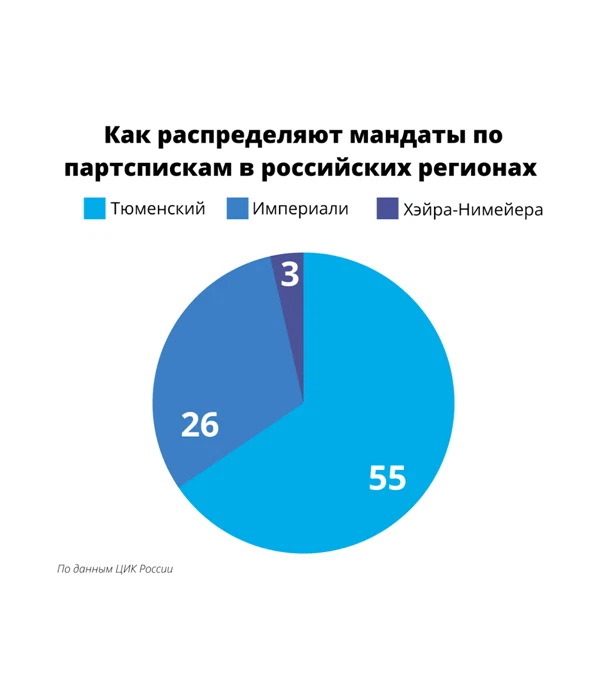
Another advantage in these elections to United Russia is given by methods of distribution of mandates. In Russia, two methods of dividers are used: “Tyumen”, which they began to be used in Tyumen in 2007, and the Pierre Imperial method.
“Now, in the distribution of mandates, the Pskov Regional Assembly of Deputies uses the imperial methodology. This year only the number of mandates will change - it will decrease significantly. The imperials are smallly explained on the fingers, but there is the main, in my opinion, the moment-the distribution of mandates is noticeably skewed towards the batch of the leader. In contrast to other methods with this distribution, the leader will receive even more mandates, and all the rest-even less, ”explains Vladimir Zhilinsky, a member of the Voice department in the Pskov region.
Now in eight regions, the legislation provides for measures against non-renderwenting of mandates in parties that overcome a 5%barrier.
The method of distribution of Heir - Nieraeier is used only in the "electoral sultanates" - Ingushetia, Chechnya and Tatarstan. There, according to the results of the latest elections of United Russia, the majority of deputy seats were given.
“Everything is decided even at the stage of admission to the elections,” says Mikhail Tikhonov, the coordinator of the Voice in Tatarstan. -If United Russia in one of the single-mandate districts did not nominate its candidate, then there was a preliminary agreement. This is either a unicorn who deliberately went a self -nominated person, or a self -nominated person agreed with the authorities, or a loyal candidate from an opposition party who was released the district (we also have this).
In the latest elections to the State Council of Tatarstan in September 2019, the United Russia gained 72.43% on party lists, which gave them 44 mandates, plus 41 deputy was held in single -mandate districts. Total 85 deputies out of 100. Six more candidates from the Communist Party for Party. According to one deputy from the SR, LDPR and the Party of Growth in single -mandate districts (in these districts, the United Russia did not put forward their candidates by agreement). And six self -nominated ones have passed. ”
Of all the regions in which elections to the local parliament will be held on September 19, only in Ingushetia, Chechnya, the Tyumen region and the Chukchi autonomous district there is no division into territorial groups in party lists.
Most of the territorial groups in Dagestan - there should be from 53 to 62 for about 1.7 million voters. There you can also file the maximum number of deputies on the party list - up to 226, in total in the People’s Assembly of the Republic of Dagestan 90 mandates. In the population of territorial groups similar in the population of the Stavropol Territory, there can be from 13 to 25 with the maximum number of candidates in a list of 78 people, although 25 mandates are distributed in the Territory Duma according to the proportional system. In 20 regions, the minimum number of candidates in the list is larger than distributed mandates.
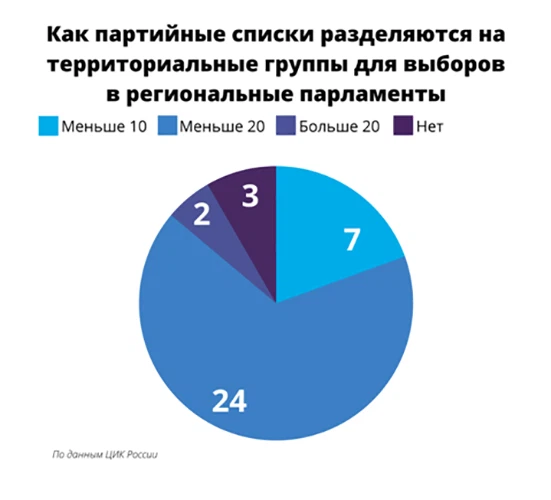
In most regions, territorial groups are tied to single -mandate districts, they allowed groups to unite in only a few: in the Leningrad and Tambov regions, as well as in the Stavropol Territory. There is no central part of the list in the Novgorod region.
According to the official version, the separation provides a more complete representation. In practice, according to the observations of “Voices”, because of this, the mandates are distributed chaotic: some territories receive too many deputies, and part remains without anything.
“We believe that division into territorial groups is not needed in small regions with a fairly homogeneous electorate,” explains Arkady Lubarev’s authors of the report. “In this campaign, Adygea, Amur, Kaliningrad, Kursk, Novgorod, Oryol, Pskov regions, the Jewish Autonomous Region, St. Petersburg can be considered such.
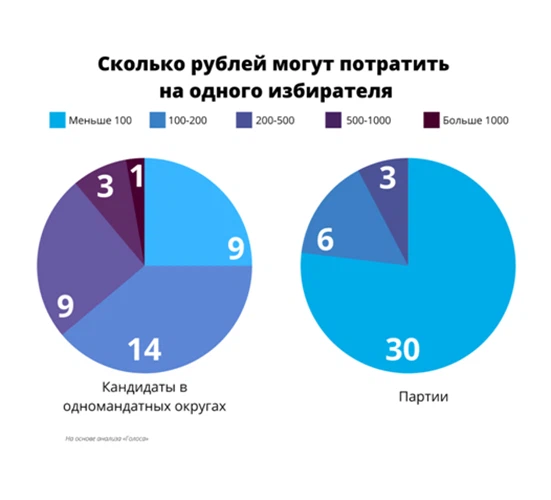
In these elections, the ceilings of election funds for parties and candidates in single -mandate districts grew. The maximum amount varies greatly: single -mandates can spend from 1052 rubles on the campaign of one voter in Karelia to 18 rubles in the Jewish Autonomous Okrug, the party - from 459 rubles in Chukotka to 15 rubles in the Sverdlovsk region.
“According to the law, all expenses for the campaign should be from the election fund. There is an opinion of some experts that this requirement is often violated, ”says Arkady Lyubarev,“ but it is much easier for pro -government candidates to violate the law, violations on their part are usually unnoticed. In addition, there is indirect agitation for them in the media dependent on the power, and neither the election committee nor the courts recognize such agitation by agitation and, accordingly, a violation of the law.
Opposition candidates in order to convey their position to voters in large districts (and the districts in regional elections and in many regional centers are quite large), you have to spend a lot of funds - on the air, on newspapers, on printed materials (leaflets, banners, etc.), especially since their leaflets are torn off, so they have to print more. If the ceiling of the fund is small, then it is impossible to exercise all such expenses legally. And for illegal expenses, sanctions are provided. ”
Since 2020, candidates and parties can collect up to 50% of signatures for nomination on public services, by decision of the region the thresholds can reduce to 25%. In these elections, there is such an opportunity in 10 regions.
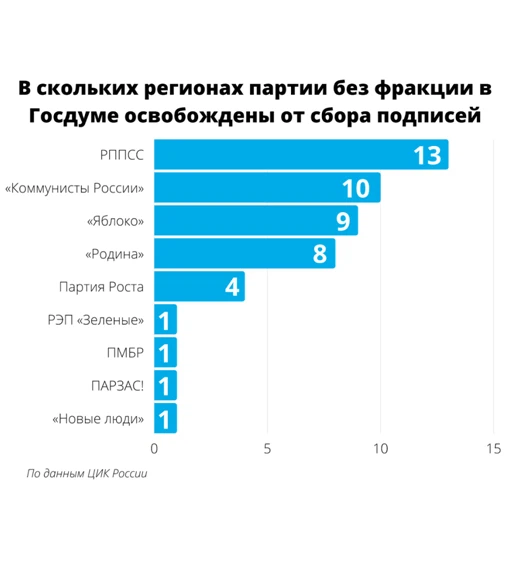
Parties with fractions in the State Duma may not collect signatures, in some regions there are also benefits for those who scored at least 3% in the last elections to the local parliament, received at least one mandate in the city collections or received at least 0.5% of the voters of the region in the elections to the City Board.
Elections in regional centers
Elections to municipal meetings will be held in 11 large cities. In Nalchik and Grozny, the mandates will be distributed only on party lists, in Saratov and Kaliningrad - in single -mandate districts, they first abandoned the proportional part.
In seven cities, party lists should be divided into territorial groups. In Stavropol alone, parties were allowed to unite several single -mandate districts into territorial groups, in Perm one group includes two districts. According to the experts of the Voice, division into groups in cities is poorly affected by the election results: the results can affect not only falsification, disruption of the appearance and bribery of the votes, but also accidents like breaking up the pipe.
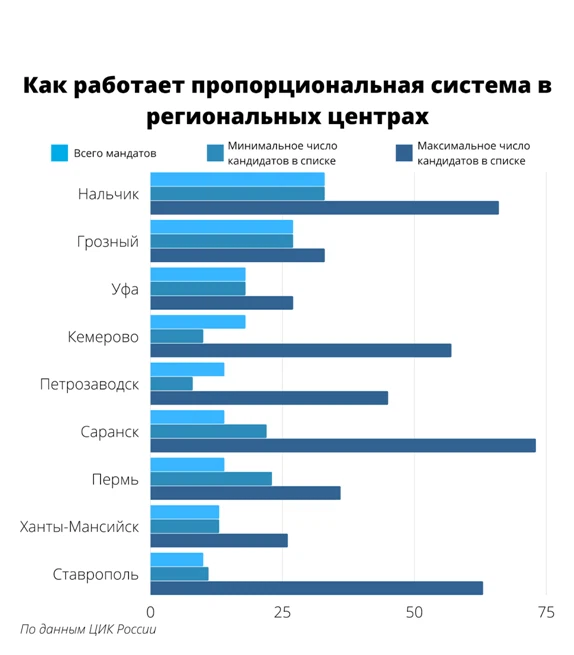
Parties with fractions in the State Duma are exempted from collecting signatures for municipality and candidates for municipal elections. In addition to them, Yabloko still has a benefit in Petrozavodsk, Perm and Kaliningrad, the Green in Ufa and Nalchik and the RPPSS in Ufa and Kaliningrad.
According to the “votes”, fewer parties will be allowed to be allowed and more and more parties will lose the benefits and chances of participating in the elections of a higher level, and the “personalization” of the elections will intensify.