
Translated material
How to break through a gold bottom
The history of the Kyrgyz Klondaika is the Kumtor deposits, which did not bring happiness to ordinary people, but brought the four former presidents of the country under the criminal article
On August 2, a message appeared on the news feeds of news agencies: the ex-president of Kyrgyzstan Askar Akayev, who headed the country from October 27, 1990 to April 11, 2005, flew to Bishkek. He flew by himself, voluntarily. He stated that he arrived at his homeland, where he was not 16 years old to help the investigation in the case of possible corruption in the activities of the Kumtor gold fiber.
According to the press service of the Prosecutor General of Kyrgyzstan, in the period from 1992 to 2019, “individual officials and the leadership of Kyrgyzaltyn OJSC, creating unlawful and sustainable communications” with representatives of the Canadian companies of Cameco and Centerra Gold Inc., as well as CJSC “CUMTOR OF CUMTOR OF COMPOTIS Gold Company ”,“ In order to illegally obtain material and other benefits, concluded agreements obviously unprofitable for Kyrgyzstan to develop the Kumtor gold fingers.
Information about the search for Askar Akayev appeared a little less than a month ago, July 8. This was announced at a special press conference by Kamchybek Tashiev, chairman of the State Committee for National Security (GKNB) of the Republic. Together with the First President of Kyrgyzstan, the second was put on the wanted list, Kurmanbek Bakiev, who replaced Akayev as head of state and headed the country until April 7, 2010. Both are charged with abuses at the conclusion of the General Agreement on the development of the gold -bearing mine Kumtor.
Moreover, Tashiev stated that the investigation establishes “possible involvement in the conclusion of obviously unprofitable agreements with Canadian companies” Almazbek Atambayev, who headed Kyrgyzstan from December 1, 2017, and Uboronbai Jeenbekov, who was the president of the country from November 24, 2017 to October 15, 2020.
After the information on the international wanted list of former presidents of Kyrgyzstan, I flew on a business trip to Bishkek.
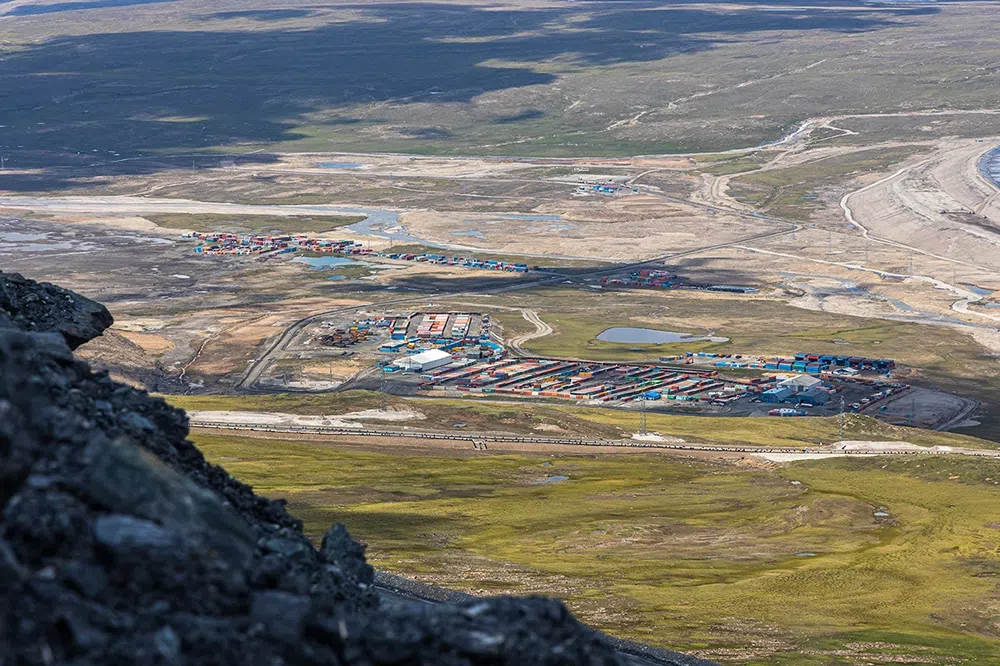
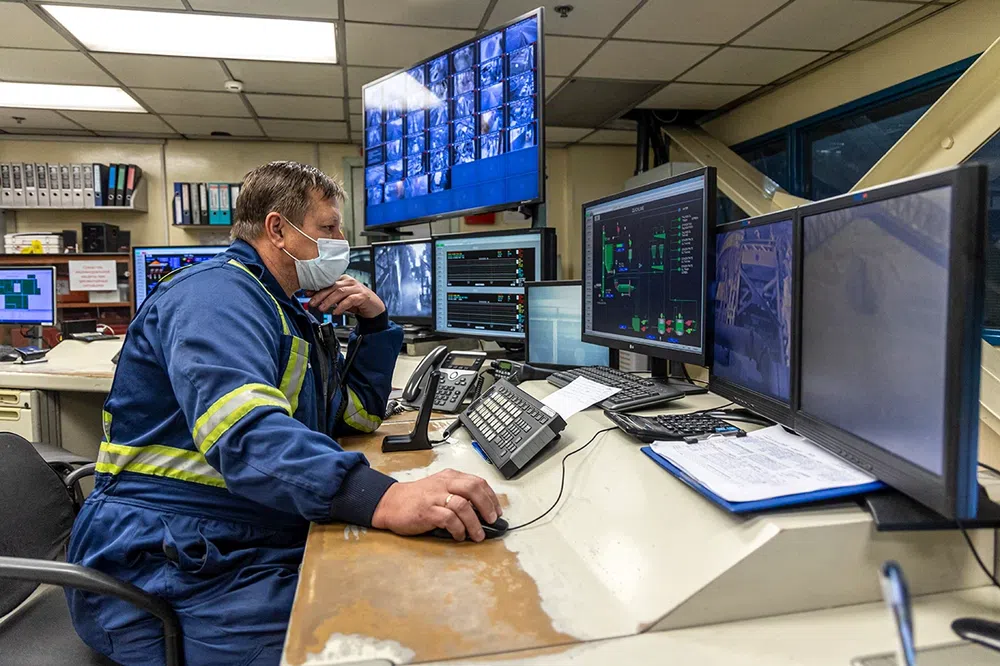
I managed to visit the once -covered, “regime facility” - the Kumtor Zolotorodnaya field, to talk with dozens of officials, law enforcement officers, ecologists and human rights defenders. But the greatest impression on me was made by meetings with simple Kyrgyzes in the highland village of Barskon, located on the shores of Lake Issyk-Kul. For the inhabitants of this village, the development of the "Kyrgyz Klondaika" turned into a real tragedy.
Dead water
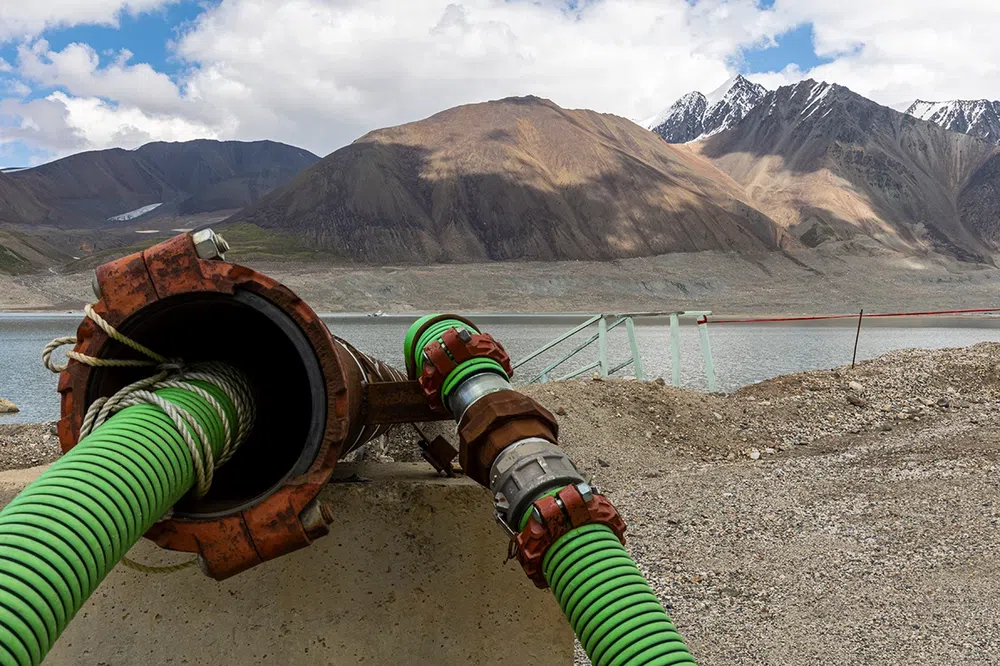
On May 20, 1998, at 12 hours 15 minutes, eight kilometers from the village of Barskon into the river due to the braking system failure, a container truck collapsed, which is taken to the cumtor cyanide mine used to extract gold from ore.
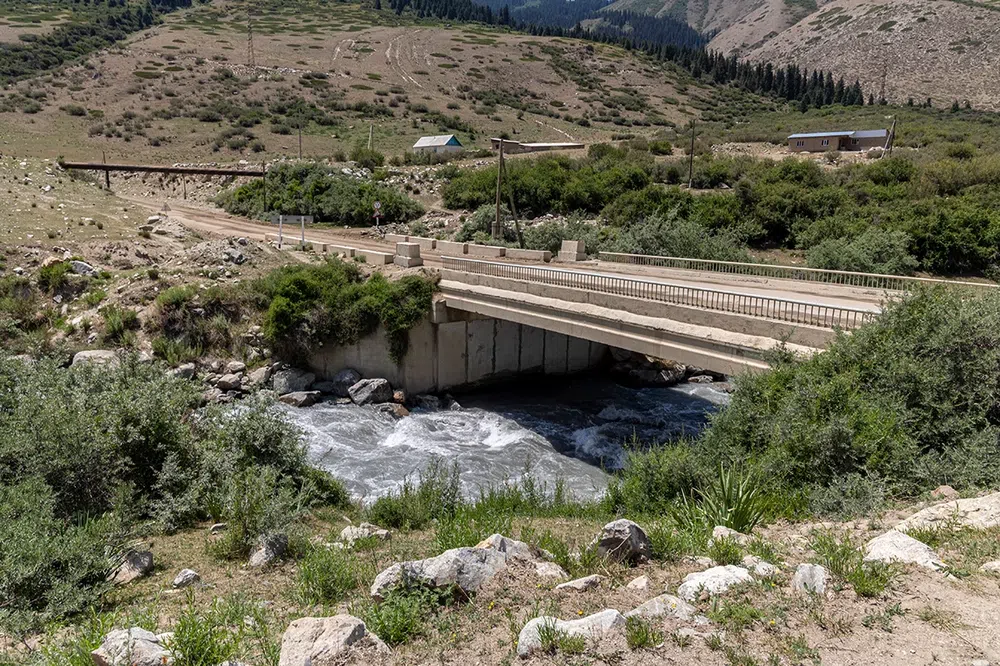
In the 20-ton container, the cyanide was in special packages of polypropylene film, the packages were laid in wooden boxes. As a result of the fall, the container was depressurized, the boxes broke down, some of the packages were torn.
Today everyone understands that on that day a terrible disaster occurred near the village of Barscoon. The world shudders from such accidents. So, for example, on January 30, 2000, in the Romanian city of Bai-Mar broke off the Dam of the Slotnik of the Aurul gold mining company, and water, poisoned by cyanide, poured into the Romanian rivers and lapush. “Dead Water” reached Tisa flowing through the territory of Hungary and Serbia, and then got into the Danube. From the place of TISA in the Danube, for eight tens of kilometers of the coast were dotted with dead fish. Ecologists of Romania, Yugoslavia, Hungary, Serbia, Ukraine trimmed about an environmental disaster - the largest in Europe since the time of Chernobyl. “Tisa is killed. Even the bacteria did not survive, ”the Minister of Environment Blazhich did not hold back emotions. Tom Popper from the Hungarian Regional Ecological Center said: “From the point of view of the complete destruction of one ecosystem, this is probably worse than Chernobyl. The damage to nature is terrible, and the threat to people can be preserved. ”
The ecological disaster in Romania was on the first lanes of newspapers, from reports from the vicinity of the city of Bai-Mar and the shores of the Danube and Tisa, television news releases of many countries began. And the world did not notice a similar incident in Kyrgyzstan. Why did it happen? First of all, because the authorities of Kyrgyzstan tried to hide the fact of getting into the Cyanide River.
The container was removed from the water five hours after the accident. When they carried out a control weighing of the preserved poisonous cargo, it turned out that 1762 kilograms of sodium cyanide in granules remained in the river. But nobody said the inhabitants of the village of Barscoon about what had happened. For twelve days, people continued to use poisoned water: they watered gardens and gardens, struck livestock and drank themselves.
From May 20 to June 16, 1998, more than 8 thousand people turned to the surrounding hospitals for medical help. These were not only the inhabitants of the village of Barskon, but also other nearby large villages-Tamga, Toros and Jung-Jargyl.
On June 3, 1998, when the hospitals were already crowded and it became impossible to hide information about the environmental disaster,
It was decided to evacuate the inhabitants of the village of Barskon. Later, the Ministry of Environmental Protection of Kyrgyzstan, not embarrassed, reported that of all those who contacted hospitals, only 2577 were found signs of cyanide poisoning.
Victims
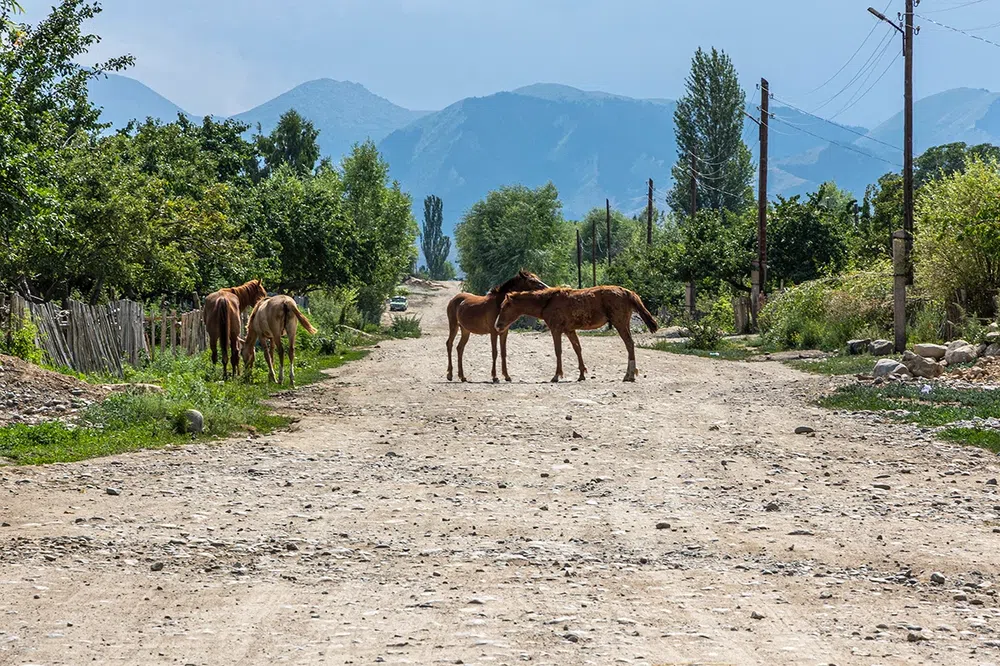
About seven thousand people live in the village of Barscoon. Despite the fact that 23 years have passed, each adult Barskonets remembers the events of May 1998 well. In Barscoon, there is practically no family that the tragedy would bypass that year. Therefore, when we came to the village with the photojournalist and transmitter, it seemed to me that we would easily find those who agree to tell what happened then. But I was mistaken: at first, people did not want to talk to us. Apparently, the memories of how the village was intimidated by the tightly pumped up guys who convincingly advised to hold their mouths and not tell anyone about the events of those days intimidated.
The chairman of the village council helped out: his assistant became our guide for the village of Barscoon.
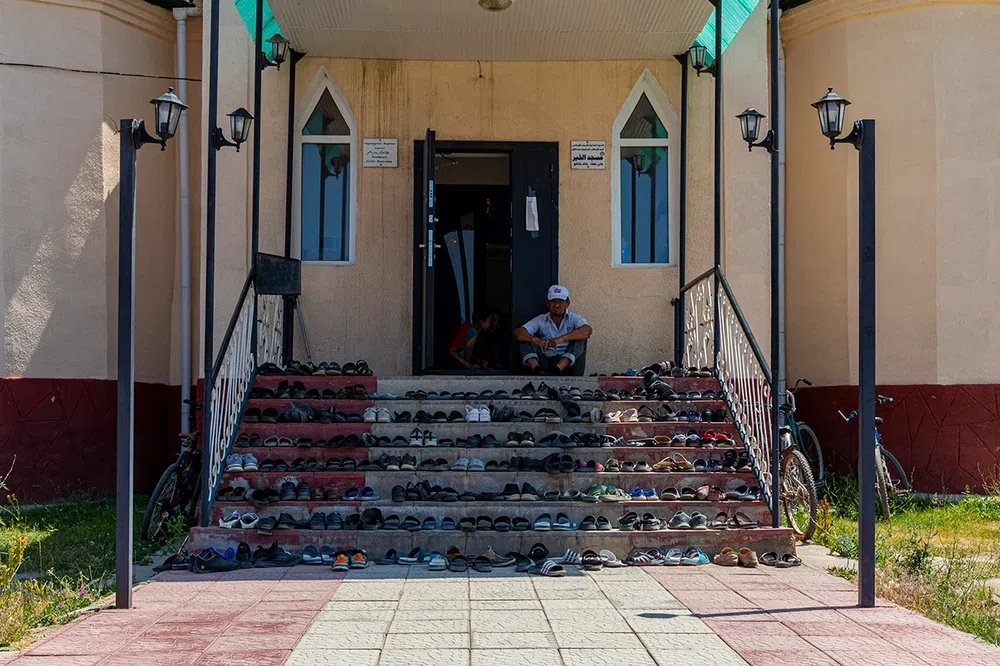
Here is an ordinary village house, it looks like my grandmother’s house, where in childhood I went every summer. Even the smell in the house seems to me the same, from childhood: it smells of fresh milk and freshly baked bread. The house is divided into several rooms. In one of them in complete darkness, 75-year-olds Uulman Baigabylov sits on the couch. Since May 1998, it does not go outside at all: shortly after cyanide poisoning, a woman is blinded.
Uulman was born and raised in the mountains of Tien Shan, worked as a shepherd. Raised seven children. On that fatal day, she grazed the herd and drove animals to the Barskon River, on a watering. Rinked itself. And the next day, an ambulance took her.
“I lay in the hospital for ten days under a dropper, and when I returned, columns of buses who took my fellow countrymen to boarding houses arrived in the village,” says Uulman. - And I went. And in the village there are several hundred people. My son also remained to guard the house, and then fell ill. In 2005, he died.
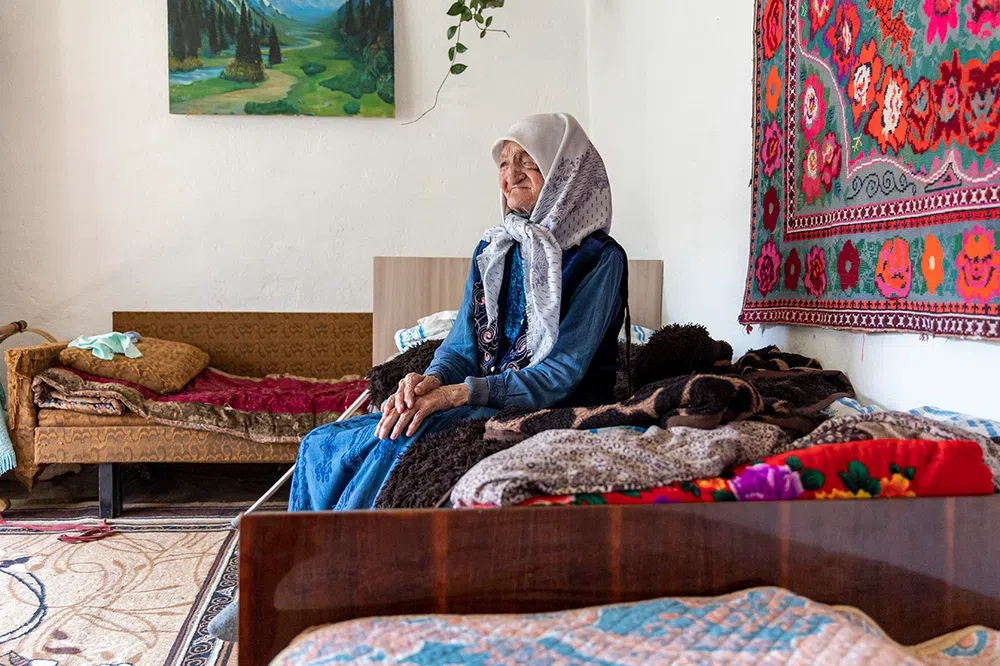
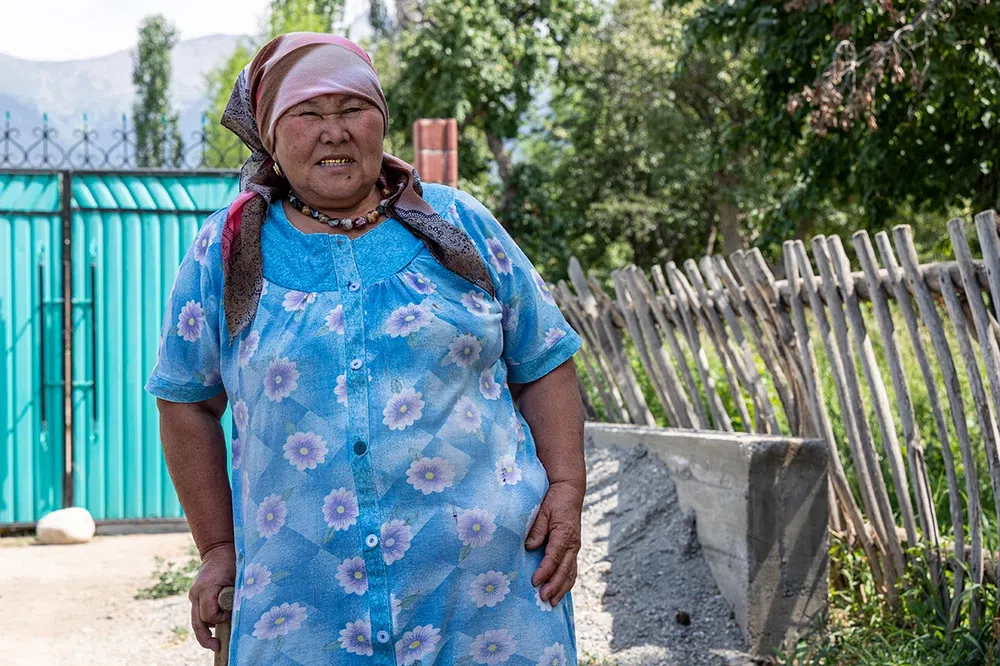
But the story of another eyewitness, Totugush Ismailova. She is 63 years old, of which 23 years old she is a disabled person.
- That day I was in Aryk, and in the evening I was taken to the hospital because I lost consciousness. The hospital also fell off somewhere, lost consciousness. I have nine children, I no longer thought to see them. But thanks to the doctors, they went out. Twelve days later I was discharged. When discharge, they gave me a certificate that I was poisoned by cyanide.
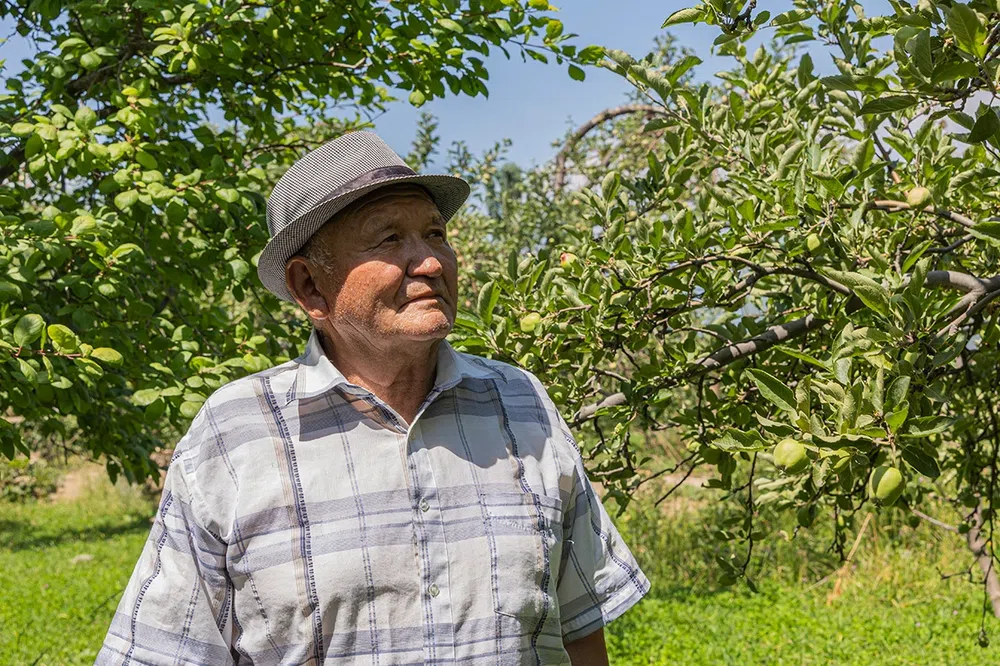
The 76-year-old Muhammad Isakov appreciated the tragic events of May 1998 through the prism of his profession. He worked as an agronomist all his life. Speaks:
- In that year, the number of birds was sharply reduced. It took several years to restore the population. In 1998, the crop disappeared. The irrigation was carried out by water, which was poisoned by cyanide. Nobody wanted to buy the crop that they collected. But the worst thing was later when dozens of young women had miscarriages. And others, many, have aborted, because doctors warned: children with disabilities can be born. The leadership of the Kumtor deceived power. And the authorities deceived us.
Samples
Employees of the Kumtor mine unit engaged in the monitoring of the state of the environment, quickly, at 14 o’clock on May 20, arrived at the place of falling a container locomotive in the water and began to select water samples from the Barscoon River.
It was found that the maximum permissible concentration of cyanids in the river is exceeded by 1590 times.
But immediately after the container was raised from the river, the content of cyanide in the water allegedly dropped sharply, up to 10 MPs. And since May 24, cyanide was not found either in the samples taken in the Barscoon River, or in the samples of soil and vegetation in the area of the accident and in the surrounding territories.
The results, of course, are optimistic, but not suggesting. I will explain on another example. A few days after the breakthrough of the dam of the gold mining enterprise in the Romanian city of Bai-Mar, the Hungarian laboratories recorded in the upper reaches of Tisa, hundreds of kilometers from the scene, exceeding the MPC of more than two thousand times. And this despite the fact that in Romania in the river it was not cyanide in granules, but water with cyanide impurities, already used in production.
Hungarian laboratories want to trust more than Kyrgyz. Could Cyanide quickly disappear from the Barscoon River in a matter of hours? But, apparently, it was precisely such test results that the authorities of Kyrgyzstan were necessary to reassure the population.
But the population did not calm down. The indignation was growing. From the Issyk-Kul region, where the tourist season was ripped off that year, discontent began to move to neighboring regions and to the capital, Bishkek. In order to somehow repay the protest, in 1999 the Kumtor Rudannik administration initiated an invitation of an “independent group of specialists” to conduct an examination of the consequences of the Barsconsky accident. Employees of the Research Institute of the Ministry of Defense of Russia, who found out the key reason for mass incidence in the area, were chosen as specialists, and now the Kyrgyz authorities tried to expand everything as if the Kumtor mine had nothing to do with it. Russian military experts found that most people suffered from ordinary chlorine.
In their report, the Russian military drew attention to the Decree of the Government of Kyrgyz No. 629 of September 29, 1998, in which preliminary results were summed up to eliminate the consequences of the environmental disaster on the Barscoon River. The resolution was completely incorrectly said: “By the decision adopted by collegials at a meeting of the Special Government Commission, the forces of the sanitary and epidemiological station in the period from May 25 to 27, 1998 processed the main irrigation channels of the Barscoon River with a total area of 15 thousand 60 square meters with a solution of calcium hypochlorite, for which 1550 kilograms were spent on the spent. chlorine ".
Meanwhile, it was in the period from May 26 to May 30 that the largest number of victims were received in hospitals. The logic of the solution is clear: to fall asleep with chlorine of the river and irrigation canals, when a huge amount of dead fish and birds that quickly decomposed appeared there. But it is also obvious that if the granules of cyanide had not got into the river, then there would be no need to use chlorine.
Encyclopedia of corruption
Why the Kumtor deposit administration tried to hide the scale of the tragedy, of course. Because it was fraught with huge reputation losses and large payments to the victims. But why did the Kyrgyz authorities be at the same time with Canadian gold miners mastering the field?
I found the answer to this question in the report of the State Commission, created in February 2021 and completed the work in May. There is no “secret” stamp on the report, but it is not public. One of the Kyrgyz environmental activists gave it to me. The document has more than eight hundred pages, and it is a real encyclopedia of corruption of Kyrgyzstan on the example of the development of the Kumtor field.
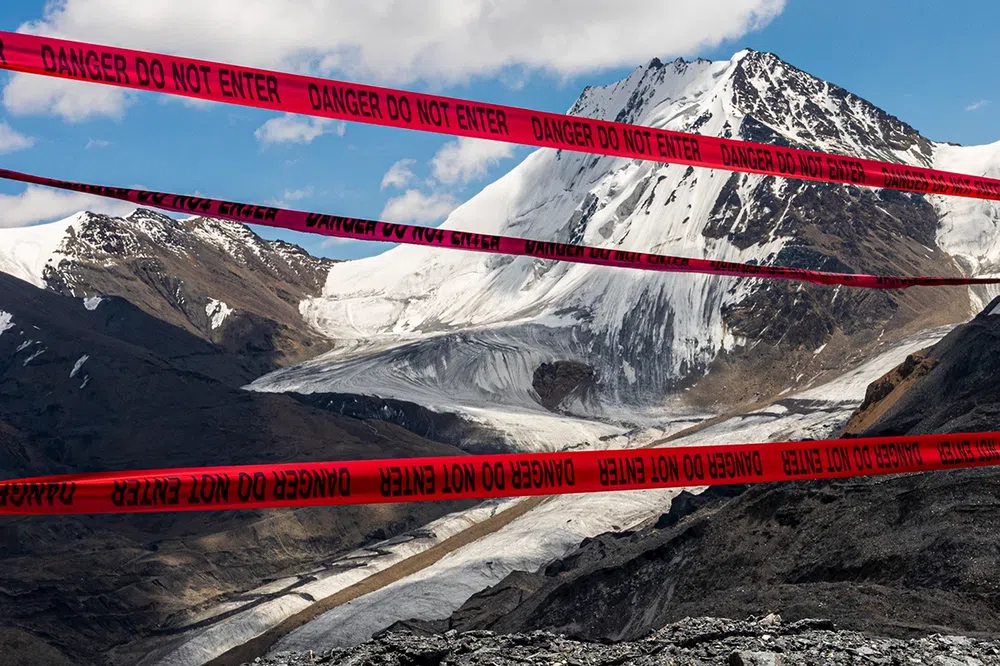
Located in the mountains of Tien Shan at an altitude of about four thousand meters, Kumtor was opened by Soviet geologists in 1978. The USSR did not dare to start gold mining in this field, although Soviet experts appreciated the reserves of gold at the colossal 953 tons. The key argument against the development of the field was a negative environmental forecast. The fact is that in the immediate vicinity of the development zone there are Lysy and Davydov glaciers, with a total area of 16 square kilometers. These are huge reserves of fresh water. Soviet scientists predicted the acceleration of melting glaciers in case of gold production.
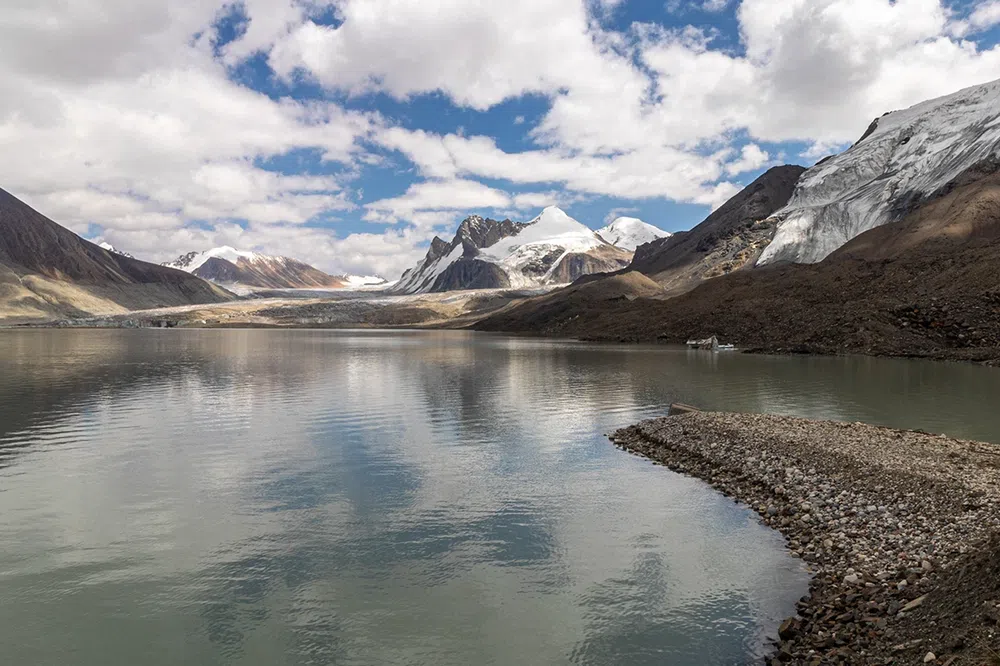
But the union broke up, Kyrgyzstan proclaimed independence, Askar Akayev took up the head of the young state for a long 13 years. The previous decisions of the Soviet leadership have lost any obligation.
In 1991, the government of the republic announced that he began to search for an investor to jointly master the Kumtor field. The largest mining companies in the world have offered their services to the republic, for example, such as Anglo-american PLC (South Africa) or NewMont GoldCorp (USA). But Kyrgyzstan chose the Canadian company Cameco, which had not yet been engaged in gold mining at all, but specialized in the extraction of Uranus.
On December 4, 1992, in the Canadian city of Toronto, documents were signed on the joint development of the Kumtor deposit between the Kyrgyz government, the Kyrgyzaltyn state concern and the Canadian company Cameco.
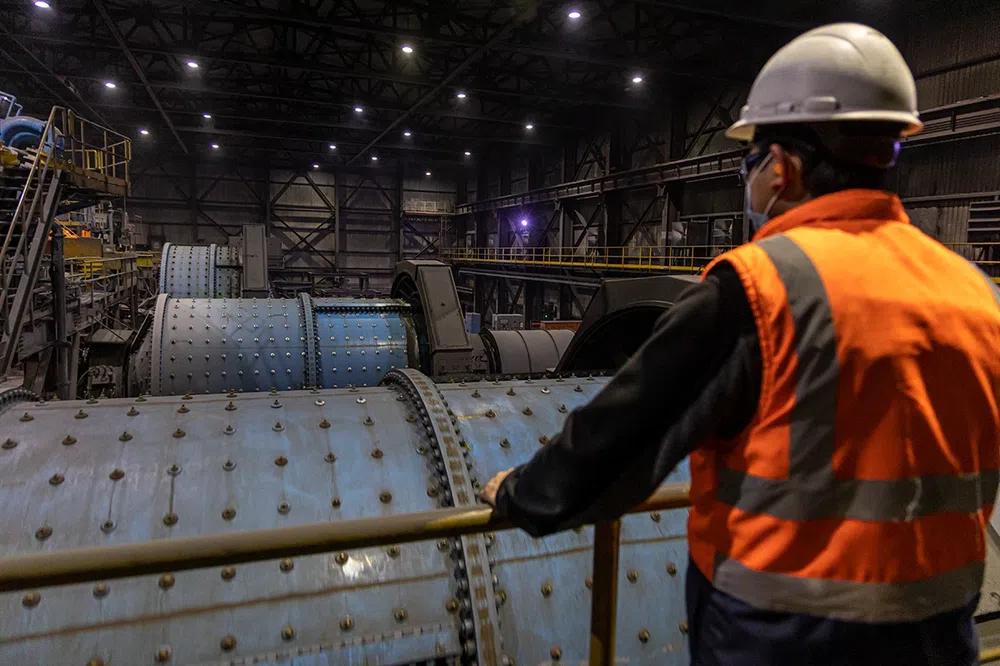
To manage the process of developing the Kumtor deposit, CJSC Kumtor Gold Company CJSC and CJSC Kumtor Operating Company were established. Kyrgyzstan, although he had the main packages of shares of these companies, was led by these legal entities by specialists appointed by Cameco.
In the concession agreement, such items were originally laid down that allowed to suspect the highest leaders of the country of corruption.
For example, in paragraph 5.4 of the agreement, it was fixed that the Canadian company and its subsidiaries “will not be taxed by taxes, fees, fines, royalties or mandatory payments, straight or indirect, related to the Kumtor project.
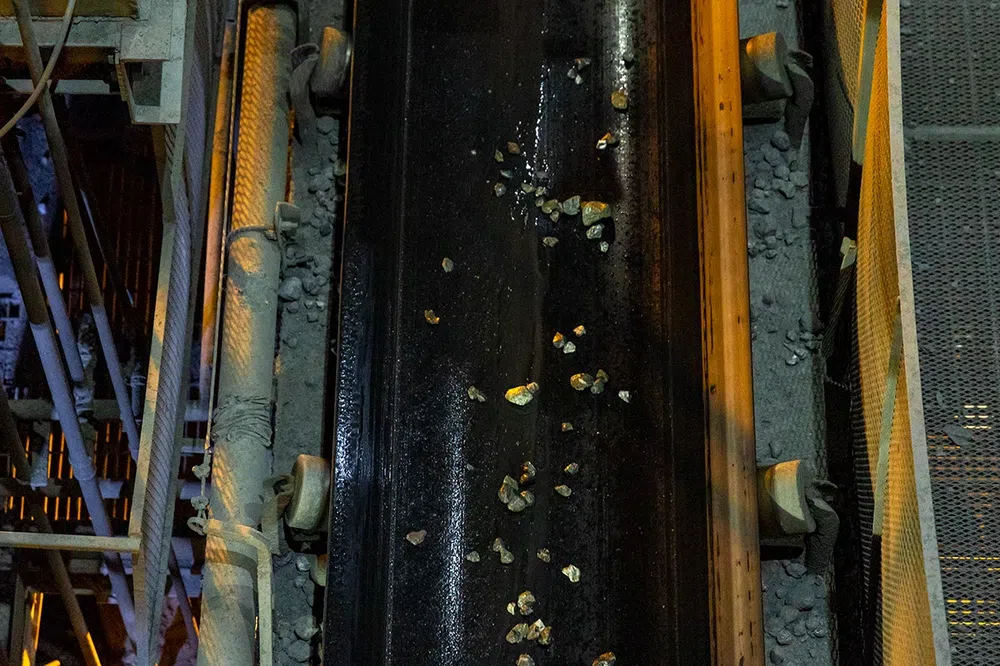
Only one clause of the agreement allowed the Canadian company to earn a lot of money on the development of the kumtor. In May of this year, the head of the State Committee for Ecology and the Climate of Dinar Kutmanov at a meeting of the country's parliament led the following figures: for all the years of gold mining, Kyrgyzstan received $ 1.5 billion, and the Canadian company - 11.5 billion. In 2002, when the term of the concession agreement signed for ten years ended and the time of tax benefits was drawing to the end, the Canadians invited the Kyrgyz government to register the joint company Centerra Gold Inc., transfer it “Kumtor Gold Company” and all assets (shares in three mining projects and shareholder loans), and then), and then), and then), and then), and then Divide shares of a new joint company. So they did. As a result, after restructuring, the republic received at Centerra Gold Inc. A share of 33%, and Cameco - 67%. Thus, Kyrgyzstan finally lost the right to manage the Kumtor project.
All these years, Askar Akayev stood at the helm of the republic.
Canadian managers had not previously shown special scrupulousness when fulfilling, for example, clause 7.14 of the concession agreement, in which they pledged to “comply with the legislation of the Kyrgyz Republic on Environmental Protection”. And after restructuring, they completely began to work without looking back, as if realizing that at any moment the situation could change and we must have time to get as much gold as possible and earn as much money as possible.
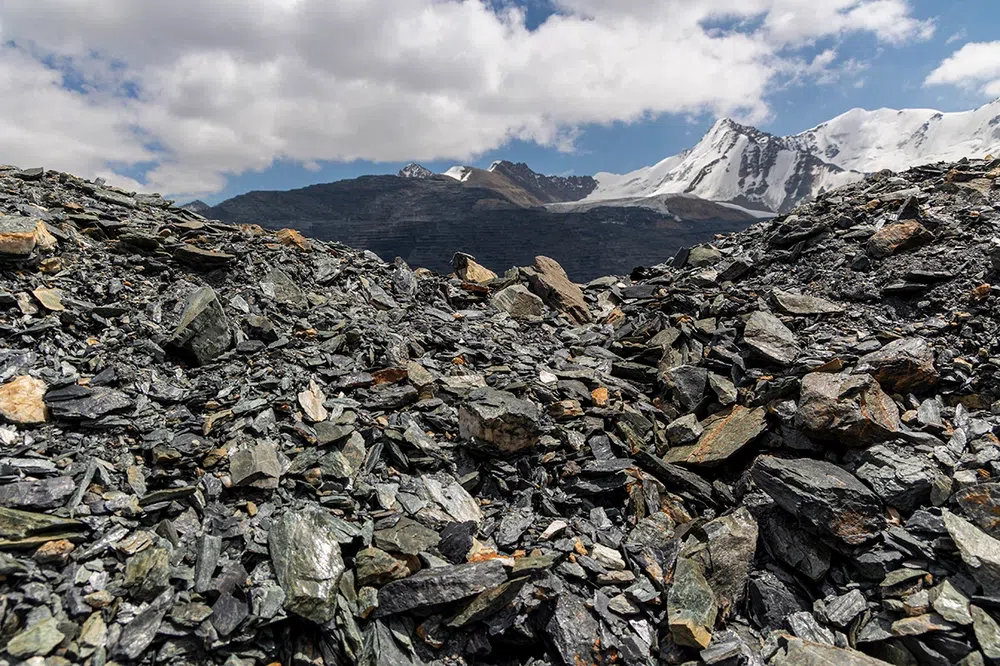
It was originally planned that the spent rocks after extracting gold will be stored below, in the valley. But Canadian managers calculated that it was expensive, and the breeds began to be wrapped directly on the surface of the Davydov glaciers and bald. By 2010, about 200 million tons of a spent breed were taken to the foot of the glaciers. And over the next decade - about 800 million tons.
This mountain of dumps provoked the movements and squeezing of ice, which led to the beginning of the destruction of the glaciers.
From 1998 to 2013, glaciers began to retreat 30 meters a year. Despite the fact that other Tien Shan glaciers, also retreating as a result of global warming, are melting three times slower.
I learned about all this from the report of the state commission, in which not only facts were given, but also the names of the specific senior leaders of the country who patronized the Canadian gold miners. With specific examples of frankly corruption manifestations. Есть в этом документе и такие строки: «По мнению нашей комиссии, одной из главных причин ( заключения концессионного соглашения и последующей реструктуризации. — И. М.) явилось желание семейного клана Акаевых скрыть свои коррупционные доходы от этого проекта в зарубежных странах, используя международную практику отмывания средств преступным путем…»
Экоцид
С самого начала освоения рудника Кумтор экологические активисты выступали против варварской добычи золота. В 2012 году в Киргизии прошли масштабные протесты, в Бишкеке стояли многотысячные митинги. Эти митинги переросли в уличные столкновения с силовиками, однако протест был подавлен. Власть тогда обвинила лидеров протеста, депутатов республиканского парламента Садыра Жапарова, Камчыбека Ташиева и Таланта Мамытова в попытке захвата власти.
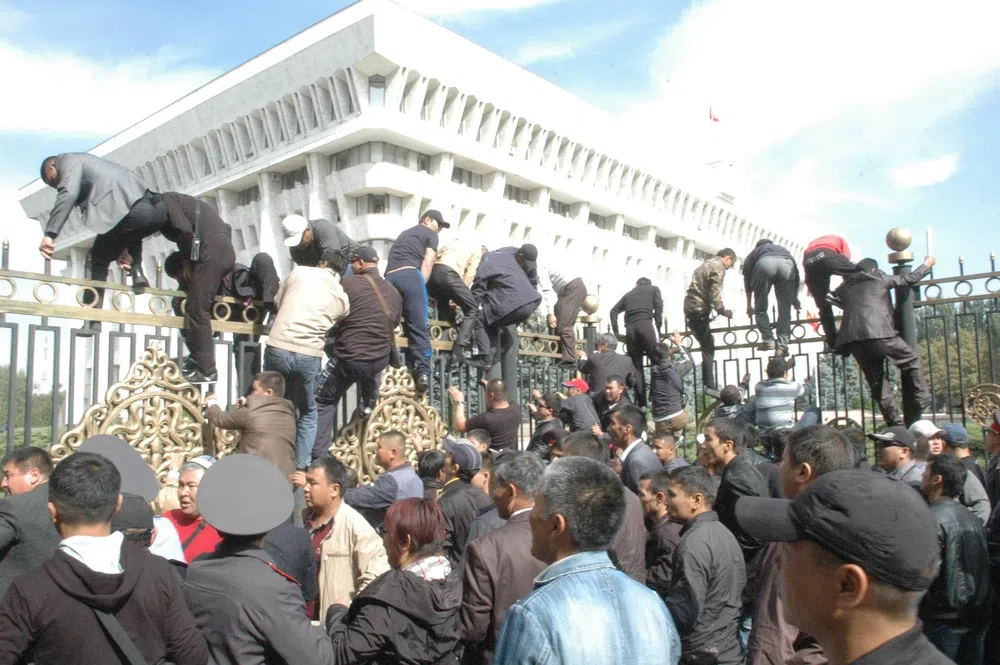
Садыр Жапаров был вынужден покинуть страну и четыре года прожил за рубежом. В 2017 году он решил вернуться на родину. При пересечении киргизско-казахской границы 25 марта 2017 года Жапаров был задержан и доставлен в СИЗО ГКНБ. Его обвинили в организации массовых беспорядков и приговорили к 11 годам и 6 месяцам лишения свободы.
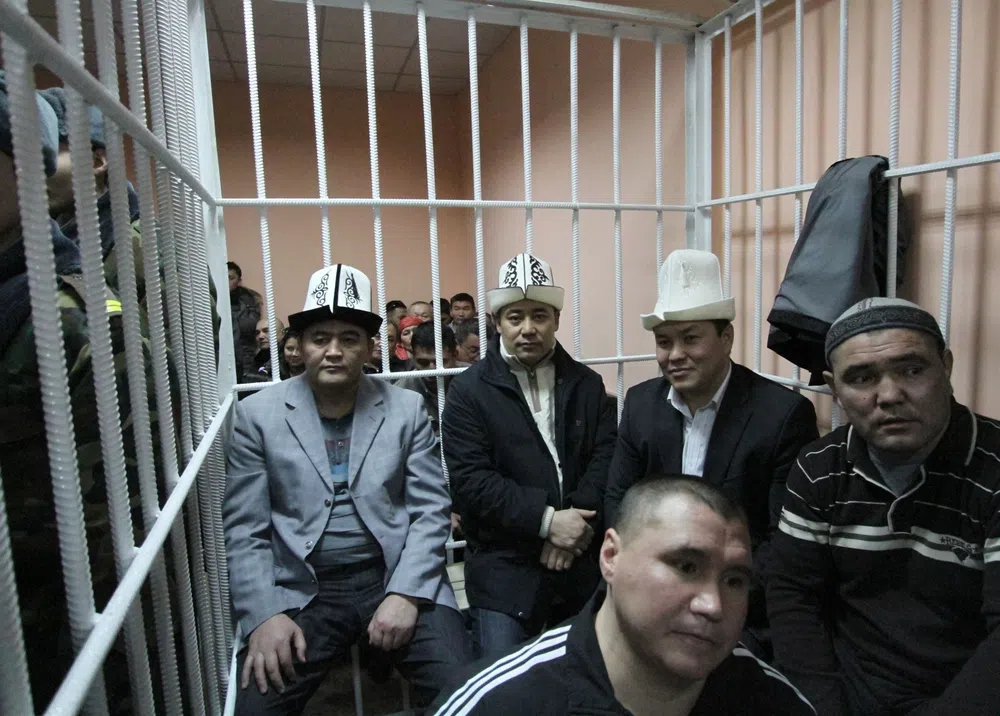
Осенью 2020 года в Крыгызстане снова начались протестные выступления. Протестующие освободили из тюремных камер Жапарова и его соратников. А в январе 2021 года бывший политзаключенный Садыр Жапаров был избран президентом Кыргызстана. Талант Мамытов возглавил парламент страны, а Камчыбек Ташиев — госкомитет национальной безопасности.
Неудивительно, что после этого возобновились расследования, которые стояли на паузе многие годы. Неудивительно, что снова заговорили о надвигающейся экологической катастрофе, связанной с разработкой рудника Кумтор.

Садыр Жапаров, который родился и вырос недалеко от месторождения Кумтор, все годы своей политической борьбы выступал за национализацию месторождения Кумтор. Но после избрания президентом слово «национализация» исчезло из его лексикона. Теперь уже руководство республики обратило внимание на то, что Centerra Gold Inc. долгие годы игнорировала уже упомянутый пункт 7.14 концессионного соглашения, в котором обязалась «соблюдать законодательство Республики Кыргызстан по охране окружающей среды».
В апреле этого года несколько экологических активистов обратились в суд, и уже 7 мая Октябрьский райсуд Бишкека удовлетворил иск и обязал Centerra Gold Inc. выплатить государству гигантский штраф — 261,7 млрд сомов ($3 млрд). Именно за ущерб, причиненный Кыргызстану несоблюдением природоохранного законодательства.
17 мая парламент Кыргызстана ввел на Кумторе внешнее управление, назначив временным внешним управляющим ЗАО «Кумтор Голд Компани» Тенгиза Болтурука.
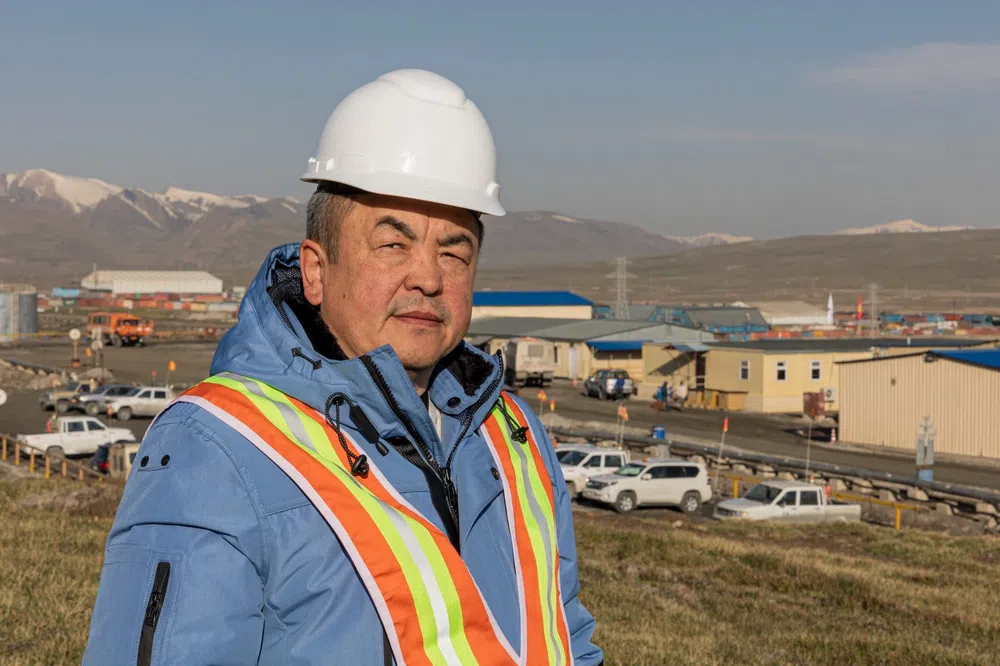
Болтурук — выпускник Московского института стали и сплавов, более двадцати лет он проработал в горнодобывающих компаниях ЮАР, Перу, Австралии, Китая, Ирана, США, Канады. В Канаде Болтурук получил лицензию инженера и гражданство. В 2020 году вернулся на родину.
В интервью «Новой» Тенгиз Болтурук рассказал, что был шокирован отношением к природе, к экологии прежних руководителей Кумтора.
— Это грубейшее нарушение кодекса профессиональной этики. Такое хищническое уничтожение колоссальных запасов чистейшей питьевой воды, которая аккумулирована в наших ледниках, за такой короткий промежуток времени можно назвать экоцидом.
Сбылось пророчество великого киргизского писателя Чингиза Айтматова, который в романе «Плаха» показал, как природа мстит человеку за варварское к себе отношение.
За годы работы рудника Кумтор 66 рабочих стали инвалидами. 19 people died.
Так, например, 1 декабря 2019 года горный мастер Ишенбеков и машинист экскаватора Жунушев остались погребенными при сходе лавины с ледника Давыдов. Их тела до сих пор не найдены.
Тенгиз Болтурук говорит о возможном переходе на подземную добычу золота, однако не исключает, что добыча золота на Кумторе будет вообще остановлена.
— Процесс таяния вряд ли замедлишь, но мы предприняли меры, чтобы хотя бы остановить движение ледников, чтобы площадь таяния не увеличивалась. Возможно, придется остановить добычу золота, потому что вода намного важнее золота. Вода — это будущее наших потомков, это будущее нашей страны, это будущее планеты.
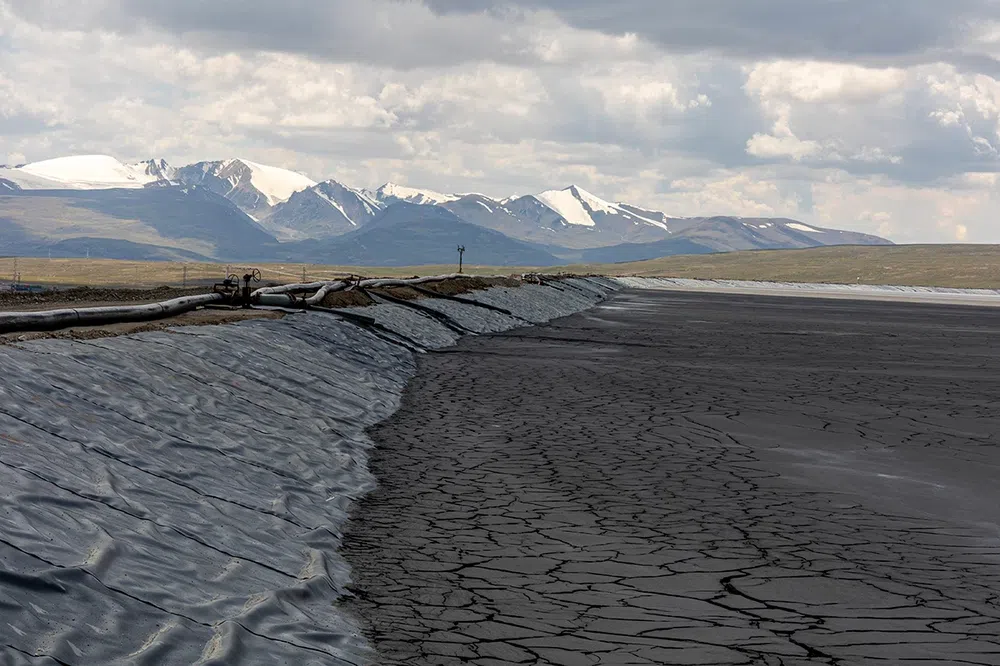
Между тем за двое суток до введения внешнего управления специалисты компании Centerra Gold Inc. прямо из головного офиса компании в Торонто заблокировали доступ к системе геотехнического мониторинга карьера и ледников, отключили доступ к серверам. Болтуруку и его команде пришлось в аварийном порядке восстанавливать работу этих систем, прежде всего мониторинг состояния ледников.
Компания Centerra Gold Inc. уже обратилась в правоохранительные органы Канады с заявлением о привлечении Тенгиза Болтурука к уголовной ответственности. Также ею был подан иск в суд Южного округа Нью-Йорка с жалобой на действия властей Кыргызстана. Президент Centerra Gold Inc. Скотт Перри заявил о подрыве договорных основ, «на которых эксплуатируется рудник Кумтор». Правительство Канады выпустило специальное заявление, в котором предупредило, что решения киргизских властей будут иметь «далеко идущие последствия для прямых иностранных инвестиций» в республику.
Снова вспоминается экологическая катастрофа в румынском городе Бая-Маре. Вскоре после прорыва дамбы отстойника золотодобывающей компании Aurul правительство Румынии аннулировало лицензию иностранного инвестора на добычу золота на месторождении Rosia Montana. Инвестор заявил о намерении судиться, но общественное мнение оказалось на стороне правительства Румынии.
Кыргызстан же пока один на один со своими проблемами.
"New" continues to monitor the development of events.