
Translated material
Opus orchids
What to ask in book
Vladimir Kozlov, Marina Kozlova. "Little USSR" and its inhabitants. Essays on the social history of the Soviet occupation community in Germany. 1945–1949. M.: New Literary Review, 2021. Content
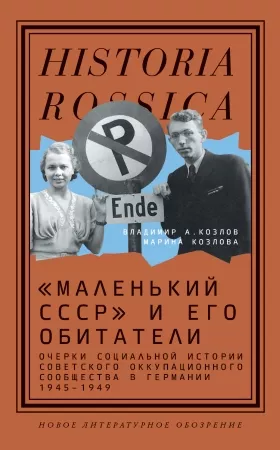 Independent researcher Vladimir Kozlov (author of a reference monograph on riots under Khrushchev and Brezhnev) and his wife, a colleague in the workshop of historians, wrote a book about the daily life of the “Soviet occupation community”. By this unusual expression, this refers to the many thousands of people who worked in the Soviet military administration in Germany, it is also the Swag, that is, in government bodies, who existed in the Soviet zone of the Faterlind from the Nazis since 1945 until the formation of the German Democratic Republic in 1949. This is the first thorough study of the life of the Swag, and this alone makes the book extremely interesting.
From the point of view of the Kozlovs, the enclave of Soviet society can be considered as the cast of the “Greater USSR”, in which the processes, less noticeable on the “large land” were observed with particular brightness. First, contrasting the background in the form of a hostile German environment contributed to this, and secondly, an incredible concentration of communists and party members among Swagovites. So, for example, the authors help to see how the points of view were formed in the SWAG, which later they will pour into the value positions of the supporters of the thaw and their antagonists, how the conflict between the desire of people for the post -war “demobilization” and “restoration” efforts of the authorities was resolved.
In addition to such structural laws, the Kozlovs describe in detail the daily routine of the community of late Stalinism in the very heart of Europe: how Soviet people ruled Germany, how their attitude towards the Germans changed, at which they used to look through the scope for years, how the Svagovtsy evaded the "sovereign", how they turned novels with German and went to German restaurants, as the temptation of beautiful bourgeoisies survived the temptation. things, etc.
“Wife in the Swag was treated with understanding, the circumstances were found out, but if they were in favor of their husband, they were more likely to sympathize with the“ accused ”.”
Olga Kushleyna. Passion, or St. Petersburg window sills. St. Petersburg: Publishing House of Ivan Lumbach, 2021. Content
 The shift of the storyteller’s prospects and the casting of the first plan actors with the heroes of the masses allows you to at least get non -casual narrative, and at best, to find new dimensions of famous events: it is enough to remember how Manuel Delanda revised the history of military equipment or Timothy Wingard presented the struggle with mosquitoes by the internal engine of civilizations from dawn of times. Philologist Olga Kushleyna made a similar trick, examining the poetry of the late XIX and early XX centuries in a tight connection with indoor plants, which came into fashion and continue to dwell in our dwellings so far.
The gaze “from the windowsill” involves the rapprochement of distant entities, but the process is described in such a fresh and clear language that there is no desire to resist the shuffling of accents. On the contrary, you will be happy to have a wide rule of tropical plants in the minds of the Silver Age poets, the dominance of the Androgin-Georgin rhymes, Verbena-seniority, and you realize that the overthrow of ficus and the accession of cryptomeria can serve as a predicance of great shocks in art. I would like to understand in this connection, which means and what a protracted fashion of recent decades for all kinds of succulents is preparing for us.
The first edition of the book was published twenty years ago and became a bibliographic rarity. As in the 2001 version, the text in a remarkable reprint is accompanied by illustrations and fragments from relatively old manuals for indoor gardeners, etc.
"The era of Art Nouveau began with the fact that the orchid and from Japan - chrysanthemums were brought to Europe."
Svetlana Yeremeeva. Memory. Battlefield or a harvest field? M.: Publishing House "Case", 2021. Content
 Parliamentary elections are on the nose. The Imponian writer Zakhar Prilepin on duty offers to rename Volgograd to Stalingrad, the Levada Center publishes the data of the All-Russian survey, according to which 48% of respondents support the idea of erecting a monument to Stalin, and in ten years the number of supporters of this idea has doubled. The audience reads the news and reacts in accordance with ... in accordance with what?
Including in accordance with their social memory, if we understand the “dynamic structure of relations with the past” by memory, as the cultural researcher Svetlana Yeremeev proposes. Her new book solves the problem “To fix some points of memory states <...> in a very definite today's cultural and political Russian situation.” It is expected that a lot of pages are devoted to Stalin in this fixation, as well as the problems associated with this name - repression, the Great Patriotic War, as well as how memory and history are related at all.
One of the most interesting chapters of the book analyzes the approaches of three famous foreign researchers to the past of Russia “from memory”, feeling for the boundaries of applicability of the concept of collective injury. Yeremeyeva shows that this concept cannot be mechanically transferred to Russian soil - there are no necessary grounds such as a clearly defined injured group with a clear collective identity and a single discourse on repressions. Instead, there are other “non -decayed” strategies for living the past and building relationships with it - and their description, let and patchwork, not always clear, makes this book extremely curious.
“The conversation about the injury is built as part of the tough opposition“ Executioner - Victim ”. As L. Viola notes, this binary opposition from Holocaust Studies does not work for the Russian past with its significant “gray zone”, where one turns into another. The Witness also turns from the "prosecutor" into something else. "
Kayum Nasri, Yakov Koblov. Mythology of Kazan Tatars. Kazan: Change, 2021. Content
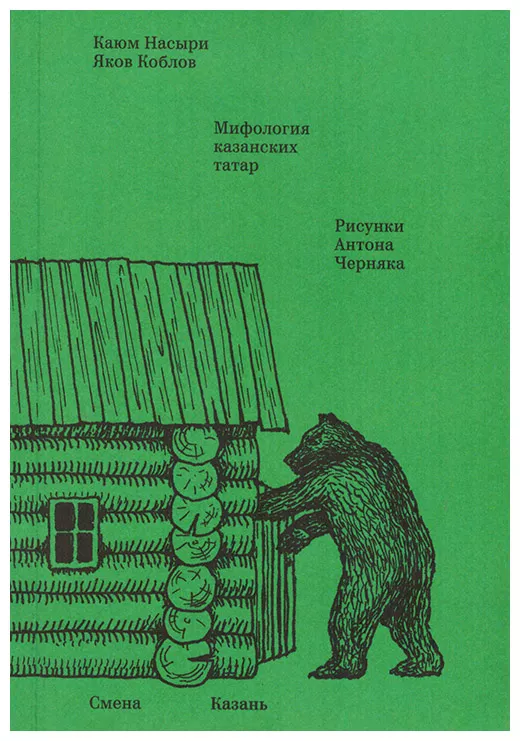 Not a novelty, but it is difficult to resist mention. The Kazan Cultural Center “Smena” once again reprinted his superhite with the drawings of Anton Chernyak (known to the general public as an awl from the Khovitokosti project) - in a timely manner, given that many discovered Kazan as an important point for domestic tourism this year after the AWAZ May festival.
The book is composed of two works where the life of wonderful Tatar devils is observed. The first is the notes of the Enlightener and Ethnographer of the 19th century Kayuma Nasyri, who from childhood absorbed stories about lower spirits, and then in adulthood began to collect the relevant materials in expeditions. The second is the work of Russian and Soviet Islamic schola and ethnographer Yakov Koblov, who continued the work of Nasyri.
The contents of the "mythology" answer many important questions: where can you meet Uryak and what does the left eye are twitching? What part of the body is in no case showing Shurale and what to do if he still saw her? Finally, how to force yourself to love? (Spoiler: Nightingale will be needed.)
“In relation to people between dwells, Albasta and Uryaku also has a significant difference.”
Recently, this book was mentioned in our selection on good reasons to study the history of its family.
Mick Eshvort. Why North from above? How conventional signs, projections and scale on maps appeared. M.: Paulsen, 2021. Translation from English Z. A. Mamedyarova . Content
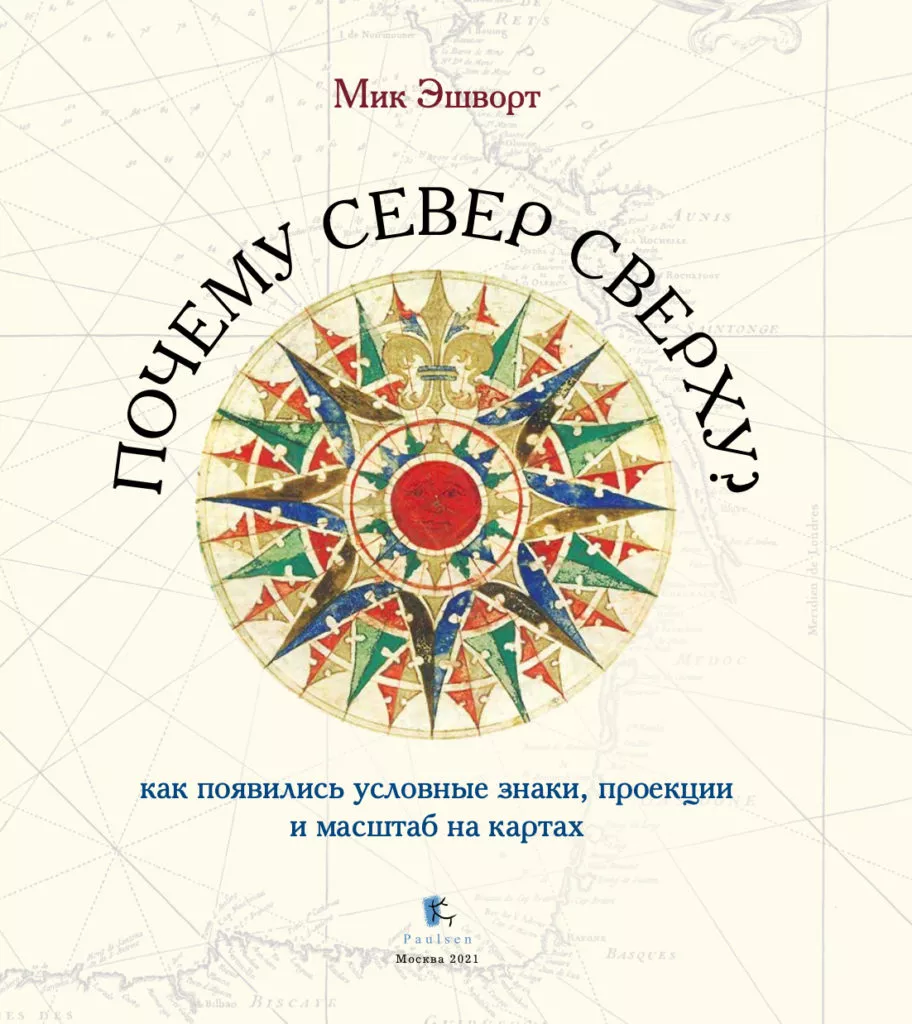 The name of the heart and the feast of the spirit for everyone who, like me, nourishes weakness to the cartographic materials of a all kinds of lady; as well as those who are interested in graphic design, infographics, UI and even UX. The author - the director of the respectable cartographic publishing house, the editor of the World Atlas of The Times, a member of the Royal Geographical Society - talks about how the art developed the world on the plane with graphic means (and, accordingly, our skills for reading cards were formed). The general vector of this development can be described as “Progress of literality”: from the symbolic layout of unprecedented parts of the world to the total accessibility of satellite photographs.
Eshvort tells in detail how the standards of drawing the relief and all cartographic elements were formed, the problems of scaling and projecting were solved, buried in details, without losing the expositions in the employment. This is achieved due to the massive use of historical jokes like the role in the Caribbean crisis played small black crosses drawn by President Kennedy on the Cuba map, or the story about how in the XVIII geographers the horizontal in an attempt to think of how to measure the mass of the moon.
The book is brilliantly illustrated by cards from the collection of the Oxford Bodlian library, collections and archives.
“On the ancient Egyptian map, drawn up about 1200 BC. e., the location of the gold mines was shown and explanations were contained, including the following: “The hills where gold is produced are indicated on the red plan”. ”
Gorky published a detailed fragment from the book.