
Translated material
Web built by Tim
Over 30 years, the Internet has gone from a universal storage of knowledge to commercialization and separation. What next?
30 years ago, on August 6, 1991, the English scientist Tim Berners-Lee published the world's first web page. This date is considered the birthday of Worldwideweb - the World Wide Web, with which most people associate the entire Internet.

Most readers have probably heard about this event, but I am almost sure that most have never seen this very first web page. Because if they saw, then they would have experienced shock forever from what extent it is not similar - neither in form, nor in content, nor in pathos - to everything that was subsequently built in the World Wide Web.
I will say more: not one of the ideas of Tim Berners-Lee became dominant in WWW, and the trends that we observed, starting in the mid-90s, are still leading to the exact opposite side of the original idea. Moreover, the closer to our time, the farther from what the English scientist shared with the world his discovery.
Brief background. Since 1984, the 29-year-old graduate of Oxford Tim Berners-Leal has been working on a permanent basis in the Geneva Européen Pour la Recherche Nucléire, Cern), the world's largest high-energies physics laboratory. The concept of the web was born from the difficulties of communication and the exchange of information between researchers and scientific institutions scattered around the world. Each university, of course, in the 80s already had its own local computer networks, for the most part proprietary, written on their own variations on the topic of non-standardized programming languages. In order to find out in Cern about what, for example, colleagues from MIT (Massachusetts Technological Institute) work on, for example, it was necessary to directly contact the MIT computer network, having previously received permission to access (login/password), somehow to navigate this unfamiliar network, find specific people in it, find files that are in the public domain, or request this access from the author, and then familiarize themselves.
All this could only be done if you knew in advance where to go and what to look. The same procedure was repeated whenever I had to connect with another local computer network and look for other studies of other scientists in it. There was no one to dream of any centralized place, in which at least a little-willed summary of the extensive spectrum of research. It was necessary to navigate in the information space by traditional methods - according to publications in the press and on international conferences.
So, the first impulse that contributed to the birth of WWW is an urgent need for the global association of information in a single space.
Berners-Lee initially called this space by Information Management-the information management. Then there were two intermediate names - Mine of Information (Information minor) and Information Mesh (information grid) - and at the end of Worldwideweb - World Wide Web.
The WWW Berners-Lee was based on Hypertext, the opening of 1963, which is understood as such a structuring data when access to a new document or additional content is opened by a link on a keyword or phrase located in the current text current.
To design texts, Tim Berners-Lee developed a special marking language-Hypertext Markup Language (HTML), to transfer data inside Worldwideweb-a special set of rules, Hypertext Transfer Protocol (HTTP), for addressing unique resources-Uniform Resource locators (urls).
The whole totality of these amazing in terms of simplicity and grace of discoveries was illustrated on August 6, 1991 on a page located (after now) at the address .
Admit it, this is not quite what you expected to see! Before us is a classic hypertext that carries a purely information load. And not the usual and countless Hello World! And my name is Vasya, which filled the World Wide Web in the next decade (until the birth of social networks).
The leadership of Cern proposed Berners-Lee as soon as possible to patent his amazing discovery, but Tim categorically rejected this idea as the very essence of Worldwideweb: “You cannot offer something as a single information space and at the same time try to control it” (remember these holy words!).
So, the second impulse that has fertilized the World Wide Web is a fundamental lack of control and decommergency . Together with the idea of the world association of information, we received a unique gift, which the 36-year-old British scientist disinterestedly attend humanity.
Now let's see how grateful humanity used this gift. The first ten years after the opening of Berners-Lee went to the intensive movement of Worldwideweb away from decommergency and information utility.
On the one hand, the broad masses saw in the World Wide Web the chance of his whole life for the realization of the Heir of Warhol (about the 15-minute of glory) and began to rivet idiotic and useless “visiting cards”, brilliantly illustrating the Leninist theory of reflection.
On the other hand, commercial structures appreciated the uniqueness of a single information space as a global flea market and after Hello World! Pages and then portals with a proposal to buy and sell something.
This went on for 10 years, until the master of the high flight took place, who opened the main Sermyag of life (big money is not the main thing, the main thing is power, because it is not only control, but also a lot of money). In the zero new centuries ended with illusions with Hello World! And the process of collecting never realized the web “personalities” in a powerful herd began. The era of social networks has come.
Why a herd of networks? Well, how: managing scattered individuals, even with linden ones, is very difficult. Another thing is to collect everyone in one place and make it happy! And - it started: Facebook, “Odnoklassniki”, “VKontakte”, “Twitter”, “Instagram”, “Yetyub”, “Tiktok”.
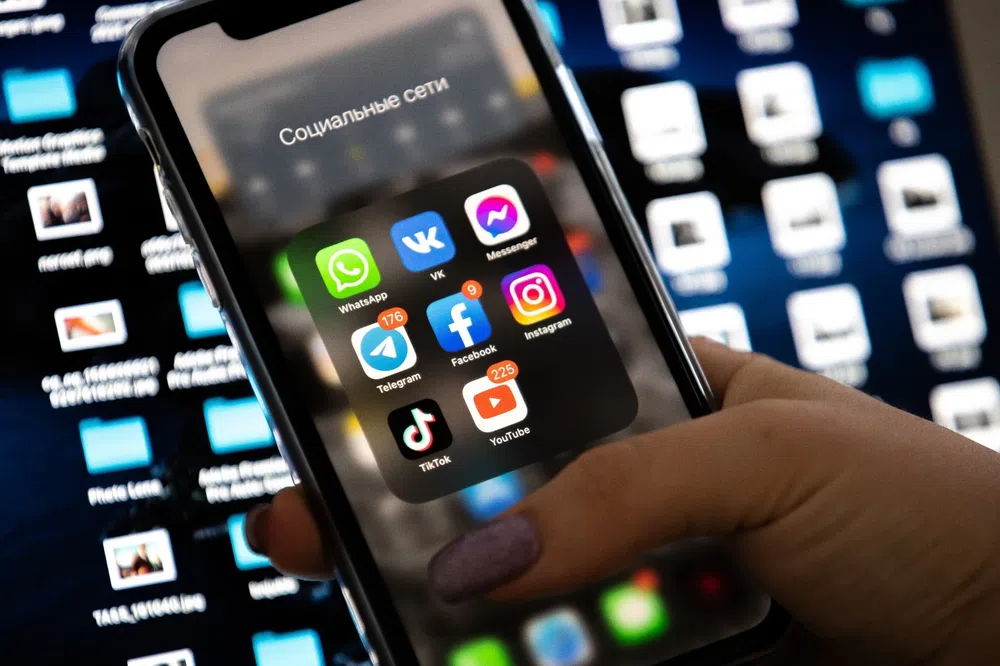
Finally, the last nail in the coffin of the illusions of Tim Berners-li, the chiefs of our planet began to score in 2014-2016. The fully controlled, manipulated and commercialized environment remained in the old fashioned way, that is, united in the information plan . And this, as you know, is not at all order.
Thus began the final stage of departure from the ideals of Worldwideweb - the universal Balkanization of the World Wide Web and - wider - the entire Internet. Berners-Lee dreamed of combining information, knowledge, scientists around the world. The chiefs of the planet undertook all these farms to disconnect and maximally melt in their musty town corners (under the name "state"). The benefit of tools has long been developed and successfully tested throughout the history of mankind by a misconducting number of times. And every time - successfully: we start intensive discourse about how strangers do not like you and your family, how they want to offend you all - voila! - You can painlessly erect the walls and separate from the world.
This is a naive, life -mothballed in Pubertat, the former American president tried to separate very primitively and took up the construction of a living wall near the southern borders of the state entrusted to him. The bosses who are striding in the leg with technology know that the wall needs to be built not real, but virtual. That is, to enclose your own national information space.
It is not necessary only to build illusions: it only seems that the Russian Federation, China, Iran and the advanced Korean-Balladesh power elites who joined them make something special, special with the world web. Nothing of the kind! Before us is a universal global world trend, aimed at destroying a single information (universal and global) space. I (IMHO, of course) have almost no doubt that
In the next few years, Web 2.0, as we know, will be stretched in the corners to a patchwork blanket. There will be its Esovsky web, there will be Russian, there will be American, Indian, Chinese, Brazilian. Etc.
This is exactly what a universal trend, and not Lukashenko’s machinations.
Finally, the most important and most importantly in this whole story: what to do next? Surprisingly, the answer to this question lies on the surface and is easily given.
It is impossible to fix the above web 2.0 in principle, because it is already structured in such a way that it is easier to finally ruin than to fix it. What everyone is successfully doing today: Balkanization is the best way to throw Berners-Lee’s unsuccessful experiment on the side of history.
To save the noble and exalted ideas of the creator of the World Wide Web, it is necessary to create a medium in which, in principle, agents of destruction of Web 2.0 cannot exist, namely, total commercialization, total centralization, total control and total income for 5 mines of glory of void characters.
And imagine such an environment already exists and has long been functioning in parallel with the dominant Web 2.0 so far. This is Web 3.0, decentralized Internet.
Web 3.0 is such an information space that is fundamentally impossible to control, or combine into a herd, nor commercialize against the will of at least a small part of the participants in this space.
The most paradoxical is that a decentralized web makes any attempt to damage the information space! It would seem: what is Balkanization? This is the destruction of integrity and unity. How is it achieved? By erecting a virtual wall on the way to the spread of unwanted (alien, hostile, incorrect) information. In Web 2.0, it is difficult to erect such a virtual wall, but you can (we carefully monitor the successes of the Runet enclosing!). In Web 3.0, which is originally decentralized, it is impossible to erect any wall in principle. Just because on the decentralized Internet there is nothing to enclose (prohibit, exhaust, clean), there are trite objects for any repression.
The only effective tactics of the fight against Web 3.0 is to completely cut down the electricity! Well, or go through all the houses and take computers. Moreover, you need to select computers not inside the boundaries of some (any) state, but everywhere on the planet! Because if at least two computers remain somewhere in the jungle of the Amazon, decentralized Internet will continue its existence.
Actually, now it is clear where the future is and how to speed up its coming: it is necessary to contribute to the spread of Web 3.0 in the world as much as possible. Popularize alternative - decentralized - social networks, alternative platforms for watching video and listening to audio, alternative messengers, alternative financial systems, etc. Because only such a worldwide web and such an Internet will allow you to maintain an information space that the brilliant Tim Berners-Lee has conceived for him.