
Translated material
Marathon
In society
 Marathon
August 9, 2021 Alexander Cherkasov
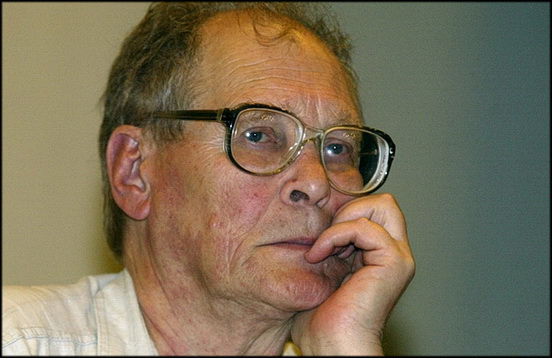
This morning, at dawn, at the fifth hour of the morning, Sergey Adamovich Kovalev died in a dream. Our senior comrade, teacher, colleague. Typly argued with us, and with opponents, and with fate. A scientist, a researcher who was looking for a system in everything. Fighting with the system, sometimes defeating, but also in defeat and in despair not discouraged. A person of encyclopedic knowledge and the life of a revival scope - now we can say about this, not being afraid to get a replica from him. Sergei Adamovich was actually enough for several full -fledged lives.
Scientist, biologist. From school - in Kyubz, the club of young biologists of the zoo. The biofacment is not the most fun years of Lysenkovschina for biology. When Stalin died and everyone was driven to mourning events, Kovalev just led somewhere a dog from Vivaria and once answered on the machine: “But a living dog is more important than a dead lion!” Well, yes, the living for him was always more important ... The scientific was always next to the “public”, and when the Lysenkovites raised their heads again in the early 60s, the scientists had to clash the last nail in the coffin cover. The “Gvozoz” was published in Izvestia an article signed by the Nobel laureate, academician Nikolai Semenov. The article was written by Sergey Kovalev and his Cubzov friend Levon Chaykhayan. But this “public” was only a continuation of the scientific work itself. Kovalev defended his thesis, worked at Moscow State University, in the laboratory of Israel Moiseevich Gelfand.
And here the “scientific” entered into a clash with the “public” - in the second half of the sixties, Sergei Kovalev, with his characteristic thoroughness, plunged tightly into a human rights movement, not yet called “dissident”. Once in the polemic, Gelfand objected to Kovalev: “You say that the system was rotten, interpreted with a finger-and will collapse. But they said the same thing about Byzantium! ” Kovalev allegedly answered (in fact, not an impromptu, but by discussing): “Well, three hundred years - this period suits me!”
This installation turned out to be true - the regime collapsed less than thirty years later, but only because Sergey Adamovich and his friends were “marathoners” who were not expected by an imminent victory. And then, in the 69th, Sergey Kovalev and his friend Alexander Lavat were forced to leave the university.
Sergei Adamovich, a solid man, entered the “movement” in the fall of the 68th, during the trial of the demonstrators who protested against the Soviet invasion of Czechoslovakia. He himself was neither a “leader”, nor a speaker, nor a manifesto, and fate naturally brought him to the “Chronicle of current events”. Her first editors were arrested, first Natalya Gorbanevskaya, who came up with a “chronicle” in the 68th, then Ilya Gabai. The “chronicle”, despite the arrests, for fifteen years has been the essence, style and core of human rights movement in the USSR. Scientists replaced poets: now Kovalev composed with his inherent leisurely thoroughness edited the “chronicle”.
The arrests of those whom the State Security Committee considered the leaders and the leaders, their repentance and recognition, blackmail remaining free led to the suspension of the release of the Chronicle in 1972. The publication was resumed in 1974, now people who openly took responsibility for its distribution: Tatyana Velikanova, Sergey Kovalev, Tatyana Koborovich. “Responsibility” was not an empty word: in December 1974, Kovalev himself was also arrested.
During the investigation, the State Security Committee decided to prove the slanderous character of the Chronicle. There were about a thousand plots in Kovalev’s reversing Kovalev. Inaccuracies were found in ten, it seems, plots. Significant inaccuracies could be counted on the fingers of one hand. The investigation of the KGB, not wanting it, confirmed the quality of the “chronicle of current events”, inaccessible to modern domestic media. 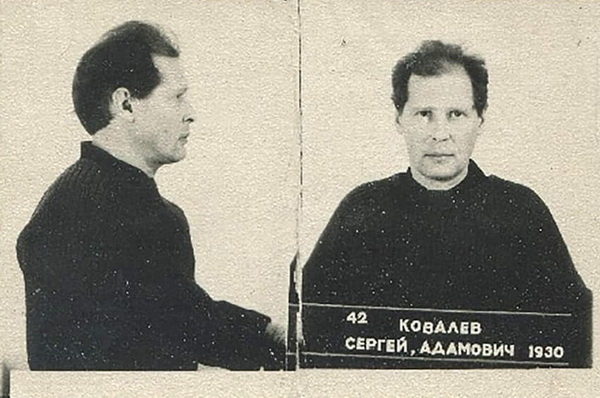
The verdict is seven years of strict regime and three years of exile. Sergei Adamovich was serving a term in Perm camps, Chistopol prison, and a link in Kolyma. There were a lot of reasons to compete for their rights in the camp, from here there was something to write about in the Chronicle. The camp administration answered its own language - up to the Kardzer and the translation into prison mode.
The KGB added hostage to this: Ivan Kovalev and Tatyana Osipova, the son and daughter -in -law of Sergei Adamovich, were arrested and condemned. They were blackmailed by the fate of each other. Kovalev stood this test.
Freedom in Orwell 1984 looked like life for 101 kilometers, but suddenly 1985 came. In less than thirty years, out of three hundred, about which Kovalev spoke with his teacher, with Gelfand, and the wall staggered. Why? Probably because there were people who were ready to overcome this marathon distance.
And also because the pages of the “complaint book”, which Lancelot spoke in the “dragon” of Schwartz, were filled. Not filled in themselves, the works of Sakharov, Solzhenitsyn, Kovalev, many others ... Because people read this book, read the Chronicle, read the other samizdat - and their worldview changed. The answers were answered to many uncomfortable questions. And the reaction of people to these answers changed - from "There can be!" Through "there is something in this ..." to "Well, who does not know this?"
In the spring of 1988, Sergei Adamovich, his friends and associates met the "memorials". In 1989, the Memorial nominated Andrei Dmitrievich Sakharov to the People’s Deputies of the USSR, and in 1990, Sergey Adamovich Kovalev to people's deputies of Russia. In the Supreme Council, Sergei Adamovich led the Human Rights Committee, and the Memorial supported him in this work. Many former dissidents and many "memorials" became deputies then. Something managed to change, for example, in the penitentiary system, which Kovalev tested in his own skin. But…
But in fact, the new time only meant that mass and gross violations of human rights did not disappear, but changed: instead of political repressions, ethnic and social conflicts. First, on the periphery of the decaying union, then in Russia-a suburban district in 1992, Moscow in 1993, and since 1994-Chechnya.
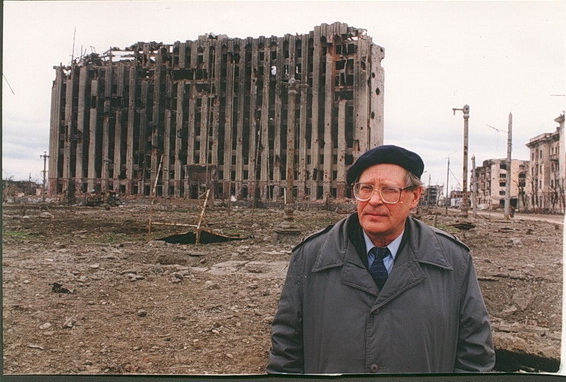
In Chechnya, the Kovalev Group worked since December 1994. Attempts to establish negotiations. Reporting from the city where civilians died under bombing. The first lists of prisoners, whom the generals preferred to forget. Messages about filtration camps and stripping. Saved by someone's human lives. And the inability to change something by and large. And so for six months, to Budennovsk, to the hospital with one and a half thousand hostages captured by Shamil Basayev terrorists. Here, after the failure of the hospital’s crazy storm, the Kovalev Group managed to enter into negotiations and, as a result, achieve an exchange of one and a half thousand hostages for one and a half hundred of voluntary hostages, who became a “live shield” for terrorists who were given a corridor to travel to Chechnya. Members of the Kovalev Group - deputies of Borschev, Molozhnikov, Rybakov, Kurochkin, Osovtsy, the Memorial Orlov and others - also became voluntary hostages. And in Grozny, peace negotiations began under the auspices of the OSCE. For six months, whatever it came, but the world. Only here for three days the forty -degree heat in the hot bus were superfluous for the heart of Sergei Adamovich ...
For this, he was awarded the highest state award. But not to Russia, but in France: in the formula for awarding the Order of the Legion of Honor, the feat of Sergei Kovalev was described in Budennovsk. From the state of the Russian and Soviet, the only award was that camp period.
The Kovalev Group, it is also the “observant mission of human rights organizations”, primarily the memorial, continued to work in the Caucasus. But there was no such “real macroscopic effect” anymore. It seems that the pendulum of history took the return move.
* * *
If someone undertakes to summarize ...
The scientist, whose, perhaps a brilliant career was interrupted on take -off. A human rights activist and editor sent ten years away from society, pen and paper. Politician, deputy, public figure who finds himself on the sidelines.
It is unlikely that such a person will be called successful, but the whole point is what to consider success.
An idealist who recognized only the pragmatist of political idealism. A man of free thought who converted this thought into action. Never renounced from comrades and beliefs. The marathon, who ran his part of the distance and conveyed the baton.
Kovalev always said: "About the dead - as alive!" - And drank, clinking. Sergei Adamovich stays with us.
Photo: 1. Alexander Chernykh for a daily magazine (archive)
2-3. @Memorial.international · Public Organization
.