
Translated material
Invisible to the world are stuffing
No one will see how your voice will be stolen - the CEC, in fact, canceled video surveillance
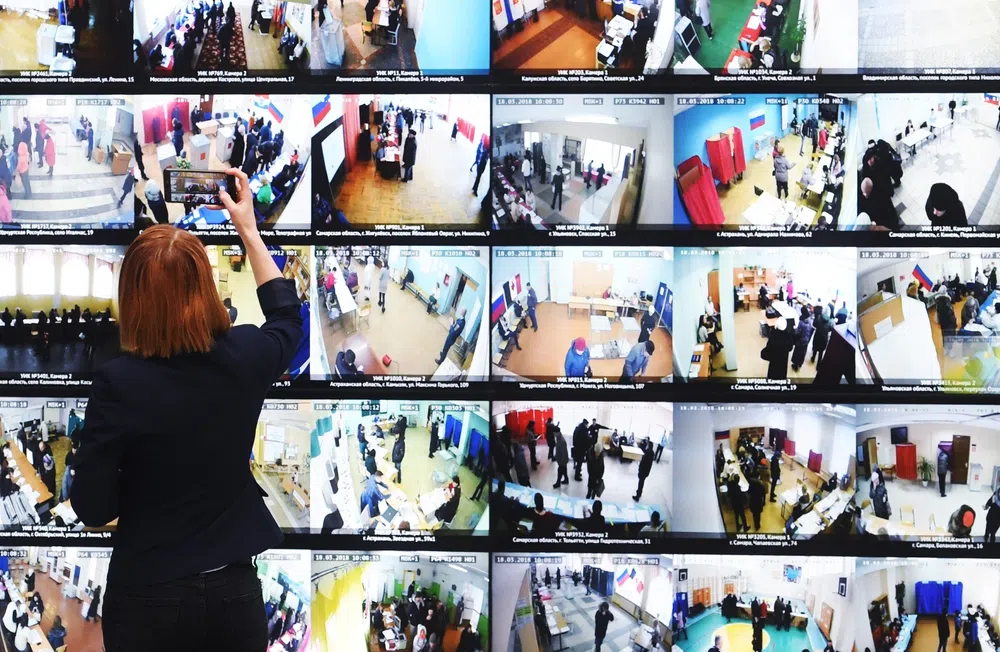
The elections of recent years have shown that the election commissions carried out mass falsifications even in the presence of observers. However, in these cases there was the possibility of fixing and appealing violations of the law.
In the upcoming Duma elections, the ballots will be at the full disposal of the election commission for two nights without any visual control by society.
Total video surveillance and free access of citizens to it could solve this problem, but ...
At the round table held in the CEC on June 16, 2021, electoral experts, calling not to introduce a three-day vote, talked about the unpreparedness of the electoral system and the absence of material and technical resources for elections at a level that causes confidence.
E.A. Pamfilova tried to dispel all the fears, assuring that everything would go without a bitch and a bitch, and large -scale video surveillance would provide a complete guarantees of an honest determination of the results of the elections.
The decision on the three -day is made, and the promises remained only promises.
On August 5, new rules for video surveillance in the elections of deputies of the State Duma of the FS of the Russian Federation of the eighth convocation were presented in the CEC. Otherwise, a mockery of the rights of voters and candidates for deputies cannot be called these rules.
Now the CEC itself, justifying the failures in its work, gives as the main argument the lack of funds. And here the arguments about the absence of financing look extremely unconvincing. The head of the CEC said that the video control reached an unprecedented level - 98% of the plots, but in such a difficult time for the country, the state cannot afford to spend tens of billions of rubles on ensuring broadcasts. That is, we will remove everything, but we will not show you.
Each political party is promised to observe 20 voting sites at the federal level and four plots in the regions. In total, this is 360 (less than 0.4%) of more than 97 thousand sites on which voting will go. Odnodnatnik candidates will be given the possibility of video control over 4 (four!) WIK (about 1%) of an average of 431 in their districts. In total, all parties and candidates will be able to gain access to about 15% of the sites (after the registration of single -mandate, it will be possible to calculate this figure for sure), but it is quite obvious that the coordination between them is impossible in the distribution of video surveillars in the PEC, and most of the elections are not going to defend voters at all.
At the same time, the “Public Chambers” were given exclusive rights to provide access to an unlimited number of broadcasts.
Firstly, it is not clear how, within the framework of one logic, the lack of money for video control for the elections for representatives of parties and candidates and an invitation of an unlimited number of people wishing to receive access through public chambers are combined. (Is there money or not?)
Secondly, the transfer of administrative rights during elections is completely unacceptable. Let me remind you that in most regions of the Russian Federation, one third of the members of the OP is appointed by the highest official of the subject, one third is appointed by the legislative body of the subject, representatives of public associations of the region choose one third. Most of the real public organizations are not represented in this body.
There is much more logic in providing unlimited access to broadcasting to direct elections to candidates and political parties.
And finally, the numbers about the costs necessary for free access of citizens to video surveillance, and the show -off relations of 98% of the surveys supposedly covered with cameras caused absolute bewilderment.
For the first time, video surveillance was used in the presidential election in 2012. The live broadcast went from more than 80 thousand polling stations, the number of video surveillanceers amounted to about 3.5 million people, and the amount of costs for different sources amounted to 25 billion rubles. Then a powerful material and technical base and software were created, which allowed to provide video surveillance from 40 thousand PECs for 2.8 billion rubles in 2018.
And today we hear from the CEC that the coverage of the cameras will be 50 thousand areas, but we will not show video recordings, as this is additional costs in dozens! billions of rubles.
Independent experts of the Voice movement made their calculations and issued the amount of costs for broadcasting a lower order of magnitude - no more than half a billion rubles.
Today, in the headings of a large number of media, information about 98% of video surveillance of voting areas sounds. If you figure out what this figure consists of, then the simulative nature of this “achievement” becomes obvious. How can you equate the recordings from 36.2 thousand stationary cameras with the public video from the 2012 presidential elections (ancient school laptops are usually used), to which not a single observer, candidate or party has never received access?
Let me remind you that the Jesuitic logic of the current legislation requires, before applying to the court or election commission for video recording of violations, to provide convincing evidence of their availability. How to do this regarding the substitution of ballots at night, when observers are not present in the areas, remains a mystery.
For the last electoral campaigns, we are accustomed to the results of voting in protocols, many times different from the real will of citizens, but such a free appeal of the CEC with numbers caused surprise for everyone. How are they going to count our voices if they do not know how to count money?
And, of course, “elements of national security” are also declared one of the main reasons for the lack of video surveillance. The Russians will not be able to monitor the election violations so that the enemies of Russia do not see them. As they say, you can’t argue with this.
Let me remind you that to sign up for observers of the Civil Control 2021 OKC, the Voice and Citizen Observer associations can be followed .
Alexander Efimov, coordinator of the observers of "Yabloko"