
Translated material
The arbitrariness of the estate
The 74-year-old icon painter is fighting for the preservation of the merchant mansion of the 19th century, but the scandals around the monuments are inconvenient on the eve of the elections
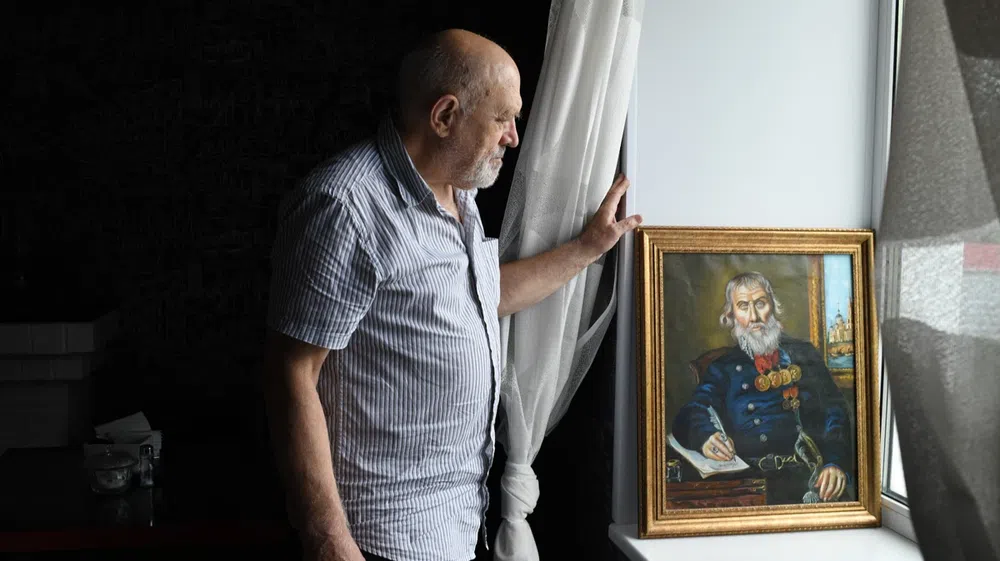
The city of Rybinsk, founded in 1777, has many unofficial names. In the past, these are the “capital of the Burlakov”, and the “bread capital of the Volga”, and “Little Petersburg”. Today he is known thanks to the reservoir (or, as it is called here, the Rybinsk Sea), for the sake of the creation of which a whole city was flooded - Mologa. And also-thanks to the colony in which the ex-mayor of Yaroslavl Evgeny Urlashov, convicted of bribery sits.
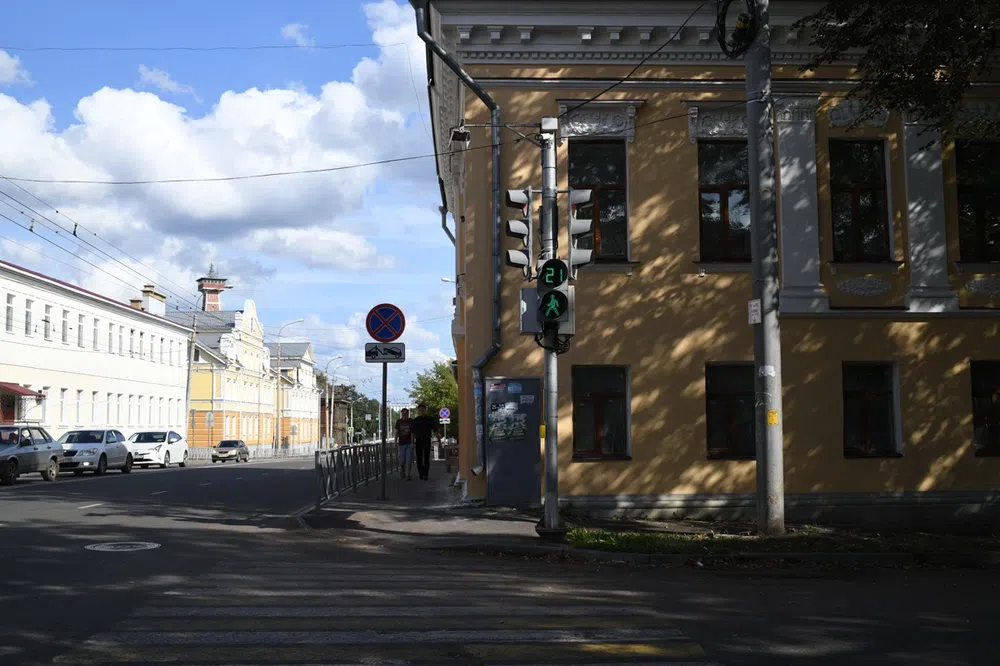
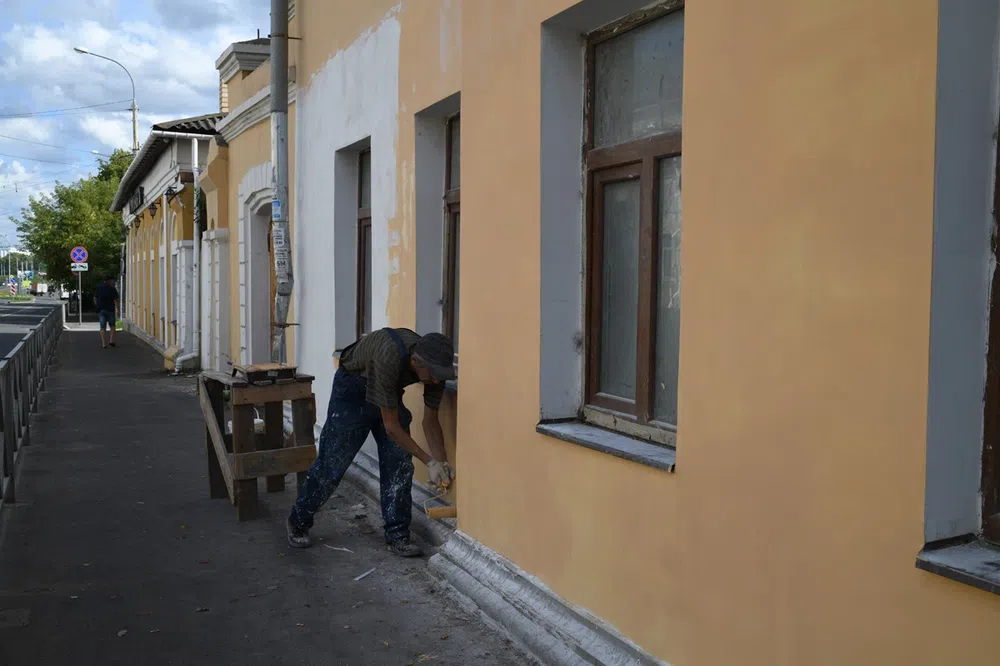
I go to the intersection a few blocks from the main street of Rybinsk - Krestovaya. Many houses are dilapidated here. On the corner, settling noticeably against their background, there is a large stone house, freshly painted in sandy yellow. The facade is decorated with pilasters - white rectangular ledges resembling columns. Between them - stucco molding: the serene face of the goddess Fortune with the horns of abundance. On the second floor, clinging the eyes of passers-by and motorists, there is a bright red banner. The inscription on it reads: "Rybinsk is the only city in Russia, where eight round -the -clock cars are in the federal monument."
The monument in question is the estate of the first third of the XIX century, built by order of the first mayor of Mikhail Tyumenev. Her project was developed by the great architect Karl Rossi, the author of the Mikhailovsky Palace and the building of the General Staff with a triumphal arch in St. Petersburg. In total, for local customers, bourgeois and merchants, Rossi created 18 projects (14 houses, facades of two living rooms and two bakers), which, as art historians say, “set the scale and image of the development of provincial Rybinsk”. True, not all of them have been preserved to our time: some of the buildings were either demolished or rebuilt. At the Tyumenov’s house, fate was different.
In the 60s, the estate passed to Ekaterina Savich, the wife of the county doctor and the vowel of the city Duma. She was a great -granddaughter of Fedor Tyumenev - a famous Rybinsk merchant, the mayor and the philanthropist who donated a lot to the construction of churches and schools. At the turn of the century, the estate passed from one merchant family to another, and after the revolution it was municipalized. From 1968 to 2011, a medical cutter was located here.
Now the mansion belongs to the icon painter Vyacheslav Volkov. It was he who hung a banner on the facade of the house.
For more than two years, the artist has been fighting to transfer a round -the -clock car wash to another place, which is located in a neighboring extension - a former stable outbuilding.
He enters the ensemble of Tyumenev’s estate and, along with the house, is a federal architectural monument. But due to the work of the sink, it is slowly destroyed.
***
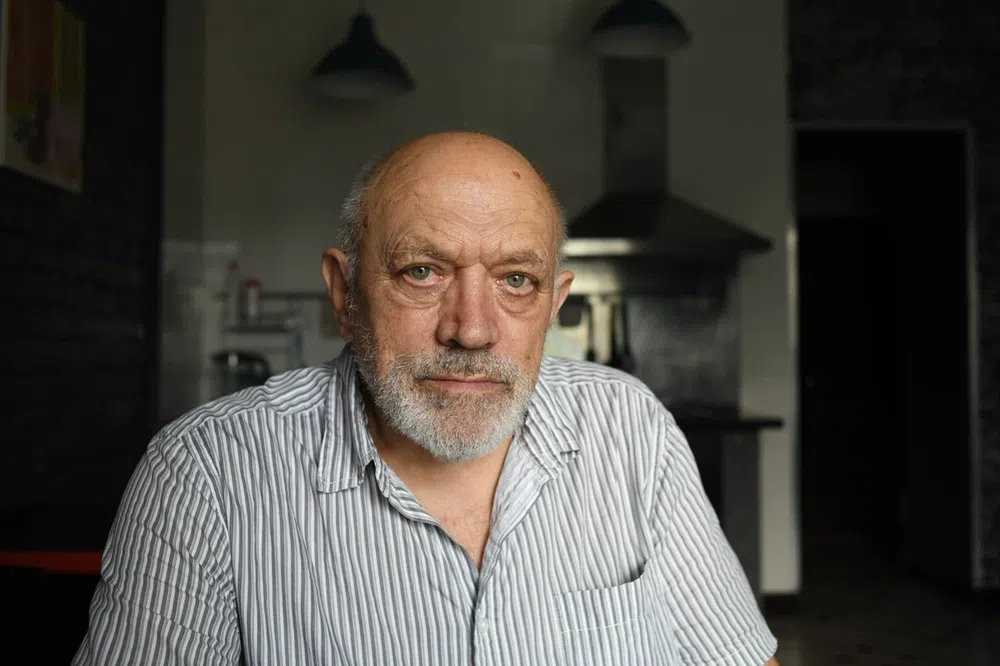
Vyacheslav Nikolaevich Volkov was born in Moscow. He is 74 years old. From under the medical mask, which hides half of the face, a thinning gray bristles peeps. Fingers in the paint, varnish and glue are yellow under the nails.
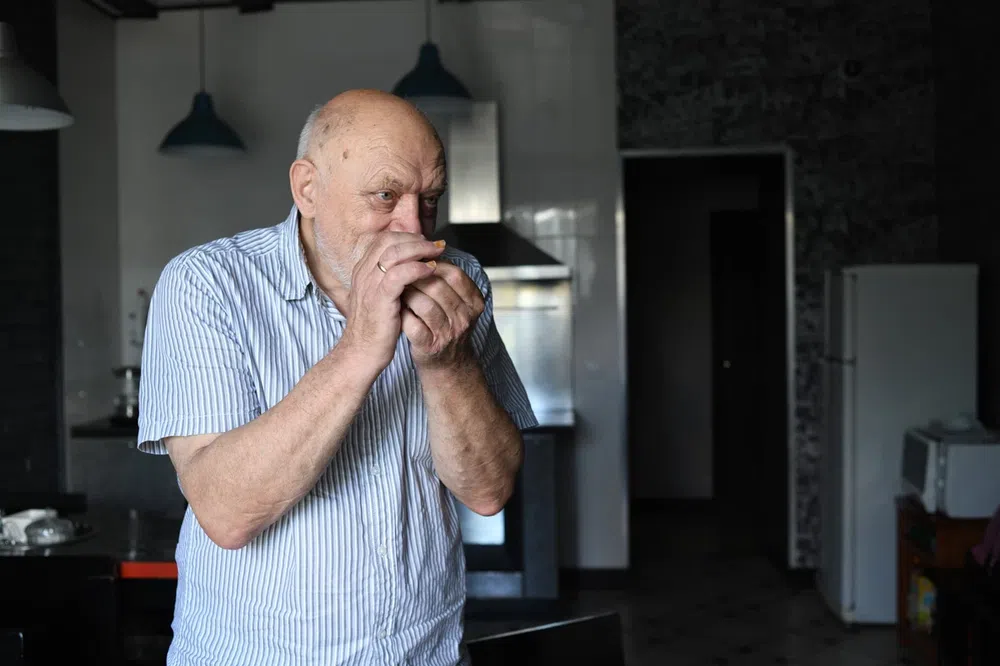
Volkov is an icon painter, but no one taught icon painting it. He is self -taught. In Moscow, the artist had his own workshop, where he was engaged in the restoration of icons. In the 80s, Vyacheslav Nikolayevich arrived in Rybinsk and got a job as a teacher of icon painting at a parish school. When she “began to collapse”, Volkov was offered to buy an old but large empty residential building on the left bank of the Volga. In it, the artist soon opened the hotel.
Now the business is led by his assistant. Vyacheslav Nikolaevich himself has long been retired and spends most of the time in his workshop right there, at the hotel.
“It’s dark, closely and creative mess there,” snaps Vyacheslav Nikolaevich at my request to look at the workshop. But immediately hides behind the door and takes out two icons covered with a web of cracks. I would think that these are the works of the 16th century, but in fact Volkov wrote them this year.
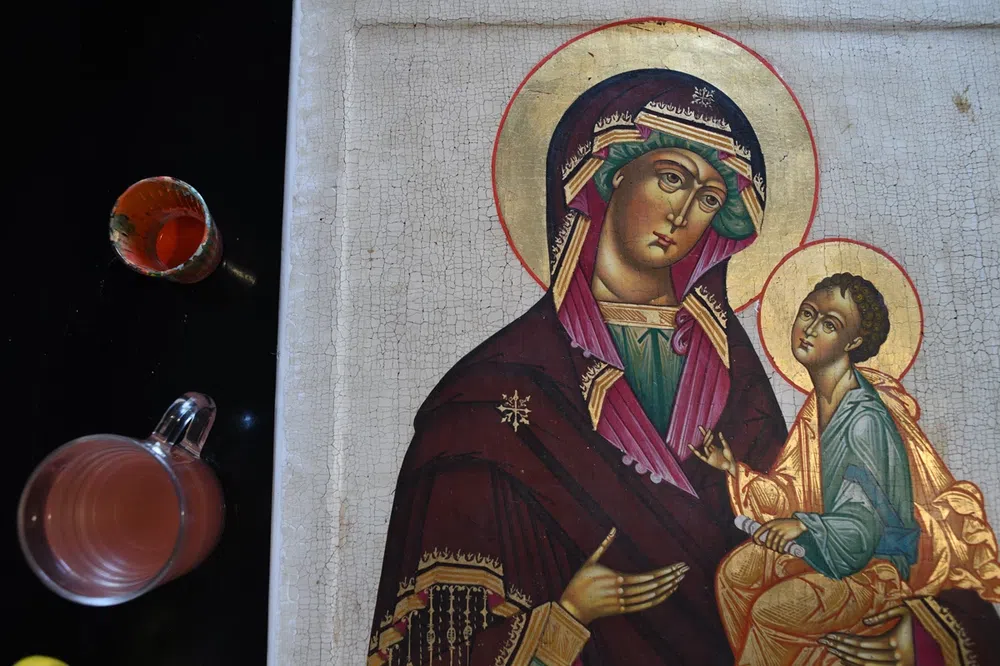
“I am a lover of antiquities and icons according to the old recipe,” the artist shares. -I buy up the old women linen bags of potatoes. In the old days, they served as a pavolok - a cloth that was glued on a wooden base. Levkas put on it - a mixture of chalk with glue and special additives. Cracks appear from them. There is no secret to anyone but me.
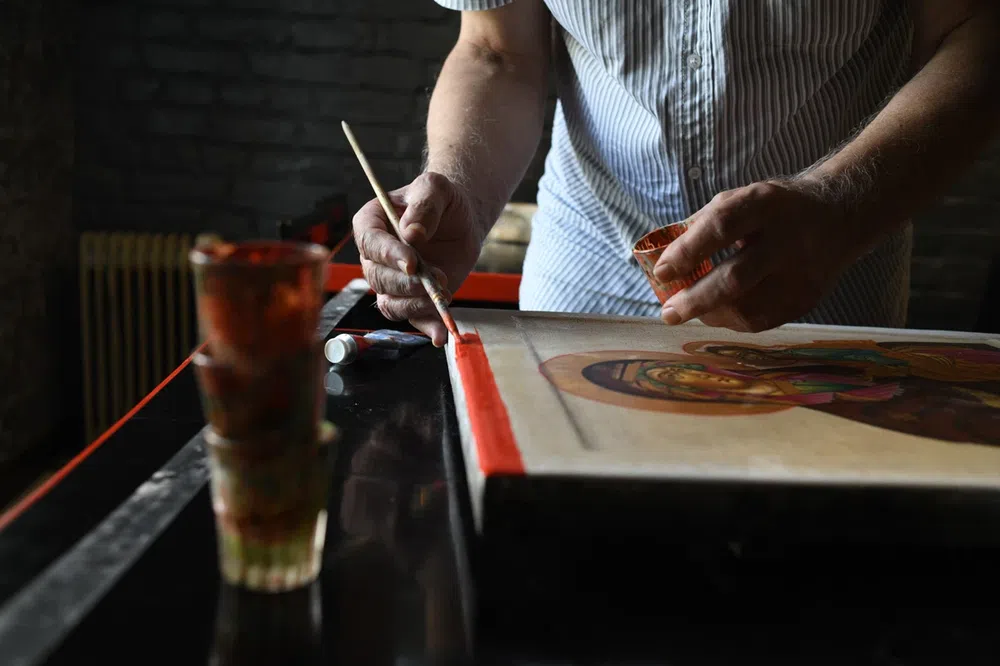
Volkov often writes icons to order. Four years ago, he recalls with pride, Bishop of Rybinsky and Romanovo-Borisoglebsky Veniamin chose him “Of all the icon painters of the Yaroslavl region” to write seven icons with the image of Admiral Fedor Ushakov (he was born in the village near Rybinsk, in 2001 was counted for the saints). Volkov’s works “overcame more than five thousand kilometers through the water under the auspices of the Blue Necklace of Russia expedition. One icon is now in the village of Khopalevo, where Ushakova was baptized, the second - in St. Petersburg, the third in Saransk. Four more - in Sevastopol.
In 2019, Vyacheslav Nikolaevich found out that the old Tyumenev mansion is being sold in Rybinsk. The house was launched: the roof was leaked, the basement was flooded meter, the walls crumbled. Chips appeared on the bas -relief, some details were lost. Almost nothing was left of the interior decoration: murals, stucco moldings on the ceiling and four old fireplaces with tiles. But Volkova did not bother.
- I believe that this house is the first most important in Rybinsk. They were owned by the merchant family of the Tyumenevs, large philanthropists who built hospitals and shelters for free. Their guest during a visit to Rybinsk was stopped by Emperor Alexander I, ”says the artist. And admiringly adds: - In addition, there was also an icon painter in their family!
Vyacheslav Nikolaevich decided to restore the mansion, dreaming of opening a gallery in it with portraits of famous people of the Yaroslavl region.
***
To the left of Tyumenev’s house is a small one -story extension of mustard color. This is a former stable wing that is part of the ensemble of the estate. In 1995, President Boris Yeltsin brought him together with a mansion to the list of cultural heritage objects of federal significance.
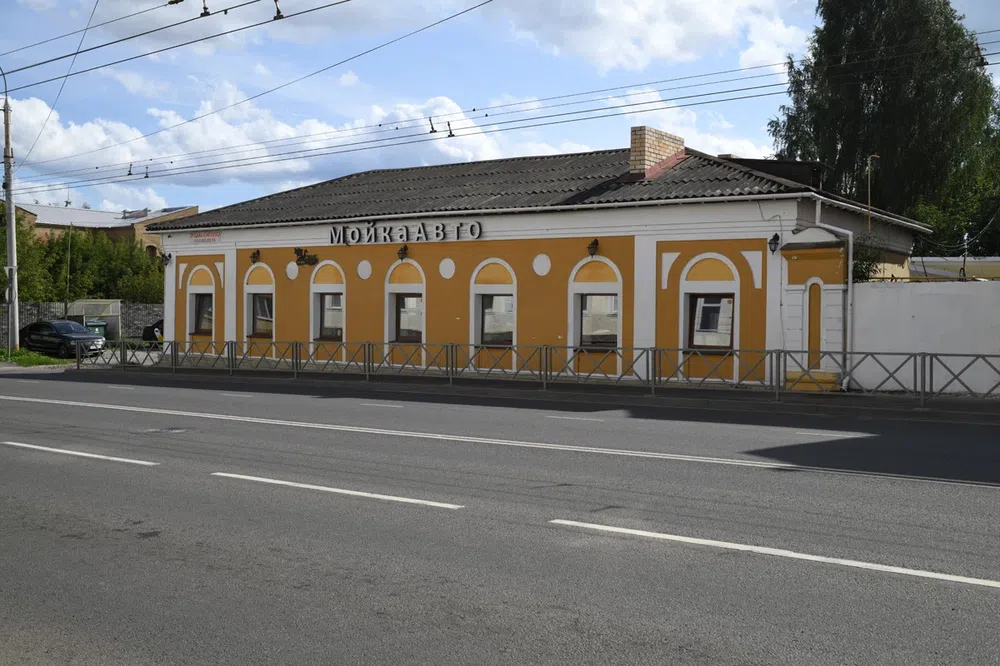
In 2015, the estate territory was divided into two parts. One of the sites - the one on which the Tyumenev mansion stands - bought Volkov four years later. And in the second section, where the stable wing is located, entrepreneur Dmitry Sukhachev opened the tire workshop and a 24 -hour round -the -clock car wash with four posts.
According to Volkov, Sukhachev is a friend of the mayor of Rybinsk Denis Dobryakov. They have been familiar from the time when the head of the city worked as deputy chairman of the government of Sevastopol. The artist later learned about this at a personal reception from an employee of the prosecutor's office, whose name he asked not to mention.
According to SanPiN standards, car wash, which have more than two posts, belong to the fourth hazard class. This means that within a radius of 100 meters from the “building spot” (the edges of the foundation or self -service washing plate) there should not be residential buildings, schools, kindergartens and other social institutions.
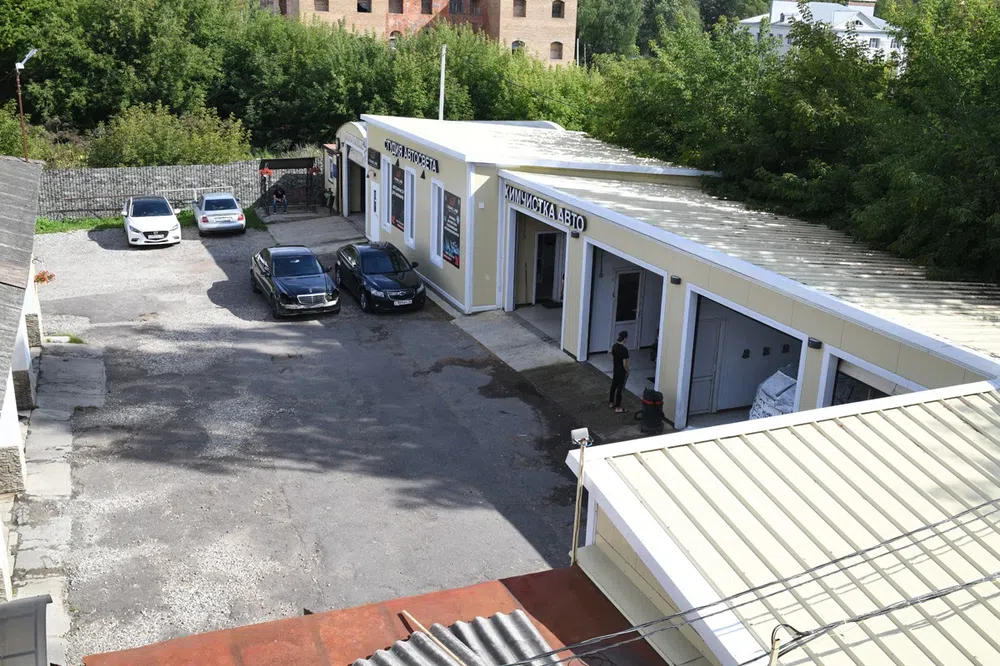
In fact, it turned out that at least four residential buildings fall into the sanitary zone of Sukhachev car wash.
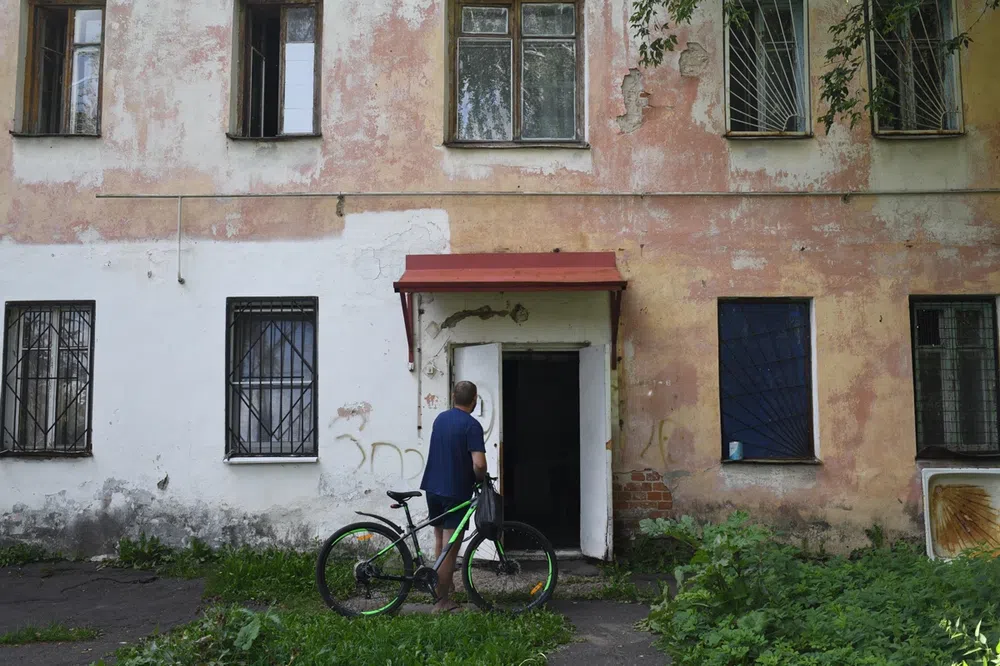
One of them is located behind the estate along Lomonosov Street - less than 20 meters from the “development spot”. The dirty walls of the building squinted and cut into deep cracks. On the windows of the first floor are iron lattices.
- The plaster is sprinkled, the beams were bending upstairs. My kitchen corner was half sagging. We walk around the house and are afraid that we are falling away. Scary, but what will you do ...
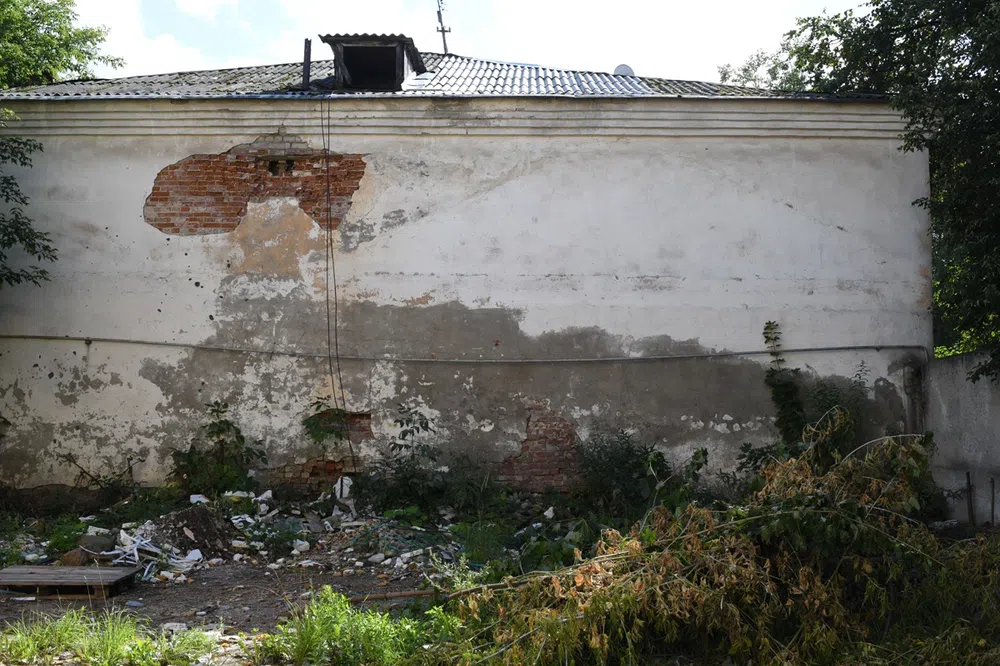
Julia, a pleasant dark-haired girl of about thirty, talks to me on the threshold of an apartment in a darkened entrance, holding a little son in her arms. She says that this house, built in 1917, has long been recognized as emergency. It was supposed to resettle and demolished back in 2017, but the date was constantly transferred (now it is 2025). Now a little more than 20 people live here, among them pensioners and small children.
The girl says that the windows of her apartments go to the car wash, and she should open the window as a caustic smell and dust fly inside. Outside, it really smells very much with chemistry.
- I have two young children, and in the yard we cannot take a walk. Immediately the cough begins, the head hurts. - Julia sways the baby and wraps him tightly into the blanket. After a pause, he adds anxiously: - He always had a good immunity, he was almost not sick since birth. And when it all started, I even had to contact the hospital.
According to Julia, the inhabitants of the house have repeatedly complained about the work of a car wash. “The husband also went there, tried to explain the situation. There was a swearing, but nothing helped. "
Vyacheslav Volkov, who insists, is not satisfied with such a neighborhood: there should simply be no car wash on the territory of the federal monument.
***
When Vyacheslav Nikolayevich took up the restoration of his mansion, Sukhachev fenced off a plot with an outbuilding and began the construction of four more car wash posts, which is prohibited by the law. Here's how the Rybinsky branch of the All -Russian Society for the Protection of Monuments of History and Culture (VOOPIK) reacted to this:
“The brick walls of the building ( outbuilding . - E.K. ) and the foundation are constantly corroded with chemical reagents, increased humidity and temperature changes destroy the connecting materials, which extremely negatively affects not only the condition of the building, but the entire ensemble of the estate.
In pursuit of profit, the owner does not comply with laws, neglected the history of the city, destroys the legacy of the ancestors, thereby putting itself above the state and moral principles of society. Laws cannot have exceptions, they act the same for everyone. ”
Vyacheslav Volkov wrote a complaint to the administration of Rybinsk. The officials answered (the document is at the disposal of the New ”) that the inspection conducted two“ raid inspections ”of the car wash and drew up a protocol on Part 1 of Art. 8.8 Code of Administrative Offenses (using the site is not for their intended purpose). The punishment under this article for legal entities provides for a fine of 1.5 to 2% of the cadastral value of the land, but not less than 100 thousand rubles.
Dmitry Sukhachev tried to challenge this protocol in court. Judge Anna Gromova refused to fined him, limited herself to the warning, but supported the position of the Rybinsk prosecutor's office, which demanded to close the car wash. Despite the fact that the court decision entered into force, the owner did not comply with this order. And then the prosecutor’s office filed a lawsuit against him.
This case was considered by another judge - Ekaterina Popova. Volkov spoke in him as a third party from the plaintiff. He recalls how, trying to figure out the essence of the problem, the judge asked what to do Sukhachev in the case of the closing of the car wash.
- I asked her: we are considering the question of where to earn money or his legitimacy of being there? That is, let the monument be crumbling better and residents are poisoned? She replied that this did not apply to the matter, but did not ask questions anymore.
Popova refused to satisfy the claim of the prosecutor's office and close the sink. After that, Volkov wrote a statement to the court to be allowed to get acquainted with the case file. When the artist sat down to look at them, he found that they did not have a decision of Judge Gromova, a letter from Vopik, a collective complaint of residents and a construction examination - that is, all key documents that prove the illegality of the car wash on the territory of the outbuilding. Volkov suggested that Popova made such a decision, because "he simply did not figure it out."
In June of this year, the Rybinsk prosecutor’s office again filed a lawsuit against the owner of the car wash “due to new circumstances”, but the court refused to consider it.
- What kind of new circumstances are this, I do not know. But less than a year ago, Sukhachev sold a car wash to his comrade, who has a place of residence in Moscow. And therefore the case will be considered by the Moscow court, ”Volkov explains. - And I am very happy about this, because now I can re -provide all the "disappeared" documents and achieve justice.
***
Since Volkov began the struggle to preserve the monument, all sorts of miracles began to be happening.
Last winter, in the house of Tyumenev and at the hotel, the artist was not just disconnected, but cut off light and gas. The official reason is "for non -payment of debt." Public utilities said that Volkov should pay on accounts at the highest rate as a legal entity. The artist in response presented documents that he issued property as a physical face and he had never had firms in his life. As a result, the utilities had to recognize the mistake and recalculate.
Once the police appeared in the mansion.
- They climbed through the gap in the fence, broke into the house and said they were looking for a criminal. But they left with nothing, ”says Vyacheslav Nikolaevich.
Then the unknowns knocked out three double -glazed windows in the Tyumenev estate. Working tools stole a total of about 150 thousand rubles. Twice to the hotel “bandits” came to Volkov.
- They said that their friend disappeared a week ago. They asked if I were in the know where he is. I know how and why such hints are made. He answered: “Well, disappeared - that means everything,” the icon painter recalls.
Five months ago, the Department of Protection of Cultural Heritage Support sued Vyacheslav Nikolayevich for whispering and painting the walls of the estate without their consent and thereby “spoiled the building”.
But the officials did not take into account that the previous owner handed over to Volkov all permits for restoration work, which they signed. The court won the court.
The last incident occurred at the end of July, when Volkov hung the same red banner with the inscription “Rybinsk is the only city in Russia where eight round -the -clock car soles in the federal monument and a long arrow indicating the outbuilding of the outbuilding.
- Two hours later, all the services of the city began to call me: the architectural department, land, and the administration twice. They persuaded to take off the poster, but I refused: I do not urge anything, but state the fact, - Volkov grins. - The mayor called twice, he has the election on his nose. Two days later, the poster was cut off. I hung the same new one, but I remove it at night. I will finally take it off now only with the closure of the sink.
***
For many years, the city center was entire quarters from dilapidated buildings, from the roofs of which bushes and trees stuck. I remember empty old houses with knocked out windows and sagging floors in the area of Sovetskaya Street. No one guarded these buildings, because there was nothing to protect inside. One garbage, beer bottles and cramped striped mattresses on which homeless ones spent the night. There were so many “abandons” in the city that military films came here.
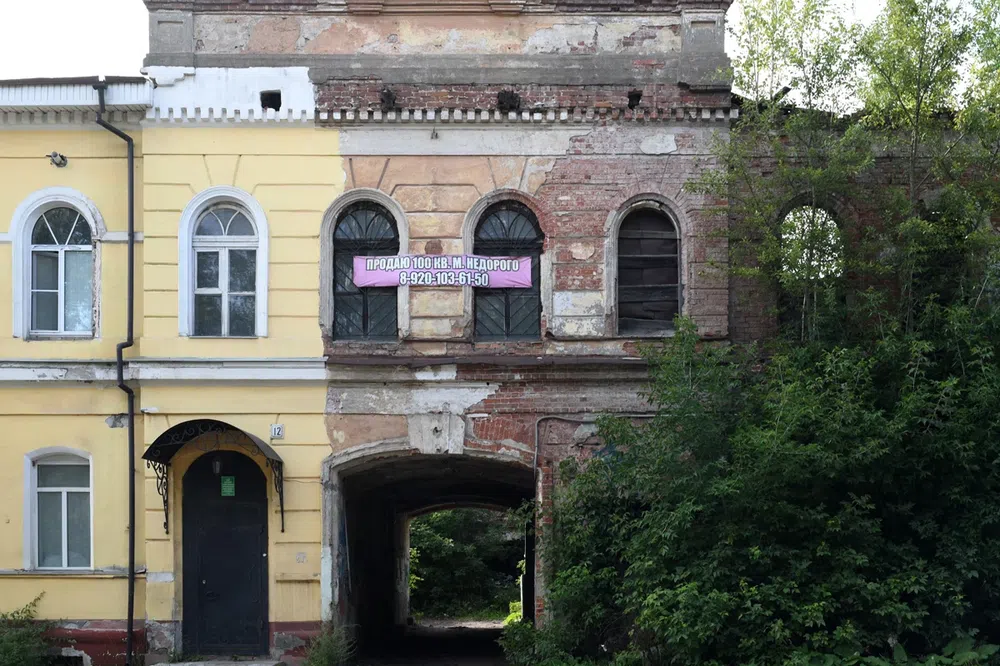
A few years ago, the appearance of historical Rybinsk began to change. The merchant mansions on the main street of the city, Krestovaya, were rebuilt and restored. Some roads are paved with stone tiles. Shops and offices decorated wooden signs manually written out by pre -revolutionary font. Now, instead of the bored “products” above the entrance, you can see the inscription “Grace -free trade” with fruit and meat still lifes stylized under the XIX century, and the “Magnit Cosmetics” at the ends of the words appeared “Era”.
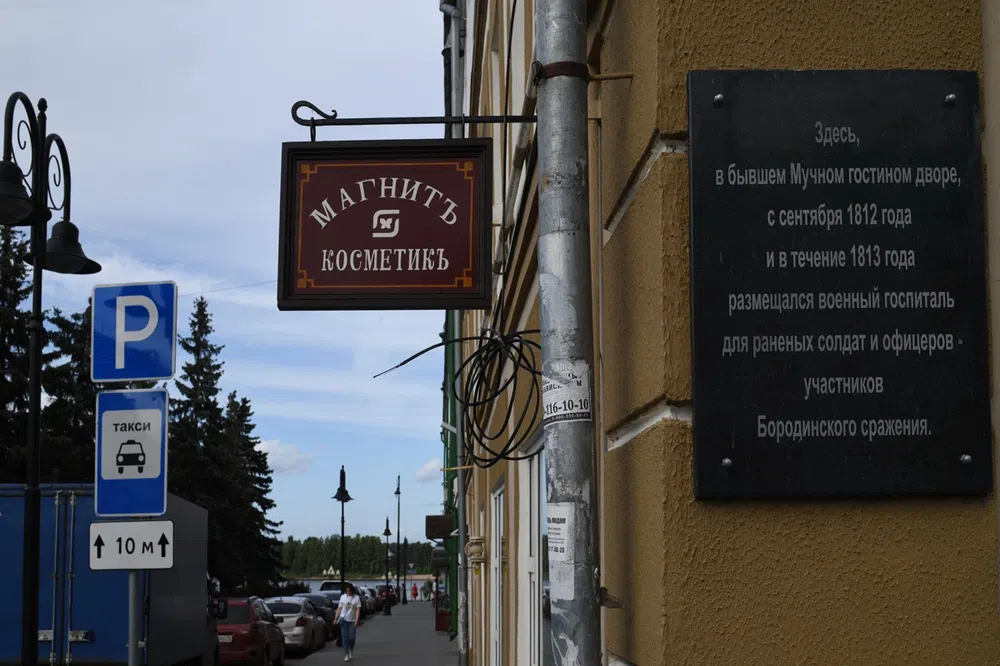
This idea belonged to Mitya Kuznetsov, a native of Rybinsk, a musician, a designer and founder of the art-worship art resident, located here, in Rybinsk. His project enthusiastically was supported by the city administration, which soon ordered store owners to change signs.
The business met the innovation ambiguously: on the one hand, no one was against putting advertisements in the historical center. On the other hand, these are additional financial costs. The authorities of the city, although they promised to allocate subsidies, but they cover only part of the expenses. Dissatisfaction was also caused by the threat of forced dismantling of signs that do not comply with the new rules.
In April 2019, the Cheremukha Rybinsky online portal said that "in current realities, most entrepreneurs are balancing on the verge of survival."
“I am crushed as an entrepreneur! Both financially and morally. For seven days - such a period was given to me for dismantling - it is unrealistic to find money, order a layout, coordinate it with the same department of architecture, as required in the administration. I am a representative of the small business, and I have no free money, ”complained Natalia Makarycheva, the owner of the door salon on the crusader. The manufacture of its sign cost 80 thousand rubles, and this is "far from the highest price."
And recently, local authorities proposed replacing not only signs on historical buildings, but also window frames, bindings, as well as “facades associated with them”. All of them should also be made of natural wood. In June, public hearings were held on making these amendments to the improvement rules.
- When entrepreneurs refused to dismantle the signs, the administration came, carried out dismantling, and then issued an account. If the entrepreneur does not have the opportunity to decorate the windows, the administration itself will do this and submit an account later? - asked the entrepreneur Olga Volkova. She never received an answer to her question.
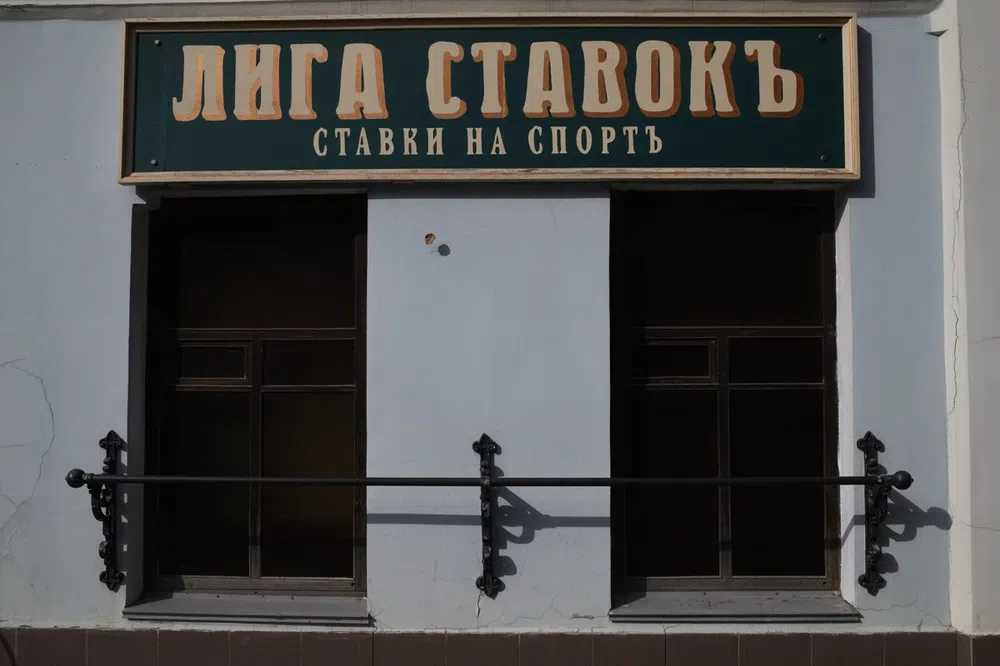
As a result, the Rybins voted against the adoption of amendments.
“I accept criticism,” Denis Dobryakov commented on the results of public hearings. — Если у горожан возникли вопросы — значит, документ сырой и нуждается в доработке. Будем выяснять мнение бизнеса и горожан, предлагать варианты решений, разработаем систему компенсаций затрат предпринимателей.
***
В 2018 году президент России Владимир Путин поручил правительству разработать национальные стандарты в сфере сохранения объектов культурного наследия. К этой теме глава государства впоследствии возвращался неоднократно, заявляя, что «восстановление памятников архитектуры — это очень важно».
«Очевидно, что на местах, к сожалению, не всегда есть возможность обеспечить достойное содержание памятников истории и культуры, а значит, нужна, наверное, и корректировка соответствующих законодательных норм», — говорил Путин на прошлогоднем заседании с членами Совета по культуре и искусству.
На территории исторического центра Рыбинска расположено 157 объектов культурного наследия как федерального, так и регионального значения. Из них больше 20 — полуразрушены. У города огромный туристический потенциал, и администрация всяческими способами (преимущественно за счет бизнеса и собственников) пытается создать «красивую картинку», чтобы в город повалили туристы. Это полезно и с точки зрения поднятия рейтинга — выборы главы города пройдут 19 сентября.
Вот несколько примеров того, как «красивая картинка» расходится с реальностью.
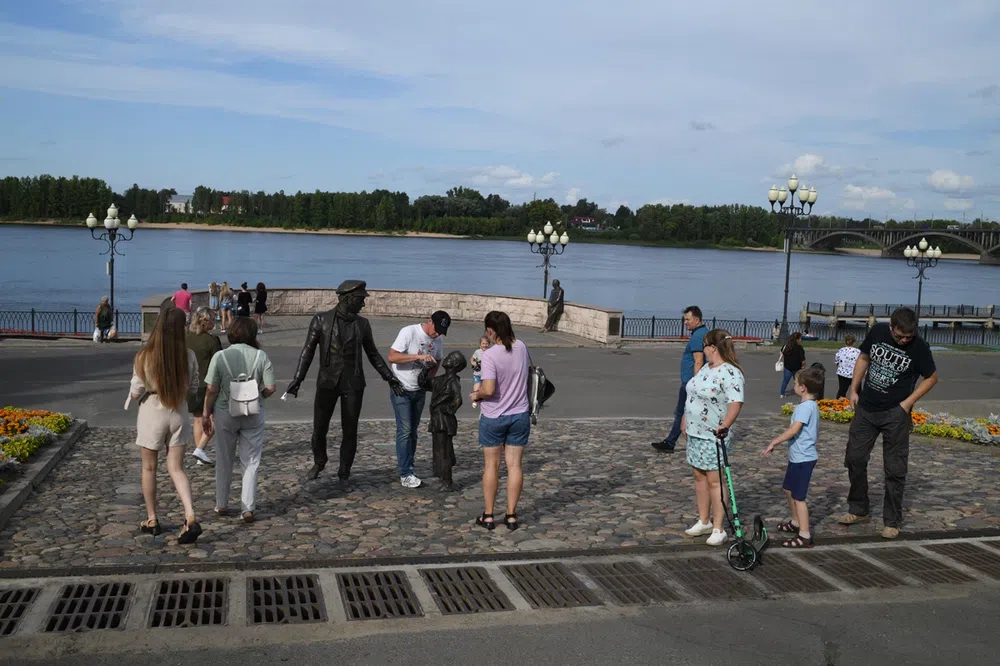
Накануне празднования Дня города по инициативе мэра Дениса Добрякова в центре города была установлена скульптура Остапа Бендера и мальчишки-беспризорника. Она воспроизводит сцену из фильма Леонида Гайдая «12 стульев», которую снимали в начале Стоялой улицы, где теперь и находится композиция.
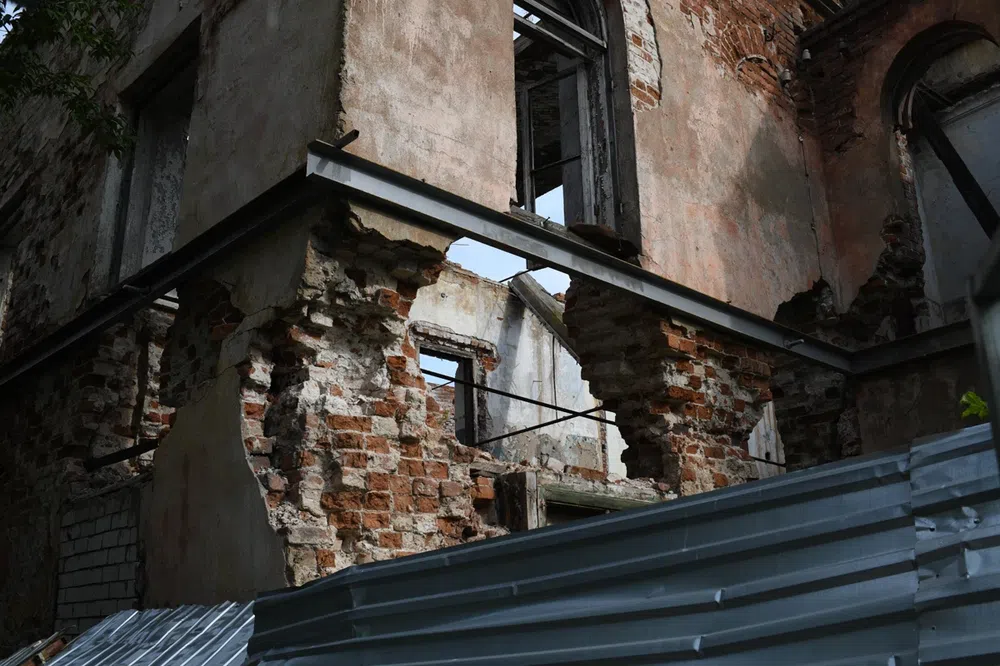
Но выше по этой же улице стоит закрытый строительной сеткой дом купца Журавлева, который в фильме «сыграл» жилище мадам Грицацуевой. Раньше его украшали резные наличники, растительные орнаменты по периметру и кованый балкон. Долгое время дом Журавлева находился на балансе администрации. Сейчас это здание — объект культурного наследия регионального значения — стоит без крыши, в руинах. Кирпичная кладка рушится, стены опасно накренились. Недавно стало известно, что у него появился новый собственник, который займется реставрацией. Но хватит ли у него на это денег без поддержки от государства?
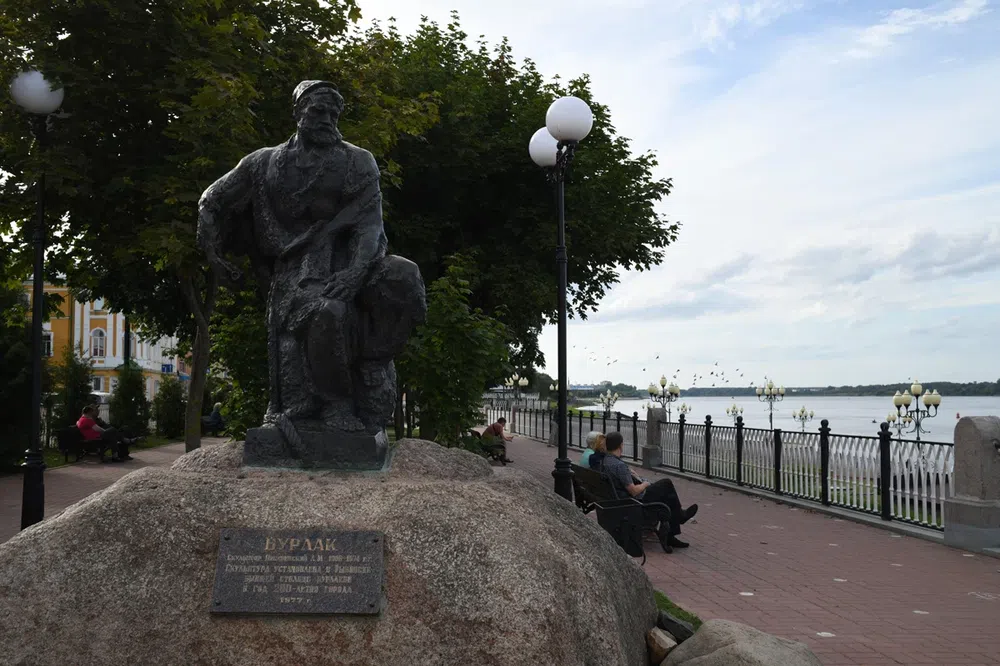
Рыбинск гордится негласным званием «столицы бурлаков». Бурлаки — это рабочие, которые помогали тянуть суда против течения Волги, когда гребцы и парус не справлялись. В период навигации в середине XIX века их число в Рыбинске достигало 130 тысяч — при населении всего города в семь тысяч. Рядом со старой хлебной биржей на набережной стоит памятник бурлаку. Говорят, что он единственный в мире.
При этом в плачевном виде находится единственная в городе больница, в которой лечили этих самых бурлаков. Она была построена в неорусском стиле в конце XIX века на пожертвования купцов. Больница работала и при советской власти, но с 90-х годов постепенно приходила в упадок. Все привело к тому, что за ее территорий остался следить один лишь сторож. После его смерти в 2019 году другого такого энтузиаста не нашлось, деревянные здания быстро обветшали, мародеры выбили окна. Сейчас они заколочены досками, чтобы внутрь не забирались бездомные.
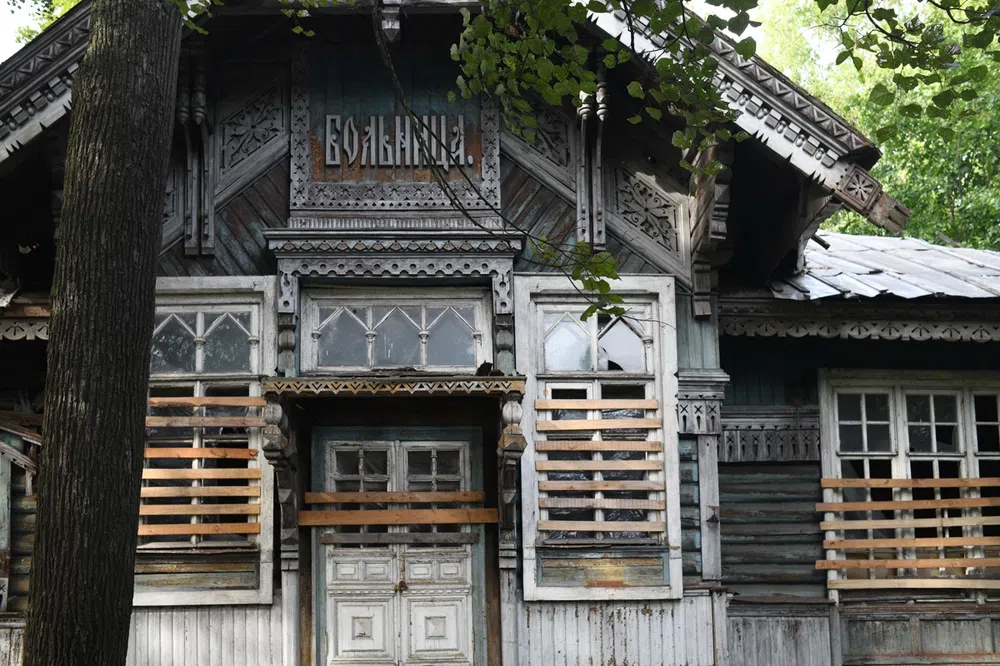
Раньше больница бурлаков (или по-другому — водников) была памятником культуры федерального значения. Когда жители города начали обращать внимание властей на ее состояние, Денис Добряков разводил руками: «Мы хотим сохранить комплекс исторических зданий, но не имеем права ничего предпринять, пока это не городская собственность», — говорил он в одном из интервью.
В прошлом году после долгих переговоров больницу удалось перевести на баланс города, но видимых изменений в ее облике с тех пор не произошло. Территорию поддерживают в порядке разве что волонтеры, которые время от времени устраивают здесь субботники.