
Translated material
Watching in uniform
Russian soldiers will prepare for a battle with the enemy with the help of a "patriotic" movie. And also with the help of "Besogon". List of "ideologically correct" paintings
Deputy Minister of Defense of the Russian Federation, Colonel-General Andrei Kartapolov took up the education of Russian soldiers and firmly intends to transfer this experience to the entire adult population of the country. Among the methods are a recommendatory list of films and television programs.
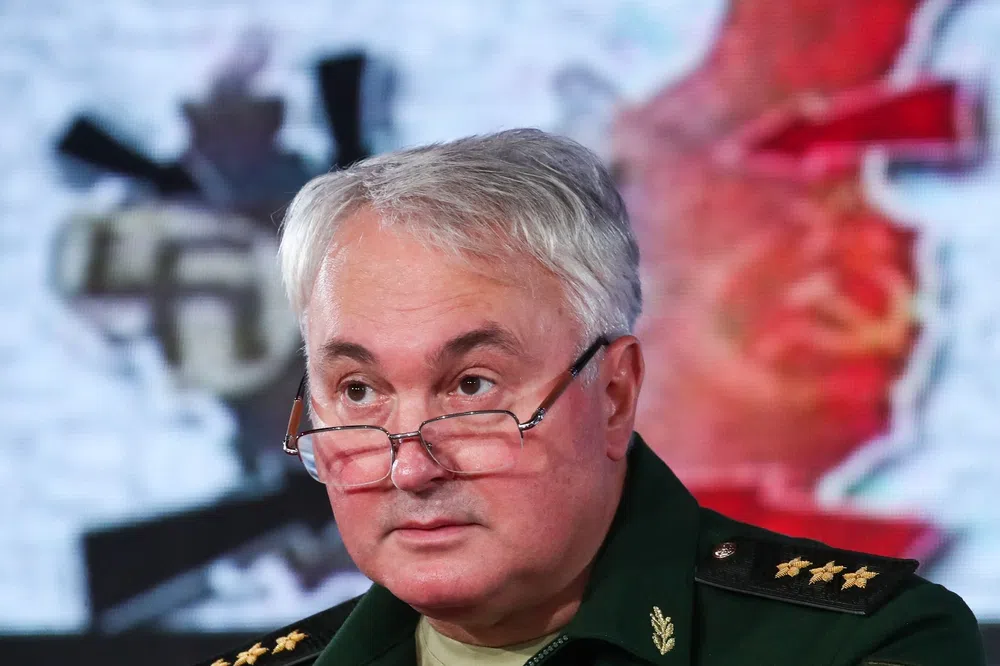
In an interview with “arguments and facts”, the main ideologist of the army told how he intends to teach the soldier to love the homeland, and at the same time distinguish the truth from fakes.
In his opinion, the Besogon cycle will help in this, in which the director of all Rus' with a sovereign fervor reveals young artists for opposition moods, looks out for computer graphics in the shootings of Belarusian protests, and in vaccinations from coronavirus detects chipping. Any texts in comparison with such cognitive videos as the “Russian lessons” Zakhar Prilepin, according to the military leader, are crushing: “They planted a soldier, showed a series, discussed. And it works. They have interest. "
And recently, an important part of ideological work was “a list of films, approved by the Minister of Defense ... which includes the works that form the normal consciousness of the patriot’s warrior”.
In this list, the Soviet cinema classic, and caused by the life of the Stalin's concern for the correct superstructure of the tape, and shot by patterns of the past, Russian patriotic cinema coexist.
What does the Mammary list testify to? First of all, about the return of the Soviet optics. In the era of the new Russia, no heroes have been created.
So, new songs about the heroes of the old days, those "who have risen in hostility like one."
The “List” itself is similar to a time machine that returned us to the USSR. There will be a young mother and father is alive:
All along with tears in our eyes, we will see the “officers” rubbed with the TV to the TV;
"Belarusian station";
“There are only old people in battle”;
"Volunteers";
Well, the “Tale of a real man”, in which he flew and landed without a fuel “at one desire” the hero of the story of Boris Polevoy. And in the final, commander Boris Babobochkin, ex-Chapaev, let down the line: “We will win any war with such a people!”
The movie masterpieces about the war are always antimilitarian art, reflecting on the price of human life. In the “torpedo bombers”, “go and look”, the “Belarusian station” is breaking through the truth about the war, the so -called “trench truth”, a feeling of inescapable grief associated with the battle, reflections on the price of human life. This is not relevant today.
Alas, there are no legendary “ballads about a soldier”, nor “cranes”, nor “climbing”, not a single picture of Alexei German, “Ivanov’s childhood”, there are no tragicomedies of “cuckoo” and “Zhenya, Zhenochka and Katyusha”.
Because the super -task of the main political officer to teach not to “love a person”, no matter what test to his share fell, but heroically die, sacrifice himself. For the homeland, for Stalin. Party, Government, United Russia.
When the country orders to be a hero
Our hero becomes any ...
It is known that, starting from the mid-30s, Stalin personally defined the development strategy of Soviet cinema, gave “orders” to create individual films. He needed a myth, exalting and rethinking the past. I needed an iconostasis of heroic, wise rulers:
"Alexander Nevsky";
"Peter I";
And, finally, who became the Avatar of the Generalissimo, the beloved king “Ivan the Terrible” (though after the second series of “Ivan the Terrible”, exploring the vices of tyranny, the repression of the oprichnina, the reprisal against Eisenstein began). All three films are in the recommended list.
The portrait gallery programmed by Stalin had to meet the requests of the party and government, so the title characters of Kutuzov, Suvorov, Ushakova, Nakhimov, Pirogov, Pavlova, Michurin praised the country with their military and peaceful achievements, proved the advantage of the Soviet system. And these films were allowed to neglect historical truth for the sake of political tasks with the highest will.
The main censor of the country was called up for the advanced struggle against alien elements. It seems to his followers that the time has come to “repeat”: to again ensure the atmosphere of suspicion, schizophrenic searches for enemies of the people outside and inside.
If we watch Soviet cinema with amendments for a while, censorship, then
Films of the New Age more eloquently other newspapers will tell us about how the atmosphere of the country, slowly sliding into the ravine of shallow antiquity, has changed.
At the turn of the zero, paintings are still breaking through the war as a machine that grinds the human (“checkpoint”, “The war is over. Forget ...”, “In August of the 44th”).
But even then, the most perspicacious directors began to produce films like weapons. In them, propaganda, distorted ideas and images are packed in fashionable wrappers, as in August. Eighth ". The film about the eight-day war is framed by the genre of glamorous fantasy-beer. Here are the Ossetians, and the “enemies” of the groups are no, no, and they will talk to each other in Russian (so that we better understand): “Shoot it to hell!” According to the producers and authors of the film “Augustus. The eighth ”, their opus is an example of a patriotic and at the same time attractive for the viewer of the film.
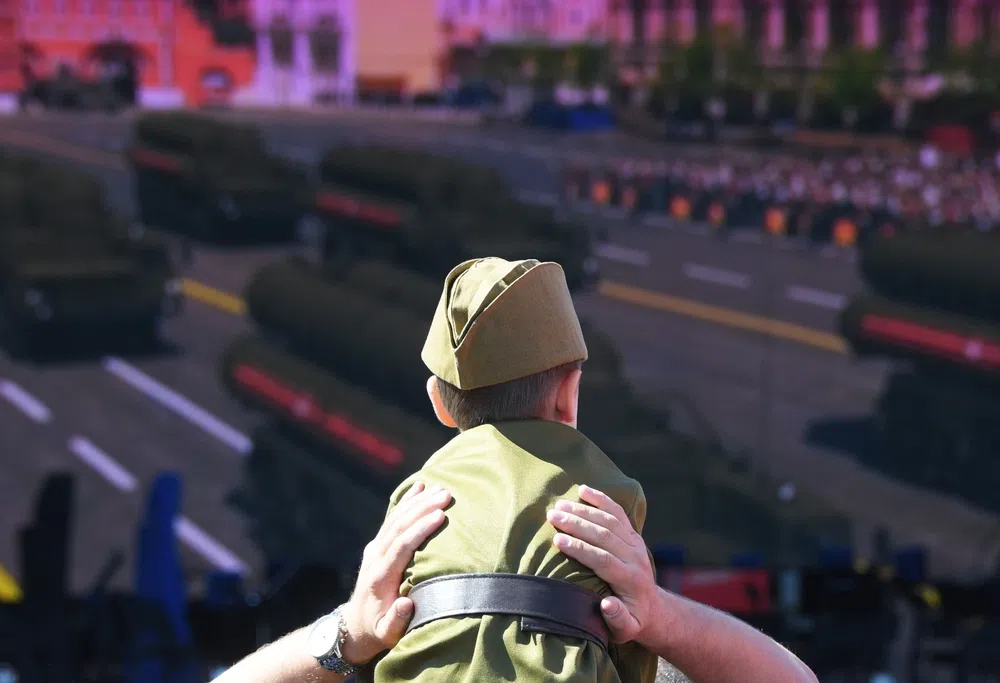
With the advent of Vladimir Medinsky in 2012, who headed the culture under the auspices of the military-historical society, the attitude to history is completely reviewed.
Patriotism is brought up using myth -making. The “preservation of historical memory” is ranked for the “national interests” of the Russian Federation, and law enforcement agencies from the Prosecutor General to the Security Council and the Ministry of Internal Affairs are called upon to defend this memory. But the concept of "memory" should be perceived expandfully. The fact, historical evidence and documents replaces the myth. The Minister of Culture calls the history of 28 Panfilov by a holy legend, which cannot be touched, and the people who do this are “overdled”. The new mining doctrine was approved at the very top. Dmitry Peskov confirmed that thanks to this film, all historical hypotheses that subjected the legend of doubts came to an end: “Therefore, this picture is of particular importance from the point of view of historical truth.” The scientists now have no choice but to go to the cinema and watch that the directors Klim Druzhinin, Andrei Schalopa will tell about Panfilov and Mikhail Koshkin, Maxim Brius and Leonid Glyaskin about Zoya Kosmodemyanskaya .
The producers of the “first after the year” tape claim that their history is completely based on the facts of the biography of the submariner, Alexander Marinesko . He finds a brother-monk, a former Kolchakovets, who seemed to have not died. It’s good if the viewer does not know that Marinesko was born in 1913. How many years should his fictional brother be? “Sobibor” was indignant at the eyewitnesses surviving, because the camp depicted in the film as a prisoner of war camp was created by the Reinhard program - an operation on the mass destruction of Jews.
By the way, in the list among the first names the series “Eternal Patriotic War” (11 episodes), 2020, initiated by the Ministry of Defense, is indicated. Zakhar Prilepin, whom Kartapolov, along with Nikita Mikhalkov, calls the scriptwriter and the author of the text, calls the myths fighter.
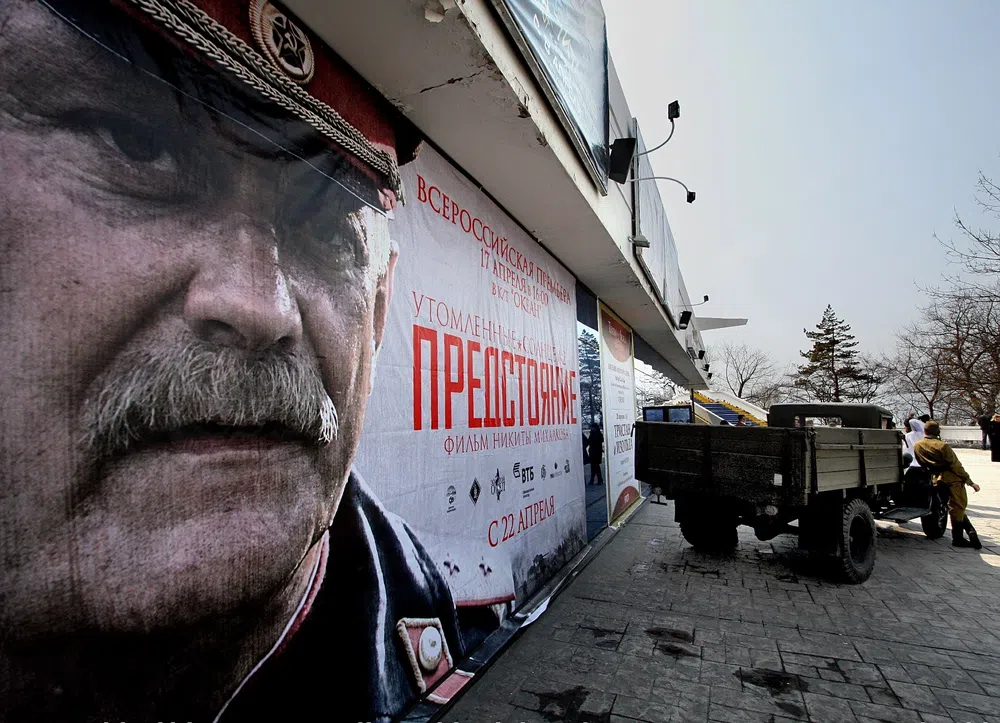
Kartapolov, who revives the military-political bodies in the army, claims that the political officer must make the soldier clearly understands: to whom he will shoot and why. And the right movie to help him, as well as historians. It is intended to reconfigure the brains of the soldiers, so that, without asking unnecessary questions, they realize "who to shoot at ...".
In recent years, the genre of patriotic defense cinema, which surged on the screens before the Patriotic War, has survived again. We are fighting and winning cinema on tanks, planes, submarines and balloons. We destroy the enemy that does not give up. And we are building new indestructible myths in the spirit of monumental sculptures of Salavat Shcherbakov. Yes, myths are often more tenacious than real memory, especially played by famous actors, painted with computer graphics. The widespread opinion that one cannot touch the legend, which has become the mind of people, destroy their faith. Although, according to scientists, this is counterproductive. The destruction of the myth, the detection of its clay legs can be a genuine drama for believers in it.
However, why should the myth analyze, look for justification in the historical perspective? You just have to believe in the myth. “If I claim something,” says Nikita Sergeyevich, “I am not obliged to present evidence. If you affirm the opposite, refuting me, you must present evidence! Isn't that the case?! "
Here is Andrei Kartapolov, who has adopted the lessons of the ex-minister of culture, continues to climb the career ladder with a printed step-to the State Duma: “ In our army you know what will happen tomorrow, so the military man has confidence in the future that is transferred to his family. People clearly know how life is arranged, where to move on. This is not a civilian. I want to try to attach it to the whole society. So that it develops clear that a graduate of any university does not think where he will go with his diploma. He must clearly know that he will get to a particular enterprise where they will take it, and there he will be able to work. Otherwise, the meaning of higher education is lost. ”
And so that the graduate did not think-where to go, a soldier-to whom to shoot, we will show them a spiritual movie about the indestructible heroes of the victorious, on a military field and in football, in space and under water, in troubled times four centuries ago and today.