Translated material
Unfinished Revolution
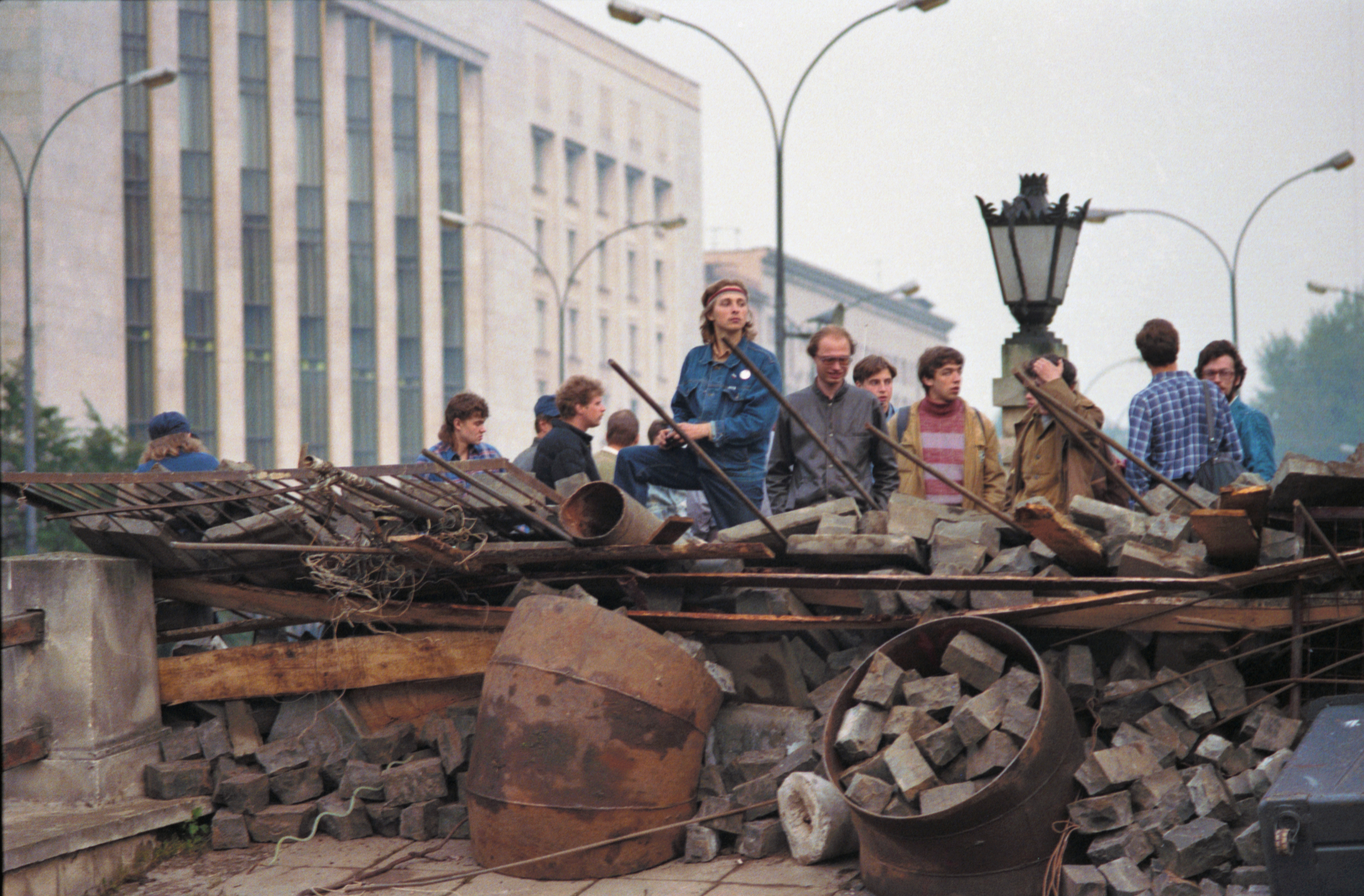
Will there be a continuation of August-91? Political scientists Gleb Pavlovsky and Alexander Morozov discuss
- 30 years ago in Moscow, a coup attempt led by the State Emergency Committee failed. It seemed that Russia had embarked on the path of democracy and modernization.
- Today, in 2021, we clearly see authoritarian and imperial revenge: Putin’s Russia is increasingly looking like a revived USSR.
- There have been many forks in Russian history, attempts to modernize the country, but the authoritarian system is restored every time.
Sergei Medvedev: 30 years ago in Moscow, a coup attempt led by the State Emergency Committee failed. It seemed that, as they said then, Russia had become a normal country, having taken the path of democracy and modernization. 30 years later we see the complete opposite: authoritarian and imperial revenge. Putin's Russia is increasingly looking like a reanimated Soviet Union.
Who and when was the 1991 revolution betrayed? Was this a real revolution, and will it continue? We have political scientist Gleb Pavlovsky in our studio.
Video version of the program
The main purpose of creating the State Emergency Committee was to prevent the signing of the Treaty on the Union of Sovereign States
Correspondent: At 6 am on August 19, 1991, television and radio announcers read out the decrees of the State Emergency Committee on the introduction of a state of emergency and on the assumption of Gennady Yanaev as acting president of the USSR. There are reports of the alleged illness of Mikhail Gorbachev, who at that moment was blocked at his dacha in Foros. By order of Defense Minister Dmitry Yazov, troops enter Moscow, a ban on rallies and strikes is introduced, the work of the media is limited, and the activities of any political organizations other than the CPSU and the Komsomol are prohibited. All TV channels broadcast news releases and the Swan Lake ballet instead of broadcasts.
The main purpose of creating the State Emergency Committee, according to Yanaev, was to prevent the signing of the treaty on the Union of Sovereign States, which, according to the participants, abolished the USSR. The authorities of the union republics and the President of the RSFSR Boris Yeltsin are opposed to the State Emergency Committee. Ten tank crews go over to Yeltsin's side. Boris Nikolayevich reads an appeal from the armor of a T-72 tank. Tens of thousands of people respond to his call and begin to gather at the White House for his defense. In the evening, the organizers of the State Emergency Committee impose a curfew, however, the military does not detain anyone, and the Alpha group ignores the order to storm. One of the key moments is the episode in the Novoarbatsky tunnel on the Garden Ring, when Yeltsin’s supporters clash with a column of armored vehicles of the Taman Division, as a result of which three defenders of the White House are killed - Dmitry Komar, Ilya Krichevsky and Vladimir Usov.
The August putsch ends in the failure of the State Emergency Committee. Yazov gives the order to withdraw troops from Moscow. On August 22, arrests of the leaders of the State Emergency Committee begin. At the winners' meeting they decide to make the Russian flag a tricolor. In the evening, the Dzerzhinsky statue is dismantled near the KGB building on Lubyanka amid applause. The direct consequence of these events was the signing of the Belovezhskaya Accords on December 8 and the formal collapse of the USSR, when the Soviet flag was lowered over the Kremlin and the Russian tricolor was raised.
Sergei Medvedev: What was it: a revolution, a popular uprising, an elite coup?
Gleb Pavlovsky: It started as a natural coup on the part of a group of old leaders. In response, a massive urban uprising broke out in Moscow, although there was some action in other cities as well. And it’s interesting that this was not a liberal, but a democratic uprising, in defense of institutions and principles, against attacks on Gorbachev’s legitimacy.
Sergei Medvedev: Can we say that this was a bourgeois-democratic revolution, in some sense a continuation of February 1917?
It was not a liberal, but a democratic uprising, in defense of institutions and principles, against attacks on Gorbachev’s legitimacy
Gleb Pavlovsky: Tattered. By the way, one of the missed scenarios for the possibility of radicalization of the revolution is a return to 1917. Yes, it was extremely difficult, but it would have made impossible, for example, such a terrible thing in the future as succession from the USSR.
Sergei Medvedev: Could this have been done differently?
Gleb Pavlovsky: Two options - either a complete legal break and a new Russia, or a return to February 1917. Then there is a basis for laws about private property and the like. But it was a dual message. “All power to the Soviets” is one of the slogans of perestroika, and it was realized to some extent. How did you prepare for the White House? Through so-called informal public organizations, voters' clubs, usually organized under the councils of workers or people's deputies.
Sergei Medvedev: But most people still came to the White House themselves.
Gleb Pavlovsky: This is another illusion.
Sergei Medvedev: I personally came myself when I heard tanks rumble in the street.
Gleb Pavlovsky: Me too. And most of the people were mobilized by the powerful democratic infrastructure that is forgotten today.
Sergei Medvedev: The surge of civil society and self-organization that occurred in the late 80s has never been repeated.
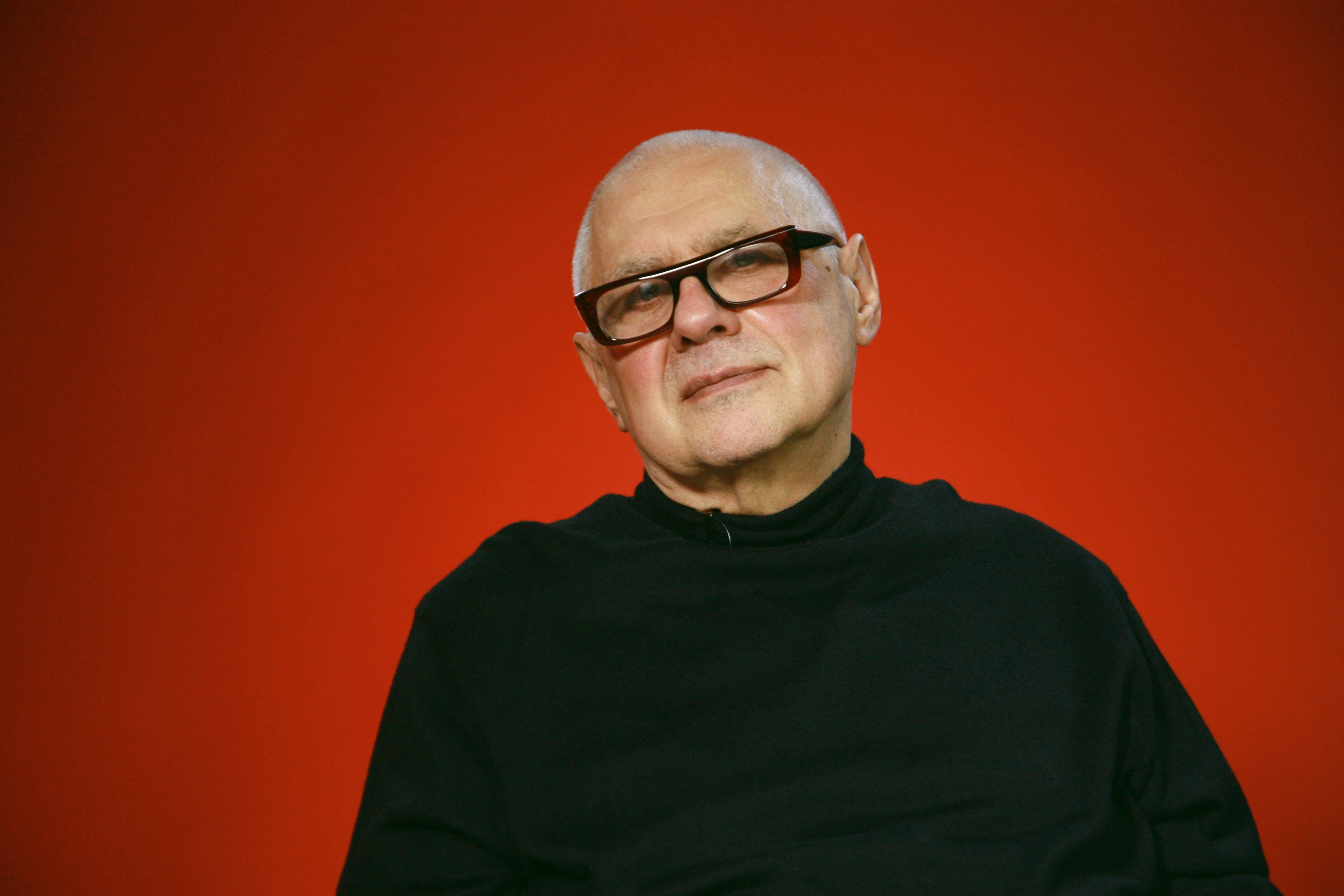
Gleb Pavlovsky: Yes, because it was destroyed immediately after 1991, first by the abolition of the soviets. And how many informal newspapers there were in Moscow alone! Hundreds! There isn't a single one left. This revolution was possible, it began, but was cut short.
Sergei Medvedev: It was a time of some fantastic historical creativity; I personally felt an incredible inner liberation that I had never experienced before in my life. And that, using this drive, it was possible to go further and form a different Russia?
This revolution was possible, it began, but ended
Gleb Pavlovsky: Of course. If you carefully examine the institutions that existed in August-December, you will immediately be surprised by the sluggishness of their use, and yet no alternative Central Committee was created. These institutions seem to suddenly go into hibernation. Gorbachev does not use the union institutions and actually operates in the mode of some kind of documentation preparation center together with Grigory Yavlinsky and several other people. At the same time, union institutions are dissolved without full-fledged decisions on this issue. The question of who is in control now has not been recorded. Between the 22nd and 24th there is a window of survival, a window of legitimacy of the Union, because there is no slogan of the abolition of the Union, but there is Yeltsin, who simply can become a new center of consolidation. If Yeltsin had asked, and in fact ordered, Kravchuk at the rally on the 22nd, I think even Gamsakhurdia, who simply chickened out during the days of the State Emergency Committee, to stand next to him, I think the fate of the Union would have been different. The problem was precisely that many were afraid of his growing power.
Sergei Medvedev: And that’s why centrifugal tendencies started?
Gleb Pavlovsky: They were on their own, but then they suddenly accelerated.
Sergei Medvedev: On the other hand, the collapse of the Union was inevitable. What if there had been no coup, if it had failed at the beginning?
There would be no democratic 90s if not for Gorbachev’s liberal five-year plan
Gleb Pavlovsky: The Soviet Union, in fact, by that time was an ultra-liberal empire in which no one was going to seriously use violence. There would be no democratic 90s if not for Gorbachev’s liberal five-year plan. Moreover, then all the figures of the 90s were formed. And here was the technical engineering mistake of Gaidar’s team: they proposed reforms for a totalitarian system that had not been totalitarian for a long time.
Sergei Medvedev: Journalist Dmitry Borko recalls the events of that time.
Dmitry Borko: From the direction of Manege, Kutuzovsky, from Arbat, an iron-metal roar was heard, and two columns of armored vehicles began to crawl out onto Manezh Square from both sides. And then an amazing thing happened. People, instead of running away, ran towards these columns and simply stopped them. The columns got bogged down in the mass of people. There were a lot of people, they climbed onto the armor, began handing out newspapers and leaflets to the soldiers and officers, passionately explaining what the State Emergency Committee was, and calling on the soldiers not to act against people. The soldiers themselves were confused. At first, the officers drove people away, then they waved their hands. People surrounded these tanks and armored personnel carriers. Then they began to block Tverskaya: they stopped trolleybuses, turned them around and blocked them, thus protecting the Moscow City Council, which was one of the centers of resistance.
Sergei Medvedev: Joining us is Alexander Morozov , a fellow at the Boris Nemtsov Center at Charles University in Prague .
Why does a dragon's head grow back so quickly? After all, Russian Thermidor is actually already advancing, probably under Boris Nikolaevich. How does the system reproduce itself so quickly that an attempt at revolutionary change ends up the way it did?
Alexander Morozov: History has forks. The putsch is one of these forks that turned here. Second important point. Historically, we have become convinced that the so-called revolution of dignity (and 1991 was something like a revolution of dignity for Russia) is insufficient in itself. It is beautiful, it gives great inspiration to those who participate in it, but at the same time it creates some self-satisfaction. Having spent a lot of emotional energy to commit such an act of defending democracy, then everyone disperses and begins to think that those people who came to power “are somehow on their own.” And continuous democratic participation is necessary. At every moment, society itself and all its segments, all thinking and active people must continue this work.
The story has forks. The putsch is one of these forks that turned here
Sergei Medvedev: Was it possible to have a Russian Wenceslas Square, a scenario of a “velvet” democratic revolution that would continue and completely change the course of the country?
Alexander Morozov: In my opinion, yes. There are three well-described scenarios for the transition from authoritarianism to democracy. The first is through the popular front or the so-called “round table”, the Czechoslovak scenario. The second is through a military coup, some kind of junta, which is liberal. The third turn is the “Moncloa Pact,” that is, elite consensus. There are no more options (well, there are some mixed ones).
At the time of the August 1991 events in Russia there were very weak possibilities for a military coup. But there were two other scenarios that were quite realistic. The first is through the popular front. And this popular front was demonstrated (this is Wenceslas Square) back in February 1990, when there was a mass rally on the eve of the abolition of Article 6 of the Constitution. And the option of elite consensus was possible. Actually, Gorbachev has been moving in this direction for a long time. The State Emergency Committee thwarted all three transition scenarios. They did not make it possible to carry out the transition through an elite consensus, they destroyed it. Well, it is clear that they could not rely on the popular front. Then Yeltsin came, and this was the scenario: through Wenceslas Square and the popular front.
Sergei Medvedev: Tiananmen actually didn’t work out, Wenceslas Square in Russia didn’t work out either. Why then is there an eternal return to the Russian rut? In Novaya Gazeta there was a long article by Vladimir Pastukhov, where he writes that this Russian triad of paternalism, authoritarianism and imperialism, which Putin resurrected, is eternal. It was reproduced in the 90s and in the 2000s under Putin. Was it possible to get out of this rut?
Alexander Morozov: I think so. After all, the Russians collapsed their empire twice within one century, and with much greater noise than other imperial peoples.
Sergei Medvedev: Yes, but it grew back twice in a new form, but with the same content.
In 1991, Russia had very little opportunity for a military coup.
Alexander Morozov: Paternalism - it’s difficult to argue with anything here, because in some form, of course, great expectations are placed on the state. As for imperialism, I am generally an opponent of this term as applied to today. Imperialism is, after all, really an imperial policy.
The whole concept of a rut is broken by forks. I have seen at least six such turns during this 30th anniversary where switches existed and the train could have gone the other way. We can easily imagine a situation in which Gorbachev, for example, would agree with the putschists who came to him in Foros and would say: “Okay, we are making this turn,” and would find himself at the head of this process. It is unknown how his clash with Yeltsin and with the already emerging democratic environment would have ended. Perhaps we would have found ourselves in a different situation for three or four years.
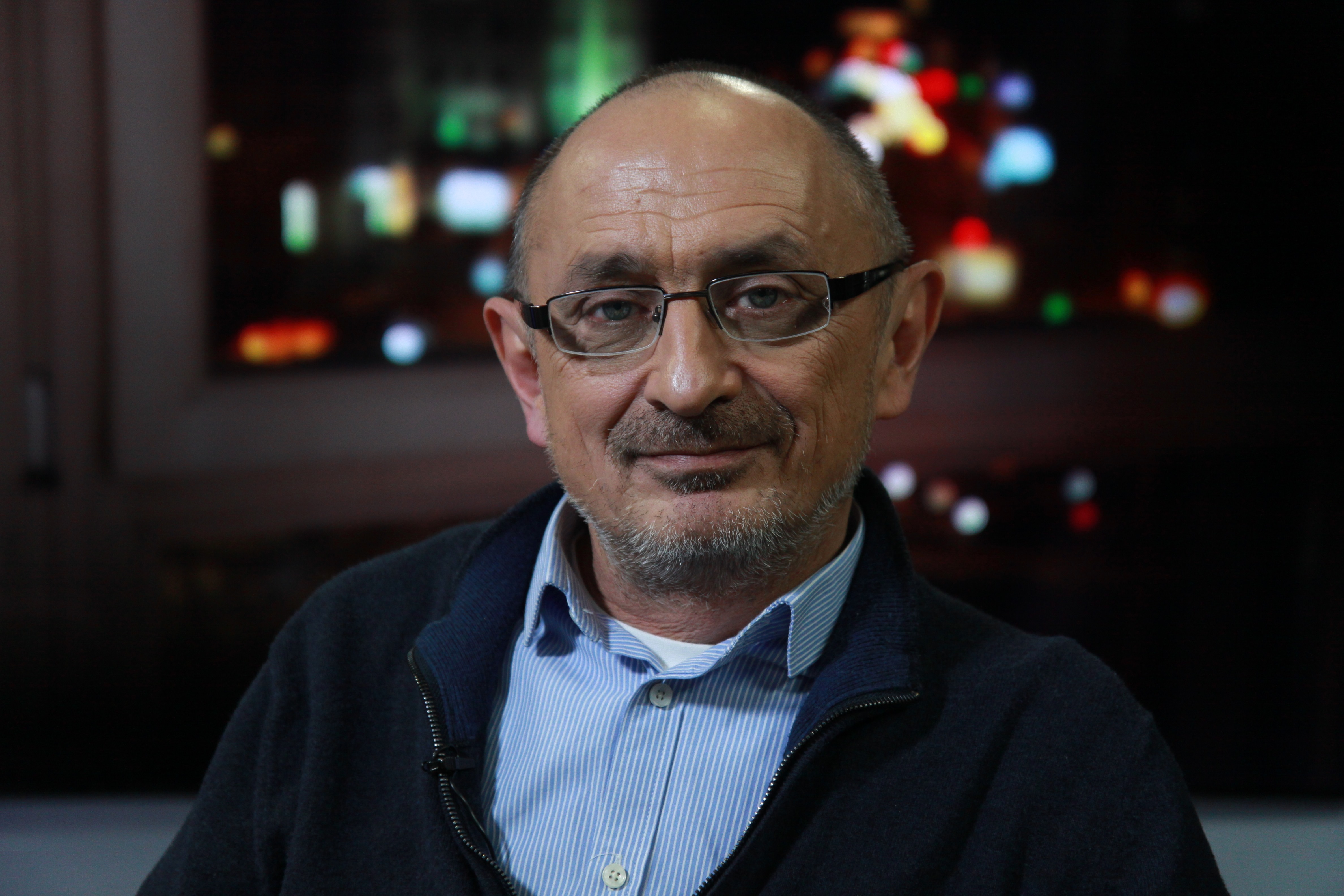
This also applies to the period of “Bearism” and the moment when the remnants of democratic forces in the late 90s chose in favor of the statist model and its strengthening. And we can even say that such a fork has passed before our eyes right now with constitutional amendments.
Sergei Medvedev: But still, every time this fork leads to the reproduction of the Russian system. At the entrance to the Yeltsin Center they show a video - here is the Novgorod veche, here is the Zemsky Sobor of 1613, here is the bourgeois revolution of February 1917. Every time Russia stands at a fork in the road, experiments with a different path, but we still end up in 2021.
Gleb Pavlovsky: There are actually much more forks. Once, having taken Yeltsin’s minutes of meetings in the fall of 1991, I was amazed to discover how many times they discussed different options. It turns out that Yeltsin actually played to preserve the Union until the end of November 1991 and abandoned this completely only in connection with the Ukrainian demarche. Gorbachev, Yeltsin, Yavlinsky had a lot of different behavior options.
It’s bad that we attribute this same rut to this determinant every time: again we are there, again this dragon and this empire. There is a central mistake here, because in no period is there total inevitability.
Every time Russia stands at a fork in the road, but we still end up in 2021
Sergei Medvedev: The idea of a rut is the idea of defeatism. In August 1991 she was not there. It was a time of historical creativity, historical opportunities, open doors. Could you imagine in 1991 that the system of power would be restored to its previous format under the leadership of the security officers?
Gleb Pavlovsky: No, because almost from the mid-80s it was clear that this process was irreversible.
Sergei Medvedev: However, then Thermidor happened. What is Putin’s role in this revenge? We recently discussed Green and Robertson's book Who's in Power . And they say an important thing there: this is not Putin’s Russia, but Russian Putin, that is, Putin is the exponent of this internal state of the anthropology of the Russian people.
Gleb Pavlovsky: Putin could not rule without being a representation of some coalition of groups among the people.
Sergei Medvedev: You said that there were two half-lives of the empire - 1917 and 1991. Is there a third one waiting for us? Is a new and final August of 1991 possible?
When this system can do anything, it becomes dangerous to itself.
Gleb Pavlovsky: There are no material objects that are eternal and cannot decay. The main problem with this system is with itself. She is so resilient in crises that at some point she loses her caution and begins to create as she sees fit. Today she destroyed, as she believes, the opposition that she saw, and it seems to her that now anything is possible. And when she can do everything, she becomes dangerous to herself. She can try to create some social and political miracles. These miracles will be bad, she can discuss, as now, the removal of communists from the elections so that they do not interfere, or she can discuss the start of a war, which she can start just to scare. But it is more closely integrated with the population than before, and the population will not give it up easily.
Sergei Medvedev: However, we are now celebrating the 30th anniversary of August 1991. An amazing time - the uprising of the masses, the birth of a civil nation, civic consciousness! And I think we can use the slogan that is often carried on the rear windows of cars: “August 1991 – we can repeat it.”