
Translated material
Development from Shoigu. What is behind the idea of the Minister of Defense to build new cities in Siberia
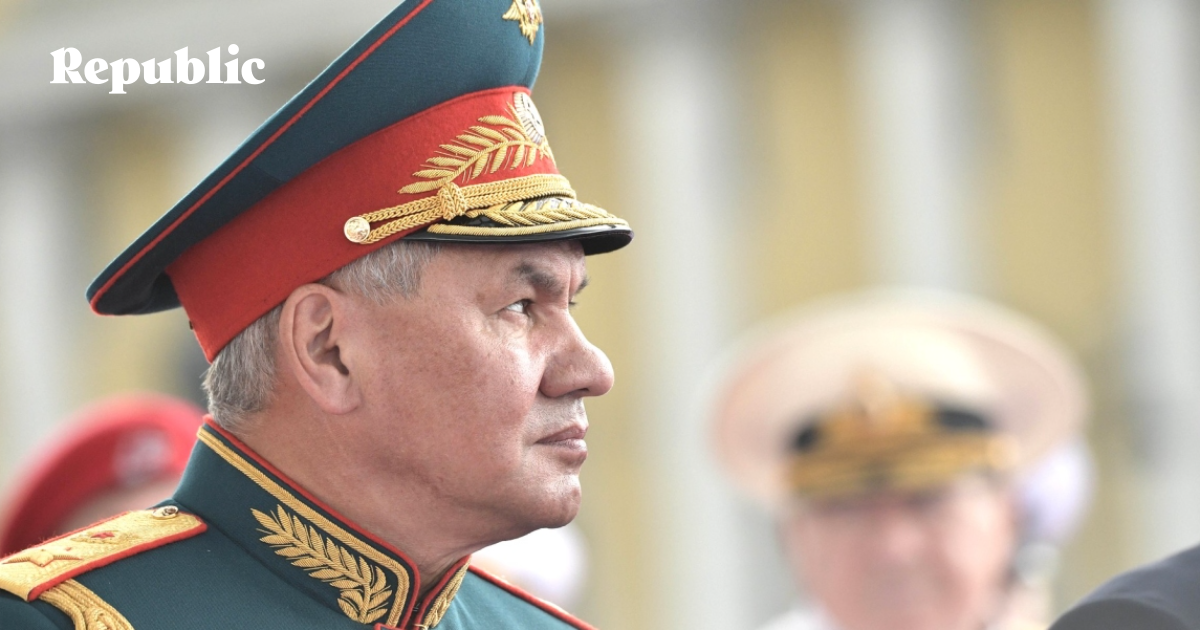
The idea of the Minister of Defense and Urbanist Sergei Shoigu to build five cities in Siberia , as well as transfer Moscow somewhere for the Urals (to one of the new centers or to the old one is still unclear), of course, one can be attributed to the specifics of the moment. Moreover, even without special irony, a politician who finds himself in the first five of United Russia is trying to compensate for the deficit of the image of the future with a large -scale idea. People of his generation often perceive development as the construction of a city and plant, just as young people mean the development of the release of a new gadget. Everyone plays a role in their circumstances in place, time and social status.
At the same time, Shoigu is a person of order, that is, he believes that the decision itself guarantees its implementation. “There is a solution to build a city. So the city will be. Five cities mean five cities. ” The city seems to be here with a development project, and not a social environment - like the construction of the infrastructure for the garrison, and the transfer of the capital - by the transfer of the command post: signalmen will lay a cable, the orderly will transport the service. And yet, for all the fantasticity of these ideas (it is clear that no one will cost any cities, the capital will also remain in its place), they are revealed a series of fork, which the territorial administration system faces today.
The first is really there is no strategic vision of what to do with huge spaces of Western Siberia and the Far East against the backdrop of their depopulation. Administratively turn this trend will not work. The distribution of the free Far Eastern hectare at the edge of the world has not become a social magnet - cheap land is enough in more favorable central Russia. But what is the logic of retention and even more so the buildings of the population in remote provinces? The paradox is that these regions today do not need the current amount.
Even if you bet on new enterprises - real or hypothetical, the number of their staff will already be many times less than that of industrial giants of the past. New investment projects do not form cities around them, as Magnitogorsk created a metallurgical “Magnitogorsk”, and the cities of Yamala created oil and gas crafts. In the best case, they create residential quarters. First, you need to clarify what people need to do in such quantities in the territories that are not the most comfortable for life. It is not necessary only in the Far East, but, for example, in Omsk with its millions of people who are trying to maintain regional power. The logic “Let's collect people, and they will find what to do” does not work here.
Demographic indicators become the goal of themselves, come off from context, are perceived as a marker of regional success, in isolation from new technologies, the features of resettlement. What makes you constantly return to the topic of the empty east of the country? Fear of loss of control over space, the desire to maintain the connectedness of space? But then the population becomes not a goal, but a means of holding space, and an illusory means with a population density of 4 people per square kilometer. Four guards of the North. But even in the demographically more stable central Russia, where the average population density is 61 people per square kilometer, this figure is 3 times lower than in Western Europe. Given the more developed infrastructure, labor market, climate, and proximity to megalopolites, this macroregion will inevitably draw in flows from other territories.
Or it must be admitted that the function of twenty -five million inhabitants of Siberia and the Far East, with the exception of the military and a small part, occupying the development of the resource base, to ensure the presence as such, symbolically confirming the fact: “We are still here, we have not gone anywhere” and carry out service work in relation to the first group. Then you need to decide, and how many people really need to create this sensation, whether it is necessary to create it throughout the territory or enough borders. Or the second decision: to strategically consider these lands as an area of joint projects with Asian countries, although geopolitical phobias will not allow this idea to unfold.
An even more complex node of contradictions is Moscow, a superheavy center that tightens the regions with its gravity. Ultimately, the design of the huge Moscow metropolis is not fixed by the scale of the city, which has long lost its real boundaries, but by the fact that Moscow performs the function of making key decisions and concentrates financial flows. In this sense, Moscow can only be unloaded in one way - decentralizing decision -making and budget. To transfer, for example, significant powers to regions and municipalities. If an adherent of strict vertical Sergei Shoigu wants this, there is something to discuss. But to transfer the capital to its current form - this means starting to reproduce the same hell elsewhere.
What can not be done with Moscow? For example, to divide the business and political center between the cities, to leave Moscow one of these functions. This will not allow the specifics of Russian business - with its concentration of capital, conditional property, dependence on the state and a high share of informal rules of the game, which must be confirmed in personal interaction. For approximately the same reason, it is not possible to bring out individual management functions from Moscow - the structure of power in the country does not imply its formal separation, autonomization of individual institutions. Of course, it is now interesting to observe how organically Gazprom will take root in St. Petersburg, but so far it is a unique and rather specific case.
At the beginning of the pandemic, it was fashionable to say that administrative decontience would be able to provide online technologies. However, in the decision -making device there is a moment requiring personal presence, excluding an intermediary. The authorities are bodily. The idea to make a “distributed capital” (as well as a distributed online office of a large company) is faced with a barrier: without constant micro-compounds, the control wires begin to sag, the connections are weakening, the system loses efficiency.
Conclusion: spatial and demographic changes are not autonomous entities. They are derived from deeper processes. There are no people or cities in which it lives, there are no many or few. It happens - enough or not enough for tasks associated with the organic life of society. And here it is worthwhile to figure out: do people and the spatial forms of their life as a resource? Or is the state itself a tool for these entities? Perhaps, instead of creating new superideers, it is better to leave people just at rest - let them regulate their numbers and forms of life.