
Translated material
Talibana Triumph, Failed State Economics and Russia's role in Afghanistan
The triumphal return of the Taliban (a terrorist organization banned in Russia) to power in Afghanistan has become the main world historical event of 2021. In the final weekly newsletter, we told why the Americans recognized the failure and left Afghanistan, what the country went to the Taliban and whether there are chances for resistance. But the main thing is why Russia, for many years, the most irreconcilable opponent of the Taliban, in the mid-2010s suddenly began to bring bridges with him and that it could give the Kremlin now.
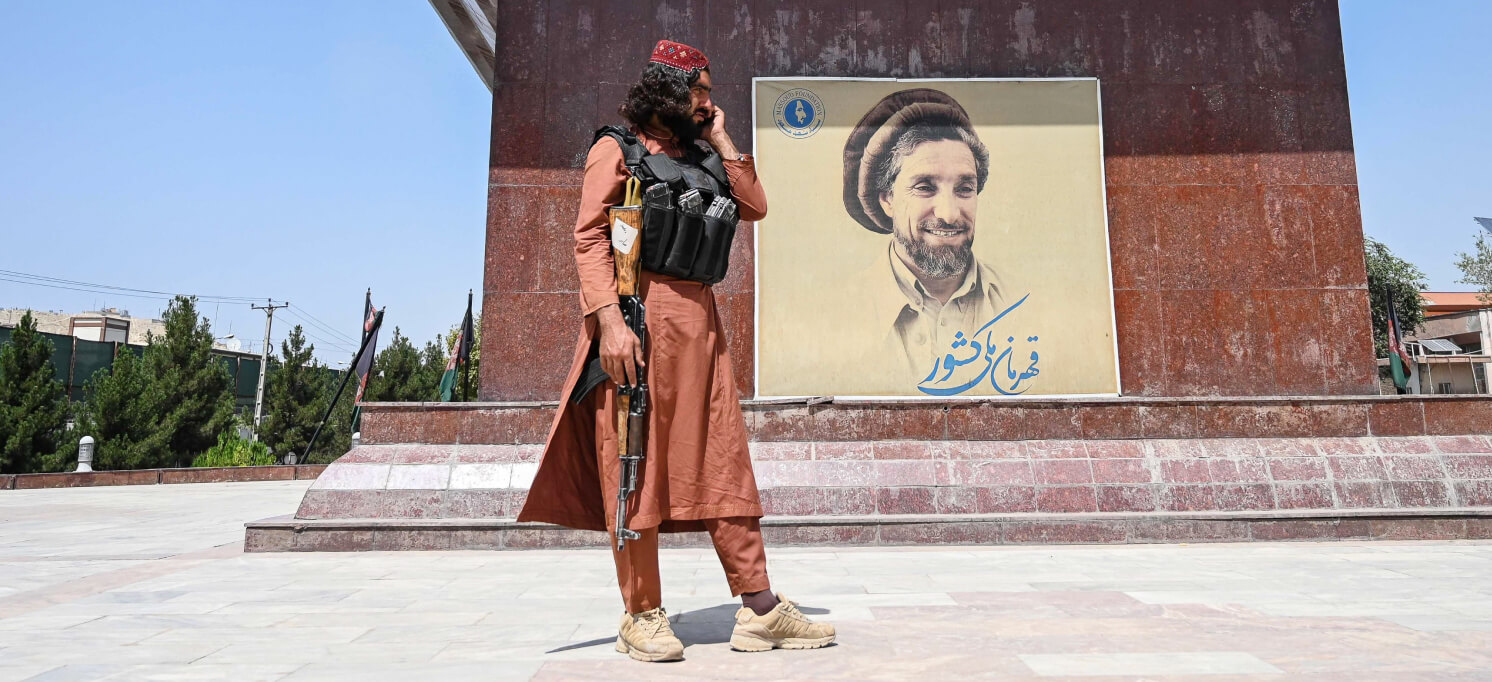
How the Taliban returned to power
Turning to the nation on the day of the capture of Kabul by the Taliban, President Joe Biden directly said that the United States got goals in the country 10 years ago, but delayed with leaving.
Indeed, Al-Qaeda, which was banned in Russia, managed to significantly weaken, and Ben Laden’s usam was eliminated in 2011 (though already in neighboring Pakistan). At the peak, the American contingent in Afghanistan reached 100 thousand people, but a month after the murder of Ben Laden Barack Obama, he announced the reduction of troops by a third, and in 2014 - about turning the military operation. The task of the remaining contingent (a little more than 10 thousand) was a quick response to the “outbreaks of terrorism” and the training of the local police and the military.
But the Taliban that once sheltered, the Taliban did not go away - and all this time remained a factor in the domestic policy of Afghanistan, and the pro -American administrations of Hamid Karzai and Ashraf Gani , even on paper , have never controlled more than two thirds of the country's provinces. The Taliban, who passed to partisan tactics, combined terrorist attacks with negotiations with the Kabul authorities. The economic base of the Taliban also has not gone anywhere. Most of the cash flows, contrary to considerable opinion, was provided not by opium plantations, but by road, fuel and other requisitions, as well as the custody of the “tithe” (OSHR) in the controlled territories, and the FT is quoted by FT. A recent study quoted .
For the American political establishment, the failure in Afghanistan was obvious by the first half of the 2010s. In 2019, The Washington Post was able to study the materials of the federal investigation of US failures and the NATO Coalition Lessons Learned in 2014. The main conclusion from hundreds of interviews of the participants in the operation: the Americans became victims of their own misunderstanding of the situation in Afghanistan and self -deception, and even a military strategy was wrong, not to mention the domestic political. But the main mistake was stupid expenses on the transformation of a disconnected tribal country into a modern state. The total direct and indirect operations for the operation are estimated at $ 2 trillion. Half of them went to projects that often did not end with anything but the saw .
President Donald Trump, before coming to power, promised to stop the “endless war” that had finally disappointed the Americans. At the beginning of 2019, the US special representative Zalmai Halilzad began negotiations with the emissaries of the Taliban in Doha, and on February 29, 2020, they ended with the signing of a peace agreement - on the assessment of political scientists, from a weak position of the United States. It had four sections:
- Cease-fire.
- The withdrawal of foreign troops. The United States agreed to reduce the contingent from 12 thousand to 8.6 thousand people within 135 days. And subject to the Taliban compliance with obligations, the full withdrawal of troops should occur within 14 months - that is, until May 1, 2021.
- Mezhafgan negotiations on the coalition government. In reality, they began only in September 2020, and, as the future showed, the Taliban had no intention of leading them seriously. Attempts to agree was not facilitated by the pressure of the American side on the negotiators of Gani (some details surfaced after the change of power). The United States had the opportunity to cancel the withdrawal of troops in the failure of negotiations, but the Biden administration did not use it.
- Guarantees of the fight against terrorism. The Taliban pledged to prevent the presence of terrorists in Afghanistan, threatening the security of the United States and their allies, including al-Qaeda and (prohibited in Russia) ISIS. This item was the simplest for the Taliban and is still being observed - by the time the Taliban agreement was concluded, they had been actively fought with competing Islamists for several years.
In November 2020, the United States announced that almost half (2500 people) had been withdrawn by the remaining contingent by mid -January 2021, but they did not have time with a complete conclusion to May. In April, Baiden timed the withdrawal of troops to the twenty -year anniversary of the terrorist attacks on September 11, 2001. In July, a group of US diplomatic corps in Afghanistan warned the State Department about the direct threat of lightning -fast capture by Taliban Kabul. And on August 15, after a week of the consistent transition of the provinces under the control of Taliban, the movement captured the capital of the country, leaving only the airport under the control of the United States. This speed, however, should not be overestimated: in 2001, the North Alliance with the support of the United States also expelled Taliban from key provinces and captured Kabul in a week.
What will happen next
According to political scientists, over the past 10 years, the Taliban’s positions have significantly intensified , and their opponents, on the contrary, have weakened: the emergence of the new Northern Alliance is now almost not expected.
Resistance clearly shared the foci. Prominent leaders of the ethnic communities of the north of Afghanistan, figures of the struggle against the Soviet occupation and the subsequent civilian-Uzbek, Marshal Abdul-Rashid Dustum and Tajik Ata-Mohammad Nur managed to evacuate (presumably in Uzbekistan). There are , apparently, thousands of militants and aircraft and helicopters of the Afghan Air Force, who were able to fly away from the country and land in Uzbekistan.
The main center of resistance to the Taliban on the territory of Afghanistan itself will once again be an impregnable Panjsher Gorge north of Kabul - surrounded by the mountains of the Valley, which Soviet troops during the Afghan war could not be controlled. Now the gorge is under the control of the young leader of Ahmad Masud, the son of the many-year-old owner of the Panjshera gorge, Ahmad Shah Masuda, the most famous leader of Mujahideen during the Afghan war, and later the head of the Northern Alliance, killed by Al-Qaeda terrorists two days before the attacks of September 11, 2001. Probably, the vice-president of Afghanistan amruullah Saleh, a native of the Panjsher and a representative of the Tajik community, who declared the legitimate head of the country is also there.
Masud Jr. himself this week did not exclude participation in the coalition government of Afghanistan-if he really created the Taliban, but warned Taliban that he was ready for war. If the Panjsher remains in isolation, his chances to somehow play in the inner arena are small, experts say : the new North Alliance is now possible only if international support and miscalculations of the Taliban. The key to the north of the country-and the united front-remains the strategic city of Mazari-Sharif, under the control of the Taliban.
The question of the near future is how much the Taliban will be able to preserve the cultivated image of a “decent” fundamentalist regime. News about the locations are already acting in many.
Is there money there
Afghanistan is one of the poorest states on the planet: 47.3% of its citizens live in poverty, every third worker receives less than $ 1.9 per day (according to purchasing power parity), and 60 of a thousand Afghan children do not live up to 5 years, follows from the latest data from the Asian development bank. According to the World Bank, the GDP of Afghanistan per capita is only $ 508.8 - this is less than, for example, in the Republic of Congo, Sudan and Uganda (in general, only six states are worse than Afghanistan in the world).
In 2020, the size of the economy of Afghanistan, according to the National Statistics Department of the country, amounted to less than $ 20 billion. This is less than the current market capitalization of Yandex ($ 24.4 billion), the condition of the Norilsk Nickel President Vladimir Potanin ( according to Forbes for 2021 - $ 27 billion) Michelson ($ 25 billion).
Afghanistan is primarily a rural country. The non -state sector of the economy is extremely small, and employment is concentrated in a low -performance agrarian sector (44% of all working Afghans are engaged in agriculture), the World Bank says . The development of the private sector of the economy, even before the Taliban came to power, impeded political instability, lack of security, weak institutions and corruption. “It was the lack of safety and stability that has always been the main obstacle to the construction of railways, pipelines, and energy targets,” says Omar Nessar, director of the Center for the Study of Modern Afghanistan, in a conversation with The Bell.
The pandemic of the SOVID-19 seriously hit the already weak economy of Afghanistan: the country's GDP in 2020 decreased by 5%, food inflation accelerated to 10%, and in April 2020, food prices reached 16.6%, the Asian development bank quoted.
The economy of Afghanistan significantly depends on external financial support. The trade deficit (that is, the excess of imports over export), according to the World Bank, is almost 30% of GDP and is fully funded by foreign financial assistance. Until recently, international grants provided about 75% of all government offices of Afghanistan. “The largest employer in Afghanistan is the army and the police, the financing of which takes place due to external assistance,” says Nessar. “The reduction up to the termination of international financial support is a lever of influence on the Taliban so that they make concessions in the issue of the formation of a new government.” The United States, after the transition of power in the country to the Taliban, not only stop financing the Afghan economy, but also freeze international reserves and accounts of the Afghan government.
The annual income of the Taliban movement, according to the UN monitoring group in May 2020, ranged from $ 300 million to $ 1.5 billion. Their traditional source - the production and trade of heroin. However, the Taliban successfully mastered the production of methamphetamine, which, unlike heroin, does not require large laboratories, and its ingredients are cheaper. The UN has already recorded the supply of Afghan methamphetamine to Central Asia, the state of the Persian Gulf, Iran and South Africa.
But most of all the income of Taliban brought racketeering and taxes from any commercial activity in its territories, FT writes with reference to detailed studies of the shadow economy of Afghanistan conducted by the British Overseas Development Institute. The Islamists taxed the prey of minerals, mobile operators and transport companies, took customs payments in the suppression of the borders and roads that they have controlled. “Even foreign investors, for example, the Chinese had to“ unfasten ”“ Taliban ”so that they would not carry out terrorist attacks on their projects,” Andrei Kazantsev, professor of the faculty of world economics and world Policy of the VSHE, told The Bell. The Taliban also received financing from foreign sources: help went from Islamic funds of the Middle East and Pakistan. “The West accuses Russia of helping the Taliban, but this has not been proven,” Kazantsev emphasized.
Despite the fact that the previous government of Afghanistan set itself the task of increasing gender equality, the situation of women in the country caused fears before the change of power. According to the UN for 2019, only 13.3% of adult women had at least the school level of education (against 36.9% of their male peers), only 21.6% of women worked or searched for work (74.7% among men). Afghanistan has the largest gender rupture regarding ownership of personality certificates: 52% of women and only 6% of men do not have a passport. The National Statistics Department of the country recorded an increase in cases of violence against women from 2018 to 2020. After the Taliban came to power for Afghan women, there is a direct threat of growth in discrimination and violence against them.
Why the Taliban of Russia
The story of the establishment of Russia's relations with the Taliban is not so long. Since the mid-1990s, when the Taliban, who actively supported the Chechen separatists, first came to power in Afghanistan, Moscow has been one of their most active opponents. Long before the start of the American operation in Afghanistan, Russia was supported by the North Alliance Ahmad Shah Masuda, with whom the Russian military built good relations at the stage of withdrawal of Soviet troops from Afghanistan. In 2003, the Taliban, which never committed terrorist attacks on Russian territory, was recognized by the Supreme Court of the Russian Federation a terrorist organization. Unlike the Americans, who always maintained limited contacts with the Taliban even after 2001, Moscow has not conducted any negotiations with them.
The situation changed dramatically at the end of 2015 - a few months after the Russian troops began an operation in Syria against the “Islamic state” (prohibited in the Russian Federation). In December 2015, the special representative of the President of the Russian Federation in Afghanistan unexpectedly stated that Russia has communication channels with the Taliban, and their interests in combating ISIS in Afghanistan "objectively coincide with the Russian." The expert on Central Asia, Arkady Dubnov, then explained the unexpected turn of the desire of Moscow to take advantage of the split of the Taliban after the announcement of the death of its founder Mullah Omar to turn the Taliban into allies in the struggle against ISIS.
“If such a game of Moscow, for the first time in many years, will be successful for raising rates in Afghanistan, then dividends can be significant,” Dubnov wrote: Russia can regain the status of an influential player in the region, strengthen Russian positions in the post-Soviet Central Asia (where the trust of local leaders in Moscow has declined greatly due to its actions in Syria and Turkey) and replace the threat of expansion) ISIS militants there. At least one of the goals was achieved: as a result of the then rate, Russia has now received a “golden action” in mediator between the warring Afghan groups as a great power, Dubnov said in July 2021, a month before the Taliban entered Kabul. But it will be necessary to pay for this rate - by the fact that the Kremlin will be responsible for the actions of the "new Taliban power", he added.
The interests of Russia in Afghanistan remain the same: to reproduce the birth of sources of the terrorist Islamic threat and turn the northern provinces of Afghanistan into a security buffet: now they are under the control of the Taliban, and for Russia this is a danger, said The Bell Dubnov. The Russian authorities need Taliban simply because so far there is no other strength in addition to them in Afghanistan who can control and restrain the terrorist threat, the expert of the Russian Council for International Affairs Kirill Semenov agrees. “So far, we can say that Russia took advantage of its chance to strengthen in Central Asia and was not mistaken by establishing connections with the Taliban. In the event of an exacerbation of the situation in Afghanistan, illegal migrants from neighboring countries can surge in Russia, among which radical elements will appear. And Afghanistan for Russia can become what Algeria is still for France - a constant threat to security, ”he says.
The fact that Russia will be able to extract some material benefits from the Taliban, all experts surveyed by The Bell doubt it. “For large business projects that bring money, stability is needed-security of employees, a guarantee of the safety of investments. Now the Afghan regime is too unstable to talk about it. In addition, in order to get something in Afghanistan than Russian companies theoretically can do, infrastructure is needed-now it is absent in the country. This means that in the country, to get the result, it will be necessary to hold a five -year plan - no one will do such long investments in the current unstable situation, ”said the Bell Orientalist Dmitry Verkhoturov.
Photo on the cover of the material: Eastnews