
Translated material
"In Russia, the worst scenario is always carried out"
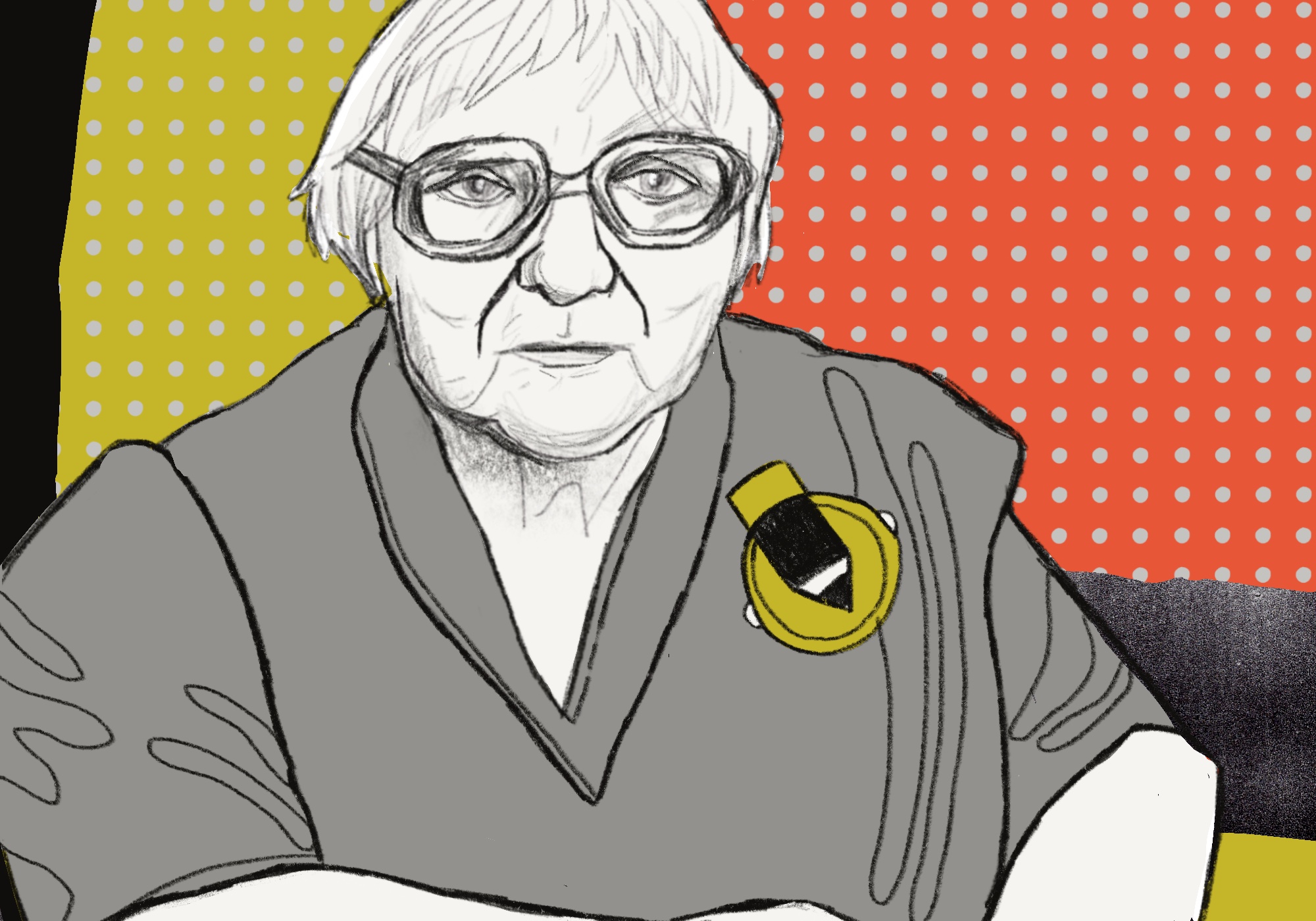
Engelina Tareeva was born in 1925. Almost all the “bombs” of the XX century fell into it. What does Putin think about Putin, Yavlinsky, Navalny, about death, love and the end of the Russian mentality of the oldest Russian blogger
"I depend on people"
“You are 96 years old, but you seem to remember everything that happened to you in life.” Does the memory fail?
- I have documentary memory, autobiographical. I still worked very well, now, maybe it is already starting to take it. But the pictures of the past are so bright that by their brightness I cannot determine what happened before, what was later.
- You were born almost a century ago. How do you remember your childhood?
- I was born in Dnepropetrovsk, I remember myself from two and a half years - not episodes, but already in a row.
I remember the nanny - she was the closest person for me. Her name was Anna Fedotovna Mukhina. The nanny was from serfs, serfdom entered me through the nanny - I felt him. She told wonderful fairy tales, I think that in the competition of storytellers she would defeat Arina Rodionovna. In her fairy tales, the bearer was not an immortal or Baba Yaga, but an evil lady. The evil lady was rotten by the maid, who ruined her skirt. I understand that this maid was a nanny mother.
I have a nanny before my eyes. She was tall, bony slightly. She seemed very beautiful to me, because I adored her.
I remember her back was sick. She wanted a healer to cure her. But, since my parents were communists in our house - it was impossible to bring the healer, she met with a healer at our janitor Thomas. I went with her. A healer came - terrible terribly. Maybe she deliberately wanted to seem so terrible that it was clear that she is a sorceress. I was frightened and clogged into the far corner. The nanny lay down, the healer began to crush her back. The nanny began to moan, and I flew out of the corner, grabbed the healer by the leg and dug into it. And now I remember the taste of a rough gray stocking.
I had an affection for each other, we were like a single creature. The nanny made me a man dependent on people. All my life I depended on someone: first from herself, then from the younger brother of Felix, and when I got married-from Igor Tareev, my husband. When he was gone, I lost 20 kilograms in three weeks.
- What did the children play a century ago? After all, they had no tablets and the Internet.
- Parents believed that I should not have dolls. Then they thought that dolls are philistinism, they raise a maternal instinct in the child ahead of time. We played the ball, a rope.
In the morning, a man who traded coal came to the courtyard of the house. Coal was bought for irons - then there were such steam irons. The coalrum shouted: “Golya! Golya! Golya! " After him came the glass, then - the man who shouted: “Sing! Fix! Buckets, pots! ” Then - the junk man: "We take the old man, we take the junk!" Children ran out to him who grabbed something at home and carried out, because for this the junior gave them sweets. But they didn’t allow me - the nanny fed me with healthy food.
Then he was a scraper, he had only one song: "Transval, transval, my country, you are all in fire." For some reason, the Russians were close to the heart of the Burov’s fate in the Anglo-Broke War (the song is dedicated to the defenders of the South African Republic of Transvaal, one of the participants in the Second Anglo-Broke War.-approx. TD ).
- Your parents were communists, and their parents were revolutionaries. Mom and dad said something about the generation of people who committed the revolution?
- Grandfather and grandmother from the father were revolutionaries, underground. Grandpa is an old “spark” (an employee of the revolutionary illegal newspaper of the Iskra RSDLP. - Approx. TD ). As my mother told me when dad was a baby, they came to them with a search. Grandmother held a private dining room - at the same time it was a party turnout, and the income from the dining room went to the party treasury. The neighbors warned that the gendarmes were coming. Grandma had a pack of "sparks". She wrapped my dad in her pope, and on top - a blanket, and when they came with a search, the dad was wrapped in a “spark”. Dad screamed all the time, his eldest two -year -old sister held on to her mother’s skirt and also cried. The gendarmes saw a large family and decided that the grandmother was not an underground. Formally, they made a search, found nothing.
Miracle and fear
- Your father became a party worker, and already under the USSR, in 1937, you had another search. Do you remember how it passed?
-Some people came, a search-also formally, did not even go to the nursery. We were not long, left and took up dad. And dad on the threshold said: “Well, now I’m sure that Victor is not to blame for anything.” Victor was his best friend, he was taken a few days before. No one understood what was happening - they thought, maybe these people were really to blame.
The revolution was a miracle. And everyone was afraid that this miracle would end. “The moon fled behind the clouds. I do not sleep in a deaf patrol for the third night. Enemies crawl into silence. Do not sleep, my country! I'm old. I am weak. Oh, woe to me ... Oh, woe! " (Aria of the old partisan from the opera according to the libretto of Arkady Gaidar. - Approx. TD ), “Enemies creep into silence” - this was a common feeling.
- Have you seen dad anymore?
- At first we were told that he received ten years without the right to correspond. This meant execution, but then no one knew this. When rehabilitation began, they told me that my father died in 1939, serving his sentence. I did not sleep the night, I thought what I had to do with a young healthy person in order to drive him into the coffin in two years. And then, after many years, there was a party rehabilitation, my mother wanted to restore in the party for some reason, and there she was told that the dad was shot three months after the arrest.
- How has the life of the family changed after the arrest of the father?
- We became the ChSVN (members of the family of the enemy of the people. - Approx. TD ), and this had to be indicated in the questionnaire, they would not have taken us to all work. Of course, mom was expelled from the party. They fired from the department of physical chemistry, did not allow to defend the finished dissertation. They hired a librarian. We had a three -room apartment, we were left the smallest room, nine -meter. There we lived four: mom, Felix and I and our housekeeper. Which, of course, ceased to be a housekeeper, we did not pay her. But she lived with us and was a family member.
- How do you generally feel about the USSR? Probably because of his father’s arrest-negatively?
- You see, what's the matter ... In Russia, the worst scenario is always carried out. When there was a February revolution, Russia could become a democratic country. But did not. The October Revolution took place. After it was a chance to become a democratic and socialist country. Lenin introduced the NEP (the new economic policy-the complex of economic reforms carried out in the 1920s-approx. TD )-it was not easy, the NEP did not accept the revolutionary masses, believed that it was surrender, a return to capitalism. If Lenin had been in power for another fifteen years, then in Russia there would be something like a Swedish model.
And Stalin, I think, made a counter -revolutionary coup. He replaced the project of the communist project of imperial. Therefore, he destroyed all the Communists, the entire Lenin Guard - in our country and abroad, to whom he could reach. And he installed a system that has nothing to do with Marxist socialism. I am a communist, not an anti -communist. And under Stalin there was state capitalism.
If you take the spectrum of beliefs from the extreme left to the extreme right, I am the left center. The intelligentsia of all centuries and all peoples has always been left, because the intelligentsia has always been on the side of social lower classes, the exception is only our today's Russian intelligentsia. Injured by Soviet practice, it mistakenly connects it with the left idea, but there is nothing more right than the Stalinist totalitarian regime. I am left.
- And what's the difference between the Stalinist repressions and the red terror immediately after the revolution?
- There was a revolution. The population of the country was divided into supporters and opponents of the revolution approximately in half. Because if there were much more people on one side, then the civil war would not last four years. The civil war ended, the Reds defeated. They say that the power of the Bolsheviks is illegitimate. I do not think so - they received power from the hands of the victorious people, and there can be no more legitimacy. But the half that was against the revolution-they continued to be opponents of the revolution and, I think, tried to do something that they could.
Here about [Nikolai] Gumilyov they say that he did nothing against the Soviet regime. He was arrested in the Tagantsev case. Those who say that think that they protect Gumilyov. In fact, they expose him with a complete insignificance. He did not accept the revolution, considered it evil, and if he had not even tried to fight this evil, he would be an insignificant coward. And he was a brave man. Of course, both he and the Tagantsev-and not only them-tried to do something.
In general, I believe that the Chc Dzerzhinsky fought with the real enemies of the revolution. Then - Stalinist repressions - there was terror against their people, and terror is carried out not to destroy enemies or potential enemies, but for people to feel fear. Dzerzhinsky’s activity is one thing, and the activity of the berry, Yezhov, and so on - is completely different. It was impossible not to fight the real enemies of the revolution - there were many of them. And the KGB-NKVD already fought with dissenters, with everyone and unleashed terror.
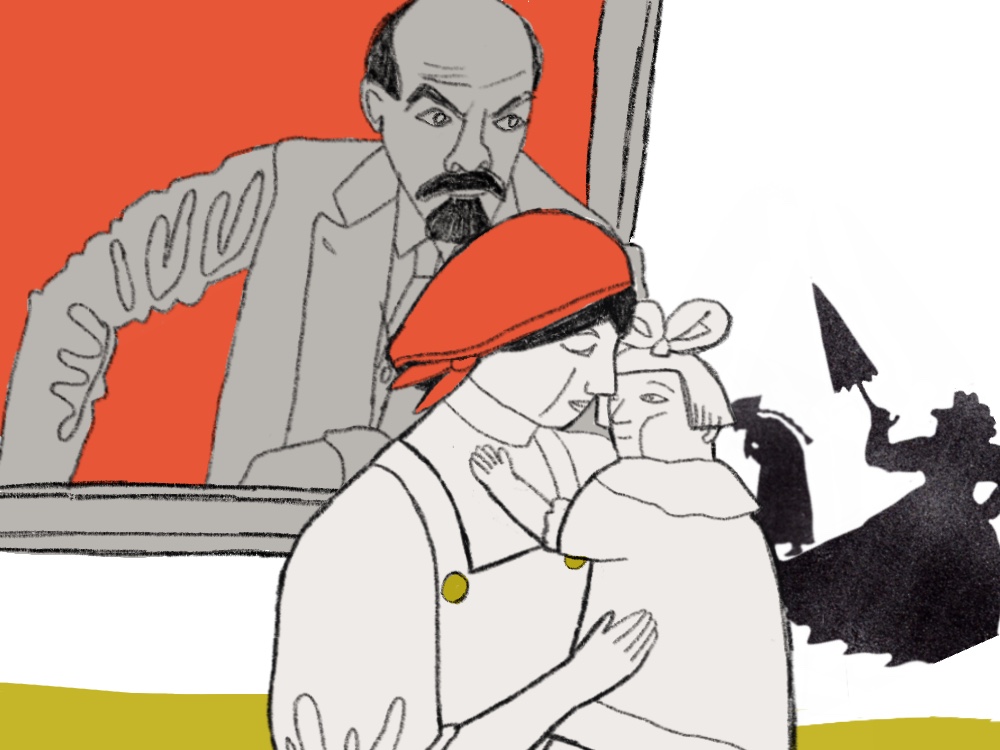 Illustration: Tanya Safonova for TD
War as in a song
- How did you remember the war years?
- The first bomb of the Great Patriotic War exploded a twenty minutes of walking from our house in Kyiv. But the young dream is strong - I did not hear the roar of the explosion. And the younger brother fiddled and said: "Linka, war, real, get up, we go to the bomb shelter." It was under our house. It was bored there, I stayed there for half an hour and went out. And more in the bomb shelter did not go down.
- It was immediately clear that this was a war?
- Before that, there were often training alarms. And this one was combat. They were waiting for the war. Then we got to Kazakhstan, to the collective farm. All men were drafted into the army, and I became a tractor driver. It was hard - not the right word. We tired that after work, without undressing, we fell on the bunks in the trailer, where we lived, and fell asleep with a stone sleep. Absolutely everyone worked from small to great from dawn to dawn.
- Did people follow the fronts on the fronts?
- No. We received only one district newspaper in one copy. They mainly wrote about workdays. About what was at the front, they wrote very little there.
In the village there lived Pavel Ivanovich Baranov, a military personnel. He adored the army and everything connected with it. Shortly before the start of the war, he was demobilized because he was discovered by open tuberculosis, and sent to Kazakhstan for climatic treatment. Here he was the chairman of the village council.
In the evening, at twelve o'clock he called the district center and asked the summary from the front. By this time, I resorted to the village council, he told me: "Touch the map." The village council and board of the collective farm were in the same building. We turned the card, dictated to him the reports, he marked some points on the map, then held the front line. I listened carefully to all this, remembered, and then ran and told my mother. And besides us, no one was interested in the war. It was a tiny village, lost in the Kazakhstan steppe. If it disappeared, no one would have recognized, except for the district authorities.
-Was there any hatred of the Germans? Fear that the Nazis will win?
- There was such a hard work that they could not imagine this. True, our foreman said that if the Germans come, he would sit on the tractor - and directly from the cliff will collapse into the cake, the old man of the Urals. There was a collective farmer who sold the cow. And everyone thought that he did it, because he was waiting for the Germans - he thinks that they would bloom the collective farm.
There were no special patriots, by the way. The collective farms did not dispose of what they were grown. The yield of the 41st year to the last grain, except for seed grain, was taken for the front. My mother was a large Soviet patriot, but she also said that it is still impossible: if the whole peaceful population will die out of hunger, then for whom is the victory then?
"Russia ended on us"
- From what year do you live in Moscow?
-In fact from 1947. But constantly-since 1955, when she married a Muscovite. At first I studied at the correspondence department of the Faculty of Philology of Moscow State University, lived in Moscow on bird rights, without registration. And Moscow was a regime city, at night there often occurred bypances, and if a person spent the night not where he was registered, there were troubles both his and the owners. I spent the night with my friends-they let me in for two to three days, but I did not want to substitute them, so I often slept at the station or at the negotiation point.
Mom asked me which faculty I want to act: “I didn’t impose anything on you, but now I ask you: only not to philosophical and not for journalism.” And I just chose between these two. But I obeyed her. Mom was afraid that there was ideology. After 1937, she tried to hide us and Felix somewhere away.
I arrived in Moscow and fell in love with the city at first sight. I realized that this is my city - for me it is hidden, here is my place. Moscow was then very well illuminated - under Stalin in this sense there was order. It was so light that it was possible to read on the street [in the evening]. And over the city, a huge portrait of Stalin soared on balloons soared on balloons. In the film by Nikita Mikhalkov, “Tired of the Sun” there is this portrait.
- Did you like Moscow, even despite the portrait of Stalin?
- I would say, the spirit of the city captivated me. And then he was different. Muscovites - it was a nation, a whole country - they were very different from the citizens of the rest of Russia. Educated, active, with wide interests. I could find out in the Muscovite train by the expression on the facial expression.
Russians are now other people. The first text that I put on a blog was called "Russia ended on us." My generation - the last carriers of what always - and before the revolution - was called the Russian mentality. It was characterized by a spiritual primacy over material, collective and public over the private, personal and primacy of the future over the present. Bryusov, the most important symbolist, wrote: “The young man is pale with the eyes of burning, now I give you three covenants. First accept: do not live the present, only the future is the area of the poet ... "
And in Russia, of course, there has never been a cult of a golden calf. Such words as “wealth”, “rich” always had a negative emotional coloring. The well -fed were under suspicion.
- Not so now?
- Now the opposite is true.
"He died of the imperfection of the world"
“You said that they were very attached to your husband.” Tell us what kind of person he was.
- When we met, at the same moment I realized that I want to spend my whole life with him. Nevertheless, we were comrades for a long time and only four years later got married. His philological education was the third in a row. He was a biologist by first education, then he entered the acting department of GITIS, graduated from him, but decided not to become an actor and came to our faculty.
He was a difficult man, and it was very difficult for him to live. He somehow could not accept the world as he is. We all see that the world is cruel and unfair. We somehow adapted to this and live. And he could not. The imperfection of the world stuck in him like a bone in the throat - neither swallow nor spit out. I think this strangled him.
He was inclined to depression. All the years that I lived with him, 24 hours a day I was engaged in psychotherapy. He completely could not stand rudeness, and if you can’t stand rudeness in Russia, it is difficult. Once he was in the hospital, and the nurse was namilled to the patient - not to him, another patient. Because of this, he had such an aggravation that the doctors thought, they could not save him. I convinced him that in this world you can live and even be happy.
- Did you sincerely think so?
- Yes, I am a happy person in a cruel and unfair world.
- When did he die?
- In 1984. After three heart attacks, he was already a disabled person of the second group. And somehow I was going to the bakery, he wanted to accompany me. I agreed and went into the kitchen to pour the water, which he would pierce an additional tablet.
When I entered the room, he was gone. True, I did not understand this. I called an ambulance when the doctor and paramedic entered, the paramedic said: "What do you call an ambulance when you have a dead man?" I replied: “Why did you get that he is a dead man? He just lost consciousness. See, he is pink and warm. ” And the doctor began to gain a large syringe. I thought: "So you can still help." But the doctor with this huge syringe came up to me and drove an injection - it was a sedative.
I started clinical depression, which lasted eight years. In the first two weeks, I lost 20 kilograms - I could not wear my clothes, because she looked strange on me. Moreover, my brother is a psychiatrist and doctor of sciences, he could not choose medicines for my depression. I believed that I would not come out of it and reactive depression due to my husband’s depression would go into senile depression.
And then such a story happened. My daughter and son -in -law belonged to the flock of father Alexander and went to Paris. They brought from there a whole box of books by YMCA-Press and put it next to my chair. Because of the depression, I did not read at all, although I am a scribe. But I took out the book out of the box - it was Shulgin, “Days,” and read it. And then the next - it turned out to be the "Red Terror" Melgunov. There was a lot of interesting things. In the fall, they brought books, during the winter I read all of them, and somewhere in May I felt that there was no depression. Felix tied the way out of depression with books. Когда Игоря не стало, я думала, что без него проживу максимум три месяца. Но вот уже 36 лет прошло.
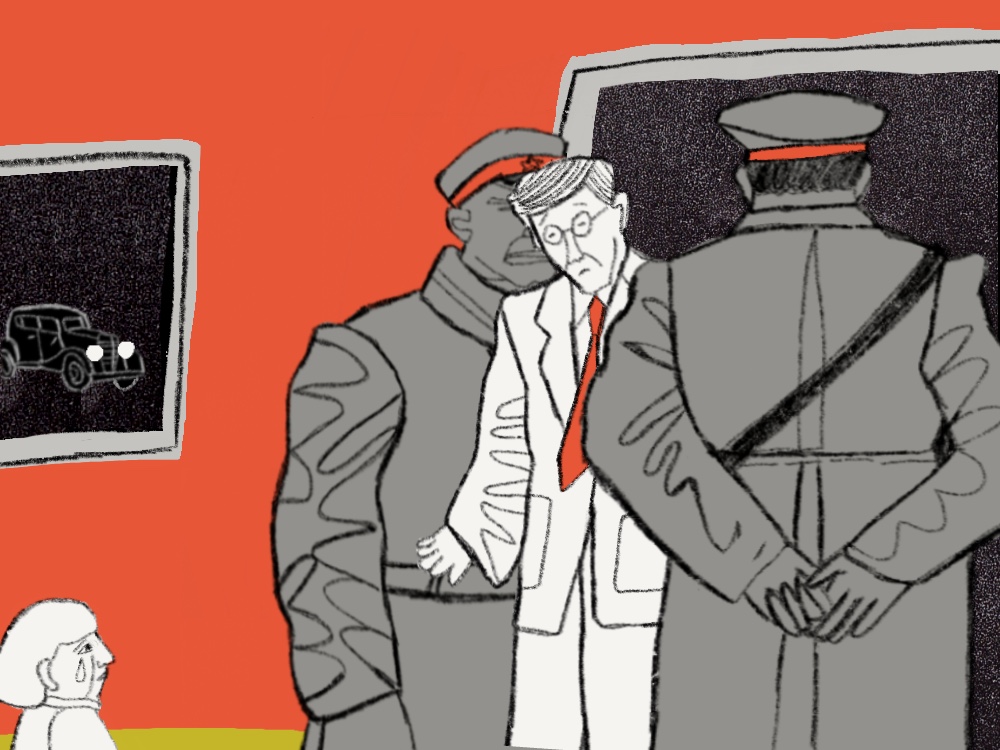 Illustration: Tanya Safonova for TD
Номенклатурная революция
— Что вы почувствовали, когда узнали о развале СССР?
— Неужели это добровольно кто-нибудь будет слушать?
Это была номенклатурная революция. Я пишу историю России XX века, собираюсь ее довести как раз до номенклатурной революции. В Советском Союзе сформировался привилегированный класс — бюрократия. Ленин говорил: «Бюрократия может погубить революцию». Сталину эта бюрократия была нужна, ему нужно было на что-то опереться.
До Сталина был партмаксимум. Маркс сформулировал несколько принципов, на которых должно было основываться социалистическое общество. Один из принципов гласил: пока будет государство, самый высший чиновник не сможет получать зарплату, превышающую среднюю зарплату рабочего. В первые годы после революции так и было. Эта средняя зарплата рабочего называлась партмаксимум, и больше нее никакому партийному деятелю, какой бы он пост ни занимал, сколько бы часов в день ни работал, не могли платить. 450 рублей была средняя зарплата рабочего. Я, дочь партийного работника — отец был членом ЦК Украины и профессором философии, — в школе была хуже всех одетая девочка.
А Сталин отменил партмаксимум. Появилась бюрократия, дорожащая своими привилегиями. Ее представители лечились в кремлевской больнице, питались в кремлевской столовой, получали паек на всю семью. Отдыхали в цековских санаториях. Эти люди были новым привилегированным классом. Если представитель этого класса чем-то не угождал начальству и терял пост, он сразу лишался и привилегий. Чиновники не могли оставить привилегии своим детям.
А когда система зашаталась, появился шанс поменять высокое социальное положение на реальную собственность. Это и была номенклатурная революция начала девяностых. Поэтому Союз распался — местные элиты не хотели делиться с центром. По-моему, Маркс говорил, что идеология правящего класса становится общей идеологией. Люди видели, как ведет себя начальство, что богатым быть не стыдно. И делали как они.
— Вы говорите как коммунистка. Но сейчас вы являетесь сторонницей «Яблока». Разве члены партии «Яблоко» — коммунисты?
— Ну, [сейчас] коммунистов нет. А «Яблоко» выступает за демократию, против путинского режима: первый пункт программы «Яблока» гласит, что путинский режим ведет страну в тупик.
— Вы верите в то, что у «Яблока» получится что-то изменить?
— Это вышло бы, получи «Яблоко» большинство в Думе или не знаю где. But this will not happen. Если бы Явлинский стал президентом — именно Явлинский, экономист с мировым именем, — мы с первых же дней почувствовали бы перемены. Он знает, что нужно сделать на первом этапе, что — на следующем. У него есть пошаговая программа выхода из кризиса и перехода к устойчивому развитию.
— Но зачем поддерживать «Яблоко», если «Яблоко» — партия нереализуемой программы?
— Есть такой русский тост: «Выпьем за успех нашего безнадежного дела». Это очень русский подход к жизни. Отсутствие успеха и даже надежды на успех не основание для прекращения усилий.
— Вы вообще верите, что в России когда-то станет лучше жить?
— Некрасов писал: «Вынес достаточно русский народ, <…> Вынесет всё — и широкую, ясную Грудью дорогу проложит себе. Жаль только — жить в эту пору прекрасную Уж не придется — ни мне, ни тебе».
— Это звучит грустно.
- Yes, very much. Думаю, даже вам, хотя вы намного моложе, не придется. Хотя следующий правитель, кем бы он ни был, все равно что-то изменит. Если бы меня спросили, Путин или Навальный, я бы сказала: безусловно, Навальный. Какого бы мнения я ни была о Навальном. Навальный — прагматик, он сразу же замирился бы с Западом, с России сняли бы санкции, ушли бы и антисанкции, к нам бы хлынули дешевые западные товары, и уровень жизни в стране сразу бы вырос. А до смерти Путина ничего не изменится.
Повторяющийся сон
— Остались ли у вас ровесники, с которыми вы поддерживаете связь? Или люди чуть моложе?
— Нет, все ушли, я последняя. Нас было трое однокурсников. Олег Леонидов умер в январе позапрошлого года. Эмма Гроссман — в марте, уже не помню, позапрошлого, кажется, тоже года.
— Вам одиноко?
— Мне не одиноко, потому что у меня есть блог. Поверьте, если бы не было блога, меня бы в живых не было. Есть молодые друзья, которые мне помогают. Есть Юра, который все делает для блога, я бы сама не смогла ничего делать.
— Когда вам было 86, вы крестились. Why?
— Знаете, вопрос о том, что первично, материя или идея, как-то не решен. У меня не было раньше потребности креститься. Я считала это чистой формальностью. Но, так как у меня дочь очень верующая и есть верующие друзья, они хотели, чтобы я крестилась. Моя крестная недавно поздравляла меня с десятилетием крещения. Крестная — подруга дочери.
— Энгелина Борисовна, вы боитесь смерти?
— Понимаете, я не хочу умереть, потому я пишу историю России XX века. Я не могу уйти, не оставив свидетельства. К тому же есть друзья, которые от меня зависят. Но я не боюсь смерти.
Я стою на пороге перехода в другую жизнь — вечную — и очень серьезно к этому готовлюсь. Пересматриваю свое прошлое. Серьезных грехов у меня нет, я никому не желала зла, даже врагам. Но по мелочам, конечно, набирается. Я сотни раз прошла мимо возможностей сделать добро. Можно было остановиться и кому-то помочь, а я не помогла — вот этого у меня навалом. Я сейчас это вспоминаю и сгораю от стыда.
— Вы верите, что там встретитесь с мужем?
- Certainly.
— Сомнений нет?
- No. Мне снится повторяющийся сон. Я иду по темному коридору, там открыта дверь в комнату, оттуда — яркий свет. В дверях комнаты стоят Игорь и мама. Так что я считаю, что они меня ждут и мы встретимся.
историческая память психология россия