
Translated material
Who will win nothing
About the most important thing that happened at the XV International Festival. Andrei Tarkovsky
No. This is not a review in the usual sense of the word. I would like to talk about the most, in my opinion, essential, incident on the forum named after the main domestic film poet.
The terms of the anniversary XV International Film Festival named after Andrei Tarkovsky “Mirror” were moved all the time. And therefore, the programs were formed in extreme mode, which, however, did not affect their saturation.
It is curious to monitor how the festival turns into a multi -junk art forum, an intersection at which cinema is periodically inferior to scientific conferences, promenade - performances, exhibitions, and classics - modernity.
The “mirror” was opened by the composition of Philip Gorbachev and the Bell group, in which the rhythms of technology and industrial and industrialized coexist on equal terms with a real bell charge. “For me, musical activity has always been associated with repentance, joy, spiritual American slides, because nothing can be done without them at all,” says Gorbachev.
The opening took place on the day of Russian cinema, on August 27, in Yuryevts - the city of childhood Andrei Tarkovsky, which he recreated in the "mirror", as Fellini recreated his native Rimini in Amarkord. Today, the Yuryevets is a place of pilgrimage to the Sinefils from all over the world. The ceremony was led by the director, actor, artistic director of Gogol-Center Alexei Agrainovich. On the territory of the former Yuryevets brewery, a scene and a street cinema were built, which contains shows and meetings with the authors of the films.
"Conscience" by Alexei Kozlov represents Russia in an international competition. This chamber black and white picture has three awards of the Shanghai festival, held in June of this year.
What is the film about
"Conscience", director Alexei Kozlov
The twenties. The post -revolutionary Peter, frozen in black crevice of eras. Gangster raspberries, shot lists, a stew from under the floors, confiscated gold ingots. Boris Arkadievich (Vladislav Komarov) of the former, a professor of law, for whom justice is not the right to judge, but the correct court and the presumption of innocence are not empty words. In free time from lectures, the Soviet government helps to catch bandits. Dreams of a fair world. Only time every day is more tearful, more confusing, stuffy. And the bandit Panteleev, who torn the professor who torn and robbed his brother, and his direct boss-syphilitic, thief, and Chekists in ties and leather cloaks, resembling exemplary SS men-in fact, all the killers, ready to lead the “mortal battle” from above for the mythical “kingdom of labor”.
The professor’s brain boils in unsolvable issues. What does the right in the country cancel the laws turn into? And what is the price that the powerless defenders of this right have to pay? The professor’s brain argues with his will, but neither will nor fear can drown out the voice of conscience.
The professor is not able to make the world fair. Even save a little niece who tightly fell silent after the murder of parents. The film is uneven, but with magnetic moments, in the spirit of Herman movie. And I also remember a huge room in a Cheka with a wet floor. Black and white room with the smell of death and blood, just washed off.
"Do not believe fairy tales, they were true"
The theme "Mirror-2021"-"Fairy Tale as a document." It is built around the traditional program of the Film Festival of Nadezhda Vasilyeva-Balabanova , a costume designer with a giant filmography. This year she “dressed” two film skids: “Horse-Gorbunks” Oleg Pogodin and “North Wind” by Renata Litvinova.
The theme of the fairy tale arises in the work of Andrei Tarkovsky: the Mirror festival, together with the St. Petersburg book project “The Word Procedure”, published the book “Hoffmanian” - the not -set script by Andrei Tarkovsky with the introductory articles of Oleg Kovalov and Larisa Poluboyarinova.
Andrei Tarkovsky has a whole martyrologist of conceived, but not born paintings. From the “idiot” and “crimes and punishment” to the “magic mountain”, “Joseph and his brothers”, “Masters and Margarita”. For example, about the plan of the “idiot”, the director of Mosfilm said: “Idiot” “Mosfilm” is not needed. ” The same fate befell the Hoffmanian.
The script wrote by order of the Estonian studio, she helped him out in difficult times of the lack of money. “Hoffmanian” was to become a kind of continuation of the “mirror”. "Hoffmanian" follows from the dying confession of the hero. The wizard and storyteller Theodore Hoffmann on the verge of death. Around the melting writer, real and invented characters gathered. And then the mirror in which he is looking for his reflection. And does not find.
The mirror for both the Hoffmann and for Tarkovsky is not only a means of self -knowledge (like Bergman), but a portal to other parallel worlds. Goskino did not approve the script. Already abroad, he tried to return to him.
Russian actors should have played Russian people, Hoffmann himself - Dustin Hoffman.
Who defeated you?
Director and founder of the magazine "Session", author and compiler of the seven -volume "Contemporary History of Russian Cinema" Lyubov Arcus awarded the Honorary Prize of the XV International Film Festival named after Andrei Tarkovsky "Mirror" for contribution to cinema art. The film closing film is a new work of Arcus "Who Nobody won you."
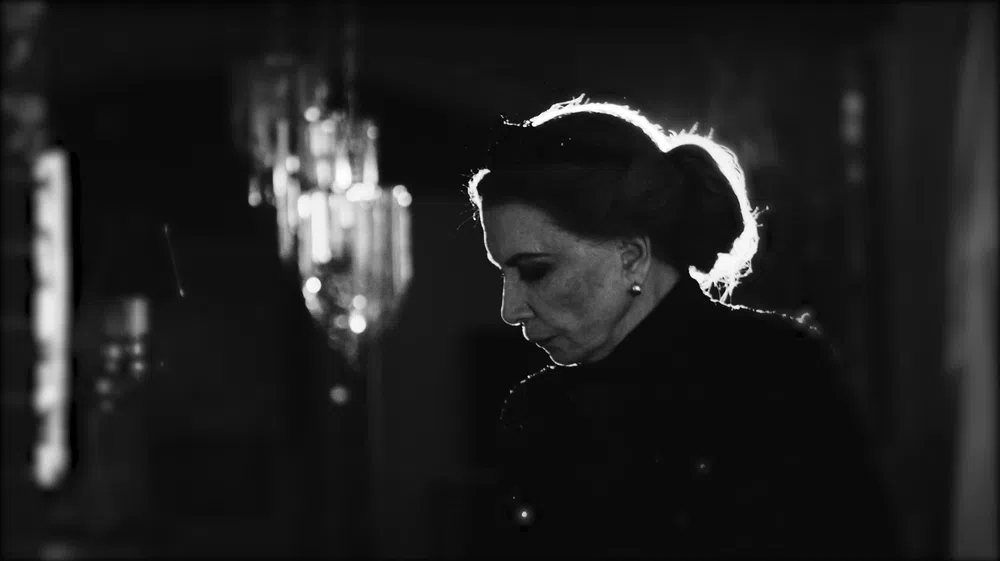
The release says that this is an Alla Demidova’s film-portrait against the backdrop of several eras and the sinking Atlantis of Soviet cinema. And the theater, of course. Everything is right about the background. Portrait? I don’t know, in any case, definitely not a bayopic. Five years made a film. He is now finished, specified. It is as if the author could not part with his heroine. Magnetic, unbearable, incredible. As if the film somehow painfully tied them. Surprisingly, the producer Konstantin Ernst ordered not to rush the director, apparently in memory of the times when he himself was the creator of the bohemian art program “Matador”.
At first, the film seems to be their fight: “Lyuba, if you were not a friend of the family ... I would never have gone to it ...” The author answers her about the same. Demidova does not like meaningless - as she sees - passages by car, passages, the way she is made up.
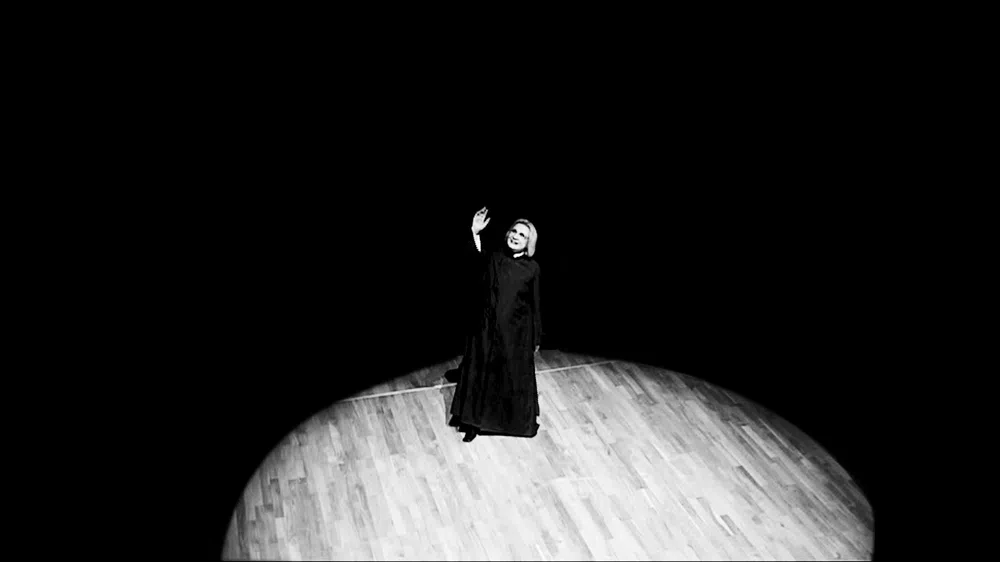
Why “look”, let it be as it is: tired after sleepless nights, an elderly woman. Every now and then there is a genuine tension: "I will not even answer ... I will not, as in a feature film ..."
She knows about her unbearable character better than others. Much is explained by childhood that does not like to remember. Anemia, tuberculosis.
When with such data, the girl brought up by her grandmother, the girl intended to establish herself among her peers, they simply grabbed her and held her over the river, threatening to throw down.
Since then he hates crowds. Calling to execution and enthusiastically glorifying. The crowd is always a prison, artificial ventilation. She rushes alone as salvation, the opportunity to breathe on her own. "Loneliness teaches the essence of things." Always contrary to the monolithic Soviet superstructures and friendly mascstation of the Taganka troupe. Here is a rare chronicle-the Tagankovites during the break of the grandiose, burning Hamlet behind the scenes, they sing, sang, and only her gersera with a shadow slips into his dressing room, tightly covering the door. Yes, she felt superfluous in the noisy, enchanting Taganka.
An extra person on the rendezvous over time. When the “bitch children” arrange the grass of Efros, Demidov does not participate in it, when they curse the creator of the Lyubimov Theater in chorus, she stands on his defense: they don’t drive her own father from the house. Her maximalist choice, her alienation, her ethical code are non -labe.
The screen noticed her and in demand already for thirty - in the posttherapy era of crushing disappointment. But at the same time, the "mirror" happens. And there is her Lisa with nervous fingers, the closest friend of the heroine Terekhova. And her stupid flask is in the final of a long passage along the corridor of the printing house. The actress took and jumped. And Tarkovsky took and left it in the film. And then everything coincided: and our knowledge that this Lisa died in the morning, and this flask. Hurt.
What is the difference between the film "Who the Nobody defeated you" and many acting or directorial baiopics? This is a movieroman, reflecting on time. In the main role - actress. The through plot is “an invisible germination of history in a person”, in roles, actions. Here, the author - a cinema and an analyst - examines the difficult path of the domestic theater and cinema, plunging into the secret of art of a separate royal actress, which has not become a serf, breaking out of the institutions of the rotting Elsinor with the growling name "Sesser".
Separate Demidova is also manifested in the analysis of the female film image of the era of stagnation: the director of the classrooms, mayors, strange, sweet women looking for their man. This is all not about her. Fragile and steel. Adult. Piece. Self -sufficient. Her characters are the same as separate: poetess, fanatic, aristocrat, sorceress, Duchess of Malboro.
No matter how hidden under the mask of an outsider, the film highlights the attractive power of the actress, moments of her delightful and tragic novel with a stage or camera. Her Gretargogarbov coldness, melting in "supersensible energies" and strange rapprochement with geniuses. Her sacrifice. The Iron Lady, who knows how to keep the distance between themselves and the role, is ready to give all the way to the last, risking himself. In the “... Stone Gosten” Anatoly Vasiliev, she barely recovering after two operations, saved the performance with a dance with castengers, driving heels into the planned groom, a cry of pain.
The film has a rare chronicle - live prints of the era, and the last interview with Gaevsky, Turovskaya, Muratova. And leisurely conversations with Vasilyev, Kurentsis, Serebrennikov.
And after all, with whom from the great Demidov she worked - she remained the mistress of the role. She dared to pour “a drop of cynicism, modern brittle intelligentsia-and thereby risky to bring her closer to contemporaries. And in the Muratov “adjustor”, her wealthy widow Anna Sergeevna was originally more caricatured, provincial, this Demidova “infected” her Chekhov absurdity, as if a lady with a dog was old in the province by the sea, but never acquired any life experience. Their duet with Vysotsky in Gamlet and in the Vishnevo Garden - an inexplicable miracle, alchemy, the center of the performances of Lyubimov and Efros. “They played their best roles in pairs,” Arkus will say.
The dependence of the acting profession ... well, how much can. It seems that she herself chose the Titans: Lyubimov, Efros, Tarkovsky, Viktyuk, Shepipko, Muratov, Khamdamov, Brodsky.
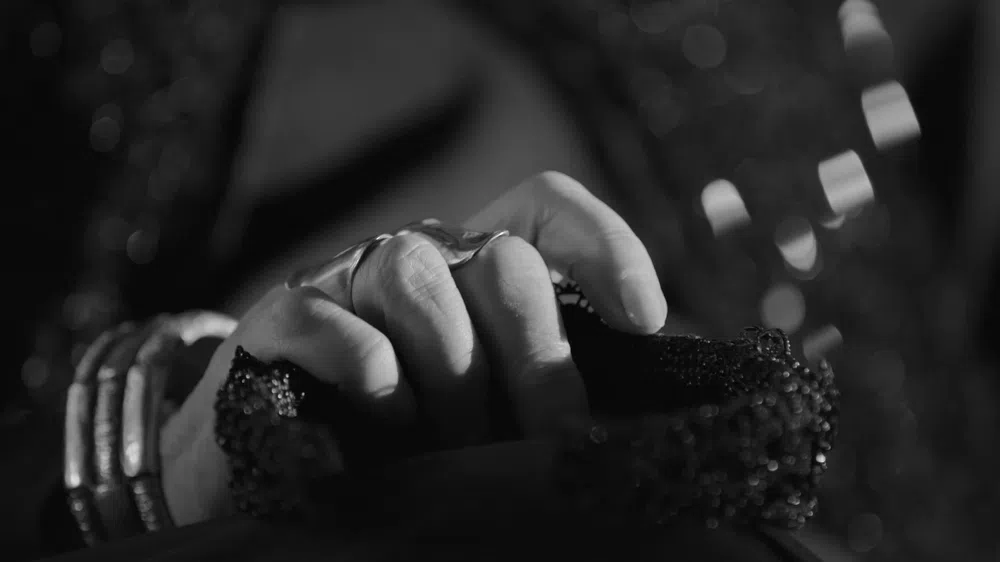
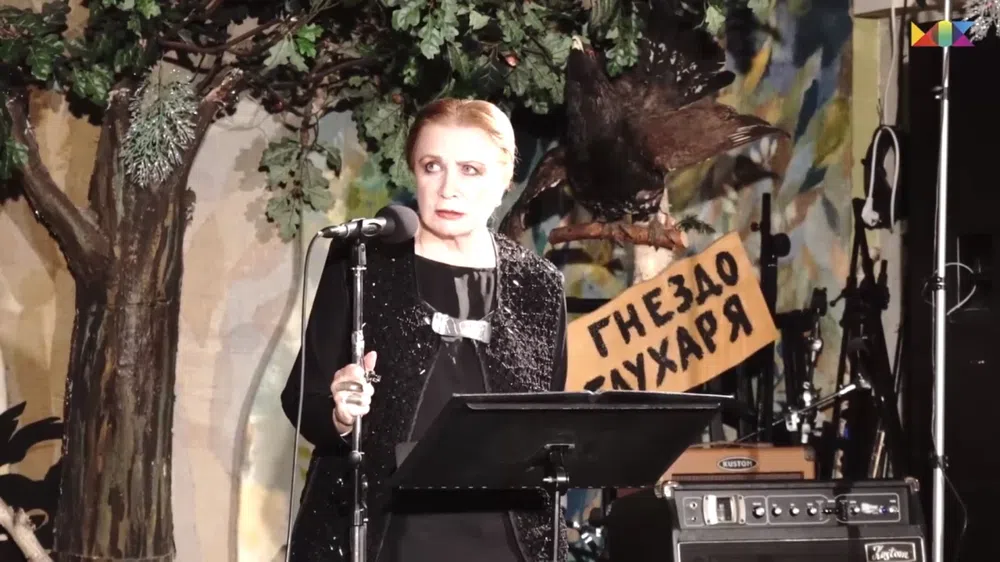
We observe how she has herself on stage, conducts a camera, a microphone. Cooking. And the spectators who came to a meeting with her, in the wardrobe of the Philharmonic, change their minds. Preparing for the meeting. So it was yesterday. Today she, as always capricious, goes to performance in the "Ground Nest." Reads Brodsky . “On my retina is a golden nickel. Enough for the entire length of the dream. ” Spectators continue to drink, chew, talk. Her hands in the rings grab onto the microphone, like a straw - tries to slip out of the "black void".
As the insightful Muratov will explain: "Her mania of greatness is a form of self -defense." Krentzis will add: "It is just that it is the theater, there is no border between the game and life."
Her time? He is not. It expired with its directors, favorite critics, its spectators.
And therefore, the frequent beeps that sound behind the scenes are a refrain of the New Age. "Laid the eyes of the genius." Who to call? Subscribers are not available. Voices remained, and the episode with the voice of Brodsky, perhaps the strongest in the film. Like the memory of Parisian tour. "Cherry Orchard" in Paris. Behind the scenes of Efros, the words of farewell: “Life is like a whirlwind, and people do not have time for this whirlwind. The wind knocks people, takes them away. And the whirlwind is always over us. And we are weaker than this whirlwind, to whom the name is time. And time is ruthless, swiftly, mercilessly. ”
Not finished, not completed: "I am leaving the unaware." Vasiliev will call this defeat. And he does not have a troupe, the diaries are registered with exclamations of despair.
And now, when he was very lingering, the film “Who Won you” is released, he falls into the most patient - our general defeat.
She looks into the eyes of merciless time and does not look away. Therefore, he wants to be in front of the camera “as is”, not like in feature cinema. But Arcus shoots a feature movie about the artist. Equal, pile, paradoxical, uncompromising. Vulnerable. With soda -skinned skin. Building invisible impenetrable walls between themselves and loud unbearable Elsinor. There, behind these walls, in silence, among the matte crystal lumber of chandeliers and glasses, she takes off his glasses and peers into shaky reflections, as if recalling Pasternakovskoye "All the people sent to us are our reflection." Lyubimov from the darkness shines with his flashlight. Muratova looks around bewildered. Efros will suddenly laugh. Tarkovsky will think for a moment. Vysotsky asks about something with a torment. And her husband, playwright Vladimir Valutsky, next to her. He drinks wine. “And who won you, old man? Nobody. I just went to sea too far. ”