
Translated material
Metal
Meetings at the plant for the production of consciousness, character, past, future and beauty
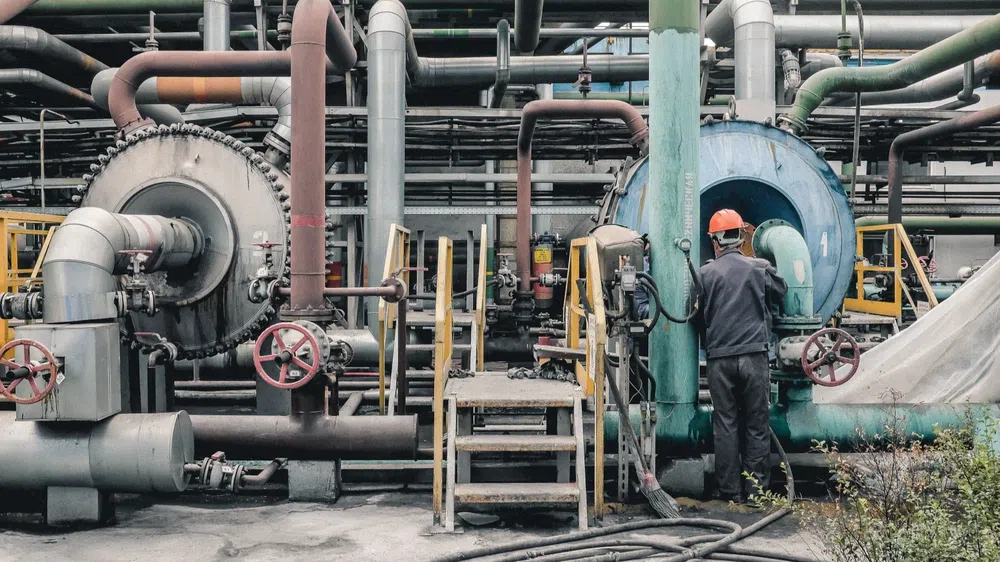
The person is arranged beautifully and difficult. Outside, he is happy, sad, generous or stupid, but it is not clear what is happening inside him at that time, in all these dark veins of the veins of the veins, where physics and chemistry of life are happening. The ore of days is sprinkled there in the worthless stoves of consciousness, and they slowly, mercilessly, melt her into the cast iron of the past years. In huge buckets of his experience, even red from impressions, they will take the character of doubts and passions to the converter of character, and then it will become a steel of actions. The actions will pour into slabs, heavy metal plates, from which an evil or bright fate will already do what she wants - a bucket, rocket, gun or machine. Or maybe he will just leave only one hope, thin as a galvanized liner.
All this person is clearly not to cope alone. He needs something like the Novolipetsk Metallurgical Plant. So that there were 28 square kilometers of the inner world, so that it would not go around it and go for all earthly lives, despite the streets, avenues, buses and 610 kilometers of railways, more than in the entire Moscow metro. And so that at least 26 thousand people have worked all the past and future of a person. And so that in the middle of all this round -the -clock force, the soul, similar to a fire pond, was hidden. Or a swan lake with white birds who do not want or cannot fly away. So that the meaning of man is like metal, the only excuse of his century, the basis of the world in which he lives.

Consciousness
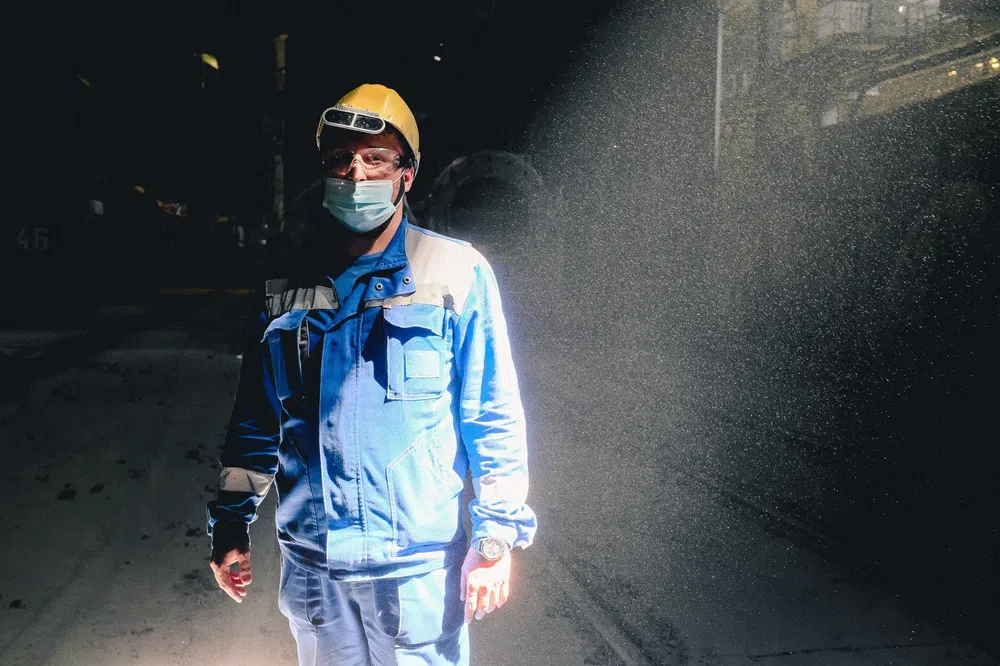
Nicholas Logvinov is responsible for consciousness in a person. Formally, it can be assumed that it controls the work of the domain furnace No. 6 of the Novolipetsk Metallurgical Plant. This is a huge building fifty meters high. In order for it to work properly, a total of 400 people are needed. From above, the foundations of the world, taken from nature by the power of progress - coke, ore, agglomerate, pellets, limestone, are loaded into the blast. In five to six hours at a temperature of 2100–2200 degrees, they go down from heaven to a person to become a hot liquid cast iron for him. Cast iron is released out as revelation, bright and long -awaited. You can stand next to it only in a special anti -reflective cloak, similar to a liquid mirror, in which the entire fiery river of unfulfilled human desires shimmers. She is filled with stunt buckets of everyday life, able to endure even one and a half thousand degrees of a rolled cast -iron imagination.

Nikolai Logvinov looks at all this everyday, in compliance with safety regulations. He is in a helmet, a simple special forces, to which, just in case, a red gas analyzer of anxiety for the state of the world is attached. But in his protective glasses, red reflections of the fire of life are burning, to which he has long been assigned an observer. He knows his main secret - the domain stove of consciousness at the very beginning of her life is made very simply, with wood, in fact a match of love. But then it is no longer possible to give this flame to go out, the process of cognition of the world is non -state. So Nikolai Logvinov, as it should be for any decent consciousness, wakes up at five in the morning, and at seven he is already here, understanding the night shift, whether the furnace had problems.
The main purpose of Nikolai Logvinov is to feel how the stove breathes, and help her not suffocate from troubles, stupidity or mistakes. It is useless to scold her for uncontrollability and whims, you can and should only be counted on yourself. Actually, that is why Nikolai Logvinov was assigned to the domain process of human consciousness.
“I am not Jules Verne, I have no global dream,” he says, looking at the unnecessary fire of desires. - I am here because a person can realize himself very simply - when he makes decisions. This is the main difficulty.
The domain process is the basis of the modern world. It has long been said that he has no prospects, they come up with something new. But I look at something-everything worked as it works.
Enough for our century.
Character
The character of a person is Alexander Shabalin. Shabalin is an steelmark. Often his business is compared with work in the kitchen, only gigantic, dark, as a truth of life, and the rays of hopes, which are breaking through the rare windows in the invisible heaven of the workshop of reality. In the workshop are converters similar to huge pots. They load 60 tons of a last life of a past life and pour 300 tons of revelations of hot iron there. Then all this is blown by oxygen, and in fifteen minutes of cooking, steel is obtained, pure as the personality of the newly born person. It remains to add a little spices of our time - of all kinds of additives - to get exactly the type of steel character that the modern world awaits.
However, a comparison of steeling with a cuisine of everyday life was most likely invented for the calm of an accidental observer. They tell how in the converter workshop of the Novolipetsk Metallurgical Plant, the cooks, who were looking for a worthy salary for hard and ungrateful work, were really once set to work. They held out to the winter and disappeared. They say that for a long time there remains the one who, for a start, defends the whole hot summer at the converter of character, while the fruits of expectations are ripening around and the stems of confidence in the future. The kitchen began to check the person not on fantasy, but for simplicity. Alexander Shabalin, apparently, was adapted to this since childhood. For works at school, he put units and deuces - units for literacy, a deuce - for ideas. But he perfectly understood the physics and chemistry of the world, simply remembered and did not even write down.
“There is chemistry in everything,” says the steature. - Chemistry in man, chemistry in nature. When they connect, they live. Like metal. Because the metal is alive and watching it is very interesting. You always think: how many more new I will find out how much more I can do. Stalear generally needs to move and think all the time. Why? Because for everything about everything he has only fifteen minutes of swimming. And in these fifteen minutes you need to live a lifetime.

Fate
The fate of a person will be performed, of course, in the Directorate on Research and Development. These are clean, bright and modern office premises. The directorate’s laboratory is similar to an exhibition of equipment, to understand the purpose of which to an ordinary person is not only difficult, but simply not needed. These are spectrometers, analyzers, microscopes that penetrate deep into the metal to understand and improve its essence. Here, Master Anna Roldugin, who peers into the crystal grill of steel, sits behind a translucent electron microscope. In principle, on a monitor, it is somewhat similar to a gray beach pebbles, but only a hundred people around the world can judge her serenity today, and we obviously do not enter into their number.
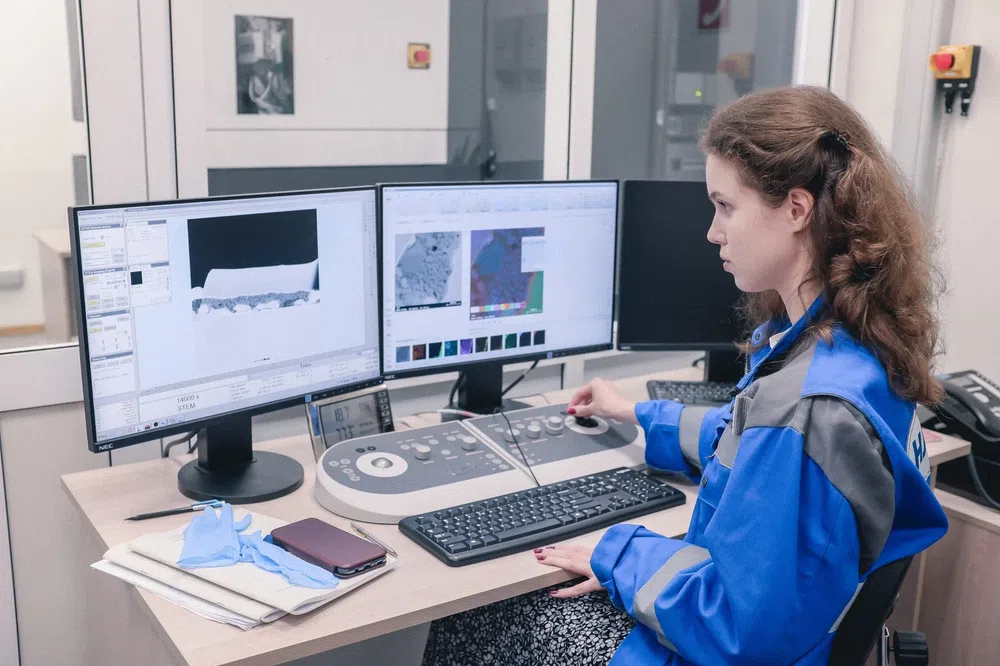
Formally, all this is necessary in order to create new types of metal with previously inconceivable properties and ideal structures. Highly permanent transformer steel. Steel self -healing during deformation. Ecological steel. Antibacterial rental with polymer coating. Alternative methods of metal restoration. In other words, here they think about all these things, the existence of which we are unlikely to ever learn in detail, but that is why they will affect what is happening to us. That is, it is, in fact, about fate. It is not for nothing that in the corridors of the laboratory there are photos of her employees with their revelations about their own feelings and desires.
Irina Sherenkova smiles: "I appreciate every day." Mikhail Zavyalov seems to wink: "I appreciate laconicism." Elena Yakubenko looks either to reproach or with irony: "I value time." Maxim Kazatov will be pulled and assembled: "I am proud that I’m going forward all the time and develop, albeit in small steps." And only Mikhail Mokrousov looks from the photograph so joyfully that it is immediately clear how he knows how to tell others what they are already clear, but leave something secret only to himself: “I am proud of the work in R&D”.
R&D - Research & Development, research and development. Not bad for the person who began at the Novolipetsk Metallurgical Combine a domainer, and then worked for seven years in the converter workshop No. 1.
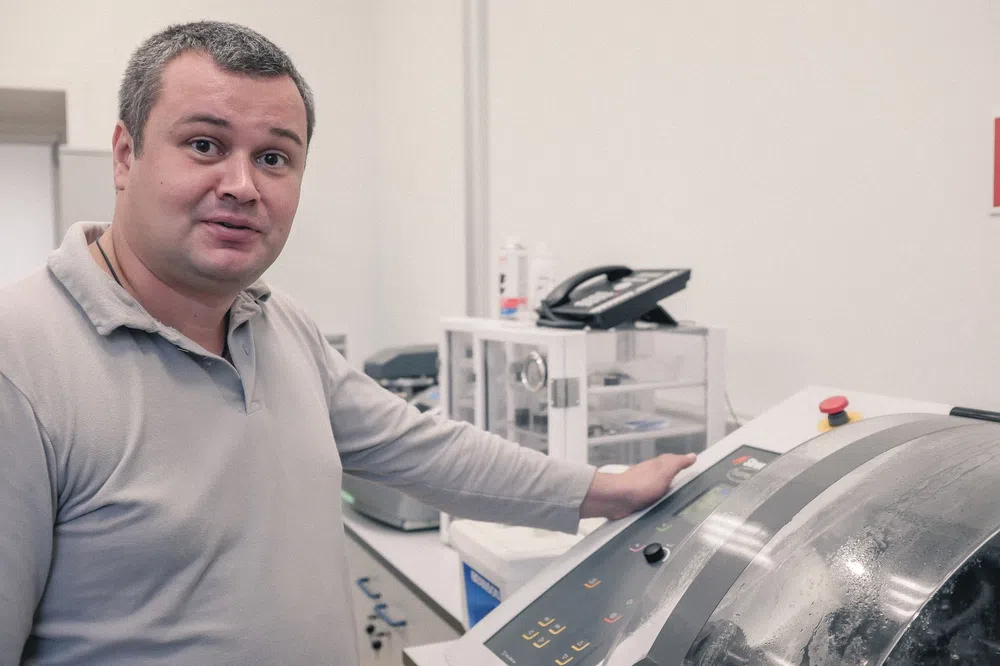
-Well, what is the kind there: the melting is a melting. Every day. Every day is a groundhog's day, ”says Mikhail Mokrousov, and his smile sly, as it were, reminds of the irony of any creation. - And here I am preparing metal samples for research. They said to cut thirty samples - I cut thirty samples. But these are not just samples. These are examples of what everything consists of in this life. Who knows, maybe our new project will be a metal person. Maybe this is generally the main thing that will be done in the XXII century. After all, even now, for example, a hand was torn off. How to replace it? Metal.
Fate.

Past
The whole past of a person is made at the Novolipetsk Metallurgical Plant in the production workshop. Ivan Filippovich Kurunov (1939–2017) is considered the author of this breakthrough technology. Unfortunately, he himself did not live to see the moment when his brainchild, capable of turning unnecessary waste achievements of civilization into something meaningful, tangible and suitable in order to bring benefits again. 78-year-old Ivan Filippovich shot down a young motorcyclist on Street. So, the production of Kurunov attached in the most prominent place today is watching the production of the past, from which a cheerful strong man, who briefly torn from the computer and papers, looks into the huge room of the workshop. It makes sense to bring here the entire text of the obituary posted in this photo.
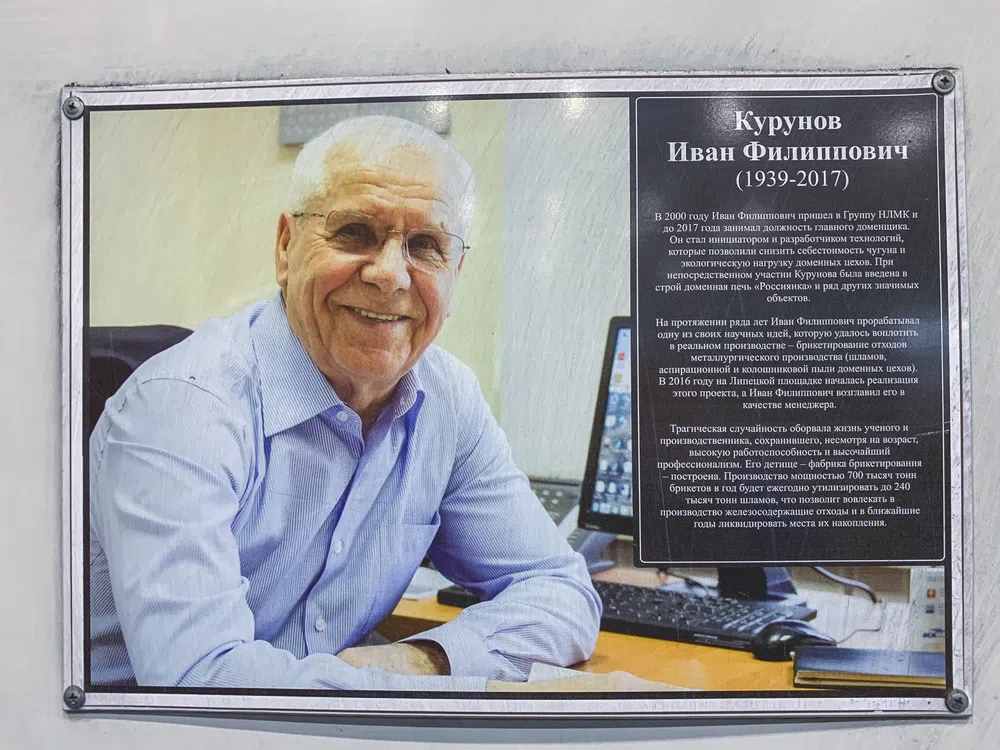
“In 2000, Ivan Filippovich came to the NLMK group and, until 2017, held the position of chief domainter. He became the initiator and developer of technology, which allowed to reduce the cost of cast iron and the environmental load of domain workshops. With the direct participation of Kurunov, the Russian Domeniyanka Domain stove and a number of other significant objects were commissioned.
Over the years, Ivan Filippovich has worked out one of his scientific ideas, which managed to embody in real production - briquetting of metallurgical production waste (sludge, aspiration and jacket dust of domain workshops). In 2016, the implementation of this project began on the Lipetsk platform, and Ivan Filippovich headed it as a manager.
The tragic accident interrupted the life of a scientist and a producer who retained, despite his age, high performance and the highest professionalism. His brainchild - a briquetting factory - is built. Production with a capacity of 700 thousand tons of briquettes per year will dispose of up to 240 thousand tons of sludge annually, which will allow you to involve iron -containing waste and in the coming years to eliminate the places of their accumulation. ”
All products of a huge factory invented by Ivan Filippovich are in a special way compressed and enriched departures of the living years. They are born through small holes, as if they were squeezed out of the mystical nozzle for a meat grinder. It really looks like minced meat, only black from forced memories. He is poured with a mountain, dried, and then they are taken back to the blast of consciousness, where it once came from. Add a little - a bucket per ton of ore.
This is the past.
Beauty
The beauty of man is the crane operator of the Novolipetsk Metallurgical Plant Ekaterina Kurganovich. You cannot describe beauty and explain in words, so it’s better to listen to what she says about herself:
“I was born in Lipetsk. My mother is from Tver, and dad is from here. He worked at the plant, in a converter laboratory, he told me a lot in childhood about him. For example, the fact that the metal can be liquid and that the piece of iron is wrong, because it is alloys of different metals. He talked about the difference between cast iron and steel and as a magical way one turns into another. It was something unreal for me. Thanks to dad, I really wanted to work at the plant.
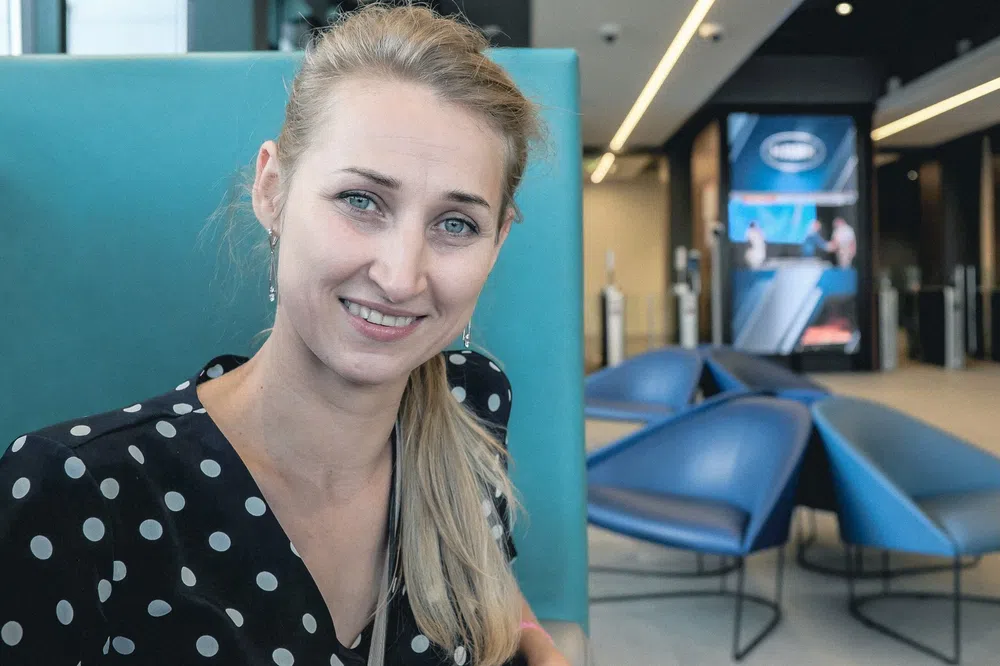
When I finally got here, it was a discovery for me that it was a whole city. I was 21 years old. By this time, I graduated from the school and became a crane driver. My husband’s acquaintances worked as crane operators, they told me how interesting it is. Moreover, I really loved all sorts of mechanisms. From childhood on wheels. Bicycles. Mopeds. Motorcycles. I tried to ride everything in a row. Therefore, I went to the school, and my random training became a vocation. I have been working on the tap for almost seventeen years.
I will probably surprise you, but the bulk of the crane operators at the plant are women. I can’t say why so. But there is such a stereotype. The crane operator is a large woman with a slanting fathom in the shoulders and slightly impudent. Only such a crane can endure. But in fact, crane operators are also 45 kilograms and very cultural. And even more so they do not drink, because it is impossible to drink in our profession.
I remember how I came to the plant. It was a river of people. I immediately felt like a piece of something so impressive.
It was incredible. I went by bus through the entire plant and looked at all these buildings, pipes, trains, huge trucks. I was given a direction in the domain workshop number two, where our largest oven “Russian” is now. When I saw this, I became huge eyes and only a thought pulsed directly: I want to work here.
The work of a crane operator on a blast furnace is a dream work, to be honest. There is everything that can be observed forever. There is fire. There is water. And there are people who work. When I tell people about the crane, they usually say: Come on, it cannot be so good. And I am sitting there, I see little people on top. They cannot raise something, do something, but I help them. I feel like a transformer, an autobot, a living creature that completely merges with a huge mechanism. And even if there are a lot of work and difficult days happen, I go home and smile, with a sense of duty, because my work benefits.
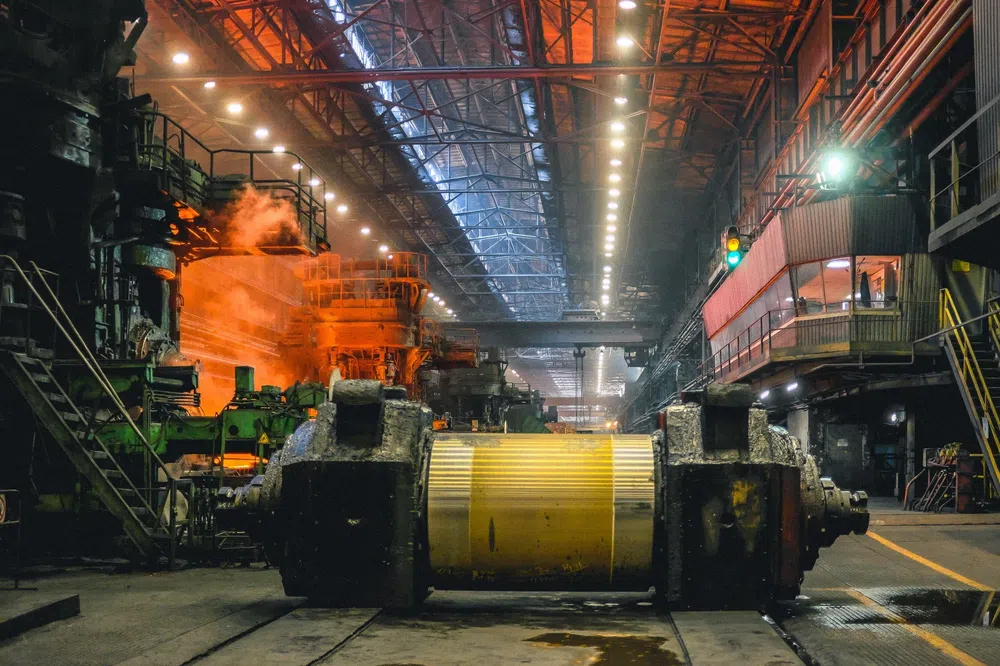
It seems to me that the beauty of this work is that it teaches simple things: a person should not be somehow special, he should be primarily a person. Healthy. Talented. Different. Alive. And hardworking. Metallurg is a hot profession. This is hard work. He requires courage.
But then, when you do a common cause, you put your soul into the whole world, in the items of which it consists. We may not see this, not to give ourselves a report. But this is so. This is his beauty. Every time different. New. Complex. Interesting. And you can admire her every day. Personally, I will definitely have enough for retirement. ”
Soul
The human soul is a fire pond in the middle of the Novolipetsk Metallurgical Plant. In fact, this is a fairly large lake, from which back in 1978 they decided to make the first and still the only menagerie in Russia in the territory of the ferrous metallurgy enterprise. At the bottom of the reservoir, pipes with compressed air and hot steam are laid, and when they are turned on in winter, the water, one must think, is seething here as in hell. Although this is called the Swan Lake, the employees of the plant do not get here often - it is better to eat or smoke during the break, and after the shift I want to go home. So the lake is fun for children and excursions. But the birds like here.
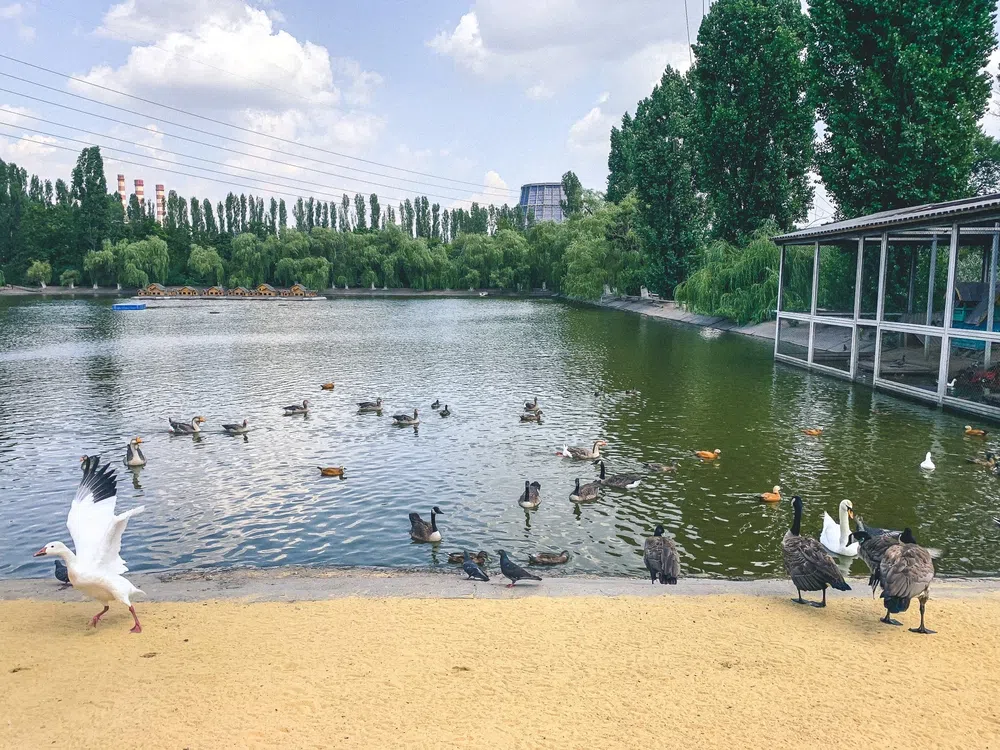
All the most unusual magic of the world lives on the secret fire pond. Kazarki. Swans-shipes and swans clicons. Goose polar and home. Muscular ducks. Tangerines. Japanese crane. The peacock is ordinary. Emu ostrich. Pheasant. Gorlitsa and Cesard. What they and why do they do are known, probably only to God and the leadership of NLMK. But the main thing is why they all do not fly away from here and still remain somewhere in the midst of the workshops of human life? Probably cannot. Or maybe they don’t want to. But this, in fact, gives us the opportunity, being conscious, still shove the ore of every day into character, fate and beauty. Melt your life. Pour metal from it.