
Translated material
The first is better not to know
Why did the dictator with free media, and when he decides to get rid of them
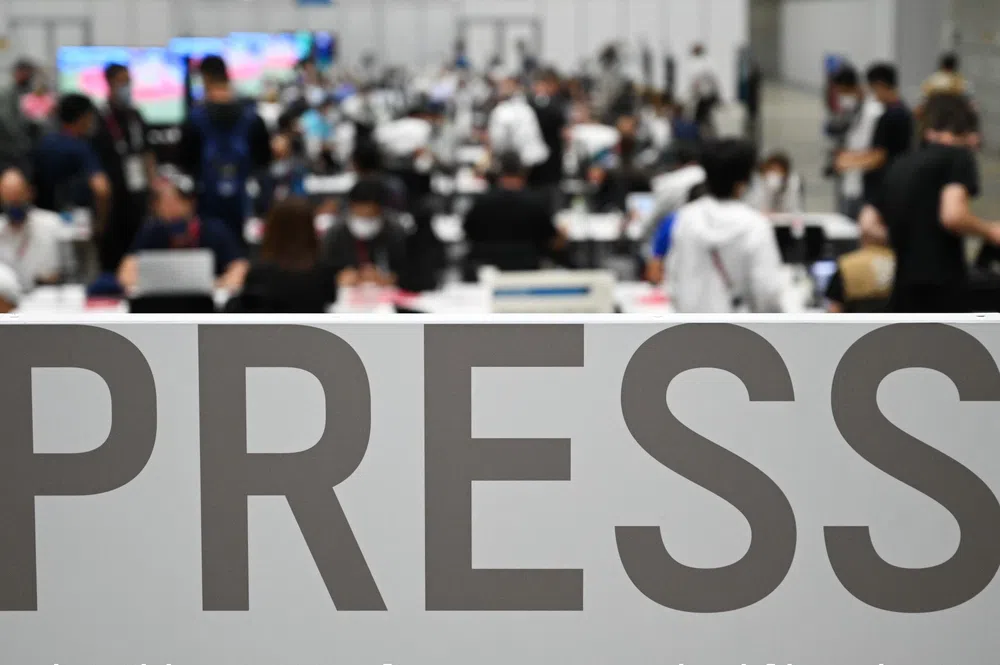
Free press and secret police
The confrontation between power and the media is a difficult story. Even in three times dictatorial regime, the authorities may need independent and uncontrolled sources of information. The logic of the dictator in this case may seem paradoxical, but in fact it is simply not obvious. An independent (truly independent!) Press may well play the same role as the secret police. And to cope with this role is no worse.
Do not believe? Even from the dark centuries, the saga about Konong Daga Mudr is known, who dissolved rumors about himself, as if he understood the language of sparrows, who told the ruler about all matters in the state. Once the king was reported that one of his governors killed sparrow. Why is this person to be afraid of the words of the free messenger, if he is faithful to me and he has nothing to hide, said Konung? If he is afraid of my messenger, then he is incorrect to me! And for the one who is incorrect to me, the punishment will be severe, said Dag Wise. (A description of what Konung did with the governor and his family falls under all the restrictions on Roskomnadzor.)
Of course, Konung did not understand any sparrow language, but it was important for him to show his people awareness. I see everything! I know everything!
Of course, next to the governors of the lords were real disgraces, who, however, did not want to reveal the king, because the governors could easily identify the spy, telling each of the proxies different information, and then checking which of the news will reach the king. But if the information is given to the ruler by sparrow (that is, an independent journalist), then how can you protect yourself from a cunning bird?
In this sense
An independent press, telling people about the incompetence and dishonesty of the sovereign governors, duplicates and complements the secret police, informing the ruler of information that subordinates would like to hide.
Well, if somewhere the governor begins to put pressure on journalists, this is an occasion to think-is he so faithful to his boss? It may be a secret police to take a closer look at the wrong one.
Covering operation
In addition, an independent press plays another important role. No dictator rules alone. With him there is always a circle of trusted people - one is responsible for money, the other for weapons, the third for pleasure, the fourth - for reprisal against dissatisfied and so on. Each of the employees of the dictator has their own apparatus, assistants and governors, and everyone needs to be encouraged and elevated.
But what to do to the dictator if he, for some reason, does not want to award his mercenary (at least for the fact that he tried more or just sorry for the money). He can tell him-you understand what's the matter ... I want to elevate you with all my heart, but then some newspapers wrote something bad about you (and really, they wrote!). Of course, I don’t believe this, but people say, but I hear the deep people ... Let's wait with your new appointment, and you will work in your previous position - until everything will be forgotten.
The existence of at least a formally independent press allows the authorities to ensure “cover operations” not only on the internal, but also on the external front. There is a story about how the Literary Gazeta printed an insulting article about President Truman. In general, the Soviet press and propaganda never allowed themselves any boorish attacks against the personality of the leaders of the great powers-to scold the last words with the unnamed “collapsed of the military-industrial complex”, “the arsonists of the war”, and “racists”, but not real presidents and premiers. And then they wrote about Truman in such expressions that the US ambassador demanded a meeting with Stalin and was immediately accepted.
Is it to consider everything written in the article by the official position of the USSR government, the ambassador asked? You see, the editor -in -chief of all peoples explained, in the USSR there is only one newspaper that does not obey either the party, the government, the army, or even the trade unions - and this is the “literary newspaper” of the Union of Soviet writers, the real stronghold of the freedom of creative word. But, if the American government insists, of course, we can take the strictest measures against those who allowed themselves to express their opinion on the US president. How about freedom of speech and double standards? There was really nothing to cover, and the ambassador had to agree that “freedom of speech” could take such specific forms.
The last words of the scout
There is another argument in favor of media freedom in non -free countries. “In the field” there may be the most important information that other than independent sources cannot be brought to the supreme power. About this, in fact, the brilliant fairy tale "Left -handed". This is not at all about how the Russian craftsman fed flea, but about how military intelligence works.
Having instructed the Tula craftsmen to improve the “Aglitskaya flea” emperor to find an arms master who can be entrusted with an important assignment - under the legend of the demonstration of Russian achievements to send a technical specialist to England, capable of finding out the state of English arsenals and evaluate mobilization reserves. "It was not the same left -handed man who was made by new guns, how much as old in what form they are." The master completely coped with his task, told the British that “everything that needed to be seen already saw” and hurried back.
However, in St. Petersburg, the scout was not lucky - he ran into the police, who "dumped the left -handed man in the quarter to the floor, and the hours, and took the money." Already in the hospital it turned out that the left -handed man and the back of the head split, and the emperor’s secret agent managed to say “tell the sovereign that the British did not clean the brick guns, so that we didn’t clean the war, they are not good, they are not good to shoot.”
The doctor, who heard the last words of the scout, really went to the authorities, but at the minister level he was told "not in his business not to interfere, there are generals in Russia!" The sovereign was never said, and the brick cleaning continued until "began to charge the guns, and the bullets in them were hanging out." And bring the words to the Levshina at one time to the sovereign - in the war with the enemy there was a completely different turn, the narrator ended the story.
It is noteworthy that the doctor from a fairy tale about Levsha reproached the war minister in defeat of the country - they say that you were warned about how to maintain a weapon in serviceability. I went to hell, the general answered, I will repose that I have never heard of you about it - you will get it.
And he really will take it off, the aware doctor thought - and said nothing.
If the sovereign’s service, this story could become the subject of publicity, and the war with the enemy would have turned into “other turnover”. But these media were not, and the emperor had to rely solely on the conscientiousness and competence of subordinates. They let him down.
Trust against management
Tales - fairy tales, but indeed, the existence of an independent press improves the quality of public administration - just like the existence of a decentralized network of sources of information improves the quality of corporate management. Of course, the boss may abandon the free messengers - independent informants. Enough of the current police, the ruler will say. But in this case, he turns out to be a hostage to the conscientiousness of such informants.
The ruler’s spy can come to the governor and say - the boss gave me a hundred coins so that I would follow you. Give me two hundred, and I will report to him what a good person you are. Or vice versa - the governor will come to the informant himself and say - take three hundred coins and tell the authorities how good I am. This is the issue of the market - what shares of income from office will the governor will share with the inspectors.
The ruler has an answer in this situation - you can create several “secret police” who will follow the governors and one after another. This case is costly, but quite feasible - especially if the ruler has money.
But there is other important circumstance that can force the ruler to disperse the “free messengers” - the need to make a wide gesture towards his governors.
What does the ruler do when he orders the elimination of the elite signal to eliminate the disloyal press - do what you want, I need you too much, I believe you, you see - I don’t even follow you ...
More precisely, of course, I do not allow you to follow you to those who are not supposed to do in position. People of a low rank. We have a separate world with you here, our separate people, a closed caste, inside which we will always agree on everything with each other. And what we will agree on - people are not better than our circle not to know.
The arguments are arguments, but the people are not very necessary for the people, the boss could add. Take a look at at least the data of the hundredth care - what bothers people? In any case, this is definitely not the fate of the Russian media.
“... 24% of Russians consider money to the main source of stress at the moment. The second and third place among the reasons for experiences took work and health - in 16% of respondents. In 13%, stress is associated with the topic of the future, and in 11% with a news background (media and social networks). The Russians are experiencing the least worried about family and children (10%), as well as politicians-it is most disturbed by only 6% of respondents. ”
What does the boss see?
People are indifferent to the future (what difference does it matter, nothing depends on me), the news is indifferent (everything is cool on the TV), the media are indifferent (no - well), and the policy does not bother anyone.
They strain people - money, health, work. The conclusion of the boss - people will not have money, there will be no work, there will be no health - and people will not have stress either. Indeed, on the example of the media, it is clear: what is not - it does not disturb, so people themselves say.