
Translated material
Rosbuk and Rospad
How a ban on the purchase of foreign computer equipment for state bodies will change the market
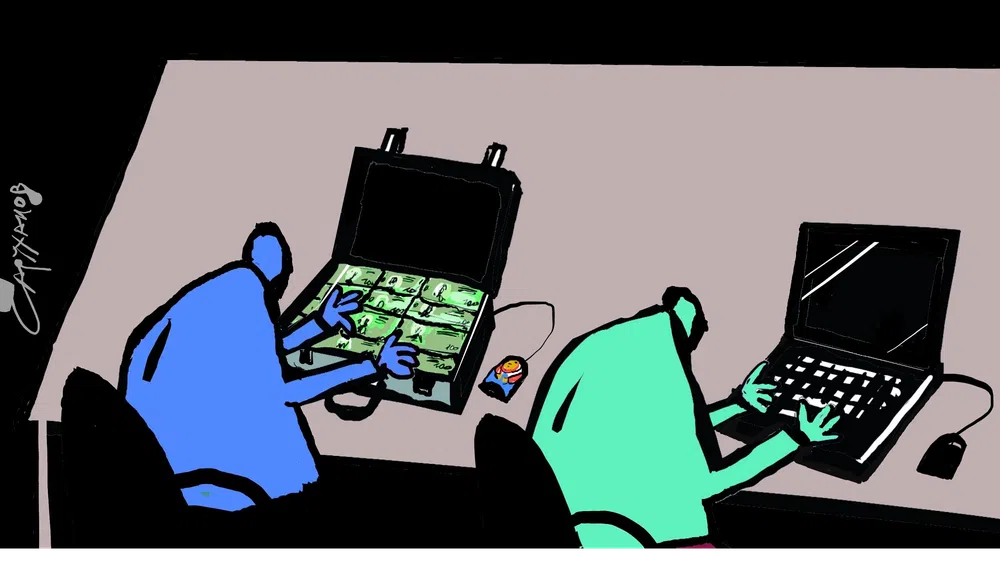
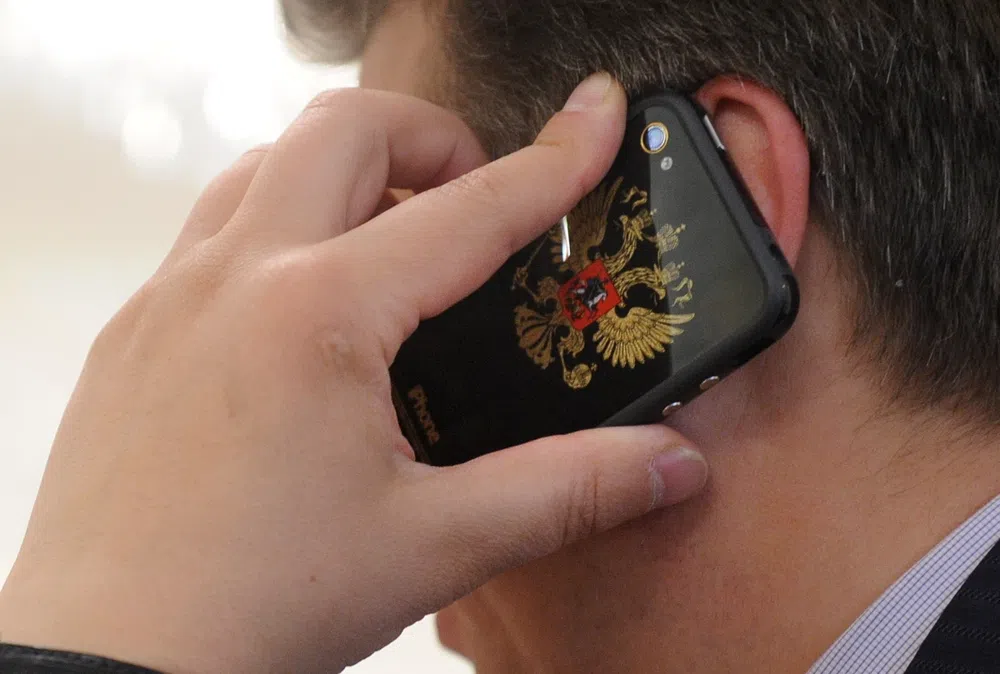
I propose to start an account of autumn chickens in the domestic IT from the Decree of the Government of the Russian Federation dated 08.28.2021 No. 1432 “On amendments to some acts of the Government of the Russian Federation”. This document adjusts the lists of goods and equipment to be excluded from public procurement, intended, as you know, to cover “state and municipal needs”. In particular, the metaphorical status of a “foreign agent” with all the ensuing consequences was assigned to smart cards, laptops, tablets and smartphones produced outside the Russian Federation and-wider-not included in the “Register of Eurasian Industrial Products”.
To understand the logic of the modification of the list of public procurement, it is enough to pay attention not to what they added, but to what was excluded, in particular, medical equipment (artificial ventilation devices, mammographs, x -rays, etc.).
It immediately becomes clear that they remove from the list of prohibitions that which themselves do not have and is very necessary, and add what is either not very necessary.
In the context of this logic, I would like to consider those close to the heart and well-known “smart cards, laptops, tablets and smartphones”.
However, I will begin with the staging of the main accent - the fact that he imposes himself primitive, but, alas, popular political propaganda. I directly see how my hypothetical ally of liberal illusions is Yortic: “You can present the situation that the Gosdepovsk Regional Committee issues a decree on compulsory purchase by all departments of the federal and full -time laptops made exclusively by Apple and Dell, and the ban on the ministry’s utilization by Lenovo, Huawei, Sony, Sony, Sony Toshiba, Asus and Acer? !!! Ahaha! What an absurdity! "
Of course, absurd. Not where the reader thought now. For there is no need to imagine such prohibitions performed by the “Gosdepovsky regional committee”, because they have long become a reality. Take something like “ US Government Ban Foreign Equipment ” in the Google’s search line and find a whole bouquet of legislative acts approved by Congress and Senate and aimed at a direct ban on the use of telecommunication equipment, software and services from China.
In 2018 alone, two independent laws of this kind went into business at once:
First, in January, the law was held in the House of Representatives (HR 4747 “Defending us Government Communications Act”),
Then in February they complemented it with a new modification in the Senate (S. 2391).
As a result, all the technique produced by Huawei, ZTE, Datang and Zhongxing turned out to be prohibited.
Formal reason: Chinese vendors have very close ties with the Chinese authorities, so their equipment can monitor American government departments and thereby undermine national security.
Do not just think that our overseas antipates are again pioneers. Five years earlier (in 2013), the fighters for the state interests of Australia forcibly excluded Huawei from the auction for the supply of equipment for a gigantic amount of $ 38 billion for the National Broadband Network, NBN). Despite the fact that Huawei had better equipment, and prices were more profitable.
Of course, the main "scapegoat" is not behind - China. In December 2019, the Chinese Communist Party, traditionally not exchanging for trifles with voting in congresses and thoughts, ordered the compulsory replacement for three years of computer equipment and software produced by foreign companies.
Why am I? The fact that nothing original in the anti -reference demarche of the Russian government in the framework of a long -term course for import substitution.
The Russian Federation is moving in the fairway of the world trend. Even the formulations in Decree No. 1432 are universal: purchases are carried out for the “needs of the defense of the country and the security of the state”, and therefore God himself ordered to defend himself from partners who spy on us, dreaming only to harder to harm.
It has long been clear that today everyone in the world does not like all in the world, and it is necessary to treat this given philosophical - as the economic cycles of Kondratyev. You can’t do anything here: you just have to tolerate and wait until the sinusoid of paranoid suspicion in relations between states will exhaust itself and begin to play in the opposite direction.
It is much more productive to answer the question: how will the run of the cheese tractor on laptops and smartphones affect the satisfaction of IT-nouses of compatriots? Or - periphrase:
Will we be out of the digital Hamon after they stop buying it on the territory of sovereign Eurasianism?
He drew a dashing phrase and immediately caught himself thinking that he had committed a semantic substitution at a subconscious level! What does we have humble and recently dumb inhabitants have to do with it? After all, this is not about the supply of iPads, MacBuks and other samsungs with Huaii to the shelves of Russian stores, but only about public procurement! The Decree of the Government of the Russian Federation No. 1432 means that Russian officials will no longer be able to use iPads and macbooks purchased for money by taxpayers.
That's wonderful! We don’t care what they, powerful people, will use at their workplaces?
Imagine, not anyway! And that's why.
If we take to talk about high (read: state) matters, this is to do this outside the usual philistine contexts. “We/they”, “this will not affect us”, “let them do what they want there” - this is all inappropriate if we want to answer an important question: a ban on public procurement of laptops - is it good or bad for the country and bad?
To begin with, over the past 10 years, the Russian state in the field of information technology has turned from a key economic agent into exclusive. In the sense that Russian software and computer iron collectors have no more customers left.
Only the state has serious money, therefore, the well-being of the entire industry depends on where and from whom the state purchases IT equipment, software and services.
The industries, notice, are very competitive. This is easy to verify if you look at the level of activity of IT developers outside the native state-that equipment specialists, what programmers. Say, in the cryptoeconomics, which is most concerned and interested in, almost half of the most successful and popular projects in the world was created by our people. Of course, by “ours” I mean linguistic genetics, and not a passport and ideological preferences.
At the same time, a significant part of the intellectual resources in IT remains closed within the framework of the national state.
Why is this happening? Why, after the destruction of a non-state IT market, so many talented developers did not reorient on the external market and thereby condemned themselves to dependence on state subsidies, grants and orders?
I still have no final answer to this question. Probably because nothing but the linguistic inertia of our compatriots comes to mind. This, however, is a weak argument, since initially the IT language is English. Functions and teams in all programming languages are in English. Any programmer can start writing a code for a project, geographically located anywhere in the world, at least tomorrow. And since the “production cycle” is implemented through the Internet - right today!
You can, of course, speculate on the topic, if not linguistic, then the sociocultural inertia of compatriots. In the sense that our person abroad can be seen as a mile away - according to the unique expression of psychological discomfort on his face. All this, of course, is funny, but it does not change anything in reality. The reality is that the Aitishnikov army and their only employer with serious money remains to work in Russia - this is the state itself.
It follows that the law on the ban on public procurement of smart cards, laptops, tablets and smartphones of foreign production theoretically should play a positive role in the development of domestic IT manufacturers and improve the welfare of domestic IT developers.
Why, you agree, give state money to Tim Cook, if you can give them to Russian visuals?
Because of this, I used the word "theoretically." Not because I doubt the existence of people in Russia, comparable to the flight of imagination and creative providence with Tim Cook, but because where do we get our own macbooks?
And then the most interesting begins. It may seem that Decree No. 1432 is even deeper into the Russian society into the “scoop”. In the sense that once we honestly rewinded 74 years from a call to a call in a paradise of total import substitution. Contrary to electoral historical amnesia cultivated by the state, however, people who remember well what the Soviet tape recorder, the Soviet washing machine, the Soviet kitchen combine and the Soviet car did not look well.
And now the caring power again offers us to take a walk into the past to play the game “We are with a mustache”, but only this time - with laptops and smartphones.
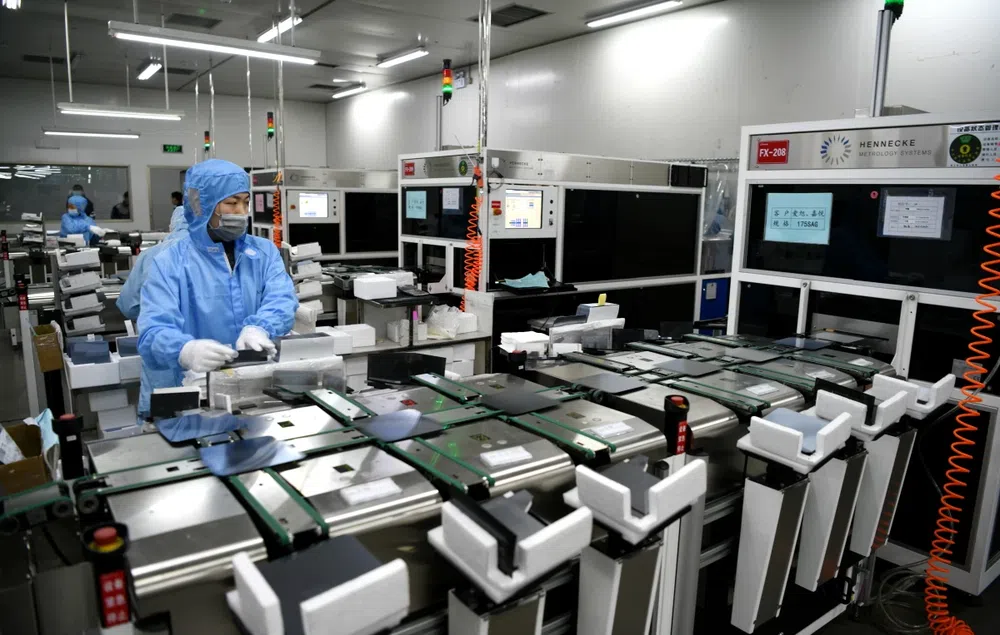
The logging is that the production of modern computer equipment is not at all that the production of radios, refrigerators and cars! In the Soviet Union, it was possible to establish the production of the necessary components, from which they then assembled finished technological products were able to establish. Unfortunately, it will not work with computers.
There is no need to talk about any production of components for laptops, tablets and smartphones in the Russian Federation. There is no money, no know-how, no equipment for this.
Theoretically, all this can be borrowed on the side, but in a situation where the state, by self -awareness, is surrounded by “enemies” from all sides, no one will even ask.
There is an illusion that China will share with us. But this, alas, will never happen, because all that China can share is its own finished product (in the sense that it can sell it to us). But he cannot share equipment, because most of this manufacturing equipment was made by “enemies” (Americans, Dutch, French, Germans, Danes). Not to mention the fact that the 95% IT products created in China are closed by patents, which also belong to the “enemies”.
In order not to sound unfounded, I will give a list of the five largest companies that supply almost all the equipment existing in the world, which is necessary for the subsequent production of semiconductors, microcircuits and most of what we know like household computer electronics. Ready to argue that most readers have never heard these names:
American Applied Materials,
Dutch Asml Holding,
American Kla Corporation,
American Lam Research,
Japanese Tokyo Electron.
If the Russian government refuses to purchase mobile and portable IT technology abroad, then the question reasonly arises: what technique will be purchased as an alternative? Eurasian? This, however, does not exist in nature, and in the foreseeable future, as I just showed, its production is not expected.
The only thing you can talk about in this context is about the domestic assembly. Accordingly, the practical reading of Decree No. 1432 can only be this: the Russian state will not purchase laptops, tablets and smartphones for its needs, which were collected outside the Eurasian Union from the Chinese components created on equipment from the EU and the United States. Instead
The Russian state will purchase laptops, tablets and smartphones for its needs, which will gather inside the Eurasian Union from the Chinese components created on equipment from the EU and the USA.
That's the whole "revolution." Well, tell me by mercy, how will such a formulation of the question contribute to the development of domestic IT thoughts? How will this promote domestic IT technologies?
Rhetorical questions - nothing. The only nuance that will be added after the movement of Chinese components at the assembly stage inside the Eurasian Union is an inevitable drop in the quality of final products.
Why is the drop in quality inevitable? Well, because we already have the same 74 years of the experience of Soviet import substitution, when the production of components, very advanced in technological terms, could not establish inside the USSR and therefore had to relieve the heart, these components to import (for the most part by the bypass and through sub-firms-when due to sanctions, when due to patents).
What came of this, readers at a respectable age can imagine if they remember how Soviet, say, video recorders looked and worked.
The idea of quality can be supplemented with examples from recent history. Everyone who was lucky in the zero years to feel the so -called. “Domestic” tablets, electronic readers and smartphones collected in the Russian Federation from Chinese components will not be allowed to lie: of course, they were not a complete nightmare, but they never even reached the most budget huavaevs. And what is indicative, always cost like three such huayays.
What did we come to in the end? In general, to the fact that it was clear from the very beginning, but I honestly tried to weigh the pros and against the decision on the import substitution of mobile and portable computer technology, which made us happy in the fall in Decree No. 1432. If briefly, then: if briefly, then: if briefly, then:
The benefits for the development of domestic "manufacturers" of laptops and smartphones from the ban on public procurement of non -Eurasian equipment will not be, because there are no "manufacturers" in nature. And it's bad.
The benefits for domestic collectors of finished products from Chinese components will be real, because cash flows from public orders will go into the pockets of Russian businesses, not foreign ones. So, many of our compatriots will have a good salary and new jobs will appear. And that's good.
There will be no harm to ordinary residents of the country from Decree No. 1432, because public procurement has nothing to do with ordinary residents: we bought Apple, Dell, Samsung and Huawei equipment, and continue to buy it. And that's good.
What is in our dry remnant? 2: 1 - won "good." And thank you!