
Translated material
Estonia. We can envy
Around Russia
 Estonia. We can envy
September 6, 2021 Victor Mikhailov
Estonia is a small country with a population of just over 1.33 million people, the nearest neighbor of Russia, bordering the Leningrad and Pskov regions. Estonia was part of Russia in 1918, and then was part of the USSR from 1940 until its collapse in 1991.
Estonia GDP per capita in 2019 according to the face value of $ 23,758 ( 41st ), according to the PPS- $ 38,540 ( 38th ). Among the post -communist countries, Estonia is one of the most developed. In 2019, for GDP per capita (denomination), it took 2nd place after Slovenia, in terms of GDP per capita (PPS)-3rd place after Slovenia and the Czech Republic (2019).
For a general comparison of the standard of living of various countries and regions, the human development index (ICR) is usually used, taking into account 3 types of indicators: the living expectancy of the country's population, the level of literacy of the country's population (the average number of years spent on training and the expected life expectancy ) and the standard of living, estimated through gross national income of the population in the USA in US dollars.
In 2019, Estonia was in 29th place in the IChR, and according to the IChR, taking into account inequality-on the 19th.
For comparison: in Russia, GDP in 2019 amounted to 11,601 dollars ( 64th place ) at denomination, according to the PPS - $ 28,184 ( 53th place ).
According to the ICHR, Russia was in 49th place, taking into account inequality-in the 42nd.
Estonian economy growth rate
Throughout 1990-2019 Estonia GDP in current prices increased by 5.6 times to 31.5 billion dollars. The average annual increase in Estonia GDP amounted to $ 0.89 billion (6.1%), and at permanent prices - 2.2%. The share of Estonia’s economy in the world increased by 0.011%, and in Europe increased by 0.081%. The minimum of GDP was in 1993 ($ 4.2 billion), the maximum in 2019 ($ 31.5 billion).
For the period 1990-2019 GDP per capita in Estonia grew 6.6 times to 23,740 dollars. The average annual growth of GDP per capita at the current prices was at 694.1 dollars or 6.7%.
For comparison. Since 1991 - the emergence of the Russian Federation, - GDP per capita of the Russian population in the PPS grew by 27% in constant prices and nominally 3.3 times. At the same time, in 1998, GDP for PPP per capita was only $ 5,460, i.e. From the minimum importance in the latest history of Russia, GDP per capita of the Russian population in the PPS grew 5 times.
After the proclamation of independence, a serious problem for Estonia was high inflation, which reached hundreds of percent per year.
In the summer of 1992, Estonia became the first of the post -Soviet republics to conduct monetary reform. The Estonian crown was tied to a German brand at a fixed course - 8 kroons per 1 brand. Since January 1, 1999, the crown was attached to the euro. In 1997, an Estonian stabilization reserve fund was created. Since the mid-90s, the inflation rate has gradually decreased. 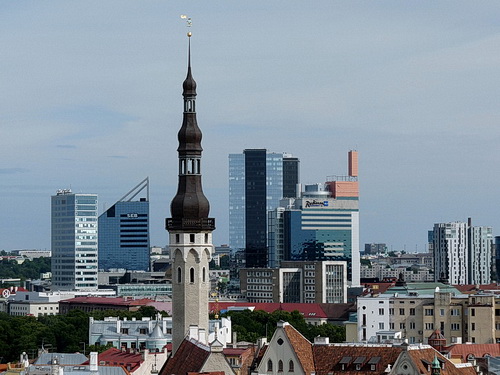
By 1992, almost half of the enterprises were privatized, in 1997 - almost all enterprises, only the most significant remained in state ownership. Large industrial enterprises were sold through an international tender. About 40% of state -owned companies were sold to foreign companies or joint ventures with the participation of foreign investors. The state did not buy the enterprise, did not write off debts and did not provide special support, the enterprises were confronted with the choice - either privatization or liquidation. One of the main tasks of privatization was the return of the real estate nationalized in Soviet times to its owners or their descendants.
In 1994, Estonia became one of the first countries in the world to accept a flat income tax scale with a rate of 26% and its subsequent annual decrease for the planned achievement of the rate of 18% by 2010. To date, this goal has not been fulfilled, the income tax rate in 2021 is 20%.
The liberal tax regime and the relatively cheap and qualified labor force have become a favorable factor for attracting investments to the country. A fairly high growth rate of GDP was achieved. In 1999, Estonia joined the World Trade Organization . In 2003, Estonia reached the 1989 GDP level, thus restoring the economy after the crisis of the 1990s.
For 15 years that have passed since the Estonia entered the EEC (from 2004 to 2019), the net average wage has grown in the country more than three times, from 363 to 1098 euros, and the minimum wage has increased more than 3.4 times, from 158.50 to 540 euros (516.45 euros after tax payments). The country's GDP has doubled over the years from 23.790 billion dollars to 46.587 billion
The development of the Estonian economy in these years has encountered a number of problems. In 2006 - 2007, signs of overheating began to appear: inflation grew, a price “bubble” appeared on the real estate market, a sharp increase in domestic consumption spurred imports, which increased the foreign trade deficit. According to a number of economists and politicians, the economic growth that had previously taken place was largely based on external loans and the boom followed in the credit sphere.
In 2007, Estonian economic growth rate began to decline. Since the beginning of 2008, the economy of Estonia has manifested negative trends related to the global financial and economic crisis . GDP began to decline, industrial production has fallen, the budget for 2009 was first adopted with a shortage. In 2009, GDP fell by almost 15%, industrial production by almost a quarter. To combat the consequences of the crisis, a reduction in government spending was made,
By the end of 2009, a way out of the crisis was outlined. From the 3rd quarter of 2009, a sequential growth of GDP was observed. Industrial production in September 2010 increased by almost a third compared to September 2009. In 2010, the GDP trend was already positive. The public debt and budget deficit remained the smallest in the EU, in 2010 Estonia was one of the two EU countries that reduced the budget deficit.
Estonia became the first European country to introduce free travel by public transport almost throughout the country. In 11 out of 15 counties from July 1, 2018, residents of the country use buses, trolleybuses and trams for free.
The government significantly increased its expenses for innovation: in 2017, 304 million euros were aimed at stimulating research and development.
According to some forecasts, Estonia GDP can grow per capita by 2025 to the level of Sweden economies, Finland, Denmark and Norway. 
Taxes in Estonia
Estonia stands out favorably among other states - members of the European Union Loyal Tax Policy to business. Taxes in Estonia form a fairly simple and understandable system, and most bets are installed at a low level compared to many Western European states. All these circumstances make the country attractive to doing business.
The main taxes in Estonia: income, social, land, VAT, on the profit of legal entities, for gambling, customs duties, excise taxes, a contribution to heavy vehicles.
The personal rate of personal income tax in the country is flat, but there is a separation of tariffs by type of income. The salary of employees and other income, for which lower rates are not provided, are taxed at a rate of 20%, insurance benefits for unemployment - at a rate of 0.1. The lower rate - 7% - is provided for the payment of dividends to an individual if before that a rate of 14% was applied to them. In practice, this means that distributed dividends are taxed twice: adding in 14% at the distribution stage and retention of 7% at the stage of issuance to an individual. For example, if the co -founder of the company has the right to 1000 euros of dividend payments, 162.79 euros must be paid to the budget at the expense of the enterprise (1000 × 14/86) and 70 euros at the expense of the recipient (1000*7%). The founder receives 930 euros "clean" in his hands.
Since 2021, a single approach began to operate in the country to determine the non -taxable part of annual income. The maximum size of the released part is 6,000 euros, provided that the annual earnings do not exceed 14,400 euros.
The annual amount of money earned and, accordingly, income tax in Estonia can be reduced by additional deductions:
• excluded from the tax base, social insurance contributions in case of unemployment and the obligatory funded part of the pension paid by non-entrepreneur citizens are excluded;
• If the family has children, then personal income tax is not taxed by another 1848 euros for each baby, starting from the second;
• From the base you can subtract interest on housing loan - up to 300 euros per year;
• Expenses for training and donations - up to 1200 euros per year.
In addition to income, hired employees are paid from the salary of employees:
• Social tax - 33 % of accrued earnings (before the retention of personal income tax), at the expense of the employer;
• The unemployment fee contribution - 0.8 % of the salary at the expense of the employer and 1.6 % - retention at the expense of the employee himself.
Since 2000, Estonia introduced a zero rate of income tax from legal entities, which is one of the most attractive factors for doing business in Estonia. This applies only to the profit of the company, that is, retained. If the shareholders or shareholders (owners) decide to distribute the profit in the form of dividends, then the company pays only income tax for shareholders.
From January 1, 2021, the tax rate has been reduced from 20% (or 20/80 from a net-shum) to 14% (or 14/86 from the Net-Suma paid), provided that dividends are paid on a regular basis for at least 3 years in a row.
In practice, the legislator proposes to use the following scheme:
• in 2021, the rate of 14% will be applied to an amount equal to 1/3 paid in 2021, the balance is taxed at a rate of 20/80;
• in 2021, this limit will be increased to 1/3 of the total amount paid in 2021 and 2021;
• A full transition to a reduced rate is possible since 2021 (however, the amount of payments should not exceed the average indicator over the past 3 years).
The zero rate applies to goods exported outside the customs territory of Estonia, transit operations, the sale of goods and services provided to passengers of foreign sea and aircraft.
Exempted from the payment of VAT:
• universal postal services;
• medical services related to the use of blood and its components, the provision of breast milk, as well as transplantation of human organs and tissues;
• services of professional dentists;
• work of social services organized by the municipality;
• basic vocational, secondary and higher education;
• transportation of patients, injured and disabled;
• insurance services;
• Rent and leasing of real estate;
• Sale of lottery tickets and the organization of gambling;
• The turnover of investment gold.
Unlike most European countries, real estate tax is not charged in Estonia. However, when making transactions for the purchase or alienation of property, you will have to pay a coat of arms in the amount of up to 0.04% of the transaction amount.
Land tax is required to pay owners, regular users and developers of the territories allocated to them. The rates are approved at the level of municipalities and are in the range of 0.1-2.5% of the value of the land tax. Only part of the site located under the residential building (from 0.15 to 2 hectares) is released from taxation. But only on condition that this building is a place of official registration of the land owner.
Some obligations act only in certain territories. For example, a Tallinn advertising fee. Since 2021, it has been charged daily at the rate of 0.55 euros per square meter of advertising space per day.
In addition, local administrations can establish their own fees:
• for the use and pollution of the environment;
• on the closure of roads and streets;
• on a mechanical vehicle;
• for entertainment;
• for animal maintenance;
• For parking.
Used materials of the ZagranPortal.ru
For comparison: taxes in Estonia are quite high. However, if the taxes that Russian employees and employers pay (13% are personalized; 22%-the pension fund; 5.1%-a contribution to the compulsory medical insurance; 3.1%-a contribution to the FSS; as well as VAT; excise taxes and additional taxes for fuel, alcohol, etc., then 43-45% are obtained).
Salaries in Estonia
The average wage in Estonia in December 2020 was 1604 euros. As of December 2020, Estonia had the highest average wage among all the post -communist countries of the world (1292.12 euros) and (as of January 1, 2020) - the second after Slovenia (700 euros, in Estonia - 550.38 euros) a minimum wage. The average amount of remuneration in Estonia in December 2020 was 1604 euros and, after deduction of taxes, 1292.12 euros. The minimum wage in Estonia from January 1, 2020 is 584 euros, after taxes are 550.38 euros. The amount of the subsistence minimum in 2019 increased by 7% compared to 2017, this is the average mark according to European criteria.
In 2021, the amount of income tax in Estonia is 20%, is not taxed 180 euros. In addition to income tax, there is also unemployment insurance, which is 1.6% of the salary and the expulsion for the accumulation of a pension - 2%. If the average salary is 1150 euros, after deductions the employee remains a net of 912.92 euros.
For comparison. According to official figures from Rosstat, the income of the population of Russia in 2020 amounted to 35,361 rubles per month (about 400 euros), the average monthly salary - 51,083 rubles (less than 600 euros).
Average salaries in Estonia by type of economic activity:
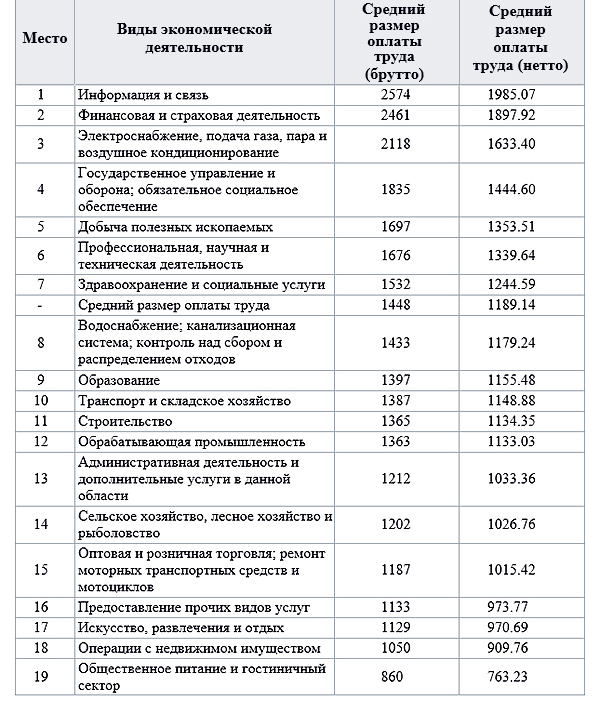
The average monthly salary in the IV quarter of 2020 was from 1359.44 in Tallinn to 996.90 in the County of Hiyumaa.
In 2019, salaries in the state sector amounted to 9.5%, and in private - 6.7%. The largest increase in salaries was recorded in the field of types of services (repair of household appliances, beauty industry), as well as in the field of health and social services - by 14% and 10%,
Pensions in Estonia
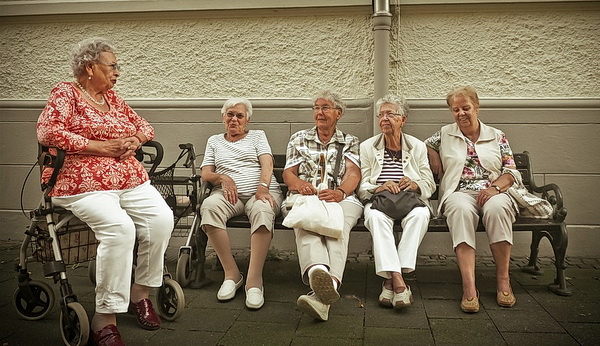
According to the current law, a pension in Estonia can be released from 63 years, from 2026 the retirement age will be increased to 65 years.
According to the Ministry of Social Affairs of Estonia, the country's pension system is divided into three steps: I step: state pension; II step: Mandatory funded pension; III step: additional funded pension.
I step I - state pension. In Estonia, state pensions of two types are paid: pensions depending on the labor contribution - an old -age pension, a pension for disability and a pension in connection with the loss of the breadwinner, as well as a minimum or popular pension.
The right to receive an old -age pension is possessed by permanent residents of Estonia, as well as foreigners living in Estonia on the basis of a temporary residence permit or the right to accommodate.
A person who has reached the age of 63 years and has a pension experience in Estonia at least 15 years has the right to pension .
People from 16 years of age to the age of old-age pension in the event that the loss of ability to work is 40-100%is right to a pension for disability .
Pension on the loss of the breadwinner. For the basis for calculating a pension for the loss of the breadwinner, a large of the following old-age pensions are accepted: old-age pension, designed for the breadwinner, or old-age pension in the case of a 30-year pension experience.
Depending on the number of persons located on the maintenance, the pension is paid as follows: one family member - 50% of the basis taken as the basis for calculating the pension, two family members - 80%; Three or more family members - 100%.
People's pension. This type of pension is paid to reaching the age of 63, as well as disabled persons, the percentage of disability is 40-100%, which does not have the right to a pension received in accordance with experience and who have lived in Estonia for at least five years. In addition, a folk pension is assigned in the event of the death of the breadwinner to the members of his family, who, due to the lack of the breadwinner, do not have the right to a pension for the loss of the breadwinner if they lived in Estonia for at least one year.
II step - a funded pension. A working person accumulates his pension, bringing 1% of his gross salary to the Pension Fund. The state adds to them 2% due to 33% of social tax accrued from the employee’s wages.
III step - an additional funded pension . This is a voluntary private additional pension that allows you to make additional savings in order to maintain formed standards of life in old age.
The country's government provides a step I, sets the standards for deductions for the II stage and provides a thorough system of supervision and regulation of the II and III steps. Employers make contributions (in the form of state social tax) in the framework of the 1st stage. Workers make mandatory contributions within the II stage and can take voluntary participation in the III stage.
The average size of pensions from 01.04.2021 is as follows:
People's pension - 255.18 euros ;
Old age pension with 15 years of experience 343.40 euros, with 30 years - 451.49 euros, with 44 years of experience - 552.38 euros.
From April 1, 2021, the daily rate with full incapacity for work is 15.13 euros (14.89 euros in 2020), and per month the amount of the manual is 453 euros (446.7 euros in 2020). With partial working capacity, the allowance is 57% of the current daily rate, that is, an average of 258 euros per month (254.62 euros in 2020).
По сравнению с данными за 2015 год в 2019 году стало вдвое меньше людей, чей ежемесячный доход ниже минимальной заработной платы, в то время как число людей, которые зарабатывают больше 2500 евро в месяц, быстро растет.
По средним показателям 2019 года, всего 15%, или в два раза меньше по сравнению с 2015 годом, зарабатывают до 540 евро в месяц. Еще 14% людей, зарабатывают от 541 до 750 евро в месяц. Вместе эти цифры показывают, что процент малоимущих в Эстонии значительно снизился. Если в 2015 году 46% жителей Эстонии зарабатывали до 750 евро в месяц, то в 2019 году эта цифра снизилась почти на треть — до 29%. Доля людей, зарабатывающих более 1500 евро в месяц, возросла с 17 до 30%.
Для сравнения: в России в настоящее средний размер государственной пенсии — 14 986 рублей (около 175 евро). На накопительную часть пенсии с 2014 действует мораторий, все страховые взносы уходят на формирование только страховой ее части. В декабре 2020 года мораторий в очередной раз продлен до конца 2023 года. Накопительный компонент пенсии со взносов работодателя сейчас не формируется ни у кого.
Серьёзной проблемой в Эстонии остаётся гендерный разрыв в оплате труда, причём наблюдается он практически во всех сферах экономической деятельности. По данным статистики, в 2019 году почасовая брутто-зарплата у женщин была на 17,1% ниже, чем у мужчин. В 2019 году по сравнению с 2018 годом гендерный разрыв в оплате труда снизился на 0,9%, а по сравнению с 2013 годом на 7,7%. В 2019 году средняя почасовая брутто-зарплата работающих женщин составляла 7,10 евро, а мужчин — 8,56 евро.
По данным Статистического управления Эстонии, в 2019 году 20,7% населения Эстонии, то есть 272 700 человек, жили в относительной бедности , а 2,3% населения Эстонии, то есть 30 500 человек, жили в условиях абсолютной бедности . В 2019 году, по сравнению с 2018 годом, доля людей, живущих в относительной бедности, снизилась на 1%, а доля людей, живущих в абсолютной бедности — на 0,1%. В 2019 году человек считался живущим в относительной бедности, если его ежемесячный располагаемый доход был ниже 611,4 евро, а в условиях абсолютной бедности — менее 211,4 евро. Если бы не помощь от государства, в относительной бедности жили бы 39,7% населения, а в абсолютной — 22%. 
ЦЕНЫ В ЭСТОНИИ (по данным сайта e-migration.ru)
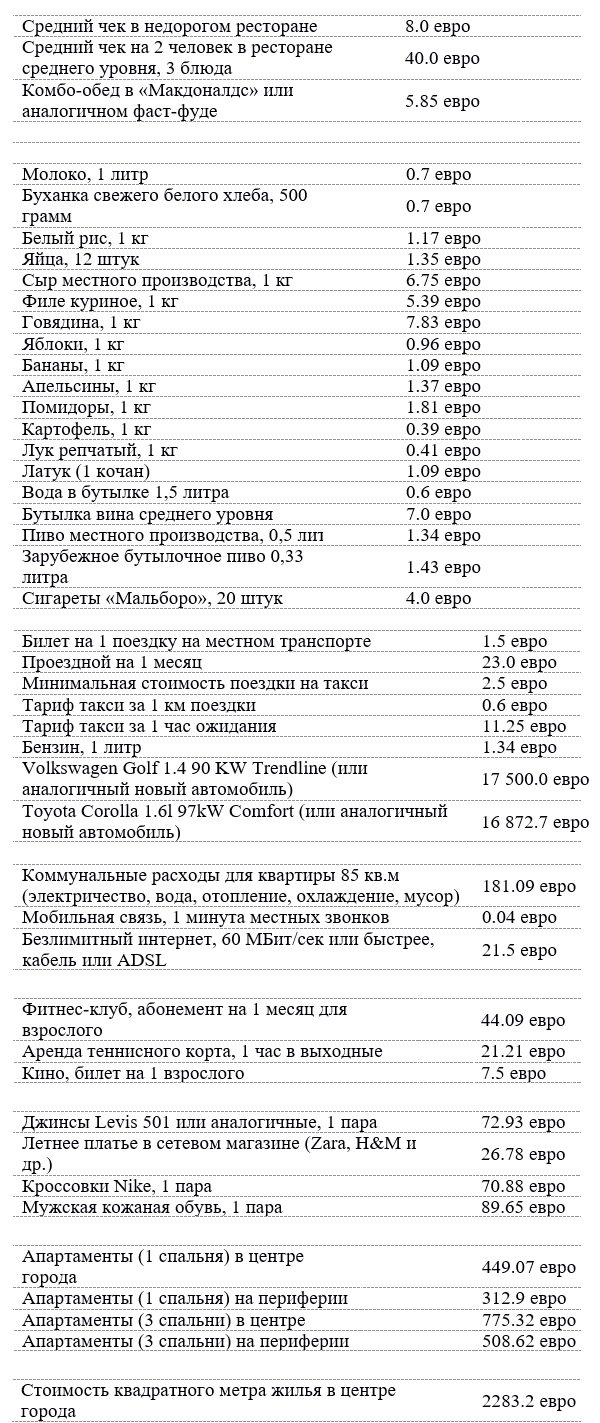
По сравнению с Россией в Эстонии значительно дороже коммунальные расходы, бензин, услуги мобильной связи, сигареты.
Photo: Pixabay.com under the license: Creative Commons Attribution 4.0 International