
Translated material
The Taliban took a panjster. Who will go to the inauguration of their government?
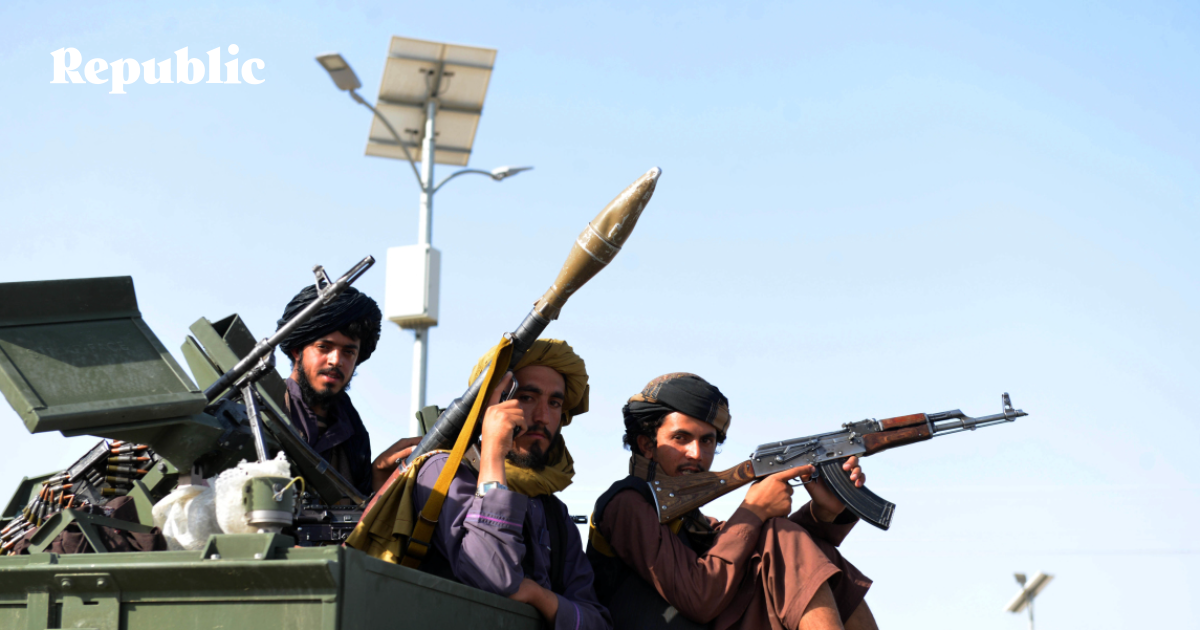
The Taliban* announced its complete control over the rebellious province of Panjsher, who refused to recognize the right of Islamic radicals to absolute power in Kabul. The white flag of the Taliban was raised by the administration of the governor of Panjsher in Bazarak.
The resistance front, whose leaders, Afghan Tajiks Ahmad Masud Jr., the son of the legendary Mujahidean Ahmad Shah Masuda, and Amrullah Saleh, a former vice-president of Afghanistan, has not yet announced his defeat, but this has little change in the situation. About the whereabouts of Salekh, after the flight from the country of the President of Afghanistan, Ashraf Gani, who declared himself an acting president, is not known. As for Masud, its supporters claim that it is hidden in the native Panjsher Gorge.
Part of the inner circle of Masuda, the military elite of the Afghan Tajiks, courageously fighting with the Taliban, was killed. In the evening of September 5, the resistance front published a declaration with a proposal to the Taliban of a ceasefire: there was no longer a word about the requirements of the Panjsers to establish such power in Afghanistan that would take into account the rights of all ethnic and religious groups of the country, the rights of women and girls - that is, to maintain all those secular values that were respected in the Islamic Republic until the Taliban returned to power. Islamic radicals answered with attacks from drones to the positions of Afghan Tajiks.
Numerous sources claim that the air support of the Taliban was carried out by the Pakistani Air Force. This information seems reliable, since even before that few doubted that Pakistani Commandos fought in the ranks of the Taliban on Earth.
Who to talk to if there is no one to talk to
Suppression of resistance in a panjster means that in Afghanistan today there are no more other military or political forces that can prevent Islamic radicals to finally approve their regime in the country. It can be expected that in the coming days they will declare the composition of their government. Moreover, the Taliban reported that they had already sent an invitation to some countries to a government announcement ceremony. The six of these very trusted states looks very expressive: Türkiye, China, Russia, Iran, Pakistan and Qatar. With a great degree of confidence, it can be predicted that Pakistan and Qatar will accept this invitation, they will be among the first states that recognized the Islamic Emirate Afghanistan (IEA).
Sergei Lavrov said on September 6 that Moscow could take part in the inauguration of the new government of Afghanistan, if it is inclusive. According to him, this means that the government should reflect the entire spectrum of Afghan society, including Taliban, as well as Tajiks, Khazareans, Uzbeks.
In the structures of the IEA, the highest council of salvation has already appeared, the head of which the former field commander of the Taliban Mohammad Akbar Aga designated the desire to establish relations with Russia. This can be considered an answer to the extremely loyal signs of Moscow attention. The Russian ambassador to Kabul Dmitry Zhirnov, whose epithets addressed to the Taliban, whom he contrasted the Afghan authorities under President Gani, were maintained in excellent colors was especially noticeable. The Taliban even offered Moscow through the Russian ambassador to become an intermediary in negotiations with Panjsher, but the reactions did not wait. The bet on the Taliban made by the Russian leadership was no longer an alternative.
This was clearly formulated by Vladimir Putin, speaking at the Eastern Economic Forum: he said that Russia is not interested in disintegration of Afghanistan, since in this case "no one will talk to." According to Putin , the faster the radical movement of the Taliban will enter the so -called family of civilized peoples, the easier it will be to contact the Taliban, to raise questions that civilized rules must be observed within the framework of civilized relations.
The persistent Putin’s prescriptions to the Taliban can be civilized as the desire to distance themselves from the most odious evidence of the bloodthirstiness of Islamic radicals, which become known to the world in recent weeks. Among them is a terrible reprisal against the famous Afghan comedian and a woman-police , a mother of many children.
And although the official speaker of the Taliban condemned these crimes and promised to understand and punish the guilty, the quite obvious image of the new government is already beginning to take shape in the world media.
The regimes ideologically close to the Islamic emirate strive to help him to outline the main contours of the new coming of the Taliban regime. The official representative of the Taliban Zabikhullah Mujahid in an interview with the Iranian television channel Al-Alam compared Israel with the “tumor in the body of the Islamic Ummah”, which, according to Iran, must be cut out. Another speaker of Taliban Suhail Shahin announced the support of Islamist separatists in the Indian Kashmir.
There is practically no doubt that with the restoration of IEA the world will deal with another state regime, which carry on its banners, the extremely radical warlike Islam, whose ideology can have an extremely strong effect on the world Islamic ummah.
Who is against the Taliban and why?
Are there any external forces that are already ready to resist this perspective today? It seems that there is, but it seems that their support for the resistance provided in Afghanistan to the Talibes can bring more problems to this country and extend there meaningless bloodshed.
I mean Tajikistan and his decisive support to the Tajik brothers in Afghanistan.
The official Dushanbe from the very beginning of the current exacerbation of the Taliban armed confrontation with the President Gani's regime refused to establish any contacts with the Taliban, announced the unambiguous support of that part of the Kabul authorities that was ready to oppose Islamic radicals. Of course, first of all, it was about the support of the resistance of the Afghan Tajiks, whose indestructible citadel was considered to be a panjsher since the time of the Soviet military occupation of Afghanistan.
Tajikistan, which has never been a secret to anyone, remained the rear base of the Northern Alliance of Afghanistan, the main shock force of resistance to the Taliban during their first parish in power in Kabul from 1996 to 2001. It was in Dushanbe in 1999 that Ahmad Shah Masud said at one of our meetings that he was fighting “not with the Taliban, who are the same as he, Afghans, but with the Pakistanis” who support them.
More than 20 years passed and his son Ahmad repeated almost the same. In his video message posted in YouTube on September 6, Masud Jr., recognizing the “defeat of Afghanistan,” meant Pakistan when he spoke of “forces of foreign states fighting on the Taliban side”. From his Panjshera Shelter, he called for a “national uprising against the Taliban”, which in the current situation does not look like a balanced political step.
The late Ahmad Shah Masud was unusually popular not only among Afghan Tajiks, but perhaps even more among the Tajik Tajiks, who saw in him their national leader. This could not but disturb the President of Tajikistan Emomali Rahmon (then he was still Rakhmonov), who understood whom compatriots would prefer if the opportunity to choose.
Masud made a lot of efforts to reconcile Rahmon with an armed Tajik opposition, some of the leaders of which after a civil war in their country found refuge in Afghanistan. No wonder in those years the idea of "Big Tajikistan" on both sides of the border was extremely popular. After the death of Masud, exactly 20 years ago, on September 9, 2001 (it was officially announced only on September 15), a demonstration of readiness to become a symbol of the unity of Tajiks became the prerogative of the President of Tajikistan.
By the way, “his Excellency”, “The leader of the nation, the founder of the world and unity” of Emomali Rahmon on September 2, in commemoration of the 30th anniversary of Independence of Tajikistan, awarded the posthumously former Minister of Defense of Afghanistan Ahmad Shah Masud and former President of Afghanistan Burkhanuddin Rabbani, the Order of Ismoni.
The current support of the official Dushanbe of the resistance front, led by Masoud Jr., does not look seriously supported by resources, both military and material. It is more likely a demonstrative, if not, PR nature, no matter how disappointed for a significant number of Tajiks, sincerely wishing victories to their compatriots on the other side of the “river” (as Pyange’s border between Afghanistan and Tajikistan).
It is obvious that the support of the desperate and courageous attempt of the Panjarts is designed to increase the Rahmon rating within the country. He has been in power since November 1992, for almost 29 years (!), More than any other leader in the post -Soviet space. It is possible that there are other reasons that make Dushanbe strive to avoid the breakup of the existing order of things along the 1350-kilometer Afghan-Tajik border. A number of experts and analysts believe that it is through this border that the main routes of Afghan drug trafficking pass, in the stability of which some significant figures are interested in the structures of the Tajik authorities.
What will the Taliban have to do for recognition?
One way or another, the unambiguous support of the official Dushanbe of the Panjshera Front of Resistance and the ignoring the power of the Taliban in Kabul is tearing the united front of the countries of Central Asia and Russia, which are trying to maintain - albeit unequally successful - equated attitude to the parties to the Afghan confrontation. None of the capitals of the region, as well as Moscow, accepted Pandesher's proposal to intervene in the settlement of the intra -Afghan conflict. Tashkent, for example, even notified Washington about the possible issuance of Afghan military pilots trained by Americans, but found refuge in Uzbekistan.
What the coordinated position of the Russian allies will look like on the Afghan problem and whether it will be achieved at all, it will become clear after September 16, when the CSTO and the SCO summites in which Tajikistan now presides in Dushanbe. At the Brix summit on September 9, the Afghan theme will also be in the spotlight. Perhaps even earlier the “Afghan” meeting of the heads of the Foreign Ministry “Big Seven” will be held together with representatives of Russia and China. Also in Moscow they count on a meeting, even in Kabul, an “extended three” in Afghanistan - Russia, the USA, China plus Pakistan.
Now the Taliban should try very hard for the world to believe in their good thoughts, but at least convinced that they are able to control the country at the very least. To do this, at least, they will have to consolidate their ranks and prevent a showdown between regional and clan leaders.
They will have to make extraordinary efforts in order to show their peacefulness to former opponents, leaders of ethnic and religious communities, stop third -the -way and threaten girls with excommunication. In other words, there should be no hunt for witches in the Islamic Emirate.
The Taliban will have to convince the world that they are not going to close the country with an “iron curtain” in order to prevent brain leakage from Afghanistan. And at the same time, they need to provide those countries who did not manage to take out the Afghans who cooperated with them, to do this freely.
And the United States and the collective West will have to make all the above requirements an indispensable condition for recognizing IEA and providing it with large -scale economic assistance. This does not apply to humanitarian assistance and assistance to refugees - they must be provided immediately. But it is here that the world is in no hurry, obviously, remembering hundreds of thousands of refugees who poured into Europe from Syria, Iraq, Maghriba countries after the “Arab Spring” in mid-2010 years ...
If the Taliban in the near future does not be able to show that the new attempt by Pashtun’s dominance in Afghanistan according to the radically interpreted laws of Sharia is acceptable for most Afghans, then the country's split according to the regional ethnic principle will become inevitable. Such a prospect definitely threatens the continuation of the civil war between the Afghans and new bloodshed.
*The organization is prohibited in Russia
What else to read:
The king is unreasonable. How Americans were mistaken in Afghanistan with legitimacy
The end of the war for the new world. Only the West will remain a stronghold of liberal values