
Translated material
We'll have to pay
The Strasbourg Court made three decisions in favor of the plaintiffs from Russia
The European Court of Human Rights (ECHR) issued, on Tuesday, September 14, 11 decisions. Three of them concern Russia. For all three, it is recognized that the Russian state violated the rights of the applicants and will have to reimburse them with moral damage, costs, correct the violations committed by its courts.
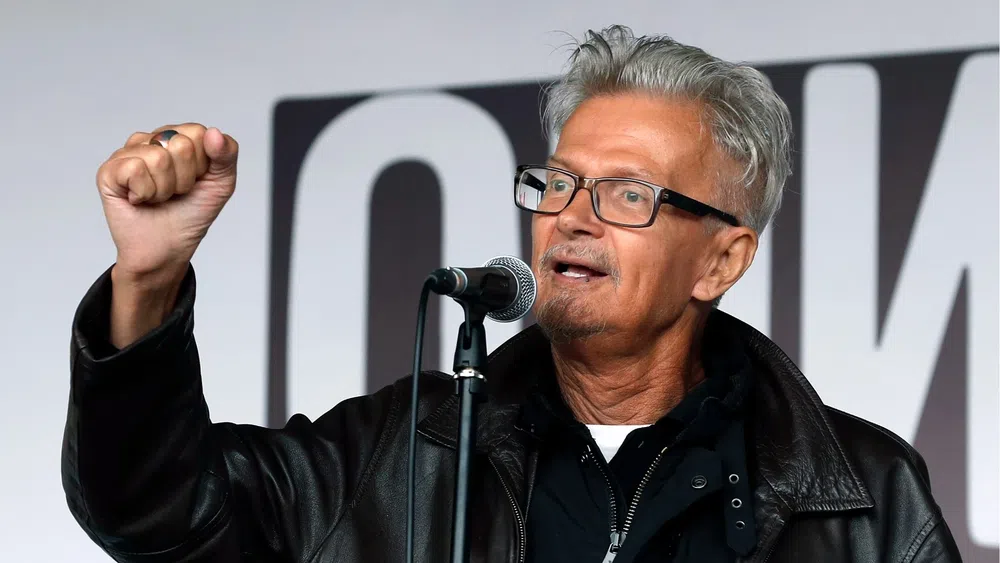
Five Russian citizens, including the writer and politician Eduard Limonov, were applicants in the case of the dissolution of the Interregional Association of the National-Bolshevik Party ( NBP was recognized as a prohibited organization in the Russian Federation ) and the authorities refusal to register it as a political party. Limonov himself (Savenko) himself died in March last year after submitting an application, and his family was excited instead of him, who also entered the executive body of this public association.
Referring to Art. 11 of the Convention on the Protection of Human Rights and Fundamental Freedoms (Freedom of Assembly and Associations), part 1 of Art. 6 (the right to a fair trial), and Art. 14 (prohibition of discrimination) in conjunction with Art. 11, the applicants complained, in particular that the decision on the dissolution was disproportionate and not necessary in a democratic society, that the cancellation of the decision of the Supreme Court in their favor contradicts the principle of legal certainty, and the decision to refuse to register the political party was not adequately motivated.
The court recognized the fact of violation of Art. 11 In connection with the dissolution of the NBP association, as well as in connection with the refusal to register as a political party.
The applicants asked the court to indicate that the proper form of individual compensation would be the restoration of the NBP in the form of a political party and the abolition of the relevant decisions issued by the courts of Russia. The ECHR noted that the member states of the European Convention on Human Rights pledged to comply with the final decisions of the court in any case in which they participate. In the present case, taking into account the variety of funds available to achieve Restitutio in integrum (“return to its original state”), and the nature of the issues under consideration, supervision of the execution of the solution should be left at the discretion of the Committee of the Council of Europe.
The requested 100 thousand euros for moral damage considered the court excessive and ordered Russia to pay all of them 10 thousand euros together.
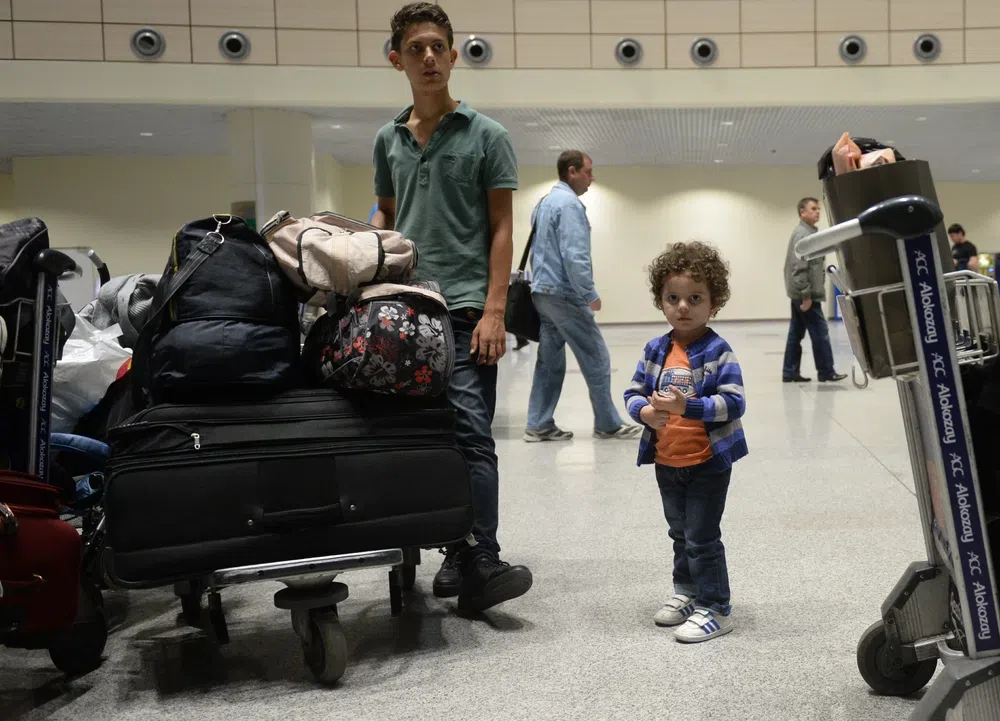
The applicants in another case are 11 citizens of Syria. In the period since 2011 (the beginning of mass repressions of the Assad regime against the opposition) in 2014 they entered the Russian Federation, and then their visas were expired. The thing concerns their arrest and detention, accusations of immigration violations made against each individually, and subsequent decisions on their expulsion.
Referring to Art. 2 of the Convention (right to life) and Art. 3 (a ban on inhuman or humiliating dignity), the applicants complained that expulsion to Syria would subject their lives to serious risk. Some also complained of violation of Art. 13 (the right to an effective means of legal protection).
They argued that their maintenance was arbitrary before the expulsion, and complaints about decisions on the detention were considered too slowly.
The court approached each applicant differentiated. He recognized the complaints of eight of them against violation of Art. 2 and 3 (in case of expulsion to Syria). In relation to two, the fact of violation of paragraph 1 of Art. 5 (right to freedom and security). In relation to two, the fact of violation of the right to challenge the court decision on detention. The Russian state should pay different amounts to the Syrians: from two to five thousand euros and preserve previously appointed interim measures before the solutions of the ECHR are finally implemented.
Perhaps a kind of premiere was the decision in the Volodin case against Russia. Russian citizen Valery Volodin, born in 1985, accused the Russian authorities of not being able to protect her from cybercrease acts. This is the continuation and development of the lawsuit Volodina, which three years ago changed the name, surname and address (new data is not disclosed for security reasons).
After Volodina parted with her partner, a citizen of Azerbaijan in 2015, he began to insult and pursue her. In the previous decision in the case of Volodina, the ECHR decided that the Russian authorities could not protect her from repeated domestic violence.
In the new case, referring to Art. 8 of the Convention (the right to respect a private life), among other things, claims that the former partner used her name, personal data and intimate photos to create fake profiles on social networks, put the GPS tracker into her handbag and threatened to kill through social networks. The applicant complains to the Strasbourg court that the authorities could not effectively investigate these actions. In particular, the authorities justified their inaction by the fact that the offender is a citizen of Azerbaijan.
The court ordered Russia to pay 7,500 euros to his citizen as moral damage and about 5400 - for reimbursement of expenses related to the case.