
Translated material
What did "Decameron"
Why and how to watch the new performance of Kirill Serebrennikov in the Gogol Center
In autumn, the culturally tuned population of Russia enters with Cyril Serebrennikov. On September 9, the shows of his sensational in the Cannes of the film “Petrova in the flu”, and the season was opened in the Gogol Center, I am not afraid of the word, by the international performance “Decameron” for the book of the same name Bokkaccio.
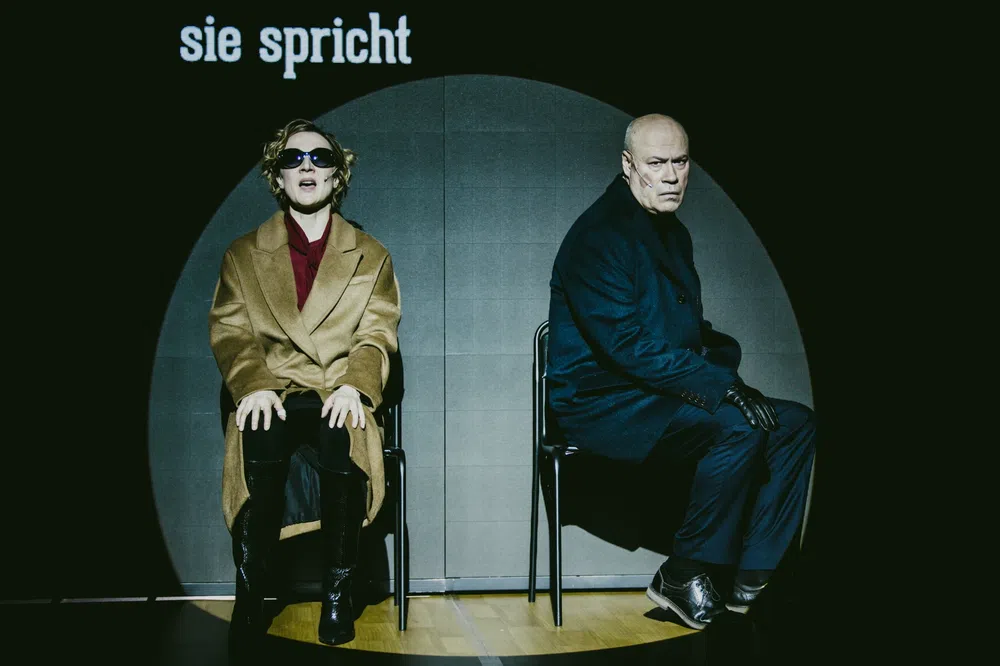
He is international for two reasons. The first is actual. Decameron is a joint project of the German Deutsches Theater Berlin Theater and Gogol Center: they play in two countries, both Russian and German actors (and even one Chinese actress, despite the fact that we already consider Jan GE to be his compatriot)-the precedent of the innovative. And the second reason is that the line is erased in the performance between nationalities, languages, traditions, etc. “Decameron” is made in such a way that when German actors say, the Russian text is displayed on the screens, and when the Russians are vice versa. And at first you look at this screen all the time. And then suddenly you suddenly stop for yourself - everything is clear without words. Serebrennikov enhances this effect in that sometimes actors speak their native language. At these moments, you generally forget who is who - and it doesn’t matter.
I will say more, there was a moment when I forgot in which country I am.
The Gogol Center and Deutsches Theater Berlin made the same scenery to play in both capitals. However, the Muscovites have been waiting for Decameron for almost three years-rehearsals began at the beginning of 2019. This is precisely the mysterious-magical flalor of the performance. But in order to understand it, you need to know the context.
The actions of Roman Bokkaccio begin in Florence 1348, in the midst of an epidemic of the plague, where the main goal was to survive. Despite morality. When the performance was conceived, there was no coronavirus and a pandemic that defeated the whole world. However, when Deutsches Theater Berlin played the last Decameron, Lokdown announced. Serebrennikov’s performance is the last thing Berlin saw. Thus, the director in a sense predicted the upcoming events.
Before going to the theater, I advise Bokkaccio to at least scroll out, since Roman Kirill Semenovich adapted to modern realities, therefore it would be nice to imagine the source.
But if this could not be done, then come to the theater half an hour before the performance and listen to the lecture of Vladimir Pecheikin. In general, his lectures before the performances is a separate type of art: here about meanings, and interesting, and with humor. In parallel with this, cocktails from Tinkoff Bank are distributed for free - they are partners of the performance.
By the way, the fact that spectators come to the performance a little submissive is also a certain meaning, because, as you know, during the plague, drunkenness was very common.
However, the performance is out of time, so you should not give this particular importance.
What happens to Bokkaccio? Cemero of girls and three young people decide to leave the plague city and settle in solitude, where their main entertainment is telling each other stories on a clearly given topic. This continues for 10 days (in the translation from the Greek language “Decameron” means “ten -day”), respectively, in total in the novel 100 novels. However, Serebrennikov in his production reduces their number to ten, selecting the most relevant to date. Bokkaccio’s heroes themselves are practically not spelled out, rather, they are intermediaries in the world of their own stories. The main thing here is the characters of the short story. Therefore, the director refuses a clear distribution of roles - the actors play several characters in different short stories at once.
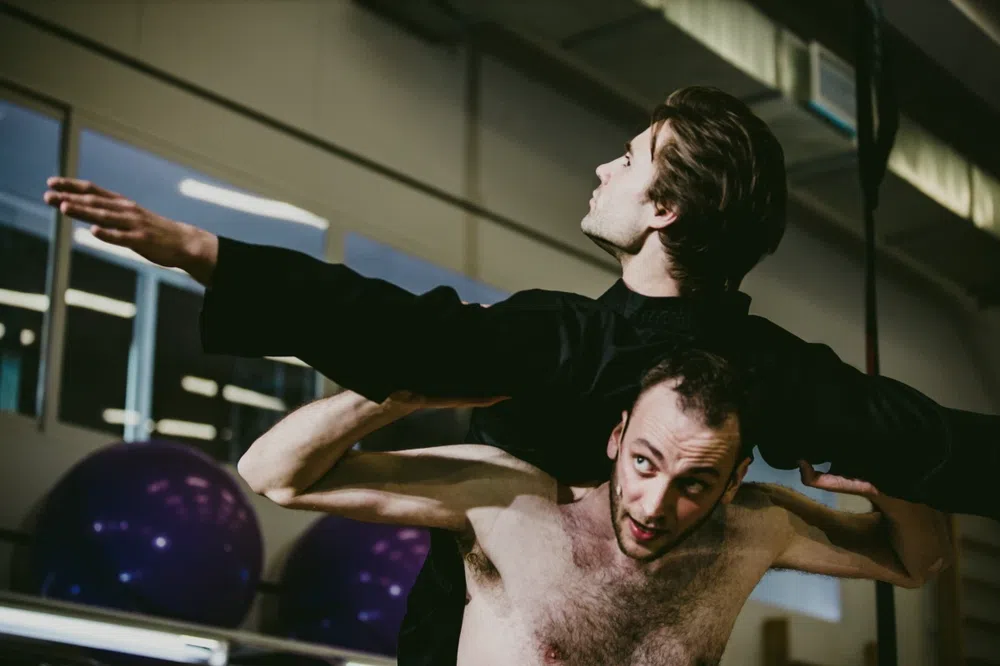
The scene in the play is a gymnastic hall personifying a person’s struggle with himself and his feelings. Even before the start on the stage, there are six very touching grandmothers performing exercises under the guidance of a harsh instructor woman. Their number is also not by chance. If you recall Bokkaccio, then in the novel every day was chosen the “queen”, who gave instructions and set the topic for evening stories. As we recall, there are seven girls in the book - accordingly, we can assume that the instructor is a queen, and grandmothers are the rest of the girls. Thus, Serebrennikov erases the boundaries of age, putting forward the feelings and experiences of the heroes. This is how he determines the super -task of the performance:
This performance is about different shades of love. We are trying to talk about what, no matter how many centuries have passed, people during the Renaissance and are currently acting approximately the same.
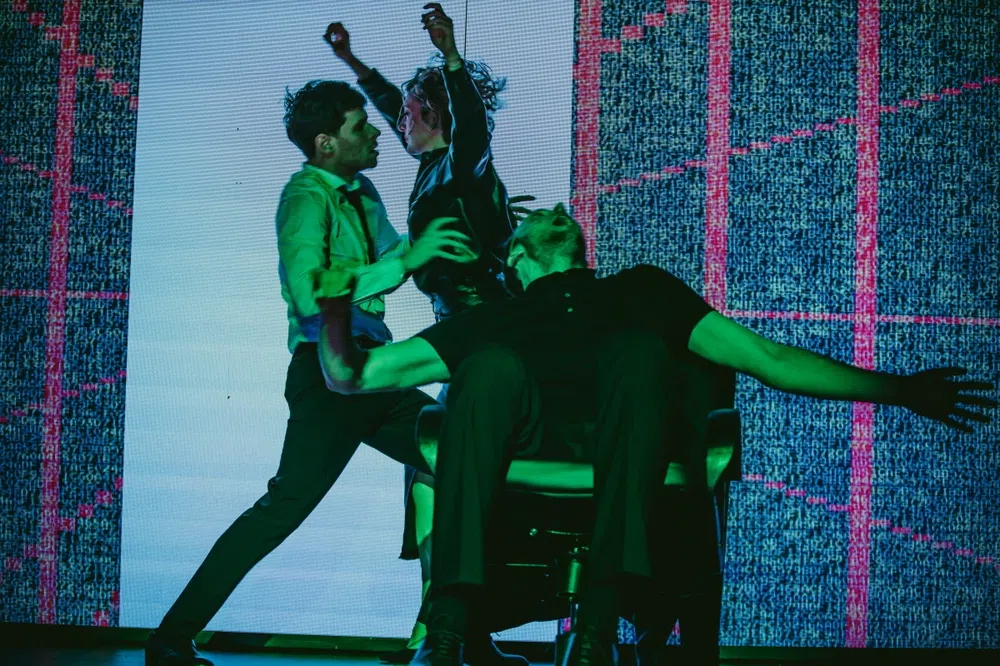
The performance, indeed, is permeated with love. Various: happy and painful, real and unrealistic, mutual and not very. Love was so swallowed by the “Decameron” that she even went beyond the scope of the performance: actress Jan Ge admitted that during rehearsals she got stuck in Berlin and met her love. The mystery of the related stories of stories fascinates. This love is represented in modern realities that are far from the Renaissance: the wife changes her husband in his eyes, putting on his supposedly augmented reality; The girl breeds a young man in a chat and makes him shake a member on the street (he then avenge her, but more on that in the play); The husband is sold for a contract; They are looking for a lover in practice in yoga ... All this is also interspersed with more classic and familiar stories for a conservative viewer, but not a single short story is knocked out of the general border of the play. Stories are located in a complementary ensemble, and the viewer is simultaneously in the 1348th, 2021st and, it seems, in some third, until the coming year. The performance introduces into a trance, from which I do not want to leave, despite all the horrors that occur on the stage.
Of course, a separate bravo must be told by the cast.

When the performance is played simultaneously in two languages, and the audience does not understand at least 50 percent of the performance - the actor is visible through and through.
It is not always possible to peer into the screen and carefully read the translation, I want to look into the eyes of the artist, empathize with him. In Decameron, this is possible that once again proves the professionalism of the acting ensemble.
A man in the appearance of a woman deserves special attention, the legend of the European cabaret of the 1990s-Georgetta Dee.
In ordinary life, she is a man, but when she goes on stage, any woman can envy her statues and grace. In the play, she is not the main, but a key role, she connects all the novels with songs, thus indicating the change of seasons. Georgetta is one of the few in whom the spirit of the old theater remained, in Russia it probably could appear only in the Gogol Center, and this place perfectly harmonizes with its nature. She has a large monologue in her play on the behalf of a woman in which monstrous pain is laid. It is amazing that she was not born in the female body so accurately to feel the female fate. In my opinion, this is the strongest moment in the play, and strong precisely because Georgetta does it. It has an iron rod that can take out any trials, and the directors, of course, use this. She does not need to explain anything, give a clear task - she just plays herself, and this is damn convincing.
If in the first act there is a place for humor, then the second act is almost all of the tragic. In the finale, in general, all the actors lie in the pose of Yoga “Shavasana” (the pose of the corpse), and the performance comes to the thesis that love is death. But “Shavasana” is the maximum relaxation and peace, therefore, in my opinion, this move should be interpreted as the cyclicality of life and love, respectively.
Despite the impressive cost of tickets - in the hall of a full house. Interest in adaptation of Bokkaccio by representatives of actors from two countries is genuine. And yet, all the concepts that are in the play are pursued by the same goal: to confirm the thesis that love has no boundaries-neither temporary, nor spatial, nor material, nor any other.
Katya Tararak - especially for "New"