
Translated material
Foreign intervention in the election
The stroke of the pen Cycs Rigans became the Sakhalin residents, Odessa citizens became the Nizhnytagylites, and the Lisbon residents became Barnauls. Tens of thousands of Russians living abroad will choose deputies in regions where they have never been
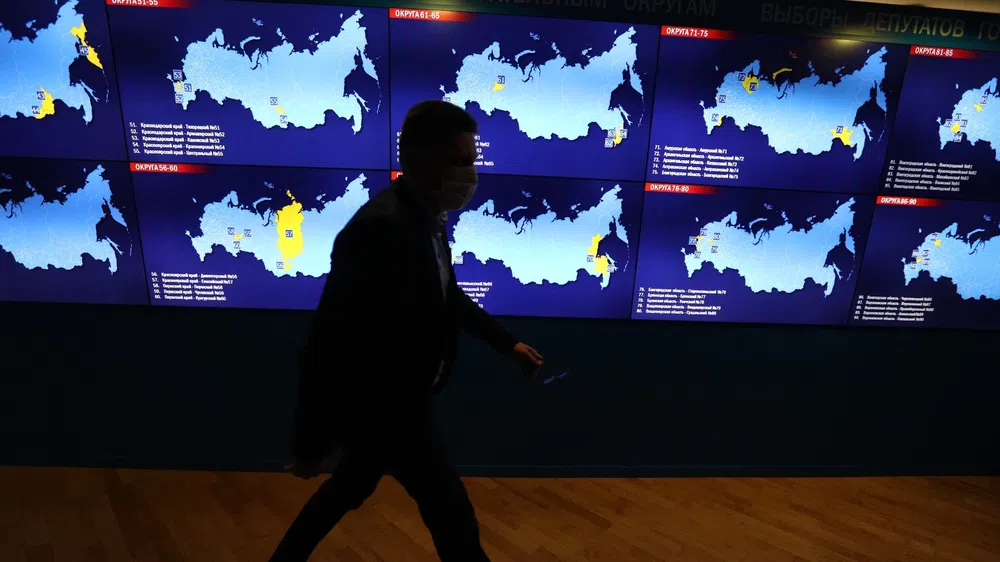
A mixture of Afghan and Nizhny Novgorod and Latvian with Sakhalin is demonstrated by election organizers in foreign sites. Unfortunately, Russian citizens in France vote around the Tomsk District, and not in Nizhny Novgorod, but still this is a classic “grief from the mind”. The Russian population living abroad, according to some magical logic, will choose deputies of the State Duma in random regions. And well, they would only vote for the federal part of the list: foreign sections are attributed to single -mandate districts. The situation is complicated by the fact that the situation with observers in consulates and embassies is completely incomprehensible. But it is clear that the sudden 10% can easily “make the weather” in the district, especially if the party does not have things to do there.
According to the election commission of the Sakhalin Region, on July 1 of the current year, there were 375,228 voters in the entire region. Five years ago, there were about 390 thousand, but people, tired and embittered, are leaving for a better life. This fatigue and bitterness also affect the regional rating of the Party of power, the governor and the president. So, according to the statistics of the VTsIOM (received by the “new” from their own sources), about 46% of the Sakhalin respondents approve of the president’s work, 55% trust him (and the indicators are slowly falling). 43%trust the governor, do not trust 46%. In this case, the information background is mostly negative.
And if you still look at the financial situation of the population? 27% of money does not have enough money for products or only for them.
It is clear that half of the Sakhalin voters will come to the elections - in 2016, the turnout was approximately 36%. But it's okay, because the Far Eastern Islands help to vote ... Latvia!
Most of the Latvians, 37,971 voter, according to the New, this year, are assigned to the Sakhalin single -mandate constituency - these are plots 8180, 8181 and 8182, they vote at the Russian Embassy in Riga. Two more areas - 8183 and 8184 - “add” to Magadan and EAO, they will choose deputies in the Consulate Generals in Daugavpils and Liepae. It is worth noting that no one hopes for a hundred percent turnout abroad - only about 15.6 thousand ballots were sent to the same Latvia. Last time, in 2016, about 75% of Latvian Russians (10,425 out of 13,832) were for United Russia. 1138 votes were cast for the Communist Party, 567 for the LDPR.
“Russian citizens permanently residing in Latvia will receive two ballots - for voting for one of the parties on federal lists, as well as for one of the candidates registered in single -mandate constituencies,” the embassy’s website explains. Moreover, if the Russian is temporarily in the country, then he votes only on lists, in the federal constituency (“with the exception of cases of providing a document confirming the presence of a place of residence in the Russian Federation within the corresponding single -mandate constituency”).
Now look carefully. Last time, in 2016, four sites were attributed to Latvia to Sakhalin (No. 8179–8182). Only 146,810 voters came to vote for party lists to the sites. Of these, 8192 are foreign:
PEC No. 8179 - 2141 people (99.95%),
PEC No. 8180 - 3078 people (98.97%),
PEC No. 8181 - 917 people (100%),
PEC No. 8182 - 2056 people (99.28%).
Amazing turnout! 5857 votes in four sections were cast for United Russia, as a percentage of 65.65% to 72.89%.
It is worth noting that four foreign plots were attributed to the South Sakhalin Terizbirkom. And the results in the capital of the region were sharply contrasted - in general, 43.4% per “EP” (there is little where the indicator for the party in general rises above 40%).
The same number of voters - 8192 voted in the majority district from Latvia for Sakhalin. Of these, for the candidate from United Russia (George Karlov, he is nominated this time):
PEC No. 8179 - 1318 people (61.56%),
PEC No. 8180 - 1979 people (64.29%),
PEC No. 8181 - 548 people (59.76%),
PEC No. 8182 - 1196 people (58.17%).
But in general, 38.74% of voters voted in Yuzhno-Sakhalinsk for Karlov, most of the PECs at the level of 30–35%. Only in three areas, not counting foreign ones, the indicator “for Karlov” is slightly larger or equal to 50%. But on the islands, even smaller areas than in Riga.
And the point is not only in Latvia and Sakhalin, of course: in different countries of the world, 348 plots are organized, they are assigned to almost 70 single -member districts. Somewhere, as in Bahrain, Chade or there in Mauritania, there are few fellow citizens. But you should not rejoice: for example, the Nizhny Novgorod district will hospitably open the doors for Russians from several dozen countries: here you are Angola, San Tome and Principi (this is one state), and Brunei, Afghanistan, Gabon, and Djibuti, and much more. Moreover, even no one was bothering with a climate basis: Kot-D'Ivoire, Burkina-Faso and, say, Iceland fell into one district (Nizhny Novgorod).
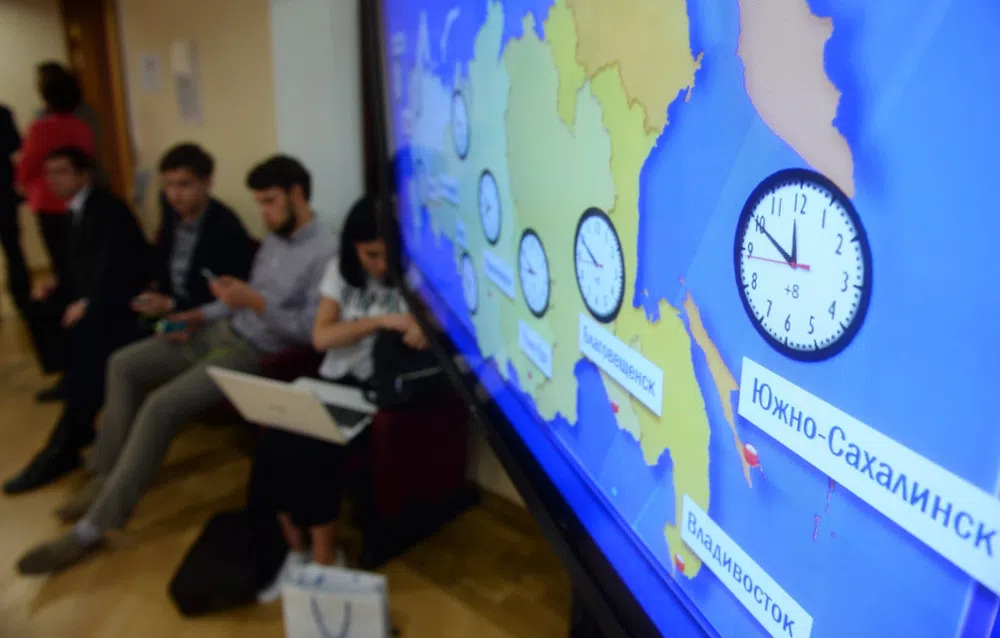
As a member of the Federation Council Committee on International Affairs Andrei Klimov said in the framework of the video Moscow in the MIA Russia Today, the selected candidates will be required to represent the interests of foreign lands. An interesting work for some one-mandate deputies is planned.
- As for falsifications - you yourself see the numbers, they are in the public domain. What amazing unanimous and impulse of patriotism showed our dear fellow citizens living in the Baltic camp. Well, a 100 percent turnout, it's just a miracle! Voting goes to the embassy. And we would probably have somehow sent observers there, but you yourself see what the epidemiological situation is in the world, ”comments Aleksey Kornienko, a candidate from the Communist Party of the Communist Party of the Communist Party of the Communist Party, he is considered the main rival of the candidate from United Russia Georgy Karlov. -An amazing story: the inhabitants of the Sakhalin Region, located outside the home region, had to write some statements through “public services” to use the “mobile voter” system. And the inhabitants of Latvia - please vote for the Sakhalin deputy. It's funny. Most of the Russians in the Baltic states, with all due respect, are unlikely to be immersed in the problems of the Sakhalin region. And most of the Sakhalin voters must plow 30 years in order to earn a ticket to that Latvia. I would also understand if the voices were only for the party, according to the federal list - but why and for single -mandate too?
Alexey Gavrukov
Political strategist:
- The history of voting in the “abroad” areas is practically not discussed in a professional environment. Are falsifications possible there? As in any closed area, there are opportunities for this. But I looked at the statistics as a whole: there is no such thing that for the current power there voted the deliberately sky -high percentage of voters. But why are the results in general loyal? Most likely, in my opinion, those who trust the institution of state power vote abroad. Judge for yourself: oppositionists do not trust neither three -day, nor remote voting, nor a video surveillance system, nor a “mobile voter”. And of course, they will not go to vote somewhere at the embassy, under not the most transparent circumstances.
Another question is more complicated and important: what right does a person who lives, for example, in Riga, has to vote for a candidate in the Sakhalin Region? Yes, I understand that it is incorrect to deprive people of suffrage, but it is very strange to allow them to determine the deputy in the region, to which they have not and will have the slightest relationship.
It would be or rather allow people to choose a region for voting - for example, using the Mobile Voter service. Then they could vote by registration, or at least for the region that they have precisely have an idea.