
Translated material
"When there is a choice - life or death," Hagakur "recommends death"
Fragment of the "Books of the Samurai" Yukio Misima
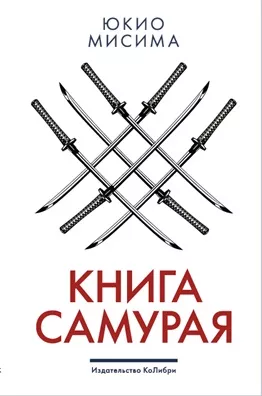
In the "ABC-Atticus" is preparing for the output "Book of the Samurai". This is a collection of thoughts of Yukio Misima regarding the content of Hagakure - the famous treatise on the Busido Code of Honor, a significant part of which is devoted to the perception of death and attitude towards it. This book had previously published in Russian, but the edition of the ABC-Atticus is the first that is made not from the English version, but directly from the Japanese original. “Gorky” publishes the third chapter of this book called “How to read“ Hagakur ”.”Yukio Mishima. The book is samurai. M.: Hummingbird, ABC-Atticus, 2021. Translation from Japanese Sergei Logachev. Content
 “Hagakure” was most read during the war, when death gathered its harvest. Then the novel by Paul Bourget “The meaning of death” was very popular, and “Hagakur” was everywhere recommended as a book that strengthened the determination of young people to go to fight.
Now, if “Hagakure” is read, it is not clear from what point of view. If there is some reason to show interest in this treatise, then, as I can assume, readers are guided by considerations, completely opposite to what the Japanese had during the war. The fact is that before our eyes, a huge disappointment in death is growing rapidly. When all other requests are satisfied, death becomes the only unfulfilled desire. No matter how you embellish death, there is not the slightest doubt that it exists and little by little breaks our resistance under its onslaught.
Young people can crave death speculatively, while people of middle -aged and older, the more free time they have, the more they are afraid to get cancer. And cancer is a murderer is much more cruel than any political power.
The Japanese have always been a nation, acutely feeling the constant presence of death behind the facade of life. Their ideas about the death of a rosary are clear. Death for them differs from that disgusting and terrible phenomenon that appears in the minds of foreigners.
The image of a creature with a scythe in a hand bearing death, which was common in medieval Europe, did not exist in the imagination of the Japanese. They represented her not like the inhabitants of Mexico, where the ruins remaining after the Aztecs and Toltecs are adjacent to modern cities, where death felt like a mistress and under the scorching sun everything was overlining with thick grass. Not gross and wild paintings of non -existence, but the image of the death behind which there is a source of life -giving moisture, from where jets of pure water are continuously poured into the world around the world - this is for a long time the Japanese visual arts enriched.
We learned a lot from the West in the knowledge of the philosophy of life, but we could not be content only with it. Similarly, it was not possible to absorb the philosophy of Buddhism with its intolerable concept of sin and karma, according to which a person passes through countless rebirths.
Death, according to Hagakur, carries in itself the incomprehensible purity of the heavenly azure, which quickly flickered in the lumen between the clouds. In a modern interpretation, such a view is surprisingly close to Kamikadze-suicide bomber pilots, whose actions are now called the tragic tactics of that war. The attacks of Kamikadze were called inhumane, and the names of the dead in them were covered with shame. However, in the long and inextricable historical tradition of Japan, nothing approached the ideals of pure action and death proclaimed by the “Hagakure”, like the fighting spirit of these guys who went to death in the name of their country, although if you study the motives of the pilots separately, it turns out that everyone had their own fears and hardships. Some will say that Kamikadze only sounds beautiful, but in fact these people were forced to die. Surely these guys, who had not even passed the course at school until the end, were sent to death against their will by state power. Even those who went to fight at their own free will, in fact, were driven by duress for certain death ... and this will be true.
Well, the death, which is hinting at Hagakur, is completely different? The death that a person chose himself? I don't think so. "Hagakur" speaks of death as an action that a person can choose, and calls to make just such a choice. But behind these words lies a deep pool of nihilism. A man who avoided his death was immersed in him, who at one time was banned from committing ritual suicide. If a person is deprived of complete freedom of choice and cannot choose death, it is also impossible to make him die. Even in the case of the death penalty, which is an extreme form of violent death, the sentenced may try to resist it by mobilizing the power of the spirit for this, and this will no longer be death by coercion. Even the death from the atomic bomb, bearing the death of everything, was for each of the deaths of death by the will of rock. We can meet with death to face only when we are clamped between fate and our own choice. The question of what form will take death is solved in the eternal confrontation between the human choice and the Providence that impersonate from a person. In some case, it may seem that a person passed away of his own free will. An example of this is suicide. In another case, death seems to be violent in the full sense of the word. An example is death as a result of an air raid.
But even in the case of suicide, which, as it might seem, is the highest manifestation of free will, fate plays a role on the path to death, which, as you know, is not chosen. And even with such seemingly natural death, like death from a disease, sometimes it is like suicide, forcing a person to have passed away voluntarily. The conditions under which “Hagakur” offers to choose death do not always have a clear shape. The enemy appears, a person fights with the enemy and is faced with a choice: to die or live - and decides to die. But such understandable conditions do not always arise, even in those days when there was no other weapon, except for the sword, everything was not so simple. The proof of this is Jamamoto himself, who has lived up to sixty -one years.
In other words, regardless of whether it is about “Hagakure” or the attack of the Kamikadze pilots, no one has the right to say that in one case we have death from our own choice, and in the other to be forced. A person can draw a distinction here only in conditions of severe reality, finding himself face to face with death. This is the problem of the human spirit in a state of peak of tension.
Here we are faced with the most difficult problem related to death. Is it really righteous death, the death that we choose in the name of a righteous goal? Many young people now say that they do not want to die in unfair wars like the one that goes in Vietnam, however, if you need to give a life for the sake of a fair state affair or salvation of mankind, they will do it with joy. Such an attitude was formed under the influence of the post -war education system and the spread of the point of view that we should not repeat the mistakes of those who died in the war for false national interests, and that henceforth can only die for those goals and ideas that a person himself considers fair.
But after all, a person lives in a state, and therefore can he limit himself only to such purposes? And even if he does not consider the state a prerequisite for his existence and lives, representing himself as a person standing above the state, does he have the opportunity to independently choose death in the name of an absolutely fair goal, in the interests of mankind? Here inevitably a discrepancy arises between the absolute concept of death and the relativistic human understanding of justice. After all, it may happen that the justice of the goals for which we are ready to die now, after a dozen, or several decades, or in a hundred years, two hundred will be revised and adjusted by history. The small, self -confident judgments of people about choosing the goal of “Hagakur” separates from a deep philosophical concept, which is death. Ultimately, death is not a thing that we can choose for ourselves. That is why, in a situation where there is a choice - life or death, Hagakure recommends death. However, this is not at all equivalent to the choice of death. The fact is that we do not have a standard by which you can choose death. The fact that we are alive may mean that we are already selected for something and, if our life is not what we have chosen for ourselves, perhaps we are not able to die of our own free will.
What does a meeting with death mean for a living creature? In this case, the “Hagakure” reads, the main thing is the purity of action. The dsetheus affirms the significance of high passion, its strength and death, generated by a passionate impulse. This is exactly what he means, saying that the condemnation of useless death is "reasoning in the spirit of Kamigat." “Hagakure” in one line: “I comprehended that the path of a warrior is death”, the most important declaration on the topic of death, cuts a knot of eternal antagonistic contradictions between life and death. “Some believe that it is pointless to die without a specific goal, without fulfilling their mission to the end. This is reasoning in the spirit of Kamigat . In a situation of “or-or” it is impossible to predict whether everything will turn out as planned or not. ”
“Fulfillment of your mission” is the same in the modern language as the right death for a just cause. “Hagakure” states that, facing the face of death, a person cannot know how right it is.
“All people want to live. Any person can find a logical excuse for the desire to stay alive. ” It exists and in the name of justification of its existence should come up with some kind of theory. Accordingly, “Hagakure” only expresses a relativistic point of view, according to which it is better to die than to live on a coward that has not managed to fulfill his mission. “Hagakure” in no case claims that, dying, a person must fulfill his mission. This manifests the nihilism of Hagakure and at the same time the most exalted idealism, born of this nihilism.
We are always inclined to experience illusions that we are ready to die for the sake of a certain idea or ideology. However, Hagakure insists that even the most ruthless and useless death, which does not bring either flowers or fruits, carries dignity as the death of a person. If we appreciate life so highly, why is the same not worthy of death? No death can be called in vain.