
Translated material
Men with elephant tusks
What to ask in book
Thomas Mann in the country of Soviets, the ideal “court” through the eyes of the humanist Baldassar Castillo, the exposure of lies of Charles (sic!) Dookins, a fascinating story of the Mayan's writing deciphering and the biography of Dovlatov, from which I want to turn into Dovlatov. Read about these new products in our column "Book of the Week".Alexey Baskakov. “I'm not a fellow traveler ...”: Thomas Mann and the Soviet Union. M.; SPb.: Nestor-History, 2021. Content
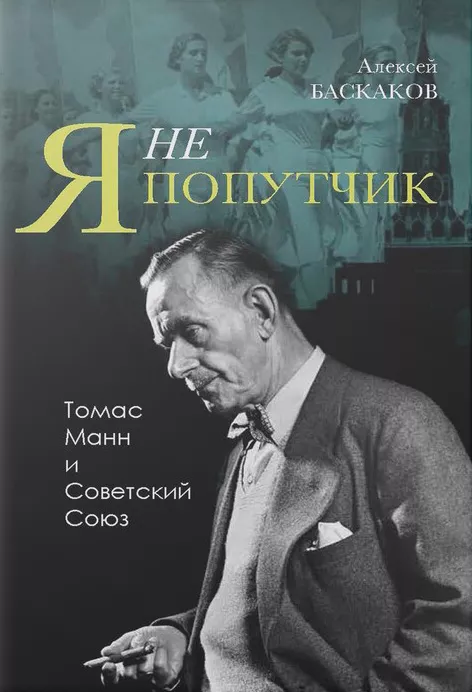 A small but substantive book by Alexei Baskakov is devoted to the relationship between Thomas Mann with the Soviet Union, to explain the specifics of which the author has to attract extensive archival material. In fact, why in the USSR they favored the great, but the bourgeois German writer, who was clearly not going to quit all things and rush to talk with Stalin, as many of his fellow fellows did? And why did the mann himself were not going to betray the Bolsheviks anathemathem, nor admire their successes, but regularly received substantial fees from Russia for the publication of his works? About all this in the book “I am not a fellow traveler ...” is reported by a lot of interesting things, and in addition, it covers many curious privacy. For example, the author of the Magic Mountain, it turns out, was familiar with Alexei Remizov and wrote about Andrei White:
“The literature of the Russian abroad was still interested in Thomas Mann. In the spring of 1920, he read the short stories of Alexei Tolstoy. Presumably at the end of 1922 he met in Berlin with their author and another writer who fled from the terror of the Bolsheviks, Alexei Remizov. About them, as well as about Andrei Bele and Bunin, he wrote with collegial sympathy in a brief review for the collection of the Gallery of Portraits of Russian Literature. A strong impression was made on him by Shmelev’s book “The Sun of the Dead”, the translation of which was published in Germany in 1925. In January next year, he personally met Shmelev in Paris. There he also talked with Merezhkovsky, Bunin and philosopher Leo Shestov. ”
Baldasser Castillion. The court. M.: Hummingbird, 2021. Translation from Italian Peter Epifanov. Content . Fragment

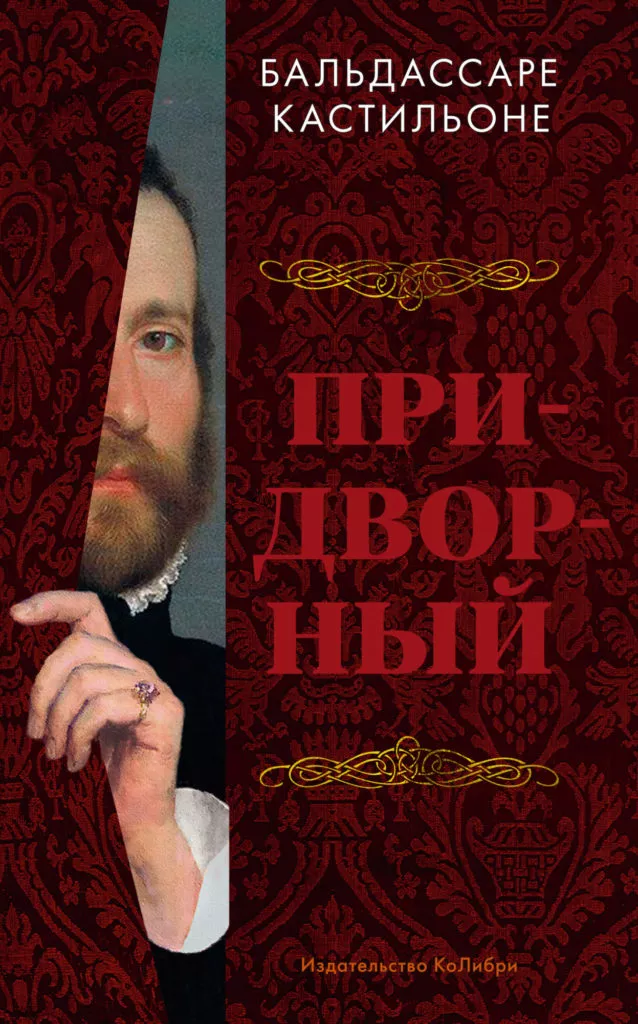 The "court" Italian diplomat, writer and poet Baldasser Castillone (1478-1529) is the most popular book in the era of the Renaissance and in subsequent centuries, in which the arguments about how to behave close to the sovereign of the nobleman are combined with memories of the court life in one of the duchies of Italy at the beginning of the 16th century. Nowadays, she from the treasure of wisdom and entertaining reading turned into a valuable historical source, but also remained a wonderful literary monument, which deserves attention at least for the sake of style - after all, they have not written for so long.
“They write that Pythagoras calculated the measure of Hercules’s body in a very thorough and witty way. It was known that the length of the stage, at which in Ahaiya, near the city of Elida, in front of the temple of Jupiter of the Olympic, every five years solemnly performed the Olympic Games, Hercules measured in feet, and it amounted to six hundred and five of its feet; And other stages, established throughout Greece in later times, also had a length of six hundred twenty -five feet, but at the same time were somewhat shorter than the Olympic. From this proportion, Pythagoras easily deduced how much the length of the foot of Hercules was greater than the length of the foot of other people, and having learned the length of its foot, established that Hercules's body was superior to the size of the body of other people in proportion to how the stages exceeded other stages.
So you, the dear Messer Alfonso, following the same principle, can clearly understand by the small part of the whole body how much the Urbinsky court exceeded all the other courtyards of Italy, seeing how much the games that were invented there to entertain souls, exhausted by more painful affairs were higher than those games that, in the course of other Italian courtyards. If there were games, imagine what, therefore, there were other valiant acts in which these minds were immersed carefully and entirely. ”
David Bentley Hart. Illusions of atheists. The Christian revolution and its newfangled critics. M.: Nikaya, 2021. Translation from English by Peter Longan edited by Natalia Kholmogorova. Content
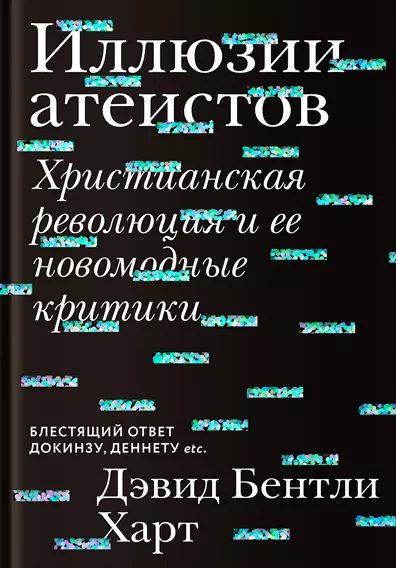 “The brilliant answer is dokinzu,” says the brilliant cover of this book. On the back, an explanation is given: “In recent years, representatives of the so -called new atheism have gained particular popularity, among whom are such famous authors as Charles Dokins, Daniel Dennet, Sam Harris and Christopher Hitchens.”
We have no idea who Charles Dokins are, but if the American theologian David Bentley Hart needed to write three hundred pages to object to this citizen, he clearly blurted out something bad.
If we speak seriously, then we are cheerfully written a book, really denouncing the plane of the thinking of modern authors who earned social capital on vulgar materialism and the depreciation of Christian philosophy. But when Hart takes on, for example, Nietzsche, then at least take the saints.
In general, this book is primarily interesting as a visual demonstration that Charles Dokins, whoever he was, is a fool, and his opponents are not far away.
“Transgumanists, such as Lee Silver, are looking forward to the day when humanity takes responsibility for its own evolution, discarding ancient moral restrictions and allowing itself to use genetic modification to turn the future generations of our offspring into gods (possibly even immortal). Some particularly dreamy transgumanists even suggest the possibility of a kind of post -human polygenesis, the process through which the obstacles between species can be broken and completely new hybrid views - men with a dog’s hearing and elephant tusks, maybe women with wings or tentacles of karakatitsa, Androgyns who can see in the darkness, breathe under water and lick the forth on their own on their own backs ".
Michael Ko. Majuration code. How scientists deciphered the writing of ancient civilization. M.: Bombor, 2021. Translation from English by D. Belyaev . Content . Fragment
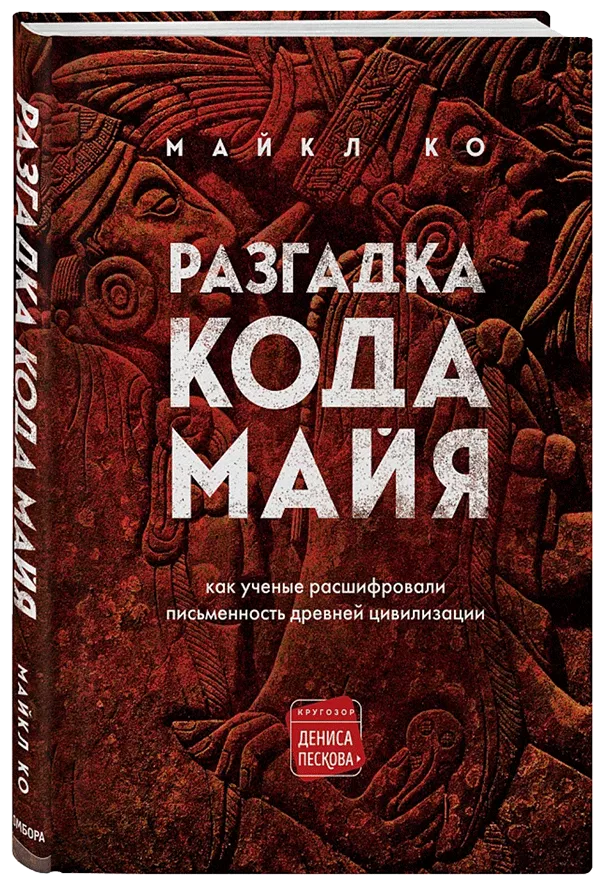 Finally, a book was published in Russian, written back in 1992 and dedicated to our great compatriot Yuri Knorozov. Its author is the American archaeologist Michael Ko, who watched the Mayan’s writing decryption (his wife Sofia was one of the first translators of Knorozov).
On the pages of this in a good Rusophilian book, he passionately and fascinatingly tells the story of those who devoted life to the terrible and beautiful meso American civilization-this army was not limited to Knomovo. Along the way, Michael, which is extremely accessiblely, explains how Mayan’s writing works and why it could not decipher it for so long.
But the “solidness of the Mayan code” is also a monument to that short era when scientists were real Newsmakers, and reports about their discoveries were released on the first lanes of newspapers around the world.
“In 1998, three modern giants of the Mayan writing giant died: Yuri Valentinovich Knorozov, Linda Shili and Floyd Launsbury. Now we understand that Yuri Valentinovich was a kind of champollion of our time, but not a single American newspaper, even “New York Times”, considered it necessary to devote the obituary to him, although he was one of the greatest scientists of the twentieth century. ”
Mikhail Khlebnikov. Union and Dovlatov (in detail and approximately). M.: Gorodets, 2021. Fragment
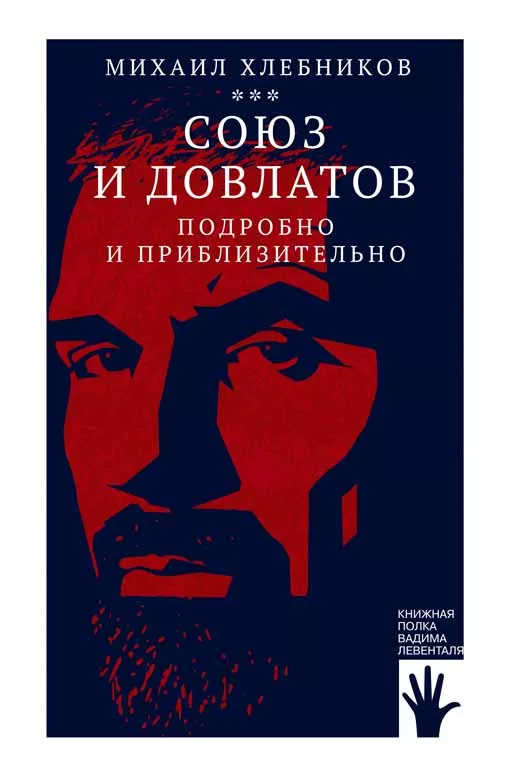 You are probably already tired of the popular celebrations of the anniversary of Dovlatov, but we will still torment you a little more. Vladimir Khlebnikov from Novosibirsk wrote a new biography of the most beloved and hated singer of the melancholic intelligentsia, this time shown through the prism of the general literary and political context of that time. While in the center of the narrative, Sergey Donatovich still remains an outside observer - unpleasant, biliary and to the bones of conformist. In general, Khlebnikov perfectly managed to convey the image of the author with his own means.
It would be nice to prohibit such books in the fall - for their reading against the backdrop of the September spell, a great temptation to turn into a Dovlatov hero. But the book really turned out to be good. (The only, in our opinion, its essential minus is the unfair invectives of the grandiose novel by Vladimir Gubin Illarion and the dwarf. However, they occupy only half the page.)
“Dovlatov wanted one to be a printed author. Not Samizdatovsky, Tamizdatovsky, but to get to the pages of a legal worthy publication. The path there is the road to the reader. For some time you can do with Erzatsa-friends who, due to personal attachment, should not only read freshly painted, but also say in the face of what they think about what they read. Friends, for one reason or another, change their attitude towards you and, accordingly, to what you write. Sometimes in a painful form for you. Lyudmila Stern recalls the mature stage of acquaintance with Dovlatov. Before that, she praised everything that he brought her. As a literally sensitive person, Dovlatov needed not only a frontal accusation of genius, but in a complex ritual consisting of irony, incredited, comparison with the stories he had previously written. ”