
Translated material
Berry and coffins
One of the worst places in Moscow is house number 9 in Milyutinsky Lane. The leaders of the OGPU lived in it. All subsequently shot
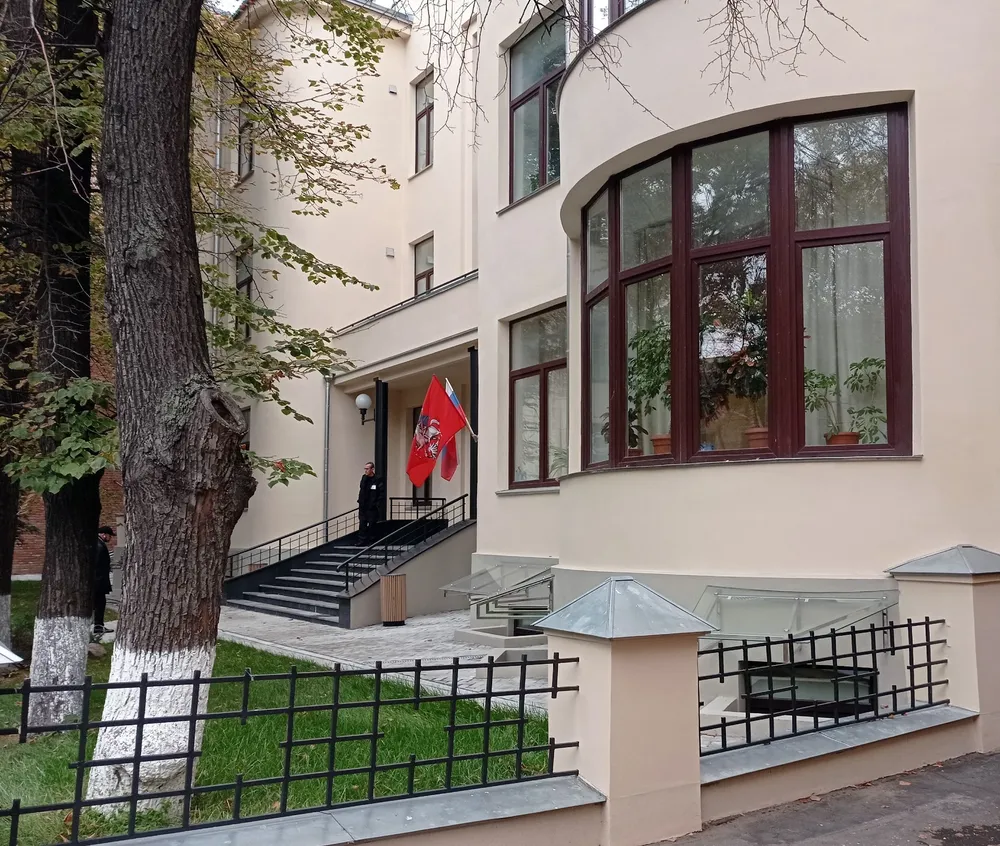
I went to this school to first grade and studied for six months, then from the street named after the revolutionary Markhlevsky moved to Preobrazhenka. And a few years later they closed the school for a long repair, and the street was renamed, “lowered” to the lane - Milyutinsky.
The school was repaired already in the 90s. It was opened as the French Lyceum named after Alexander Dumas, from the board on the wall it follows that even President of France Jacques Shirak took part in the opening.
I don’t know if the Lyceum was in “foreign agents” ...
I then lived strictly opposite, but I did not pay nine attention to the house for infancy: a fence, trees ... Yes, there is a lot of interesting and without it, at six years old.
House number 9 is in front of my school.
It was built in 1928 according to the project of the famous architect Arkady Langman, it is now written on the plate: "Residential building ... according to the Langmann project ... is guarded by the state ..."
How not to protect?
Firstly, beautiful. Three -story, high ceilings, vertical window opening above the entrance ...
Nine apartments.
“The apartments were not inferior to their layout with respectable apartments of pre -revolutionary houses, and there were three of them on each of the three floors of them, consisting of two, four and five residential premises, and this is not counting a room for servants. Each of them has an impressive living room and a rounded bay window.
It is worth noting that the apartments were perfectly isolated from each other thanks to the stairwells designed between them ... "
Secondly, historical.
Initially planned and built for the highest leaders of the OGPU. The first tenants are deputy. Chairman (then People's Commissar of the Interior) of the city of Berry, Head of Ino OGPU M. Trilisser, Head of KROPU A. Artuzov, first deputy. The head of the SOU OGPU T. Deribas, the head of the Stroyburo AHU OGPU A. Lurie, the chief of Hozo AHO OGPU I. Ostrovsky ... I do not know the other three, and there is no one to ask.
Ino-a foreign department, CRT-counterintelligence, SOU-secret-operational management, AHO-administrative-economic ...
All six are shot. In addition to the berry, everyone was then rehabilitated.
By the way, he is so the only one among all participants in the Bukharin process. And it is still impossible to get acquainted with his business (as an unorbited). Why, by the way? The last time the Supreme Court refused the applicants in 2015. The head of the Memorial (the Ministry of Justice insists that, mentioning, I call him a foreign agent) A. Roginsky expressed consent with the court decision; In his opinion, one who committed crimes against justice cannot be rehabilitated. At the same time, Roginsky noted that
The charges against the berry on the process, like his accomplices, were false, and indicated that independent researchers still do not have access to the criminal case in which the berry was convicted:
“For some reason and for our practices, researchers do not allow us to do not allow the matters of non-rehabilitated persons. This is outrageous. And this does not allow us to give a complete objective assessment of the decision of the Supreme Court on Berry. ”
But all this is then. And in 1937, the head of the State Unitary Enterprise of the NKVD V. Merkulov, then the head of the GUGB of the NKVD, drove into the vacant apartment of Lurie; From February 1943 to August 21, 1953, Lieutenant General P. Sudoplatov lived in it ...
Merkulov then, when the People’s Commissariat was once again divided (into the People's Commissariat of Internal Affairs and State Security), became a minister. Shot in 1953 with Beria, not rehabilitated. The famous Sudoplatov, the organizer of the murder of Trotsky, was more fortunate: he served, came out, wrote a book of memoirs, was received by the portrait of my comrade Boris Zhutovsky in the series “The Last People of the Empire”, but did not wait for rehabilitation ...
Who else lived here? Who lives now? The unfriendly guard does not enter into conversations ...
International tour operator Die Ganze Welt, but there are no signs. Good place.
In general, the district looks surprising for the center of any capital: the large and small Lubyanka, the Milyutinsky, the Kuznetsk bridge, the Myasnitskaya - completely in the buildings belonging to the security service: the complex of the central apparatus, the huge computing center, the residential buildings of former employees ... It is not surprising that near the Sretensky monastery, a colossal temple was erected, considered the House of the FSB, and in the Lubyanskaya Church, and in Lubyanskaya The areas do not stop the stubborn efforts to restore the monument to the founder of the organs to Felix Dzerzhinsky ... Thirty years have passed, as there are no in the courtyard of the Soviet Union, but the huge coats of arms of a non-existent state with a sickle and a hammer against the background of the globe are still on the entrances of the FSB ...
However, the powerful secret police never limited itself to a specific and compact area. The best architects, united by trust and tolerances, have been built from the 20s for the employees of the "House of OGPU", here are only some well-known addresses: 1st Meshchanskaya, 46a; B. Zlatoustinsky per., 5; Tverskaya-Yamskaya, 11; Leningradskoye Shosse, 242 (now 8/2); Leningradsky Prospekt, 48; Pokrovka, 20/1, Gorky, 101 ...
How many were there to resettle in all these houses?!
On Novokuznetskaya Street, they built the “House of Excellence of the OGPU”, so then I had to attach the corps - even larger sizes; Presumably, there were more and more “excellent students” in the department ...
Right opposite the main building of the FSB and the internal prison, on the top floor of Dynamo House in Fukasovsky Lane (where there was the largest food store in Moscow-No. 40)-huge round illuminators. It was here that the very construction of the OGPU was located, whose boss lived nearby, in Milyutin, 9. It was here that the wonderful projects of “residential buildings”, “Rest houses” and other things were born. Then Stroyburo moved to a separate building.
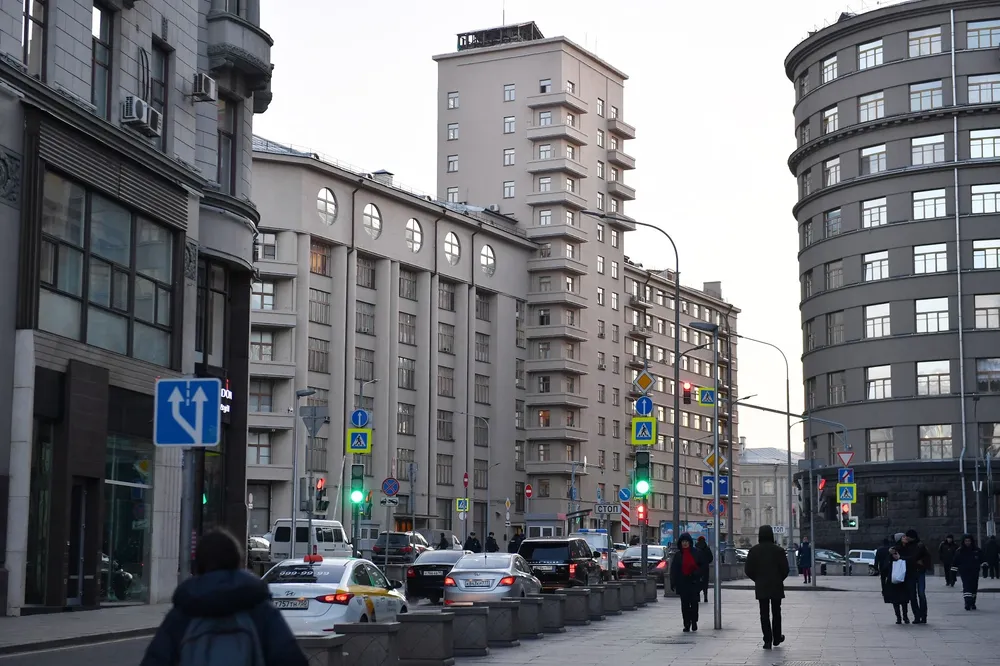
So what? There is, say, at home for ZIL workers, for Moscow State University, why not be houses for the "fighters of the invisible front"?
I will say banality. No modern state can do without special services, but each of them is controlled by the headache of each of them, prevent them from growing up and becoming the main service of the state. They must “know their place” in order to use - well -deserved - respect and appreciation of fellow citizens.
In general, and
The state itself must use it - deserved! - Respect. And not only (among other things) to shoot fellow citizens in hundreds still really counted thousands and secretly throw them on the races on countless "communal services"
(By the way, next to the dacha of that very berry). And then to hide for decades and in “exploits” to admit through their teeth, reluctantly ... Otherwise, the “houses of excellent students” will look different, with the portraits of which their grandchildren are spoiled and now go to the marches of the “immortal regiments”.
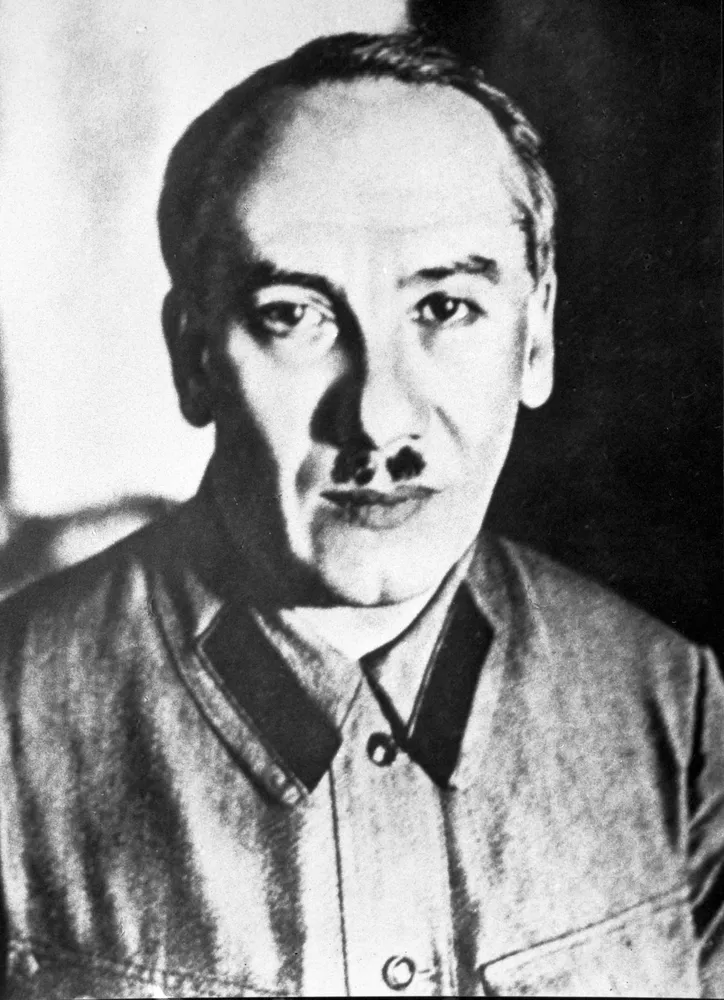
After the arrest of the first People's Commissar of Internal Affairs, General Commissioner of the State Security of Henry Berry, his parents and sisters were expelled for a period of five years in Astrakhan. On May 8, 1938, they were sentenced to eight years of forced labor camps. Father died in Vorkuta (having managed to pre-write a letter to Stalin, in which he renounced his son), his mother in the northeastern ITL. Sisters: Rosalia, after serving the term of imprisonment for another five years, was in Kolyma for another five years, Taisiya after the release on October 29, 1949 was sent to the Krasnoyarsk Territory, the Esther was sentenced to execution on June 16, 1938, Frida after release from the camp (1949) was repeatedly sentenced to 10 years, Lilia was sentenced to 10 years, 1938. Shooting.
The wife of the berry of Ida was dismissed from the prosecutor's office where she worked, and on June 9, 1937 she was arrested. Together with her mother and seven years, she was sent to exile in Orenburg for a period of five years. In 1938, after revising the case of Ida, the Averbach was shot.
Unlike my husband, the Averbach was posthumously rehabilitated.
Son Garik took the name of his mother to avoid persecution. After the death of his parents, he was brought up in an orphanage, in 1949 he got to the camp, from where he was released after Stalin's death.
In 1939, he wrote a letter to his grandmother (mother). Her neighbor in the camp was the widow of Bukharin, who reproduced this letter in her book: “Dear grandmother, dear grandmother! Again I have not died! You are left alone in the world, and I am alone if I do not die, when I grow big, and you will become very old, I will work and feed you. Your Garik "...
In general, after the execution of the People's Commissar, 15 of his relatives were injured from repression.
Initially, the berry was accused of committing “anti-state and criminal offenses”, then in “Organization of the Trotskyist-Fascist Conspiracy in the NKVD, preparing an attempt on Stalin and Yezhov, the preparation of a coup and intervention”, and work for foreign intelligence. The main associates of the Agranes, Zakovsky, Firin, Redins, Eichmance, Katsnelson, Leplevsky ... opposed the berry.
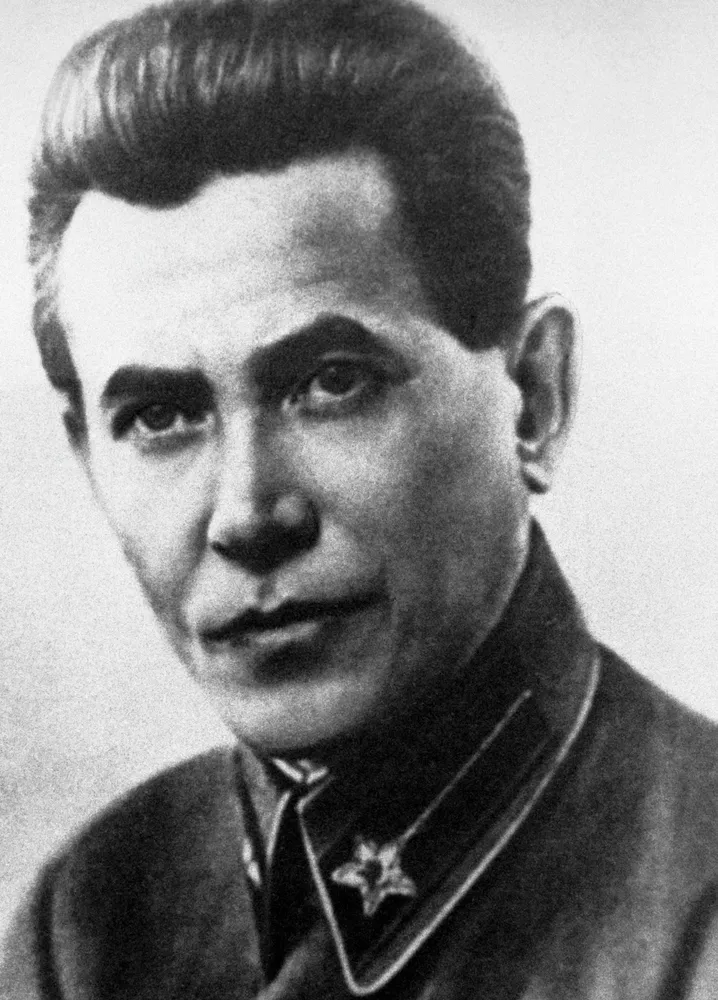
The associates, by the way, were shot too, not everyone was rehabilitated. To be proud, frankly, there is nothing to be one or the other, innocent blood on each - by elbow.
In a letter from Artuzov, the People's Commissar of Yezhov (1937) is given a berry assessment (in a neighborly way, as we recall) as a person “a limited, unworthy in all parameters of the posts that he occupied in the OGPU. By nature, by intellectual strength, by culture, by education, by knowledge of Marxism, the berry is anti -Poprzhinsky ... "
What we now know about Menzhinsky seems to confirm his listed qualities, his intellectual power, his culture and education. But it makes you think about: is it not too much suppressed by his “knowledge of Marxism”?
... And the berry was, apparently, the type was still vile. Let him not prepare attempts on Comrade Stalin,
He did not plan a coup, was not a foreign spy. As he himself said in the process: if I were a spy, they would have to dissolve all their intelligence services ...
The verdict "espionage" did not fall.
It is necessary to cautiously quote the documents of that time (as a letter from Artuzov). Here, for example, the report of the head of the 1st branch of the AHU of the NKVD Tsilinsky “On economic expenses of the 2nd branch of the AHU of the NKVD of the USSR” dated April 4, 1937 to the head of the 1st department of the State Unitary Enterprise of the NKVD, the state security commissar K. Paqueer (the main guard of Stalin, was executed in August 1937 “in a special order”, not rehabilitated). It should be borne in mind that the former people's commissar by the time of drawing up a report for a week was arrested, so they could lie. But they could not lie, not everything to lie ...
“I am reporting that among the special branches of the 1st branch of the NKVD AHO for 1936 there were the following expenses. But I have to make a reservation that the numbers are approximate, they are written as a keepsake, since in accordance with the established procedure, all expense documents were burned monthly after the approval of the report and only acts remained ... "
From the "remaining acts" follows ("along the line of the berry"):
The content of the Lake Rest House, Liza’s cottages and Galtishchevo, apartments in the Kremlin, in Milyutinsky Lane, 9, and Tverskaya, 29, such as: different repairs, landscaping and flowing colors, heating, lighting, cleaning the pond, repair and change of furniture, from 1.01 to 1.10.36 605,000 rubles. The staff for all points in nine months - 94,500 rubles ... power for cottages and apartments - 450,000 rubles ...
... The berries were regularly supplied with food: Esther, Taisa and Rose. In addition, periodic premises were sent to Grigory Filippovich, Leopold Averbach, Leonid Averbach and Friedland at the expense of the 1st department of AHO. The dachas of Rose and Esther in Kraskov, Tais and Grigory Filippovich in Zhukovka were kept and furnished. There were sewing shoes and clothes ...
All these expenses from January to October 1 are approximately rubles. 145 000 ...
Along Gorki-10.
Three points were served on this facility: Gorki-10 rest house, small. Nikitskaya and the house in the Crimea "Tesseli". Every year, large repairs were made in these houses, a lot of money was spent on landscaping and planting flowers, there was a large staff of maintenance staff, furniture and dishes were added and added. As for the supply of products, everything was given without restriction ...
Approximate expense for nine months of 1936 - 1,010,000 rubles.
In addition, in 1936 he was bought, capitalized and furnished with furniture in the village of Zhukovka No. 75 for Nadezhda Alekseevna (Gorki-10). In total, it cost 160,000 rubles ...
Writers.
Before the cancellation of the card system, the writer Kirshon used rations. Recently, periodic parcels and dairy products for which the Kirshon contributed money have been sent.
As for the furniture made by Butyrsky insulator and banquets on the occasion of the production of new plays, these expenses were partially paid by Kirshon ...
The writer of Afinogenov received a lot of furniture from the Butyrsky insulator, and at the expense of the 1st department a banquet was paid. I did not use the products of apinogens.
Sholokhov bought various items from consumer goods in the amount of about rubles. 3000 ...
Periodically, Katanian received the parcels. The rations were given large, with wine, worth 1,000 rubles ....
There were TT on constant supply. Deutsch (SOCCONTROL) and Schmidt O.Yu. They were sent in a five -day one at the rate of 450-500 rubles. ration, which in the year will amount to rub. 54,000 ...
Doroghonko cost us state security ... In an incomplete year (calculated Tselinsky), the costs of the People’s Commissar amounted to 3,718,500 rubles.
Four pages with a clean font. I can explain something. Averbakhi - Leopold and Leonid, wife's brothers, the first of them is the leader of Rapp. Friedland is a sister’s husband ... “Gorki-10 Line” is, of course, Alexei Maksimovich Gorky, a great proletarian writer. Nadezhda Alekseevna - of course, Peshkova (“Timosha”), the wife of a professional lobotryas and loafer of the son of Gorky, in whom the berry was in love ... Everyone around was in love, by the way. Stalin himself, they say, made her a proposal, but for some reason he was refused ... he lived as a bird sings, fun and thoughtlessly, only all her subsequent husbands and lovers of the NKVD took, but did not touch her. But even her daughter, Marfa, marryed for the son of Beria ...
The "cheerful widow" called her in Moscow.
The Gulag Archipelago describes the arrival of Gorky and his satellites to Solovki: “It was June 20, 1929. The famous writer went on a pier in the Bay of Blagificness. Next to him was his daughter -in -law, all in the skin (black leather cap, leather jacket, leather gallife and high narrow boots), a lively symbol of the OGPU shoulder with Russian literature. ” Timosha also left her memory of a trip to this concentration camp: “An amazing view of the lake. The water in the lake is cold dark blue, around the lake is a forest, it seems enchanted, lighting changes, the tops of pines flashes, and the mirror lake becomes fiery. Silence and surprisingly beautiful. On the way back we pass peat -development. In the evening they listened to the concert. They treated us to the Solovetsky herring, it is small, but amazingly delicate and tasty, melting in the mouth ... "
You can consider, in a word, life was a success.
... Well, as a cherry on the cake - a list of state awards of Henry Grigoryevich Yagoda, a close relative of Sverdlov, Dzerzhinsky's favorite:
1922-the sign "Honorary Worker of the Cheka-GPU (V)"-to the fifth anniversary of the organs;
1927 - Order of the Red Banner;
1930 - Order of the Red Banner;
1932 - Order of the Red Banner of Labor;
1932-sign "Honorary Worker of the Cheka-GPU (XV)"-to the 15th anniversary of the organs;
1933 - sign "Honorary Worker of the RKM";
1933 - Order of Lenin.
... In general, the whole area, according to the mind, would make a museum. From Milyutin Lane to the “Firing House”, the Military College of the Supreme Court, I would pave the pedestrian route. With a visit to the central building and the internal prison inside it. And in the building of the "House of the OGPU" in Milyutinsky Lane, I would open the main museum of state security. So far it is not there, he would still have hung on the walls of the “last address”-on all its residents, rehabilitated and not.
Someday, I believe, it will be so.