
Translated material
Barcelona guide
The author of "over the barriers" Karina Arzumanova met in Barcelona with the guide Montserrat Dumen.
Karina Arzumanova: Montserrat in a ballet is elegant. She drives Russian -speaking tourists in Barcelona beauty, is engaged in the theater, dances on stage. I thought to talk to her about Catalonia, Spain, her beloved flamenco and other dances with which she is fond of, about her life in Barcelona. Montserrat came to our meeting with a big album of photographs, and the conversation turned out to be a little different.
Montserrat Dumen: I was born in the city of Sabadel 23 kilometers from Barcelona. I spent my childhood in a Sabadel, already a teenager began to come very often, the whole weekend is practically in Barcelona. Because I love cinema, theater, in my town there are not many opportunities to go to the theater and so on. I then got a friend of Barcelonsky.
I love different cultures, from an early age I was all interested in it. For example, dances of different countries, languages are different, for me it has always been very attractive. I always loved ballet, for me Russia, the Soviet Union is a ballet. The fact is that in a large family where there were financial problems, it was impossible to write a daughter to a dance school or ballet. Even when they showed the ballet on TV, my mother said: do not say Montsi, she will be upset, cry. But then by a teenager, I began to go to some classes, dancing lessons. When I was 16-17, I began to dance tango Argentinean, then Flmenko. For the past 7 years, I have been engaged in the Indian dance of the classic, which is called a cathac.
It seemed to me that in the Soviet Union they greatly appreciated the talent in people, opened talent, and then teachers supported that these people could only do this. And here in the West, if there is no money, then you need to work out, study and work at the same time. Therefore, not everyone can do a specific one at a high level. I understand that talent is not just like that, you need to work and do a lot.
- Was there no ballet school in your city?
- No.
- Do you consider yourself to be by nationality?
- I love the world so much, I am a cosmopolitan person. But still I am a catalon. Grandparents, great-grandmothers, great-grandfathers, parents-all Catalans, but with a very open mentality, although I am a catalon, I am not against something Spanish.
-Do you perceive flamenco as your native or still not Catalan?
- This is not Catalan, it is from the south of Spain, but spread throughout Spain. I always loved, a quick -tempered dance, temperamental. I also perceive as part of my interests.
- You have a very beautiful name.
- Always, when I get acquainted with Russian people, they ask me: what is your name? Montserrat. Montserrat Kabalier? All Russians know Montserrat Kabalier. Yes, this is a typical Catalan name. The patroness of Catalonia is the virgin Maria Montserrat. 50 kilometers from Barcelona is Montserrat, where, they say, a figurine of the 10th century of the Mother of God, Black Madonna was found. There, the Benedictine monastery is still operating, there is a children's choir who is famous around the world, they study there, such a charming children's choir. This is a place of pilgrimage. The mountain has such a form as if cut. I drank in Catalon-it is "Serra", and "Mon" is a mountain. Montserrat - "Cungal Mountain". This is my name.
- Are Monsi called at home?
- Yes, Montsi, Montserrat, and the Russians are Montsechka.
- Where did you study?
- I studied at the faculty of translators at the Autonomous University near Barcelona, then graduated from Slavic philology at the Central University in Barcelona. I really love different cultures, I like to travel. For me, languages are music. When I saw an announcement that at the university the Russian language courses, I thought: I must sign up. I signed up, love from the first lesson, you can say so. I decided that I would continue to learn that I want to learn this language, I want to visit the Soviet Union.
I was the first time in the Soviet Union in 1989. I lived in a hostel at the Pushkin Institute on Volgin Street, near the University of Friendship of Peoples. We had such a company: Cuba, Colombia, Peru, still Africa, China. I opened the world. I am also connected with the Soviet Union, with Russia that I found out that the world is so rich. Because then in the late 80s-in the 90s, Barcelona was not yet popular, there were no tourists at all. Only after 1992, after the Olympic Games, Barcelona became popular all over the world, after the good Olympic Games that we organized. I came to the first lesson of the Russian language, I remember we were sitting four people in the audience. I hear steps along the corridor, the heels are swiftly. "Hello, my name is Lena. Very nice." I was like in a dream, I was interested in phonetically. Lena is the daughter of Spanish parents who emigrated during the Civil War in Spain in the Soviet Union. She recently returned from the Soviet Union. I became a devoted student, still communicate with her. There I met a friend, so far we are friends, we went to the Soviet Union with him. It was a summer course, the Ministry of Foreign Affairs of Spain gave scholarships. Later in 1996, she studied at the Pushkin Institute again, got a job because it was no longer as cheap as in the 80s, when we just rode a taxi because it was cheap. Here in Barcelona we could not ride a taxi every day. There were practically no cars in Moscow then, such spacious streets, it was a pleasure: let's ride around Moscow! At night, in the morning. Then she got a job at the Spanish consulate, a year worked there. I remember when I told the teacher: "Lena, we want to go to Russia with Zordi to Moscow." She says: "Monsi, (the fact is that Zordi is in a stroller), I don’t know how you can handle it, because there are such avenues, there are such streets, crossings, stairs in Moscow." I say: we can handle. "And we went.
“ Did you care about him?”
- I cared about him, of course. He is a man with such energy, purposeful. In 1989, strollers were not visible, at least on the street. I understood that the veterans of the Afghan war and so on, they were sitting at home, probably. I remember once I bought tickets: "Jordi, we go to the Bolshoi Theater today." I don’t know which floor, and there was no elevator. People did not know what to do, looked at us. Then they helped us with pleasure. Jordi gave instructions. Then on Gorky Street, now on Tverskaya, I remember, I walked with a stroller, the curbs are tall, I raised the stroller with all my strength, and Zhordi fell. The whole street, all pedestrians, all around us: how to help, what to do? People reacted well. I even stopped a taxi. When they saw a stroller, they looked at me with such a look. I say: "It's okay, it develops." So through the Russian language I have so much interesting experience.
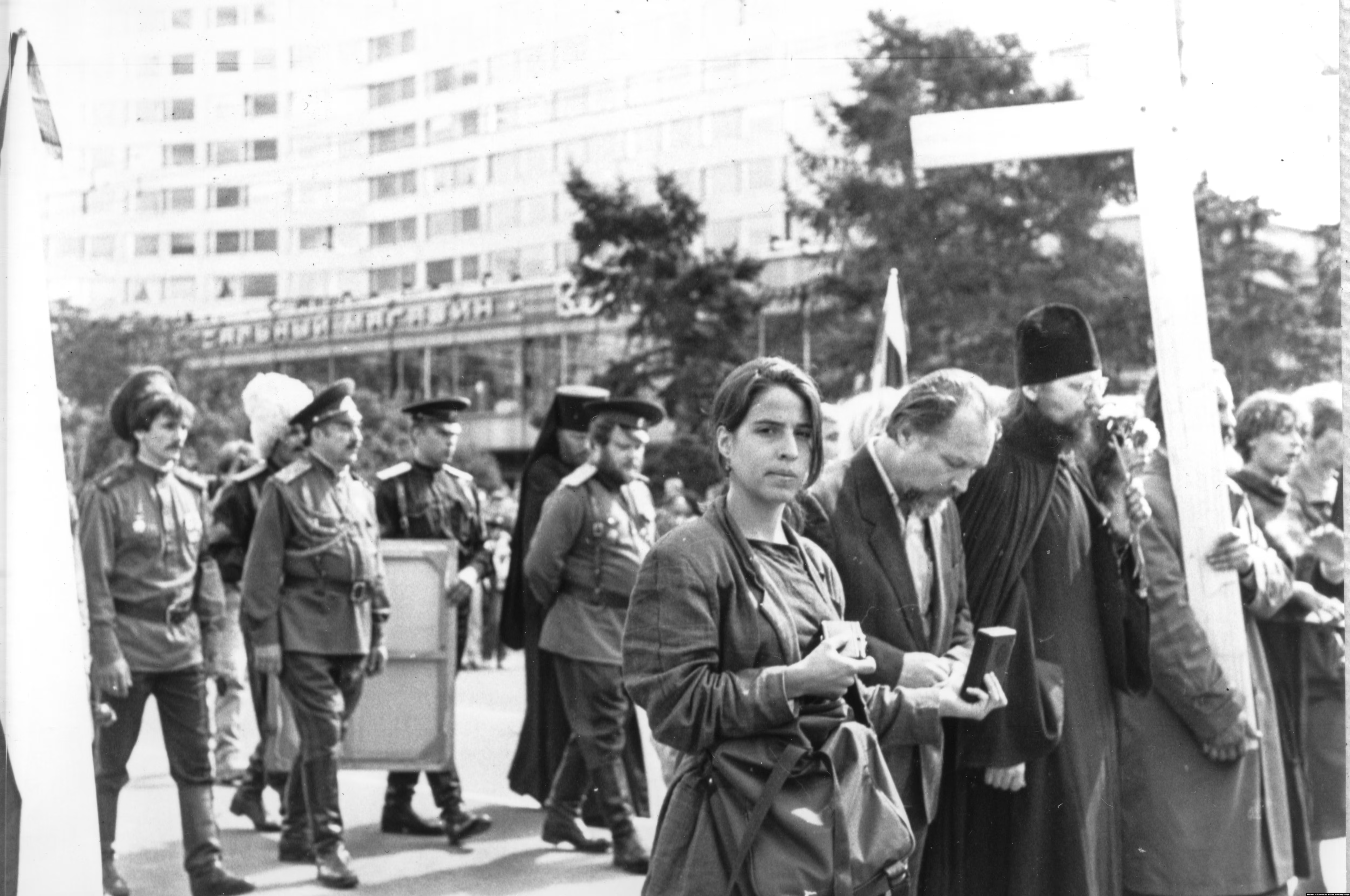
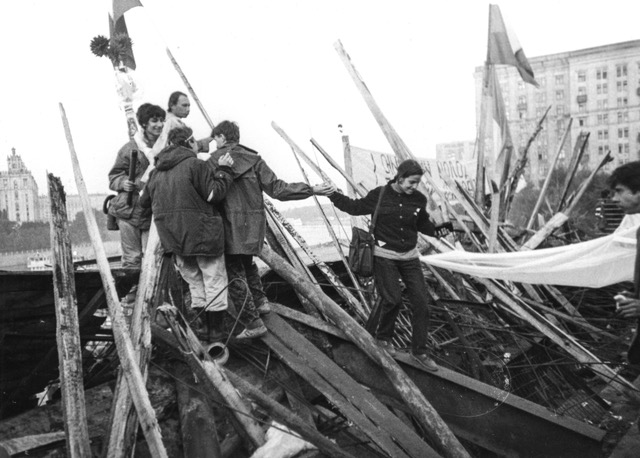
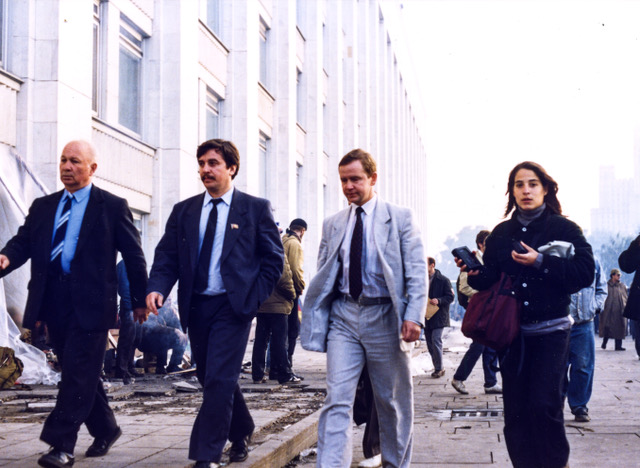
When I opened the album that Monsi brought, I saw photos of barricades at the White House in Moscow.
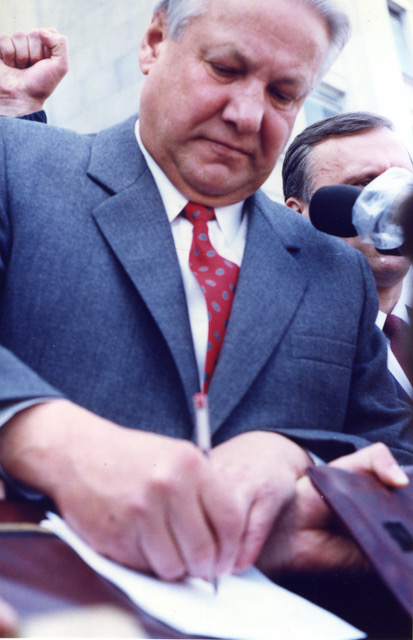
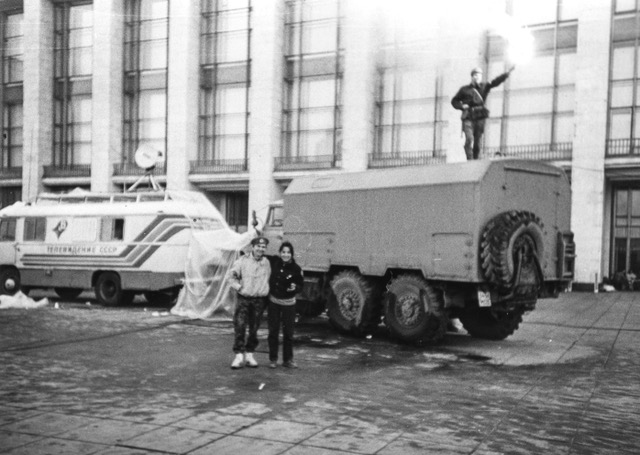
- I was at Moscow State University at the summer year, I just went to my friends in Minsk. I got up in the morning, in the kitchen, Svetlana's mother cries. I say: "What is happening?" Show on TV the "Swan Lake". I briefly tells me that, it turns out, a coup, it is not known where Gorbachev, and so on. I say: "Then I need to go back to Moscow." - "No, we will not let you in." I say: "And what if it is necessary, the embassy is only Spanish there, there is nothing in Minsk." So I flew, I remember, at night, there was already a commandant hour, and my Kububans' friends, I contacted them, say: "We will meet you at the airport." We got into the car, right at Moscow State University. Tanks, columns are coming. Now, probably, differently, but I was a curious person, still young, it seemed to me that it was a historical event, I had to be in the front row, even write down, photograph everything. I arrived at Moscow State University, met there two weeks ago with the Spaniard Ramon. I say: "Ramon, let's go to the center." - "Are you crazy? Many have already left for their countries." - "I will not go anywhere, I will stay." - "I have a headache". - "I will give you aspirin, let's go." The center has a whole story. In the end, I was on the barricades at the White House, there I spent the night among the defenders of the White House. I have an album, so many photos. At one point of control, I said that I am a Spanish journalist, that I lost my team, I have accreditation, but I don’t know where they are. This is not true. "Spaniard?" - "Yes." - "But Pasaran. Good, we will let you in." I say: "I just want to record, take pictures." The next day they announced at 6 am that the coup had already failed. We learned that Yeltsin will perform on the balcony of the White House. We began to find out where, how to go. Spaniard Ramon, he had ties in a newspaper in Saragos, sent us a certificate. The women who stood in the press center say: "Girl, I saw you, please go through." We went up to this balcony, we were the first to stand there. We can say, not real, of course, journalists, but I had a recorder, I am with a recorder, with my Lomo camera, I had so small. Are we the first to be here on the balcony, where Yeltsin will now speak? Real journalists began to come, BBC, with such cameras. Then the bodyguards of Yeltsin. And then Yeltsin, and we are nearby. Yeltsin’s protection face to me. Yeltsin promised that the country would come out of all this. I wanted to sign, there was no pen, I gave my pen. There is even a photo that he signed with this pen.
It turns out that my family saw us on TV in Spain. Of course, then there were no mobile phones, we made calls at the post office, ordered a call to Spain, waited for: "Spain, the third cabin, speak." They knew nothing, they only knew that the coup, that I was there. While I was able to get through, three to four days have passed. Then, at the consulate, they told me that I should change the ticket back home, I said that I would not go anywhere, I would remain, especially since I had a ticket to Georgia in a week. "You are crazy, do not think about your parents, how do they worry?" - Embassy employee. "They know that I can handle it." Then flew to Georgia. When I returned from Georgia, I met a Georgian in my hometown. In Spain, the holiday of every city takes place, which lasts about three days, in the summer mainly. Our family always went to dances, always invited groups from different countries, from Russia, from Ukraine, from the Caucasus, from Georgia. The ensemble came from Georgia, I was delighted, I love these dances. I met a translator Manana, then corresponded, she invited me to Tbilisi. After the coup, I went to Tbilisi, there I stayed in their country, I was very good, of course, met. I flew to the airport, I stand, I don’t see Manana, taxi drivers came up to me: "Girl, are you ours?" -"Yes, to some extent yours." It is connected with Russia, I have such feelings, the experience is unique. It so happened that after the putsch, two weeks after that, there was an exhibition of photographs of professional journalists, photos of a putsch at the Palace of Congresses, in the White House. Of course, I went to the exhibition. Here, I look, in a huge amount of photography, I see myself there in one photo, in two, or rather, next to Yeltsin, with the protection of this balcony, where Yeltsin made a speech. I turned to the TASS agency, found the address, said: "So and so, I would like to buy, buy these photos." I bought them in large size and small.
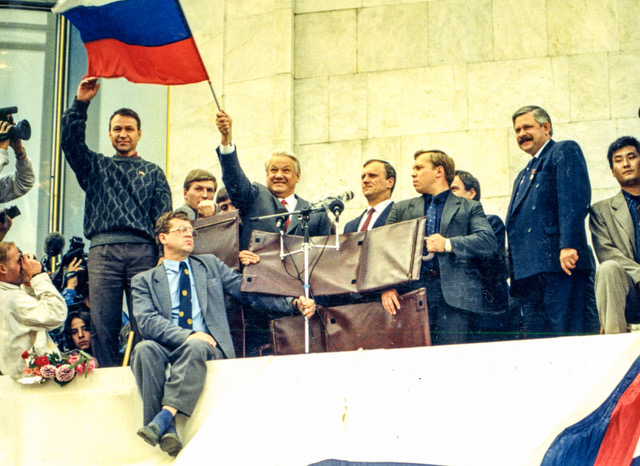
Together we watched the Moscow album Montserrat.
- Here is the pass that they gave me where “but Pasaran”, at this control point, I wanted to go out and return again at night, they say: “Show this piece of paper.” I saved.
- Fake?
- I apologize, a real certificate, but I just wanted to participate in terms of the fact that I was not a journalist. This is after the coup, we are hungry, we had a snack in the white house of the White House. This is in the morning, when it is practically announced that the coup had failed. On the one hand, of course, I am delighted, because I just wanted to watch all these events in the front row. And they let me go. It was possible to put a criminal. This album, as you see, scroll through many times. And I sit at night. All men say: "Girl, what are you doing here? It is dangerous." - "I am a journalist, I have to tell about it later."
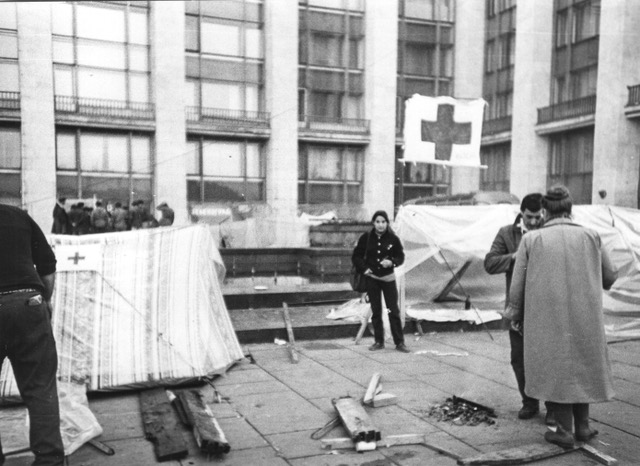
- How old are you?
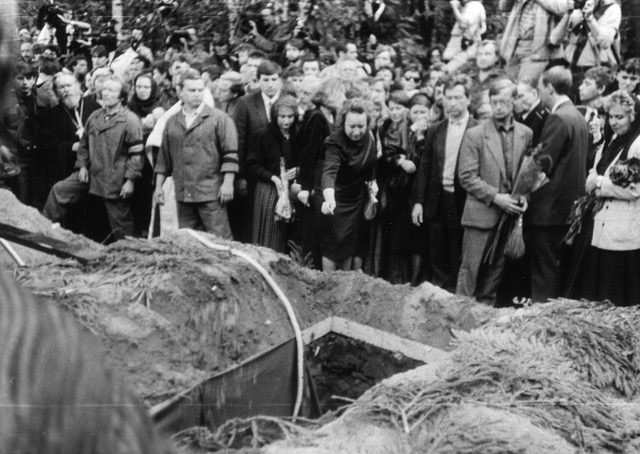
- 21 years. Photographed a soldier, tanks that stood near Red Square. And this is my pen. Remember, three guys who died during the coup? These are the funeral of the guys.
The first time the translator Montserrat worked with the orchestra Svetlanova, then with many others: director Anatoly Vasiliev, the head of the choir Anatoly Grindenko.
-She also worked as a translator for the Chechen surgeon Hassan Bayev, who during the two wars of the Russian-Chechen remained there, by the oath of Hippocrates, he received all the victims, wounded, on both sides. In the end, he was taken to America. For me it was also experience. Because he was long under the stress of post -traumatic, as part of the treatment, psychologists were advised to write a book. He wrote a book, is called "Oath", but it is not translated into Russian, although it is translated into 20 languages.
- To Spanish too?
- Same. He came with the presentation of the book. He was met at a medical faculty at Barcelona at the university, then at the Faculty of Journalism. I translated, but the man was still in such a state that it was very painful for him to remember and talk about it. According to Chechen customs, a man should not cry. I understood him. He said: "Despite the fact that it hurts me, I understand that you understand me, you convey not only words, but all emotions." So the war destroys the soul of man. He specialty is a plastic surgeon, but ended up in war, amputated his legs, limbs. For him, this horror is the destruction of the soul. You can restore cities, you can restore the landscape over time, and restore the soul is very difficult. I was in Chechnya, he invited me. I also worked as a translator in the field of human rights, for example, with a "memorial", "mother of Chechnya", "mother of Dagestan." Of course, I love Russia very much. I always follow what is happening there with interest, sometimes with horror, I worry. I don’t know to what extent people can be expressed freely there or what consequences will be.
Further in the program:
Illness and creativity. The voices of Vladimir Soloukhin, Zinovy Zinika, Roman Timenchik sound.
"My favorite records" with journalist Vladimir Abarinov.