
Translated material
Bloody webnya
Why are foreign social networks in Russia banned, despite the willingness to cooperate with the state
From the editorial office
After deleting the Navalny app from Apple and Google stores last week, as well as blocking videos with smart voting lists on YouTube, YouTube General Director Susan Vodzhitski in an interview with Bloomberg said that local laws should be taken into account when determining the final policy of the company. Our columnist Sergei Golubitsky explains what the growing pressure of the Russian authorities on international social networks can turn out for users.
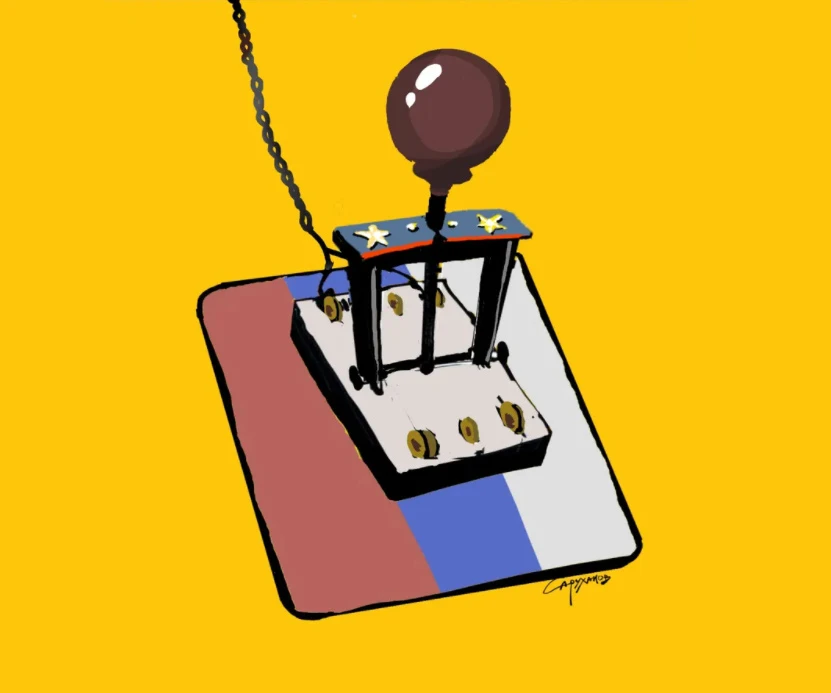
Last week, RKN strengthened the concern for the security of Russian citizens on an unlimited Internet and formed a register of social networks.
I hasten to warn the reader against the scourge of false switchmen: Roskomnadzor does not improvise in official zeal, but only fulfills the Law No. 530-ФЗ, which was adopted already on February 1, 2021. Therefore, instead of sublimation of my own political lawlessness, I suggest that the reader assess the situation from a practical point of view and analyze the scenarios of the near future.
In particular, it is useful to compare the register of social networks with monitoring mobile and Apple Store shops. The latter, as you know, on the eve of the elections regularly deleted the Navalny application from the Russian segment of their service.
Accordingly, it is important to understand to what extent the Russian state will be able to achieve a similar effect on Facebook, Twitter, Instagram, Tiktok, Likee, VKontakte and Odnoklassniki.
To begin with, I propose to formalize the intentions for which it was necessary to create a register. Law No. 530-ФЗ requires social networks of self-control.
That is, social networks are obliged, according to the plan of the Russian authorities, to independently identify and block prohibited information.
What information is considered prohibited in the Russian Federation? This is such an information that calls for criminally punishable acts (1), discloses information that constitutes a state or other secret protected by law (2), contains public calls for terrorist activity (3), extremist materials (4), pornography (5), a cult of violence and cruelty (6), obscene abuse (7), defends a citizen or citizen or citizen or citizen (7), gives rise to a citizen or citizen or citizen. A group of citizens on the grounds of gender, age, racial and nationality, language, religion, profession, place of residence and political beliefs (8), describes methods for the development and manufacture of narcotic drugs (9), methods of performing suicide (10), refers to sites for gambling and lotteries bypassing Russian standards (11), advertises the remote sale of alcohol (12), 12). He incumes minors to illegal actions (13), detract from the dignity of the Russian state, its symbols, Russian authorities and Russian citizens (14).
There are no numbers in the text of the law - I put them on my own for the convenience of analysis.
I suggest that the reader conduct an inductive, but a deductive analysis of the prohibitions, since it is precisely this approach that allows you to immediately reach two key circumstances.
The circumstance is the first. A cursory glance at the list of forbidden information is enough to understand that the Law No. 530-FZ delegates the authority of the Apostle Peter to social networks, because almost entirely the list of prohibitions coincides with the list of terrible sins of Christianity. Of course, in their modern reading: pedophilia and pornography are “adultery”, the cult of violence and cruelty is “not murdered”, the disclosure of state secrets is “deception of trusting people”, suicide as it was and remained a grave sin, etc.
It is characteristic that the burden of responsibility entrusted with Law No. 530-ФЗ on social networks is more painful than the burden of the Apostle Peter, who received the “Keys of the Kingdom of Heaven” and the Commissioner to perform the righteous court after the death of the people. Social networks are obliged to engage in all this during life: to personally identify, weigh and determine the measure of sins of the passing by the flock. And according to the result, not only to punish, but also to promptly report on the retribution of a higher instance.
For the last action, the RKN prudently created a special portal with personal offices in which social networks will be able to record a detailed list of those who and for what sins they were pressed and excommunicated from the department.
The right of higher control is reserved, of course, for the Russian state, which will evaluate the effectiveness of the actions of social-apostles and even punish them with a ruble (excommunicated from Russian advertisers) for insufficient vigil and perseverance.
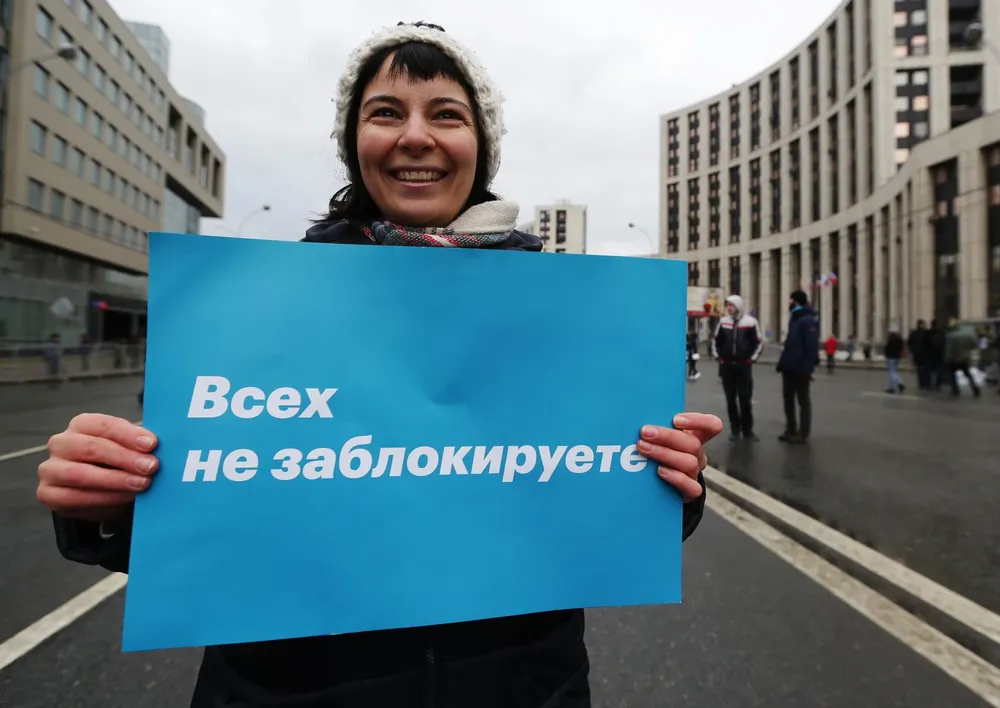
The most important thing is that you need to understand in the context of the transgressions to be prohibited and listed in paragraphs 1, 2, 5, 6, 7, 8, 9, 10, 11, 12, 13 and 14: the requirements of the Russian state presented to social networks are completely redundant.
Excessive because - Surprise! - All social networks targeted by law adhere to exactly the same ethical values (commonly, by the way, for all world religions - from Judaism to Buddhism through Christianity and Islam) as deputies of the State Duma of the Russian Federation. As a result, in the rules for using social networks direct text, the ban on the replication of the same disgusting sins is printed in direct text - starting with drugs, pedophilia and declension to suicide and ending with insults, obscenities, humiliation of human dignity, racial discrimination and pornography.
The question is legitimately: if social networks, even at the time of their creation, voluntarily took the obligation as much as possible to fight and eradicate the vices listed above, why did the Law No. 530-ФЗ even then need?
The circumstance is the second. Unfortunately, a couple of letered Cossacks was closed in the list of forbidden points, which not only spoils the idyllic picture of the potential Symbiosis of the RKN with social networks, but also puts a fat cross on the hopes that the Law No. 530-ФЗ will ever be valid.
We are talking about paragraphs No. 3 and 4 - public calls for terrorist activities (3) and extremist materials (4).
The sadness is that the Russian state and social networks have not only different, but also polarly not coinciding with themselves about what terrorism and extremism are.
This, of course, is not about VKontakte and Odnoklassniki, which are part of the modern Russian business, where, as you know, you can climb the stars only by bought a ticket to the state starship.
The Chinese Tiktok and Singapore (read - also Chinese) Likee will not have any discrepancies: the local businessmen have learned to capture the finest fluids of the state will long before the Russian colleagues in the business workshop (2-3 thousand years earlier).
However, with Facebook, Twitter and Instagram, discrepancy between points No. 3 and 4 will arise unambiguously. However, not at all where the reader suggests.
Almost immediately after the tragedy on September 11, 2001, I wrote a series of columns for the cult “computers”, in which, with great sorrow, I stated the birth of a new world. Actually, I did not come up with anything new, but only conveyed to the reader that he himself already observed his own eyes: the unprecedented in his facelessness and semantic gutta -perchery, Zhupel of the “fight against terrorism” granted the greatest chance to all states of the world (starting, of course, from the legislator of the US - the USA) proceeds to the destruction 300 years of continuous struggle.
So everything turned out: camcorders, all 50 meters in the planet, humiliating inspections at the airport, the legalization of long -term detentions without charges and other charms that are well -known to contemporaries - this is a direct consequence of 9/11 and the great Crusade against “terrorism”.
The horror, however, is that, as it should be all political Zhupel, the concept of “terrorism” has not the slightest objective filling!
The “terrorist” in India is not the one who “terrorist” in China, but the “terrorist” in Iran and Turkey is not the one whom the power elites reckon to the “terrorists” in the USA and Russia.
We live today in a world where each state has its own pocket set of “terrorists”, which regularly shuffs these states in accordance with the political expediency of the moment.
Now the promised paradox. The reader is probably led to the romantic illusion that, they say, the leaders of Facebook, Twitter and Instagram, as representatives of Western civilization, clearly other ideas about what is considered terrorism and terrorist activities in the Russian Federation. Accordingly, social networks will not comply with the requirements of the RKN to block texts and structures, which are considered “terrorist” in the Russian Federation. If only because the idea of a political opposition as terrorism in Western civilization was thinly obsolete (though very painful and painful) at the end of the 18th century.
So? The fact of the matter is not so! We like it either that we like it, but in addition to the obvious and objectively justified prohibition on the broadcast of ideas related to universal malformations and sins, an unconditional axiom is spelled out in all the cowls of modern international business: the economic activity of corporations is outside the policy.
Explanation on the surface: only this approach gives business a chance for a calm existence and the opportunity to realize its main task - to earn money for the owner and shareholders.
The direct consequence of this axiom is the situation according to which, without exception, the corporation approve the principle of unconditional subordination to local legislation.
That is: you work in Burma - you fulfill all the requirements of the Burmese law implicitly. You work in cannibalism - you fulfill the requirements of the laws of cannonage.
There is only one exception to this rule: if the business ends the business endlessly, it can curl up business activity in cannibalism and work in other places.
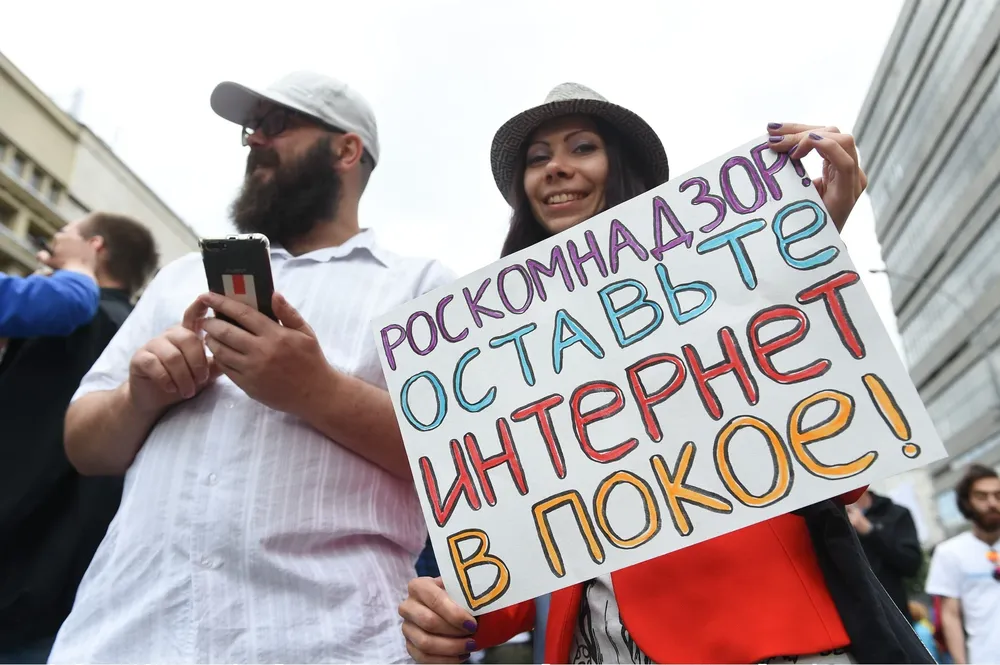
We came close to the understanding that there are no ideological and ideological obstacles to unquestioning implementation by social networks of not only selective prohibitions, but the entire list of RKN. Without any exception. Including - and paragraphs No. 3 and 4.
In other words: if in the Russian Federation of Alexei Navalny, the FBK* and their voting lists, withstanded in the spirit of early Bolshevism, Russian legislation considers “extremis” and prohibits, then there are no ideological obstacles to fulfilling the requirements of Law No. 530-ФЗ and cannot be.
Does this mean that social networks will obey the requirements of the RKN and do as the Russian government expects them? No, does not mean.
I will say more-the fulfillment of the requirements of Law No. 530-FZ in relation to social networks will never happen.
How so? What's happened? They deleted Google and Apple as cute Navalny app from stores! What changes in the case of the surveillance and cleaning of “terrorism” in posts of social networks users?
The explanatory letter that Apple sent gr. Zhdanova, after the Navalny app from the AppStore was deleted, contained the motivation already known to the reader: the rules for using Apple's services prescribe the duties of each developer to independently monitor local legislation requirements. Since the FBK did not follow and violated the rules of the company, Apple generously corrected the violation and removed the application with his own hand.
In the rules of Facebook, Twitter, Instagram, Google and other social networks, exactly the same is spelled out - each user must independently monitor compliance with local laws.
The keyword here is “independently”. When it was about the removal of a single application, for which the Russian bailiffs were not too lazy to even look at the Moscow offices of Google and Apple, these companies were not burdensome to do what was expected from the Navalny application developer.
The situation is fundamentally changing when it comes not about a single case, but about constant monitoring of hundreds of millions and even billions of user accounts, which RKN generously laid on the administration of social networks.
Law No. 530-ФЗ with one wave of his Chapaevsky checkers burdened the companies providing social networks, obligations that pull in tens of billions of dollars of additional annual expenses.
When two years ago, Russian mobile operators and Internet providers were happy with the requirements for installing special equipment for universal per lustration and censorship of Runet, the state at least took over part of the expenses associated with this burden.
Of course, I could miss something out of carelessness, but I do not recall that the Law No. 530-ФЗ provides for some material remembering Mark Zuckerberg and his comrades.
I would venture to assume that not a single social network in their right mind will engage in perelustration and exhausting of publications of its users at all points No. 1-14. Not because they do not want, but because they cannot physically. Never. Moreover, this fully applies to both VKontakte and Odnoklassniki - they will not be able to either.
Now the question is backfill: there is at least one reader who believes that the deputies who adopted the Law No. 530-ФЗ did not know that he was not fulfilled, and not by ideological, but what economic reasons?
I believe that the question is rhetorical: the deputies guessed everything perfectly. Why then did they adopt this law with enthusiasm?
This issue is also rhetorical: for this, they accepted in order to wait for the moment when social networks of requirements No. 530-ФЗ will not be fulfilled.
Finally, the third rhetorical question: what will happen then? Then, the negligence of native social networks (VKontakte and Odnoklassniki) will close their eyes, and non -native social networks will be outlawed. That is, they will simply close. Just as closed in China.
Personally, I have no doubt that from the very beginning Law No. 530-FZ was adopted precisely with such an attitude: to create obviously impossible conditions to justify further actions.
It is important to remember that the Law No. 530-FZ does not carry anything new. Five years ago, the Russian Federation was taken in the Russian Federation for the Balkanization of Runet and the construction of an analogue of the Chinese segment of the world network, separated from the world by the Great Firewall. No. 530-ФЗ only continues the vector of movement.
In conclusion, I would like to pay tribute to the sequence and determination of the power elites of the Russian Federation: the course they have taken are performed methodically, efficiently and highly professional.
Considering that the Balkanization of the Internet is not a Russian invention, but a universal trend that reflects the objective reaction of traditional societies to accelerated globalization caused by the birth of the phenomenon of the world computer network, there can be no doubt that in the near future we will live in an isolated national network segment, filled with original spiritual principles and meanings.
There is a reason to prepare for this new reality in advance.
*FBK declared an extremist organization in the Russian Federation.