
Translated material
Without golden mountains, but free
Latvia, Lithuania and Estonia regained independence in September 1991, three months before the collapse of the USSR. The previous half a century, their inhabitants consider the national tragedy
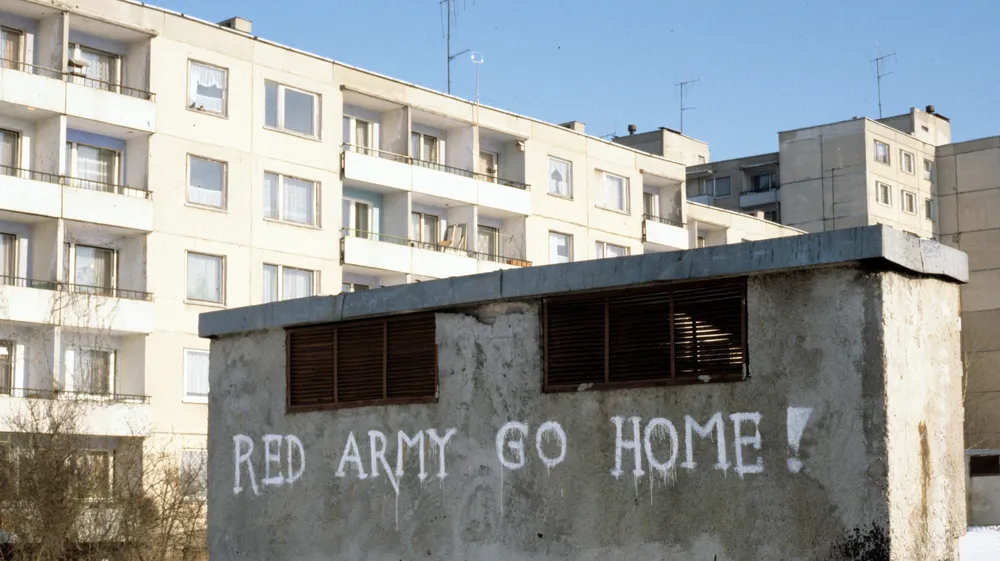
In the time of the empire, it was difficult to find more pro -Russian figures than Latvian, Estonian and Lithuanian activists. They searched for protection from the German and Polish national hegemony from the metropolis. This continued until 1918, when the proclamation of independence was followed by a two -year bloody war with the participation of the formations of new states, the Red Army, the German troops and the Russian White Guards. In 1920, Soviet Russia signed the Moscow, Tartu and Riga agreements. This forced recognition provided the Baltic republics of 20 years of peaceful development. Relations with the USSR were externally tolerant, which did not prevent the eastern neighbor from rendering assistance to the local communist underground, to engage in the bribery of representatives of the authorities and public figures. Inside the USSR in the fall of 1937, the NKVD conducted the “Latvian operation”, which claimed the lives of16.5 thousand ethnic Latvians and 8 thousand Estonians, and thousands of Soviet Lithuanians were shot or deported a year earlier, during a similar “Polish operation”.
The frontier was 1939. The secret protocols of the Molotov -Ribbentrop Pact attributed the Baltic region to the sphere of Soviet influence. After the German attack on Poland, an agreement on Soviet-German friendship and border was additionally concluded. The contract was so important for the Nazis that they agreed to the forced repatriation of 120 thousand Baltic Germans.
This led to the disappearance of an ethnic group, for 700 years determined the life of the Baltic.
Most of the repatriates who lost property were settled in Pomoria and Western Prussia, who were transferred after 1945, replenishing the number of future refugees and displaced persons.
The Baltic republics were annexed by the USSR in the summer of 1940, although Soviet troops entered there 7 months earlier. The basis was the provocation-the flooding of the allegedly Polish submarine boat of the Metalist steamer (it was planted melted in the Gulf of Narva under the cover of the Soviet watchman “cloud” and the submarine Sh-303). Another reason was the entry to the Tallinn port for urgent medical help (the threat of an epidemic on board) of the real Polish submarine "Eagle", which unloaded the patients and went to a breakthrough into the Atlantic - to fight with the Nazis. In the context of the actual occupation and with the assistance of local communists, staged “elections” took place, which paved the way for the “voluntary” inclusion of three countries in the USSR.
With member and terror
Immediately after the input of the Soviet troops, people, at first from among Russian emigrants, began to disappear right on the streets of Tallinn and Riga. This was followed by repressions against local officials, officers and clergymen. In the first year after joining Estonia alone, about 60 thousand people were repressed. The apogee fell on the eve of the war with Germany: on June 14, 1941, to praise, Latvia and Estonia, 14 thousand people were arrested, and another 30 thousand were detained for subsequent deportation to the eastern regions of the USSR. The war did not allow this operation to bring this operation. Even in Soviet times, a gypsum relief flaunted at the bar in the Estonian Pyarn: the Estonian girl bowed her head on the shoulder of the German soldier. And the date: July 8, 1941 - the day of entering the city of German troops. “Why did you put it? - I asked a friend of the bartender and received the answer: - I am not a Nazi, but on the outskirts of the city there was a women's transit camp of the NKVD. My mother was taken there, and the Germans released her. ”
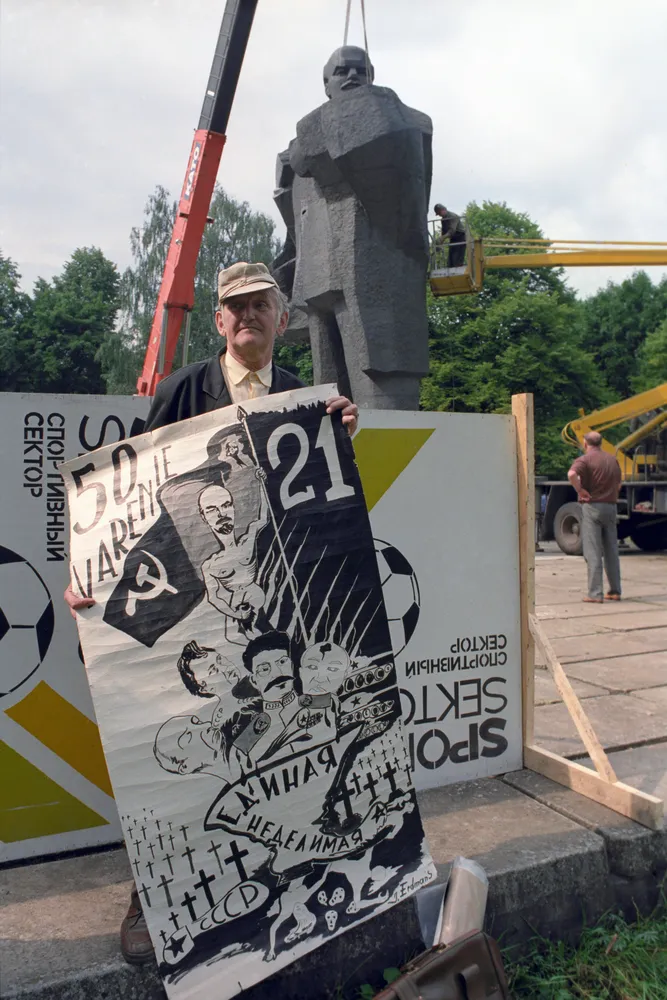
After the German attack in Kaunas, Tartu and other cities, anti -Soviet uprisings began. As in other regions, local collaborators took an active part in the Holocaust, when more than 200 thousand Lithuanian and 70 thousand Latvian Jews died. The Nazis were not going to restore someone else's independence. Nevertheless, organized resistance to the invaders was observed only in Lithuania. After the Germans retreat, these partisans for the most part did not return to peaceful life, but became the basis of the movement of “forest brothers”. The total number of the latter in all three republics was 60-100 thousand fighters (more than half in Lithuania), of which 20-30 thousand were killed. So, in 1946, the Lithuanian town of Birshtonas inhabited 700 inhabitants, of which about 160 men of draft age. On the monument to the "forest brothers", built in 1992, 48 names of those who died with weapons in their hands. This means that
Almost the entire local mobilization contingent fought against the Soviet regime.
In the late 1960s, I still found these people who went through camps, special settlement and returned home. Even to me, a teenager, after communicating with them, it became clear that the restoration of Lithuania’s independence is inevitable as a change of seasons. In neighboring Estonia and Latvia, 200 thousand draftees voluntarily condemningly passed through the Legions of the “Waffen SS”, where military crimes were also listed, and in 1944 the legions at the front directly opposed the Latvian and Estonian corps of the Red Army. After the war, ordinary legionnaires were recognized as forcibly mobilized, amnestied in 1946 and for the most part left alone. Moreover, the allies from the knowledge of the Soviet side were attracted to the convoy service of the International Tribunal in Nuremberg. The attempts of the Nazis to equip the Lithuanian legion failed. But unlike Latvia and Estonia, where the “forest brothers” were a relatively small partisan underground, a real popular war raged in Lithuania for several years. Forest detachments wore military uniforms with insignia and considered themselves to be military personnel of independent Lithuania.
The costs of Sovietization
The main means of combating the anti -Soviet resistance of the authorities chose mass deportations. At the same time, every seventh migrant died. On May 22–23, 1948, 40 thousand members of the “forest brothers” families were sent to the remote areas of the north, and the total number of Lithuanian historians expelled from the republic assess at 148 thousand people, including women and children. The largest deportation (Operation "Surf") was carried out on March 25, 1949, when, from three republics, having received two hours for fees, 95 thousand people left for Siberia. In those days, my parents were traveling in Riga. The memories of what they saw there, along with the nightmares of the front and the Leningrad blockade, pursued their rest of their lives.
At the end of the war, there was a massive outcome of the Baltic refugees to the west. In total, more than 140 thousand Latvians, 75 thousand Estonians and 50 thousand Lithuanians emigrated then. In 1943–44, more than 7 thousand Estonian Swedes were repatriated for the historical homeland. The last longboat with refugees sailed from the vicinity of Latvian Liepai on October 30 (!) Of 1945. According to the calculations of local historians, as a result of political terror, the Holocaust, emigration, deportations and military losses on both sides in 1939–49, Baltic lost about a third of the population. The boundaries have also changed: Latvia and Estonia lost the eastern outskirts, and, on the contrary, they attached the Vilensky region and the strip of the sea coast with the Klaipeda port to Lithuania.
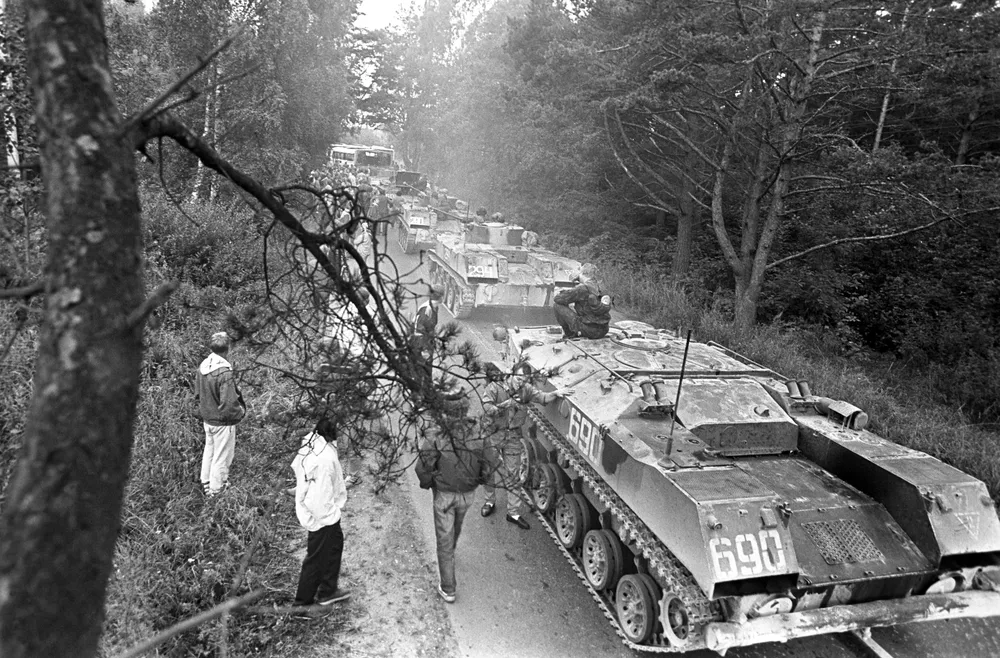
After the mid-1950s, the organized resistance took decline, although point combat operations against the remnants of movement occurred until the 1970s. A significant part of the territory of the Baltic republics was alienated under the border zone and military training grounds, which have deployed the troops of the Baltic district (170 thousand military personnel, 3,000 tanks and an armored personnel carrier for 1988, not counting the coastal units of the Baltic Fleet, border and internal troops). Subsequent events showed that the Soviet government in the region had no other support, except for these bayonets, despite the fact that demographic policy greatly resembled colonization.
Among the personnel composition of the Soviet Armed Forces, it was considered a success at the end of the service for subsequent arrangement to receive an appointment to the Baltic district. In the republics, enterprises of union subordination were located, and labor “on the Organs” was imported from all over the USSR. The authorities did nothing to integrate these people, which led to the formation of national-linguistic communities still outdated.
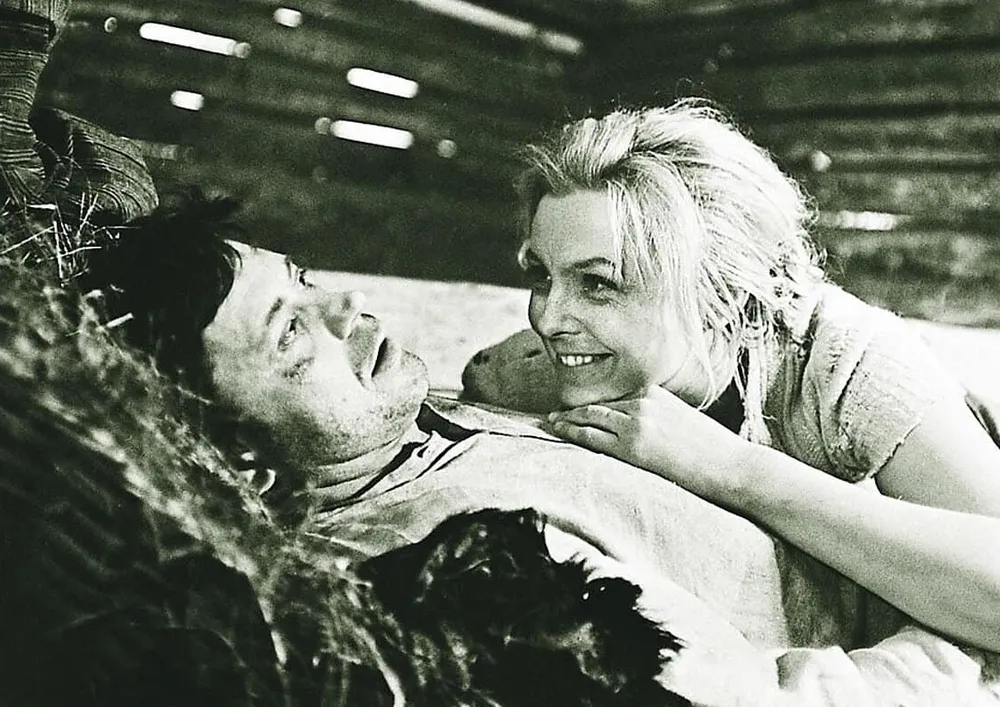
The basis of the economy was agriculture, food and light industry. Soviet pricing made such an economy of subsidized. For propaganda considerations, the standard of living was relatively high in Soviet standards and some ideological concessions were allowed. From time to time, works appeared in the local press and cinema, which quite truthfully reflected the events of the 1940s. The sensation of the Soviet film distribution was an honest and terrible Lithuanian film "Nobody wanted to die."
The collapse of the system
Further events showed that 20 years of independence left a deeper mark in the popular memory than 50 years of Soviet power.
Perestroika, announced in the USSR, put in the Baltic states the beginning of public movements on environmental protection, which quickly politized and took shape in mass people's fronts. Using public support, the Supreme Councils of the republics in 1988–89 adopted documents on state sovereignty and economic independence, and local committee traveled from the CPSU. On August 23, 1989, two million inhabitants of the republics lined up in a 670-kilometer living chain of the Baltic Way, recalling the 50th anniversary of the Molotov-Ribbentrop. The Union Center suffered all this until March 11, 1990, when an act was adopted on the restoration of an independent Lithuanian state. After that, the struggle spilled out onto the streets, and in Latvia and Lithuania reached the bloodshed with victims in clashes with riot police and KGB special forces. This caused rallies of protest and solidarity in large cities throughout the USSR. In the spring of 1991, 91% of Lithuania residents spoke in republican referenda for the restoration of independence, 78% - Estonia and 74% - Latvia. In the all -Union referendum on the preservation of the USSR, the Baltic states did not participate.
At the time of the speech of the State Emergency Committee in all three republics, independent authorities were formed in full swing. Already on the second day, the putsch on the restoration of independence was confirmed by Lithuania, and the next day, Latvia adopted similar documents, and then Estonia, where the document at a meeting of the Supreme Council announced Professor Mary Lauristin, the daughter of the Estonian communist, who in 1940 read a declaration of entry into the USSR in the same hall.
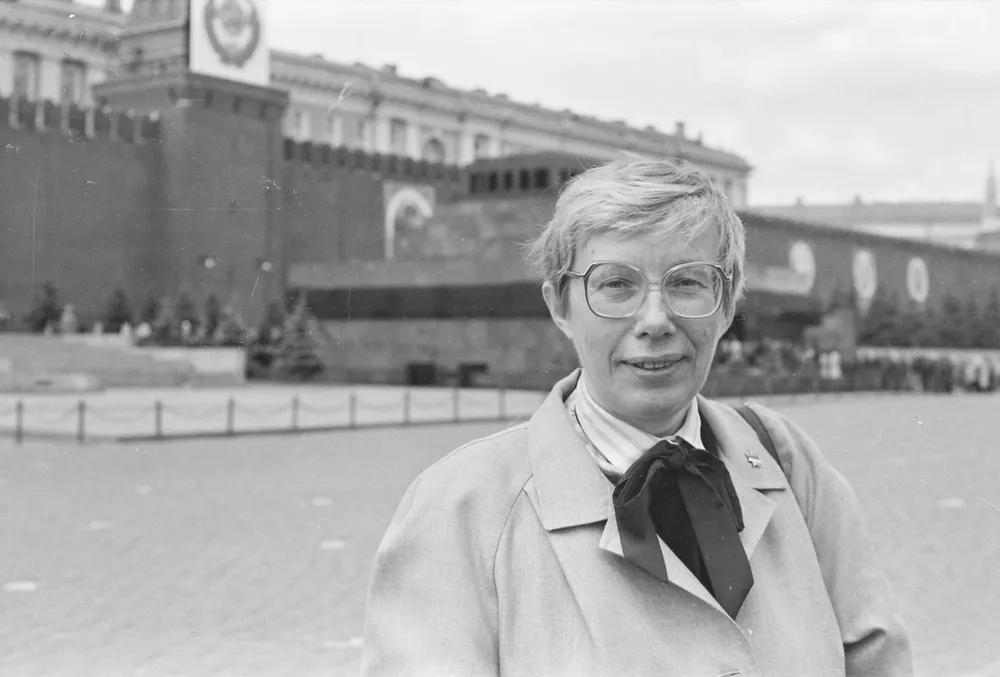
In the context of the collapse of the Union authorities, after the failure of the State Emergency Committee in Moscow, the “temporary state administration of the transition period” was created - the State Council of the USSR. One of the first decisions on September 6, 1991 he recognized the independence of the Baltic countries, and in October the still existing Soviet Union established diplomatic relations with all three countries. This has become part of a wide international recognition. The countries were returned to the gold reserve deposited in Western banks since 1940. On September 17, 1991, they were admitted to the UN, and in 2004 - in the European Union and NATO.
Painful economic reforms did not bring the Golden Mountains, although the gross domestic product per capita of the Baltic Countries is already for the fifth of more than the Russian one. Nowadays, there are less and less about the Soviet period of history there, and the attitude towards Russia is determined by its current policy. Residents of Latvia, Estonia and Lithuania from the very beginning knew what they wanted. They fought for freedom to dispose of their own fate and completely paid for this freedom.
From the cycle "Relay of peoples"
Relayer of peoples. Episode the first: Poland 30 years ago, an ordinary student rally became a detonator of a chain reaction, which bold communist regimes of Eastern EuropeRelayer of peoples: Hungary. "We accepted capitalism with all its vices"