This message (material) was created and (or) distributed by a foreign media outlet performing the functions of a foreign agent, and (or) a Russian legal entity performing the functions of a foreign agent
The general director of Channel One turned out to be the beneficiary of an offshore company in the British Virgin Islands, which is participating in a grandiose project to demolish Soviet cinemas in Moscow and build shopping centers in their place. Russian state banks provided tens of billions of rubles for these purposes.
Konstantin Ernst dreamed of cinema since childhood. But on the way to his dream in the late 1980s, he looked at television. And he has remained there ever since.
Over the course of 30 years, Ernst has made his way from an innovator of Russian television and creator of cult shows to the head of one of the main propaganda channels.
The “Vzglyad” program, where Ernst began his career; the cultural program “Matador,” which he hosted for many years; The Russian Project, which he produced, is one of the best examples of social advertising - all this is a thing of the distant past. Channel One today is the show “Time Will Show,” where the host Artem Sheinin offers to feed a guest from a bucket with the inscription “Shit”; these are fictitious news from Ukraine, including about a boy allegedly crucified by the Ukrainian military in Slavyansk; This is the “However” program, where Mikhail Leontyev shows a photo taken in Photoshop of a Ukrainian fighter allegedly shooting down a Malaysian Airlines Boeing.
The production of this “content” is financed, in part, at our expense. Over the past five years, Channel One has received several subsidies from the budget worth more than ten billion rubles. At the same time, the channel’s total loss for the same period amounted to more than nine billion rubles.
Despite the deplorable financial performance, the shareholders of Channel One - primarily the state and people from Vladimir Putin's inner circle - highly value the work of Konstantin Ernst as general director. He has held his position continuously for more than 20 years. The President of Russia himself appreciates Ernst: earlier this year, Putin awarded the General Director of Channel One the Order of Merit for the Fatherland, 1st degree, “for his great contribution to the development of the media and many years of fruitful activity.”
These awards are the Kremlin’s public recognition of the merits of one of the creators of the television face of the Russian government. But these awards are nothing compared to the billions of rubles that state banks have provided to companies associated with the main state myth-maker - including an offshore one from the distant British Virgin Islands. Lawyers and partners of the general director of Channel One carefully hid this part of his biography and were even forced to publicly lie to journalists in order to protect the secret of their influential comrade. Apparently, because while Ernst’s offshore company was receiving huge funds into its account, Channel One was telling its multi-million audience that offshore companies needed to be fought, since they were a “threat to national security”, and that first of all it was necessary to “equip your own country” and not transfer money abroad.
Paradise Islands - British law
On February 7, 2014, the opening ceremony of the Winter Olympic Games took place at the Fisht stadium in Sochi. According to the organizers, the main one of whom was Konstantin Ernst, the grandiose show was supposed to show Russia’s place in world culture and history. But everything turned out the other way around: the Olympics and the events that followed did not lead to the unity of Russia with the rest of the world, but to the unprecedented isolation of our country. The entry of the Russian army into Crimea, the war in Donbass, the deep fall of the ruble, international sanctions, rising prices and impoverishment of the population - all these are the consequences of 2014.
But these consequences did not affect everyone. After the Olympics in Sochi, someone became not just rich, but a fabulously rich person. On the same day, when festive fireworks exploded over Sochi's Fisht stadium, across the ocean, in the British Virgin Islands, located in the north-eastern Caribbean Sea, local lawyers registered the company Moscow Dvorik Ltd. And eight months later, in October 2014, Konstantin Ernst became the sole shareholder of another company from the same British Virgin Islands - Haldis Corporation.
The British Virgin Islands were discovered by Christopher Columbus in the 15th century. Today it is a dependent territory of Great Britain. With a population of just over 35 thousand people, about a million offshore companies are registered on the islands.
The reason the British Virgin Islands is so popular among businessmen is not only that companies registered there are exempt from paying taxes, but also because of corporate law.
“Russian corporate law remains unsuitable for international investment transactions. Just like Russian courts are not, in the eyes of the international business community, an acceptable tool for resolving corporate disputes due to various features that we will not discuss in this interview,” says Vladimir Gidirim, partner at the venture capital investment company The Garage Syndicate, author of the textbook “Fundamentals of International Corporate Taxation.”
This advantage is especially relevant for businessmen from Russia and other countries, where courts are used to raid enterprises and put pressure on their owners through criminal cases. And no matter how Ernst’s First Channel praised the Russian state in its evening news and no matter how he criticized offshore companies, the general director himself for some reason chose to register his business in a country subject to British law, and not the law of the Russian “Basmanny court” (a stable expression to characterize the Russian judicial system, unfair and dependent on the executive branch).
Another undoubted advantage of offshore companies in the British Virgin Islands is secrecy: the local corporate registry does not disclose information about company owners. Then how did we find out that Konstantin Ernst became a shareholder of the offshore company?
"Pandora Papers"
Over the past year, Important Stories journalists have brought you dozens of articles and videos, but at the same time, we have been working on one of the largest joint investigations in the history of global journalism. “Pandora Documents” is what we called this project. We are more than 600 reporters from almost 120 countries: from Australia to Iceland. The only participant in the project from Russia was “Important Stories”.
“Pandora Documents” is data about the owners of offshore companies from all over the world. The archive containing this information was obtained by the International Consortium of Investigative Journalists (ICIJ) from a source whose name has not been disclosed for security reasons. ICIJ brought together editorial staff around the world to collaborate on 12 million documents, totaling three terabytes.
The archive contains information about offshore companies and secret accounts of politicians, officials and their relatives from all over the world - from the USA, Ukraine, Czech Republic, Great Britain, France, Italy and, of course, Russia. Our officials, as usual, were among the leaders in the number of offshore companies registered in their names. The story of Konstantin Ernst is just one of a dozen others we found while working on the “Pandora Archive.”
We found offshore companies of many State Duma deputies, people from Vladimir Putin’s close circle, relatives of heads of state-owned companies and officials. In general, all those people who, since 2014, have adopted a huge number of crazy laws, for example, on foreign agents, and never cease to scare us - through their propagandists - with a Western conspiracy against Russia, while they themselves hide billions of rubles in their offshore accounts in those same Western countries.
Support those who find offshore officials. We, unlike Russian civil servants, do not have billions in offshore accounts, so we want to depend only on you - our readers.Support “Important Stories”
39 cinemas
In November 2014, a month after Konstantin Ernst became the owner of the offshore company, the Moscow City Hall held one of the largest state auctions of that time. City authorities put up for sale 39 cinemas located in different areas of Moscow.
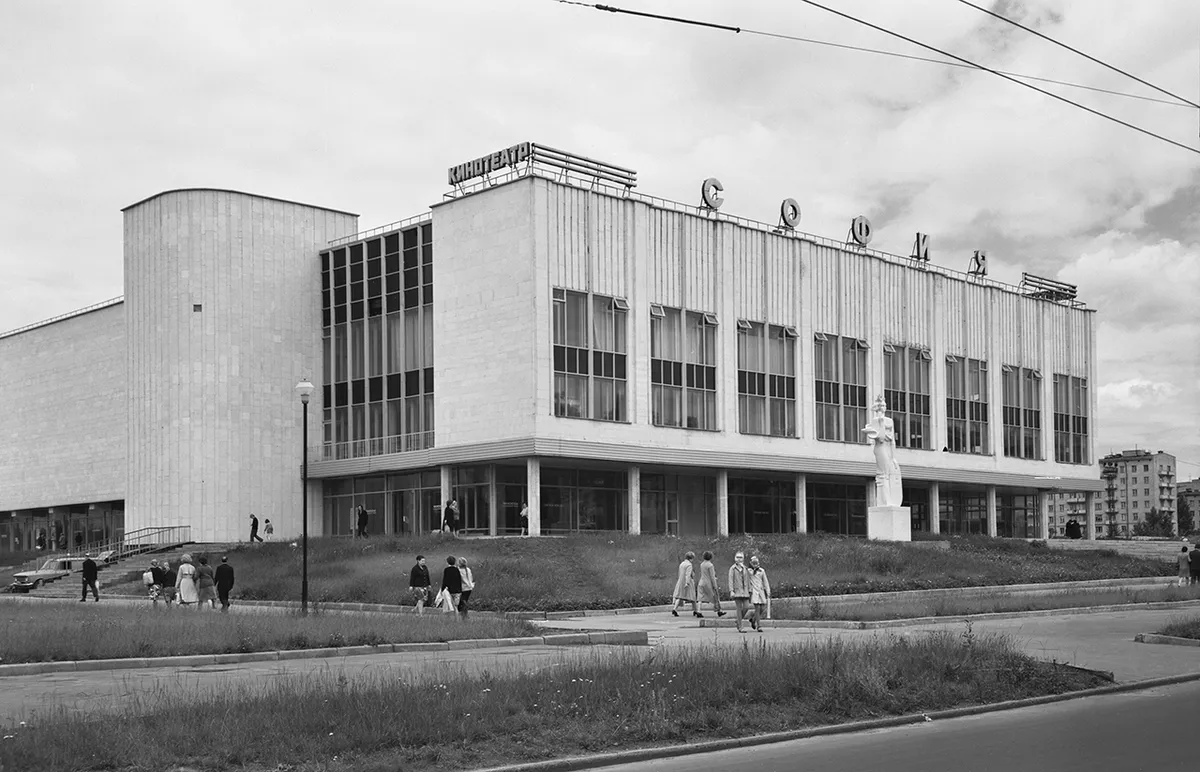
“Sofia” in Northern Izmailovo, “Baku” in the Airport district, “Vityaz” in Konkovo - these and other cinemas for sale were built during the Soviet years and for many years remained, in fact, the only centers of public attraction in residential areas of Moscow.
The cinema buildings were in different states. Some of them fell into disrepair and were of no architectural value. Nevertheless, many were dear to Muscovites not only for their film screenings, but also for their appearance.
“If we talk about typical cinemas of the 1960s and 1970s, it was only in the 1960s that most of them were truly the same type. But in the 1970s, of course, a lot of interesting solutions appeared. Each of these buildings had some interesting originality due to the architectural design and facades, stained glass windows, signs and, of course, cladding,” says Denis Romodin, senior researcher at the Museum of Moscow and architectural historian.
USSR. Moscow. July 6, 1982 Yerevan Cinema Photo: Anatoly Semekhin / TASS USSR. Moscow. February 15, 1971 Cinema "Vityaz" on Miklouho-Maclay Street. Photo: Alexander Konkov / TASS
“For example, in my opinion, the first of the most unique buildings of the 1970s was the author’s project, an atypical one, of the Baku cinema,” continues Romodin. “It was decorated with Azerbaijani sandstone, and you could see all the oriental elements of architecture there. The Yerevan cinema is entirely decorated in Armenian style. There was Armenian tuff there, the inscriptions were made in Armenian. “Vityaz” in Belyaev was in red and white style. Red brick with white stone - it was an imitation of Russian architecture. All these cinemas had their own bright, expressive appearance, despite the uniform design.”
After Moscow authorities put cinemas up for sale, residents of several districts began to protest, fearing that the historical buildings would be demolished and shopping centers would be built in their place.
One of those who actively tried to prevent the demolition of the cinema in his area was municipal deputy Dmitry Baranovsky. In his native Northern Izmailovo, the mayor's office put the Sofia cinema up for sale.
Fight for Sofia
We met with Dmitry Baranovsky shortly after Moscow's Preobrazhensky Court found him guilty of inciting violations of sanitary and epidemiological standards due to the January 23 rally in support of Alexei Navalny. The court sentenced Baranovsky to one and a half years of restriction of freedom. “A few days before my arrest, a search was carried out at the homes of my parents, my father and grandfather. Moreover, they never conducted a search at my house (I don’t know why), but they did conduct a search at my 100-year-old grandfather, a veteran of the Great Patriotic War,” Baranovsky recalls, laughing, about the beginning of his persecution.
“It was clear that such a lot was organized for a specific large buyer.” Dmitry Baranovsky Photo: Georgy Malets / @martin_camera
“I want to explain why we were initially against the demolition of the cinema. Not only because he was an active object. Seven years have passed since the cinema closed, and a new shopping center has not yet been opened,” explains Baranovsky. “But another reason is that, after all, the Sofia cinema was a symbol of the Northern Izmailovo district. This is like the historical and cultural heritage of the area. In fact, the cinema was demolished, and the area lost its face.”
Moscow historian and art critic Anastasia Solovyova agrees with Baranovsky: “The building of our former Sophia is a magnificent example of Soviet modernism. He had all the features of the best that was in our Soviet modernism. This is a very functional architecture, competent, it was perfectly placed in the existing conditions, and the ensemble sound was respected.”
USSR. Moscow. July 27, 1978 Sofia Cinema Photo: Alexey Stuzhin / TASS
Dmitry Baranovsky appealed to the Federal Antimonopoly Service (FAS) with a complaint about the auction. According to the municipal deputy, the cinemas were sold at a reduced price, and in addition, the law prohibits the privatization of existing cultural objects.
In 2014, the Sofia cinema was valued at 930 million rubles, although the year before in October 2013, when the Moscow authorities unsuccessfully tried to sell five of the 39 cinemas, the same Sofia was valued at 1.5 billion rubles, that is, 1.7 times more expensive. In general, the cadastral value (it is usually much lower than the market value) of all 39 buildings and the plots under them was at that time about 23 billion rubles. The Moscow City Hall set a starting price of 9.6 billion rubles for the cinemas. And at this minimum price, without any real bidding, they were sold.
Subscribe to the newsletter so you don't miss other global investigations. “Important Stories” is the only Russian media participating in the world’s largest investigations. Subscribe to be the first to know about them
The Moscow OFAS commission, which considered the case based on Baranovsky’s application, agreed that there may be violations of the law in terms of determining the price of cinemas and their privatization. “The commission agrees with the applicant and his representatives that the actions of the defendant complained of in the above-mentioned part may violate current legislation, but they are not a violation of antimonopoly legislation,” the commission’s decision stated. On this basis, Dmitry Baranovsky’s complaint was rejected.
“It was clear that such a lot was organized for a specific large buyer. ADG Group turned out to be such a buyer,” says Baranovsky.
"Beautiful Story"
The buyer of 39 cinemas was the Edisonenergo company. It is part of the ADG Group holding, which was founded by brothers Mikhail and Grigory Pechersky in 2004.
Grigory Pechersky estimated the total investment in the reconstruction of cinemas at 60 billion rubles. The state bank VTB provided money for this at the end of 2014.
Given the large amount of funding and the circumstances of the sale of cinemas, many in the market suspected that someone influential was behind this project. In 2017, journalists from the Kommersant newspaper asked Grigory Pechersky about this directly:
— Information is circulating on the market that the general director of Channel One, Konstantin Ernst, is also involved in the ADG cinema project...
- It would be a very beautiful story. But, alas, this is not so, ” Pechersky answered.
But, judging by documents from the “Pandora archive”, this is so.
Edisonenergo is owned by a company from Cyprus, Dvorik Cyprus Ltd, which, in turn, belongs to two companies from the British Virgin Islands: Xelio Invest (we do not yet know its owners) and the same Moscow Dvorik Ltd, which was registered on the opening day of the Olympics in Sochi.
In November 2014, Ernst's company Haldis Corporation became the largest shareholder of Moscow Dvorik Ltd. The company of the general director of Channel One acquired almost 47% of the shares. The money for this was provided to him by RCB Bank located in Cyprus - one of its main shareholders , the same Russian state bank VTB.
At the end of December 2014, the bank provided Ernst’s offshore company with more than $16 million (that’s almost a billion rubles at the exchange rate at that time) secured by its own shares.
Konstantin Ernst’s participation in this business was carefully hidden not only by his partners. After Ernst's company pledged its shares to receive almost a billion rubles from RCB Bank, the offshore registrar was obliged to send information about this pledge to the commercial register of the British Virgin Islands. But the lawyers serving Ernst’s firm apparently feared that information about the offshore company of the CEO of Channel One might become publicly available. So one of them wrote to his colleagues in the British Virgin Islands in early 2015: “Please do not submit shareholder information to the corporate register. This is a condition of the financing provided by RCB Bank.”
Don't forget to support us. Only with your help can we continue to bring you the most important stories in the country.Support Important Stories
Everything went to pieces
At the initial stage of the project, the owners of ADG Group stated that they were going to reconstruct the cinemas. “The mission of the project is to restore the historical function of Soviet cinemas as centers of life in residential areas of Moscow,” said co-owner of the holding Grigory Pechersky.
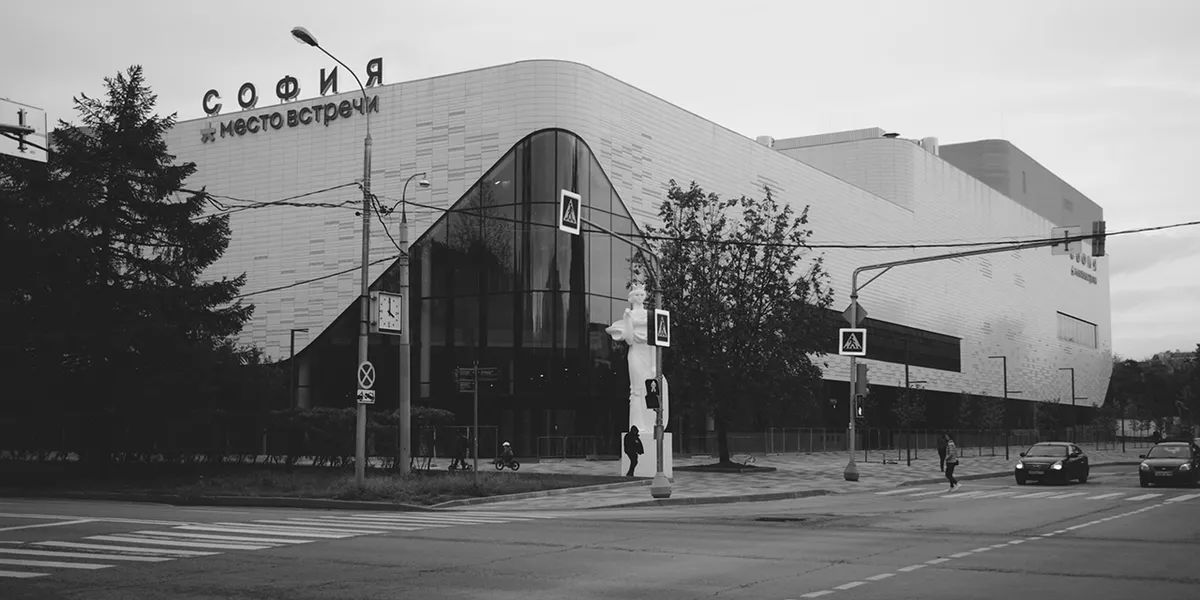
The Moscow mayor’s office echoed him, calling the sale of cinemas “a fundamentally new concept for district ‘centers of attraction’ for Moscow.” But in the end, the old Soviet cinemas were demolished, and in their place new buildings were built (or will be built), which in their appearance and content are very reminiscent of typical shopping centers.
“Well, it’s obvious that the shopping center...” says Dmitry Baranovsky about the building built on the site of the Sofia cinema. — It was initially clear that a shopping center would be built, since the documents determine the percentage of the area that can be allocated to a cultural institution and to a shopping center. Most cinemas had different proportions. Some cinemas (like the Sofia cinema) have up to 100% retail space; in other cinemas, 30% is cultural space.”
“In addition to the fact that we see the same type of uninteresting architecture in place of our old one, it takes up much more space both in volume and in height. It does not correspond at all with the environment, with the surrounding architecture. She completely destroyed this wonderful modernist ensemble, unique, which was located here in Northern Izmailovo,” laments Moscow historian and art critic Anastasia Solovyova.
Modern "Sofia" Photo: Georgy Malets / @martin_camera
Buildings similar to the Sofia shopping center will also be built on the site of other former Soviet cinemas. “Most of these buildings still had a bright, individual facade, we came to a more standard solution, and in the end, of course, two or three such standard projects appeared that replaced all these cinemas,” says Denis Romodin, senior researcher at the Museum of Moscow and architectural historian.
ADG Group representatives declined to be interviewed by Important Stories.
Konstantin Ernst, in turn, told ICIJ that he did not do (and does not plan to do) anything illegal, because “that’s how his parents raised him.” The general director of Channel One confirmed that he is related to Moscow Dvorik and “never made a secret of it.” Ernst did not explain why he decided to register the company in the British Virgin Islands; why his partner denied his involvement in the business; and also why lawyers demanded that the offshore registrar not send information about shareholders to the corporate registry of the British Virgin Islands.
According to Ernst, this project was not compensation from the authorities for the Olympics in Sochi: “My reward for participating in the opening ceremony of the Olympic Games was one ruble. You can find information about this in the official documents of the Organizing Committee."
Konstantin Ernst refused to answer other questions. “Not because I’m afraid of anything, but only because I’m more than sure: you are not an independent investigative company, but an organization receiving instructions from American intelligence agencies. And this has nothing to do with independent journalism,” said the general director of Channel One.
Vladimir Putin answered questions from journalists in exactly the same way five years ago when the Panama Papers was published, which, among other things, talked about the offshore empire with a turnover of billions of dollars of his closest friend Sergei Roldugin. The publication of the Panama Papers led to the resignation of officials in several countries, as well as large-scale reforms of the global financial system. And only the Russian authorities accused the authors of the project of working for American intelligence agencies.
In a sense, Konstantin Ernst exceeded his childhood dream of cinema. It’s just that this dream underwent approximately the same transformation as Ernst himself during his time at Channel One. The one who was an innovator of Russian television became a symbol of state propaganda. And what was a dream about cinema turned into a business project for the demolition of cinemas and the construction of shopping centers.
Photo: Alexander Miridonov / Kommersant
Support those who is telling the truth! You can become our donor by making a one-time or monthly donation. We want to depend only on you - those who want to know the truth, those who are not afraid to be free. Help us tell you the Stories That Matter.Support Important Stories


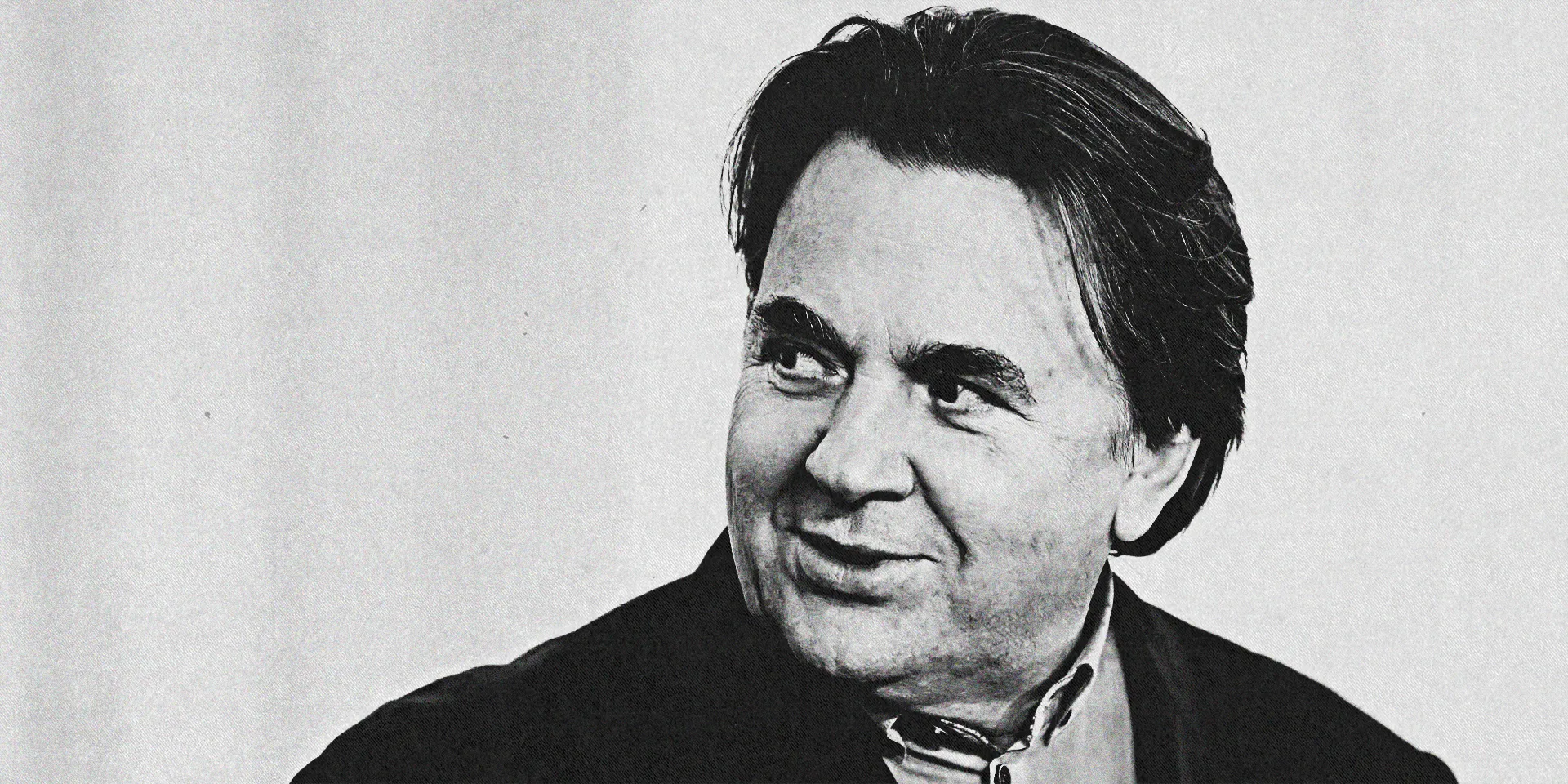

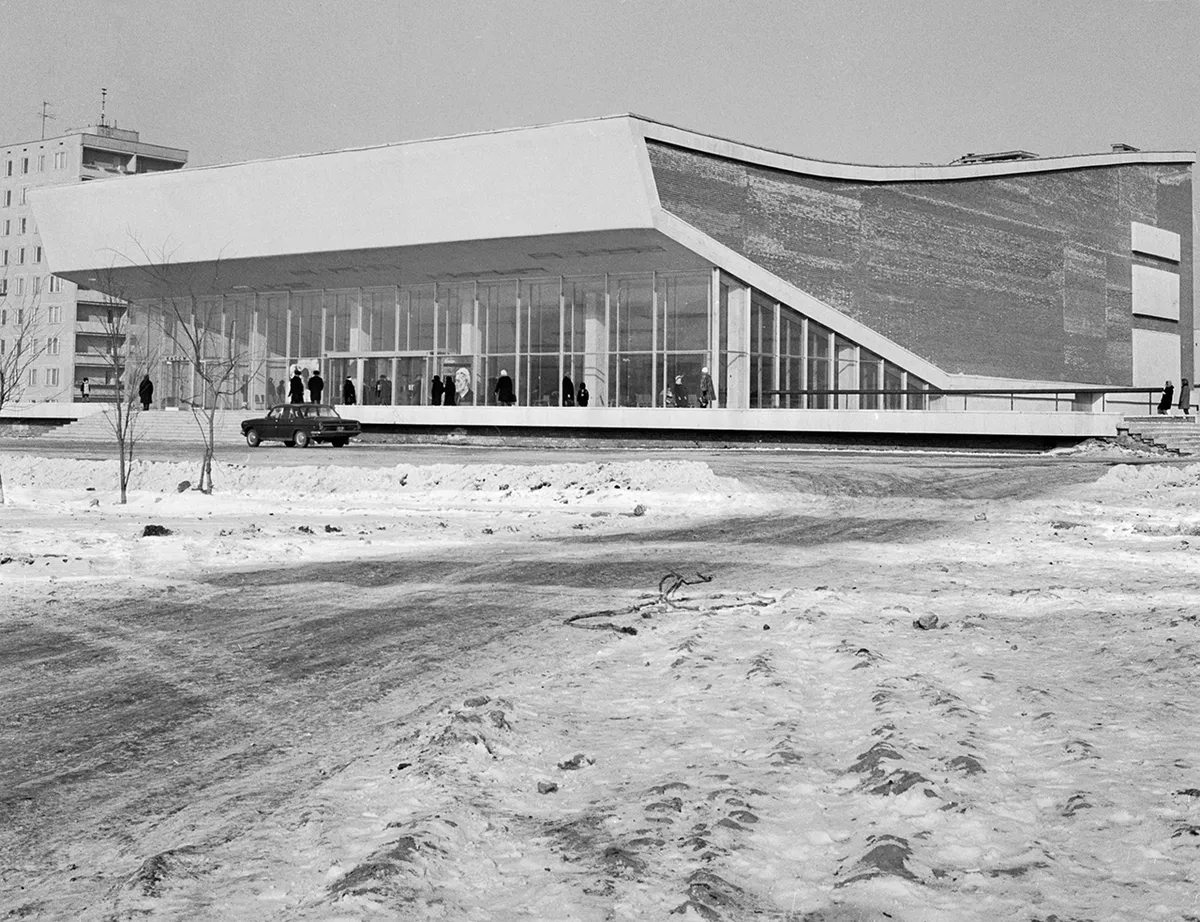
 Photo: Georgy Malets / @martin_camera