Translated material
It is unhealthy alive
October 19 marks the 210th anniversary of the founding of the Tsarskoye Selo Lyceum, glorified by the name of Pushkin
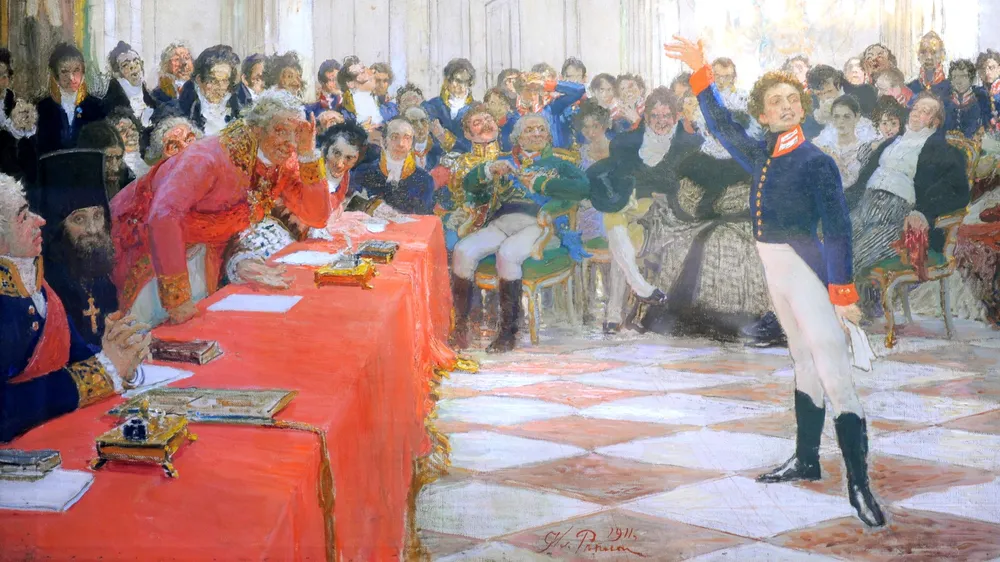
Conceived as a forge of elite personnel, this institution is now known thanks mainly to one of his pupils - A.S. Pushkin. October 19 was a special date for him. He invariably celebrated her, devoted poetry to her. Pushkin recalled the days spent in Tsarskoye Selo with love.
In general, he was surprisingly lucky for love. And during life, and especially after death. Everyone loves Pushkin, and no one knows. This applies to us, his descendants. And even those who were familiar with him personally.
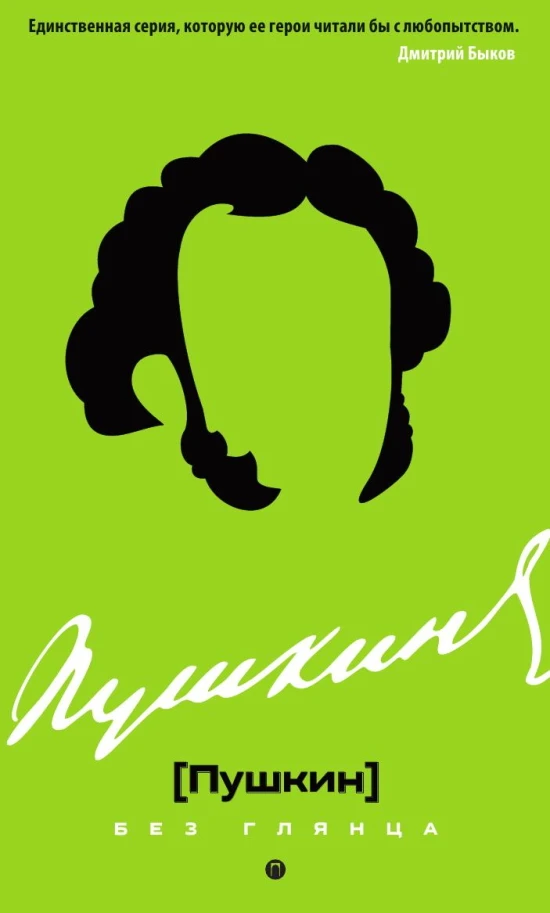
Although, it seems, it was they who would have to show us the “living” Pushkin. At least, this was the idea of the authors of the book “Pushkin without gloss” ( M.: Palmyra, 2021 ): Different people, sharing their impressions of meetings with the poet, together add an objective portrait of “our all”. The book was reprinted just this year, and very on time. Moreover, it can be reprinted on average once every five years, and each time very successfully. New generations will expand their knowledge about "Poet No. 1". Older people - to master a workshop on the topic "The possibility of an adequate assessment of an extraordinary personality." The second is especially interesting. Did, for example, the authors of the book “Pushkin without gloss” managed to show a real Pushkin? Fortunately, no.
At least two reasons. Firstly, whoever talks about, first of all speaks of himself. Therefore, reviews about the great poet are so ambiguous. “Very beautiful” - “a mixture of the appearance of the monkey and the tiger”. “High feelings of his beautiful soul” - “There was neither external nor internal religion, nor higher moral feelings in him.” And so on.
The second reason is partly connected with the first and concerns the poet himself. There were too many in it. The closer to Pushkin the witness, the more contradictory his testimony: “He was exorbitantly kind -hearted and simple -hearted” - “He was vindictive ...” recalls a friend Peter Vyazemsky. Not alien to the poet Anna Kern: “It’s noisily cheerfully, then sad, then timid, then impudent, then endlessly amiable, then languidly bored - and it was impossible to guess in what the mood he would be in a minute.” In other words, if Pushkin could be compared with something, then with life itself.
And as any living person, Pushkin best characterized his death.
He died a Christian - he asked him not to take revenge, "he dictated all his debts on which there were no bills or borrowed letters." Ivan Spassky: "The extraordinary presence of the spirit did not leave the patient." Vladimir Dal: "Pletnev said:" Looking at Pushkin, I am not afraid of death for the first time. "
Without looking back, only the highest power (king), friends and foreigners were able to express their feelings about Pushkin's death. Unfortunately, this cannot be said about the rest. In general, in the death of the poet, as in his life, there was a lot of contradictory. What is surprisingly accurately convey by outsiders, that is, the most objective eyewitnesses.
When Pushkin, mortally wounded, lay in his apartment, then, according to Konstantin Danzas, “his front was constantly filled with familiar and unfamiliar ... Some old man said with surprise:“ Lord my God! I remember how Field Marshal was dying, but this was not! ”
The secret transportation of the body to the Svyatogorsk Monastery (a coffin wrapped in burlap) was laid in the cart), Alexander Nikitenko describes this: as follows:
“ - What is it? - my wife asked one of the peasants who was here. - And God knows what! You see, some Pushkin is killed-and he is rushed to the posters in Rogozh and Solome, God forgive me-like a dog. ”
They buried in winter, so they only sprinkled the coffin, buried in the spring. Ekaterina Foc:
“None of the relatives was on the grave. The wife arrived only two years later ... "
But Pushkin’s life defeated his sad death. He was primarily alive. It is this characteristic that most often sounds in the memoirs of contemporaries. “Unusually alive in their tricks”, “liveliness, acuteness and accuracy of the mind”, etc. Maria Osipova: “He will never sit on the spot ... jumped from the sofa, but through the table, and the candles overturned it ... We say to him:“ Pushkin, that you are staring like this, it's time to settle down, ”and he only laughs.”
So it would be a big mistake that such books, if they do not disclose all the complexity of an outstanding talent, but show that a genius is also a living person. Not at all. He is somehow too, defiantly, immaturely alive.