
Translated material
Secret Failes
Any errors and falsification in electronic voting cannot be checked due to the fact that such an opportunity was not laid in the system itself
Electronic voting protocols on the elections on September 17-19 were received by employees of DIT Moscow and employees of PAO Rostelecom. Electoral commissions and observers did not have the opportunity to verify the correctness of the establishment of voting results.
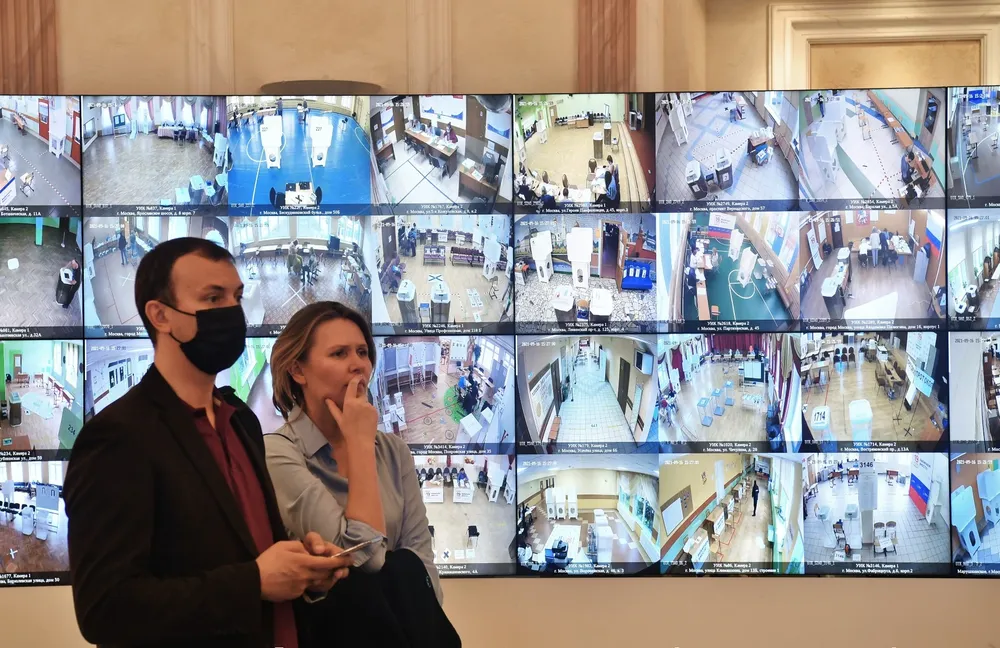
Last week, the CEC of Russia summed up the election results, but the trials related to the use of Internet voting systems in the elections on September 17-19 in our country have not yet been completed. Observers and members of the commission were deprived of objective information necessary to count the votes and verify the correctness of the establishment of voting results. At the end of the vote, the server owners issued a protocol with the results of the members of the election commission for signature. Whether the voters voted themselves whether all electronic extracts from the original ballots displayed on the screens of voter devices fell into the system, whether they were processed without errors, were displayed or partially replaced before the publication in the encrypted form and summarizing the voting results, it does not seem possible.
And it was predictable.
On distant approaches
More than a year ago, members of the technical working group (TRG), specially created by the Public Chamber (OP) of Moscow, for the consideration of the issues of the Internet voting system created for Muscovites, at the request of the head of the technical working group for the remote electronic vote, Artem Kostyko, were developed and sent to the Department of Information Technology of the city of Moscow, which, in their opinion, must be contained in the technical specifications (TK) for the system . For each developed request, examples of their implementation in classical polling stations were given.
The paragraphs of the requirements for TK were developed on the basis of the principle no worse than what we have, that is, so that the DEG system guarantees no less protection of citizens' electoral rights than a traditional vote.
For example, it was proposed to provide voters, members of commissions and observers with understandable and affordable methods, tools and documentation necessary to make sure that voters vote personally, the secret of voting and votes are taken into account without distortion. Such an audit is possible in a classic polling station where voters independently receive, fill and lower the original ballots into a transparent drive, and the members of the commission and observers have the opportunity to make sure that voters vote personally, in compliance with the secret of voting, that the ballots fall on the bottom of the transparent box, remain in safety and are calculated by the election commission correctly.
In addition, the requirements were developed and sent to Moscow more than 30 formulations with the requirements for the system. However, decisions on their inclusion in the TK before the elections on September 19 could not be achieved. The fact that these were the proposals, what and in what form the answers were received from the child of Moscow were described by Viktor Tolstoguzov.
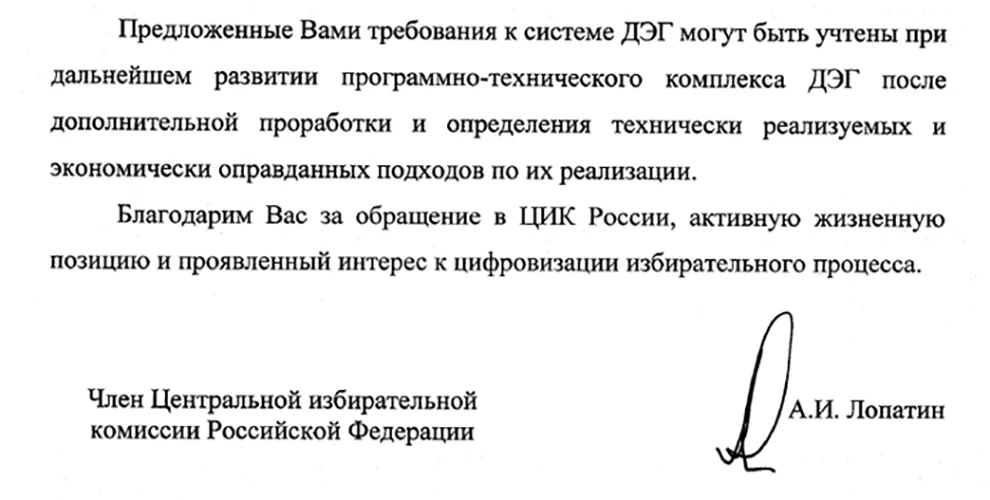
At the request of E.A. Pamfilova send everyone his proposals for DEG, expressed at the public discussion of the Internet voting last year, a similar document was sent to the CEC of Russia. In his response, the CEC said that the proposed requirements “can be taken into account with the further development of the DEG software and technical complex after additional study and determination of technically implemented and economically justified approaches for their implementation”. Of course, it is not clear how technical implementation or economic justification can cause the reduction of the existing rights of participants in the electoral process established by 67-FZ.
Doubtful technical warning of Dit Moscow
What, as a result, was included in the TK on the Internet voting system for Muscovites?
In March 2021, an order was posted on the website of the Unified Information System in the field of procurement to create work to create the state information system “Remote Electronic Voting System” in the amount of 270 million rubles. The procurement published a TK signed by Artem Kostyko.
The published TZ was compiled, in our opinion, unprofessional. For example, according to it, it is required to create a state information system of remote electronic voting (GIS DEG), and then install it on the equipment provided by the customer. However, the list of equipment in the TK is not given. Or, for example, according to this TK, after the conclusion of the contract, it is necessary to agree with the customer and perform many private TK, the text of which is not given. As a result, the customer began to receive questions through the public procurement system.
To the question of how a participant can create a system and calculate the cost of work, if the composition and characteristics of the equipment on which it should work is not described in the TK, the state customer does not reply with the eye: “The complexity of the work does not depend on the composition, a detailed description of the characteristics of the customer’s equipment on which the system should be installed, the location of the customer’s equipment and the conditions for access to this equipment”.
To the technical question about the format and structure of certain “logical and interface files”, “external input elements” and “external requests”, which are mentioned in the TK without the necessary technical description, the child without a shadow of doubt is specified in the (!) Methodology for calculating the planned cost of work, approved by the Department of Economic Policy and Development of Moscow. Who does not know - the “calculation methodology” in public procurement is usually a very short and small -containing document that analyzes the cost of similar procurement and on its basis deduces the “reasonable price” of the contract. How can the methodology for calculating the value answer technical questions about the requested formats of the interaction of GIS DEG with external systems? For example, how to establish the work of GIS DEG with a portal mos.ru or GAS "Elections"? There was no proper answer.
To questions about the need to develop a system, taking into account the requirements of the Law on Basic Guarantees of Electoral Rights of Citizens (67-FZ), including the procedure for ensuring the openness and publicity of the voting procedure when using the system, the permissibility of the numbering of 67-ФЗ prohibited, the need to store documents using an electronic signature, about the functionality for surveillance and many others, the customer responds equally, the same, no significant set of phrases.
In general, the document tells us that DIT at least reacted irresponsibly to the development of a TK for an Internet voting system for Muscovites. Despite this, some participants in the purchase had no questions, and among them the winner was identified - JSC “Kaspersky Laboratory”. How the Moscow Dit could use this TK in order to demand from the contractor the need to ensure the requirements of 67-FZ is incomprehensible.
Experience shows that a poorly compiled TK leads at least to poor -quality work. Therefore, problems with the system were well predicted.
Explanations of the child of Moscow
Before the election, the New Gazeta sent a request to DIT in connection with the preparation of the article by Andrei Zazakin and Alexander Isavnin, in which, in particular, the absence of a normative legal basis prescribing the use of specific technical solutions during DEG is discussed in detail. DIT's answers partially made us laugh, and partially confirmed our fears.
Let's start with the laughs. To question No. 2 about the full list of equipment and software products, the child replies: “The Moscow DEG system was developed by specialists of the Moscow Government and contracting organizations in accordance with state contracts, it does not use third -party software products. The system is located on the server equipment of the Center for Database of the city of Moscow. ” Everything, point. There is no exhaustive list - so that in case of unaccounted entities arise, to raise anxiety.
Therefore, at any moment you can take out the second, third, etc. from under the table. “Blockchain”, about which there was not a word either in legal or in technical documentation.
We were also amused by the answer to question No. 5 about the accounting of clause 2. The requirements of “Voice” ( the movement was recognized as an ino -agent. - Ed. ) Publish “Technical documentation, source codes, composition of equipment and its location” DEG. Dit writes that the requirements are taken into account. This is wrong. As follows from answers No. 6 and 7, technical passports, operation manuals were not published; Also, the composition of the equipment and its location were not published.
We were also made by the contradictions between individual answers. So, answer No. 2 claims that the program code is available on the link, and in answer No. 4 - that the entire code is published. Speech No. 3 is also approved: "The server part of the software for information security is not public."
But the answers that are fully consistent with our pre -election fears and the post -piercing sad find.
According to answer No. 11, observers and members of the commission did not and could not have access to rooms with DEG equipment. This means that the observer and member of the commission did not even have the theoretical opportunity to check that no malicious software was launched on the servers or no emergency equipment was installed. In the “analog” site, this would mean that the commission does not have the opportunity to check the sealed of the urn and the absence of foreign objects and devices in it (for example, the chopper of the ballots, a printer or a crocodile eaten ballots).
Answer No. 12 is most noteworthy: “On the days of voting on electronic weekends, the observer’s node will be deployed, which will allow any technical specialist to gain access directly to the blockchain, check the system and make sure of its stability and immutability.”
But we know from an interview with Nikolai Kolosov and Ilya Sukhorukov that the observer’s node did not provide access directly to the blockchain, did not allow you to look at separate records in it, but only issued the shocked shows of turnout. In the analog section, this would mean that observers do not see either the issuance of the ballot, or how it is thrown into the urn, but see only the scoreboard with the guard with the number of those who passed to the site.
To our post -sophisticated questions, sent on September 27, Dit of Moscow has not yet answered at all - we will be happy to publish answers.
The feds are silent, and it's even worse
We also tried to deal with the federal DEG, sending a request to PJSC Rostelecom, the role of which in the organization of federal voting is similar to the role of DIT in Moscow. The questions that were asked were similar to the questions asked by Dit.
The answer was a curious science: “The information listed in the request refers to the organization and conduct of state and municipal elections in the Russian Federation, and the materials of the publicly accessible portal of the distance electronic voting vybory.gov.ru, the owner of the Central Election Commission of the Russian Federation.”
On September 13, requests for both the Moscow and the federal system were sent to the CEC. On October 1, we received the answer to the CEC without a signature of a CEC or an employee-just from the “press service”, without a name and surname. Briefly its content: we will not say about the federal DEG, because, firstly, you are not supposed to know about it-secret information; secondly, because no one doubts his honesty; Thirdly, because you request “counseling”, and we do not advise anyone; We will not say about the Moscow DEG, because it was necessary to write to MGIK.
Is there any FCZ-67 at least something that the law ordered to secret? On the contrary, the activities of commissions in the preparation and conduct of elections, referendum, counting of votes, establishing voting results, determining the results of elections, referendum are carried out openly and publicly (Article 3 of the FZ-67).
If the response of the CEC without a signature is authentic, then it follows from it, including what is classified by the following information that the New Gazeta requested - we partially quote our request:
1. The address is posted “schedule for the disclosure of technical documentation” DEG.
1.1. Was this schedule followed?
...
1.10. If references to repositories for specific components are not publicly available or not all code is published on them, please inform about the reasons for the non -publication or incomplete publication of the code and indicate which components are not published.
1.11. We ask you to inform you what proposals from paragraph 2 of the Voice requirements* dated 07.29.2020, published by the link , are taken into account to the present moment?
1.12. Do A) Moscow, b) the Federal DEG system operating documents? By whom and when are they issued and/or approved?
1.13. Could you provide us with them?
1.14. Do A) Moscow, b) federal DEG system Technical passport? By whom and when is it issued and/or approved?
1.15. Could you provide us with it?
6.1. Who is the document approved ?
6.2. Will he apply to the Moscow or passing DEG outside Moscow?
6.3. Who is the author of this document, in the framework of which procedure (by whose order/order/indication/decision) he was ordered (completed, prepared)?
On the website vybory.gov.ru, some materials about PTK DEG, explaining the principle of operation, are published, and against the background of GIS DEG of Moscow, the federal system looks better. However, the understanding of these materials requires the presence of special knowledge, including in -depth knowledge in the field of cryptography, inaccessible to ordinary voters. In addition, not everything has been published, including the methodology of control checks, which makes the value of such a system no higher than Moscow.
Balagan in an electronic election commission
Indecent bustle in the Moscow Electronic Partural Party on the day of the election: statements by the Chairman of the PEC DEG with lunges to observers - they say, we will not let you sit, disconnecting the observer noda (quite useless), periodic disappearance of diet employees, delaying the processing of ballots (decoding and identifying blocked bulletins), strange speeches about the FSB - there should be no strange speeches about the FSB. Switch our attention from the main thing that happened on the night of September 19 to 20.
The main thing is that as a result, the counting of votes was carried out not only in the absence of observers, but also in the absence of a commission. All the work for the commission, including work with the ballots and appeals of citizens, the analysis and elimination of various errors, the impact on the result of the failures by the Moscow Dit actually performed, presenting at the end of the commission to sign the final protocol. Electoral commissions and observers did not have the opportunity to verify the correctness of the establishment of voting and compliance with all procedures within the framework of 67-FZ. As it turned out, at the moment, even an independent recalculation of the votes on secondary data from the Observer.mos.ru website is impossible, since according to the reports of the DIT employees, the chains of the crossings were deleted.
What is happening in the federal election commander, that is, in the TIC DEG, which established the results of 1691 votes using the Federal PTC DEG, with the participation of 635 thousand voters from 6 regions of Russia, with the exception of Moscow, was slightly different from Moscow. The members of the TIC DEG commission divided and collected the key, launched and stopped the system, solemnly pressing the button, and signed the documents.
During the vote, TIC members received foreign delegations and even went on an excursion to their Moscow colleagues.
All work with voters and their ballots was also actually delegated to personnel and equipment of a third -party organization - Rostelecom. There were no control checks of the results of their work.
One of the authors of this material (Victor Tolstoguzov) visited the TIK DEG commission member. Despite repeated appeals in various forms, including written ones, he could not look at the operating manual and the management of the PTC DEG operator, certificates for the system, and also receive a copy of documents from machine -readable media from the commission, according to which the correct stage of voter counting for all voting could be checked. On the proposal to organize data recording with encrypted votes from the DEG PTC in order to ensure their immutability and the possibility of conducting control checks, Viktor Tolstoguzov also was refused.
At the moment, no one has yet published the distribution of votes presented through the federal system, depending on the time and other parameters. Judging by the description of the DEG PTC protocol, this will not work, since this complex provides for another decryption key, with which the data with voting results is calculated. The publication of this key is not provided for regulatory documents. Thus, a convenient and understandable independent recalculation of decrypted votes according to secondary data from the STAT.VYBORY.Gov.ru website is also impossible.
В классическом представлении происходящее в электронных избиркомах означает, что милиционер Семен Семеныч, сторож дядя Петя и завхоз дома культуры Василий Иваныч самостоятельно получили бюллетени от избирателей, спрятали их в неустановленном месте, выполнили подсчет результатов и вынесли протокол комиссии на подпись, предложив поверить им на слово.
Неудобное. Неизбежное?
После возникновения перечисленных проблем с интернет-голосованием на сентябрьских выборах 2021 г. и высказывания участниками избирательного процесса сомнений в результатах интернет-голосования проблема качества контроля за электронными средствами голосования начала открыто обсуждаться президентом Владимиром Путиным. Это произошло 25 сентября, уже после подведения итогов интернет-голосования и выборов в нашей стране в целом. По словам Путина, его предупреждали, что внедрять интернет-голосование опасно. Но в результате президент согласился с теми, кто заявил, что это неизбежно, удобно для людей, и ему обещали, что сделают все максимально прозрачно и максимально честно.
Непонятно, на чем были основаны доводы тех, кто уверил президента, что интернет-голосование «неизбежно» и «удобно» для людей.
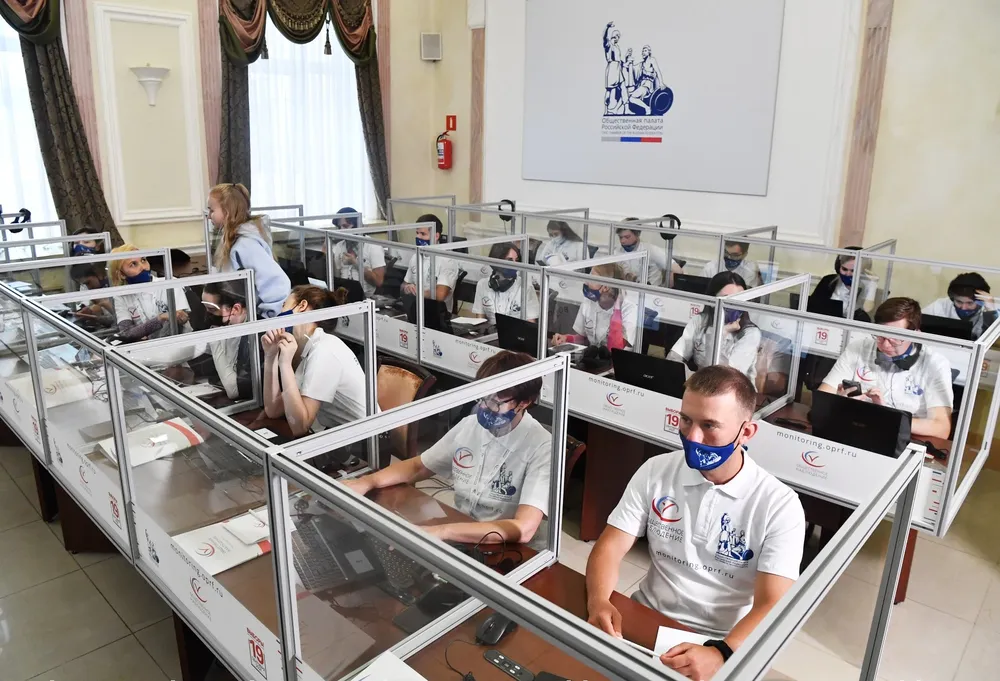
Как комиссия из 12 человек может удобно и объективно убедиться, что сотни тысяч избирателей на их избирательном участке действительно существуют, они голосуют лично и соблюдается тайна голосования, если ни одного избирателя не видно?
Возможно ли им проверить, что в систему записываются данные электронных бюллетеней в том виде, в котором их отправили избиратели, если путь их движения не просматривается?
Если члены комиссии исключены из наблюдения за процессом голосования, то как на них можно возлагать обязанность подписывать протокол?
Наконец, как избиратель может проверить, что его голос был принят системой без искажений и тайна голосования не была нарушена? В порядке дистанционного электронного голосования такой инструкции нет ни для московской, ни для федеральной системы . Странно, что разработчики обеих систем заверяют, что проверка голоса самим избирателем возможна, но при этом почему-то стесняются сообщить, где можно найти понятную для рядового гражданина инструкцию.
Как оказалось на самом деле, вместо простого и удобного наблюдения за наглядным, обеспечивающим на классическом участке тайну голосования случайным полетом бюллетеня на дно накопителя, неравнодушным гражданам предлагается поупражняться в программировании , криптографии ПТК ДЭГ и еще много в чем, носящем технический характер. Очевидно, что в этом подавляющее большинство граждан не разбирается. Сомнительно, что это все способен освоить отдельно взятый человек. При этом нужно учитывать, что многие важные процессы еще не описаны, не все исходные коды и документы опубликованы, и даже непонятно, как убедиться в том, что во время голосования работали именно те коды, которые декларировалась до выборов.
И, конечно, часто произносимый аргумент «не веришь интернет-голосованию — голосуй бумажным бюллетенем» здесь неуместен, поскольку данные всех бюллетеней складываются в один протокол, который в итоге может лишить гражданина своей собственности и свободы.
Если заявленный прогресс действительно не остановить, то мы должны были сперва увидеть замену сотрудников ФСО, охраняющих вход в Кремль и ЦИК России, на турникеты с удобной СМС-аутентификацией граждан, проходящих на прием.
И это далеко не все проблемы, сопровождавшие подготовку, электронное голосование, подсчет голосов на этих выборах. Мы продолжаем их собирать и систематизировать.
Власть экспертов?
В результате граждане для защиты своих базовых прав вынуждены искать специалистов, разбирающихся в системах электронного голосования. И даже сам Владимир Путин был вынужден оправдываться, что принимал решение об использовании интернет-голосования в России на основе мнений неназванных им экспертов. Странно, что ведущие руководители не заметили на своих примерах нарушения основополагающих прав граждан нашей страны избирать, быть избранными и участвовать в процедурах подсчета голосов на государственных выборах, не прибегая к обязательной помощи посторонних лиц.
В то же время в Германии было достаточно обращения одного из граждан в Конституционный суд для запрета использования компьютеров для голосования, не предусматривающих понятную и удобную для контроля распечатку результата волеизъявления. В решении суда от 3 марта 2009 года говорится, что граждане должны иметь возможность без специальных технических знаний проверять результаты собственного голосования.
Сегодня мы видим, что члены комиссии и кандидаты тоже не могут самостоятельно проверить, верны ли результаты выборов, полученные с помощью интернет-голосования, и вынуждены обращаться к немногочисленным экспертам. Это неудобно — и непонятно, почему это неизбежно.
Эксперты начинают рассматривать вопрос и заявляют, что нет всей необходимой информации для проверки, и обращаются за этим к разработчикам (и это уже после выборов!). Разработчики не раскрывают все данные, ссылаясь на тайну голосования, конфиденциальность информации, органов и регуляторов. Органы и регуляторы заявляют, что ничем не могут помочь, поскольку подчиняются властям и действуют в рамках законов, принятых избранными властями и добавляют: «ну вы сами понимаете». Избранные власти заявляют, что они избраны большинством избирателей, сами в этом не разбираются и вновь предлагают обратиться к экспертам. Получается порочный круг.
Thus,
в результате внедрения интернет-голосования многочисленные члены комиссии и наблюдатели были исключены из процесса подсчета голосов.
Они не разбираются в хэш-суммах, эллиптических кривых, блокчейнах, гитхабах, исходниках — и вообще не умеют программировать. Они боролись за честность подсчета голосов на своих участках, но к полученным ими результатам голосования было добавлено большое число голосов, наблюдение за происхождением которых было им недоступно, они сильно отличались и коренным образом изменили результаты выборов. По этому поводу более 1600 членов комиссий и наблюдателей направили в ОП Москвы открытое письмо о непризнании результатов интернет-голосования .
Отсутствие доказательств — не доказательство отсутствия
При Общественном штабе по наблюдению за выборами в Москве была сформирована Техническая группа по перепроверке результатов ДЭГ. Опубликован ее первый (предварительный) отчет.
Главный вывод этого отчета — ненаблюдаемость и непроверяемость публичными средствами дистанционного электронного голосования. Этот вывод полностью совпадает с нашими выводами, излагаемыми в настоящей статье.
Именно техническая группа не получила ни исходного «тайного блокчейна», ни необходимых и достаточных сведений (программного кода и ключа) для построения «тайного блокчейна» по публичному. Она имела доступ только к выгрузке «Базы данных 2», содержащей все переголосованные бюллетени. Каковую она должна была принять на веру, о чем и сделана соответствующая оговорка.
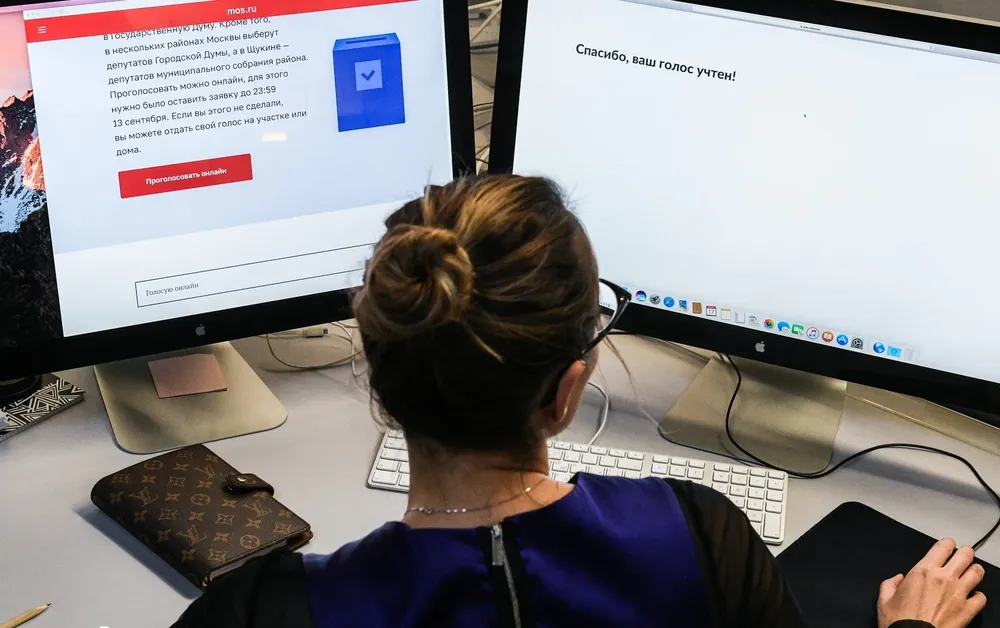
Более того, техническая группа оговорилась, что не имела возможности убедиться в целостности даже публичного дампа: проверить, что голосовали с реальных аккаунтов живые люди и что в систему записывались именно такие голоса, какие были поданы ими. Комиссия не могла проверить и не проверяла.
В отношении статистических аномалий при голосовании отчет заявляет: «На основании представленных данных нельзя сделать выводы о присутствии нарушений в ходе работы системы ДЭГ, повлиявших на итоговый результат голосования». Совершенно верно: в рамках стандартов доказывания beyond the reasonable doubt («за пределами разумного сомнения») или хотя бы clear and concise proof («четкое и ясное доказательство») — нельзя, так как рабочая группа была вынуждена работать в пределах предоставленной базы данных и проверить достоверность записей в нем не могла. Для подтверждения фальсификаций на таком уровне доказательности следовало бы найти лиц, которые осуществляли электронные вбросы, предъявить видеозаписи их деятельности, логи их компьютеров, логи серверов ДЭГ, свидетельские показания, явки с повинной и т.п. Рабочая группа по определению не могла проводить такой анализ, поэтому такой вывод был предопределен с самого начала.
А в рамках стандарта preponderance of evidence («баланс доводов») рабочая группа не проводила соответствующей работы по сравнению доказательной базы в отношении ряда претензий; контраргументы отчета, которые выдвигаются против анализа — например, «обеденного перерыва», — носят умозрительный характер, не основаны на анализе эмпирических данных или статистики и являются непротестированными гипотезами, в качестве каковых и приводятся. Поэтому невозможно утверждать (и отчет очень мудро этого не делает), что он опровергает статистические свидетельства возможных фальсификаций.
Статистические методы поиска фальсификаций можно сравнить с классическим опытом: в обычный оптический микроскоп рассматривают броуновское движение взвешенных в воде пылинок. Вы увидите, как маленькая частичка будет перемещаться странными зигзагами. Этот опыт подтверждает атомно-молекулярное учение и позволяет установить, сколько молекул содержится в миллилитре воды. Но отдельные молекулы вы увидеть не сможете. И из этой «невидимости» молекул еще не следует, что атомно-молекулярное учение неверно. Вам просто нужен другой микроскоп (так, например, в электронный микроскоп можно напрямую увидеть отдельные атомы металлов).
Перспективы оспаривания
Как кажется, такой порок установления итогов голосования на электронных УИКах требует постановки вопроса о несоответствии Конституции правовых актов, которые — при всей их неполноте и ущербности — регулировали проведение дистанционного электронного голосования.
ФЗ-67 предписывает устанавливать итоги голосования только избирательным комиссиям, а не каким-то иным субъектам. Федеральный закон от 23 мая 2020 г. № 152-ФЗ «О проведении эксперимента по организации и осуществлению дистанционного электронного голосования в городе федерального значения Москве» не устанавливал исключения из этих правил. Однако утвержденный ЦИК в соответствии с ФЗ-67 «Порядок дистанционного электронного голосования» предписывает, по сути, осуществлять функции избиркомов лицам, не наделенным таким правом, и лишают избиркомы прав и обязанностей выполнять ряд важнейших процедур, в том числе выполнять проверку правильности установления итогов голосования. Формальное подписание избиркомом итоговых протоколов не меняет сущности дела. Таким образом, в силу вмешательства неуполномоченных субъектов граждане России лишились возможности реализовать свое конституционное право избирать и быть избранными.
В практике ЕСПЧ, которая прецедентно связывает российские суды (то есть для них обязательны не только решения по конкретным делам, но и правовые позиции), существует прецедент — дело «Каримов против Азербайджана». Заявитель Хасан Каримов пожаловался в ЕСПЧ на нелегитимный состав специальных УИК, созданных на территории военных частей. Оппозиционер Каримов на выборах набрал 3454 голоса; представитель партии власти — 3661 голос, из них 1369 голосов было получено на двух УИКах в военных частях.
Суд цитирует в своем решении отчет ОБСЕ, которая провела статистический результат этих выборов и выявила существенные аномалии на разных типах участков как по явке, так и по результатам победителя. Суд дал следующую оценку этих (косвенных!) аргументов: «Эти цифры дают серьезные основания утверждать, что на этих УИКах [ военных — авт.] избирательный процесс и выражение избирателями своего мнения не были свободными».
Вслед за ЕСПЧ процитируем другой фрагмент отчета ОБСЕ: «ЦИК <Азербайджана> делегировал ответственность по организации и проведению голосования военных Министерству обороны, результатом чего стал непрозрачный процесс». От себя добавим: если в этой фразе заменить «Минобороны» на «ДИТ и Ростелеком», то мы вполне получим Россию вместо Азербайджана.
Суд нашел, что «весь избирательный процесс на УИК № 31 и № 32, включая создание УИКов, списков избирателей и голосование, не соответствовал Избирательному кодексу в части организации выборов на участковом уровне. Следовательно, выборы на УИК № 31 и № 32 проводились вне правового поля, и были поэтому нелегитимными». ЕСПЧ постановил, что поведение азербайджанских избиркомов и судов выявило «очевидное пренебрежение к утверждению верховенства права и защите целостности выборов», и, согласившись с требованием заявителя, признал, что создание УИКов, нарушающих принципы независимости функционирования избирательной системы, предписанные законодательством Азербайджана, нарушает право заявителя на свободные выборы, закрепленное в Art. 3 Протокола № 1 к Европейской конвенции, а отказы азербайджанских судов восстановить нарушенное право нарушают право заявителя на правосудие.
Если предположить существование сферического Конституционного суда России в вакууме, прецедент Каримова должен был бы стать серьезным аргументом в пользу того, что в той мере, в какой ФЗ-67, ФЗ-152 и принятые во исполнение их нормативные акты ЦИК лишают избирательные комиссии контроля над подсчетом голосов и передают такой контроль неуполномоченным субъектам, эти акты нарушают право граждан избирать и быть избранными, закрепленное в Конституции.
Candidatus ex machina
Растущее количество выступлений, публикаций, обращений, жалоб, а также исков, связанных с использованием интернет-голосования, показывает нам, что общество раскалывается на две части. Первая часть контролирует либо верит в развернутый на их территории сервер для голосования — и довольна. Вторая часть не имеет доступа к этому серверу и вообще отказывается верить в чудесные серверы, решающие их судьбу: она не может получить запрошенные документы, требует объективности, открытости и прозрачности процедур, предусмотренных законом, и поэтому нешуточно взволнована.
Электронное голосование, проверка целостности которого требует наличия специальных знаний, нарушает базовые права граждан избирать и быть избранными, делегируя контроль за выборами от избирательных комиссий неуполномоченным лицам. Избирательный закон не должен предусматривать такую порочную процедуру.
Внедрение цифровых технологий в избирательный процесс должно быть направлено не на полную замену членов избирательных комиссий машинами и их обслуживающим персоналом, а на то, чтобы дополнить классические избирательные участки оборудованием, которое выполнит дополнительные проверки, поможет всем участникам избирательного процесса соблюсти все формальности, убедиться в объективности полученных результатов, повысить прозрачность, наглядность, оперативность, открытость и гласность процедуры голосования и подсчета голосов.
Андрей Заякин, кандидат физико-математических наук, сооснователь сообщества Диссернет, редактор дата-отдела «Новой газеты»;
Александр Исавнин, преподаватель Свободного университета, член Технической рабочей группы ДЭГ города Москвы;
Виктор Толстогузов, сотрудник МГТУ им. N.E. Баумана, разработчик систем электронного голосования, член Технической рабочей группы ДЭГ города Москвы, член комиссии ТИК ДЭГ с правом совещательного голоса.