
Translated material
Martyr Nikolai Kopninsky
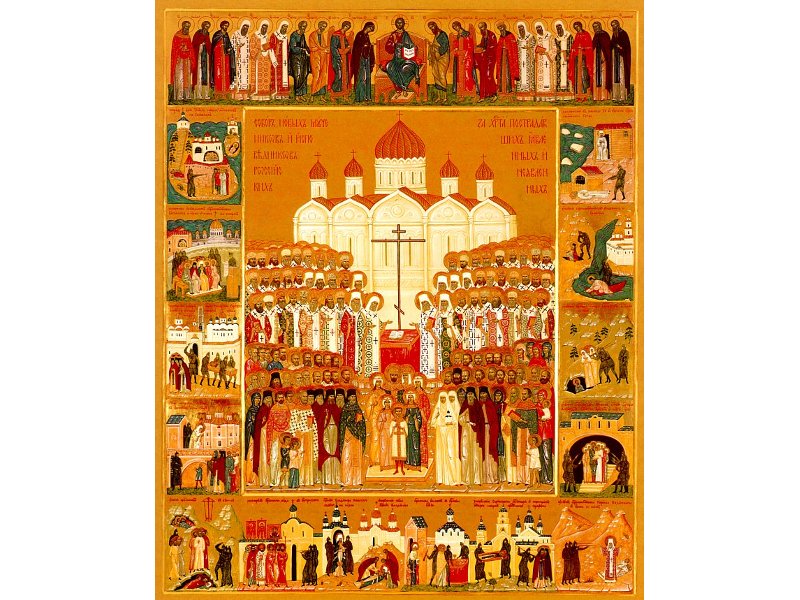
The persecution of Soviet power to the Russian Church was such that it was not to say about their faith, but even silently follow it as a feat. The new martyrs and confessors, glorified in the face of the saints did not come: believed, prayed and meekly went to their Calvarys.
“Polit.ru” recalls those who gave their lives for faith and by whose prayers the Russian Church is alive - even if almost nothing came to us besides the name.
Publications were prepared by Kirill Kharatyan (included by the Russian authorities in the register of foreign agents).
 Icon Cathedral of the Holy New Martyrs and Confessors of Russian
Nikolai Kopninsky is the son of a worker from the village of Ivanteevka of the Moscow province. In 1888, 12-year-old Nikolai Kopninsky graduated from a rural school and joined the office of the manufacturer Lysin, where he worked until 1899, when he was drafted into the army.
He served in the army for four years, first with an ordinary, and then the clergyman of the 13th Infantry Belozersky Regiment, which was lodging in the Polish city of Lomzh.
In 1903, he returned to the Lyzhin factory and began to work as a descendant. Then, from 1908 to 1914, - a descendant in the Moscow United Exchange Artel.
In 1914 he was again drafted into the army and served until 1918 in engineering intensity in Moscow; Then he returned to Ivanteevka and was engaged in peasant farming. From 1921 to 1930, he worked as a clerk at different factories in Ivanteevka.
In 1930, he ended up in a railway disaster and, due to a severe injury, received a disability.
Since 1935, he was the secretary of the revision commission at the church council of the Smolensk Church and was arrested for this in 1937. From the investigation materials:
- In what relationships were you with the chairman of the church council Kuzovkov and the priest of the vertex?
- I visited Kuzovkova, as well as he only because he was the chairman of the church council, and I, until March 17, 1937, was the secretary of the audit commission under the church council. With regard to the Vershinsky, both he, so I never visited him. - In February 1937, a meeting of the church council was held; After the meeting, you among those present expressed clearly counter -revolutionary views against the Soviet regime. - There was a collection of the church council in February 1937, but I did not express counter -revolutionary views and I do not find myself guilty of this.
On December 1, 1937, the Troika of the NKVD sentenced him to eight years in a forced labor camp.
He was enclosed in Mariinsky camps in the Kemerovo region. He died there on March 15, 1938.