
Translated material
Nikolai Kononov: Me, editor
Nikolai Kononov 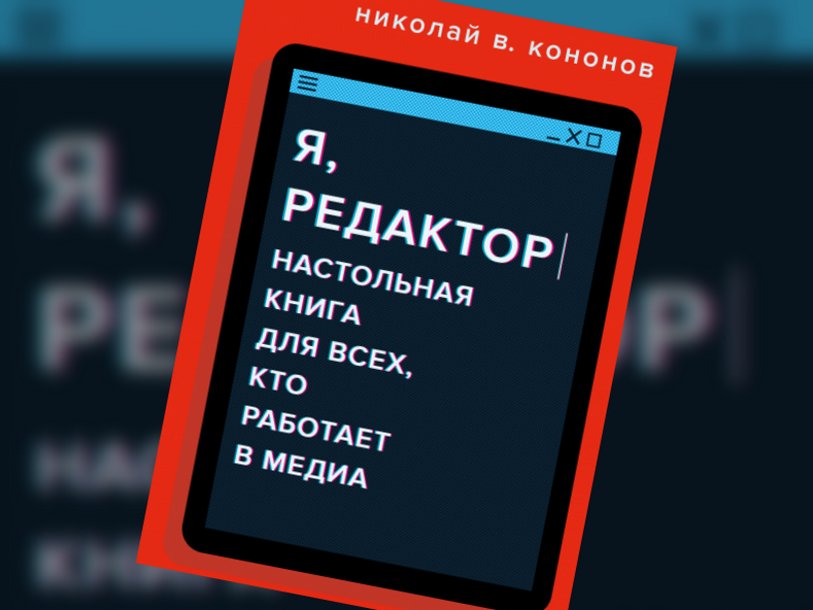
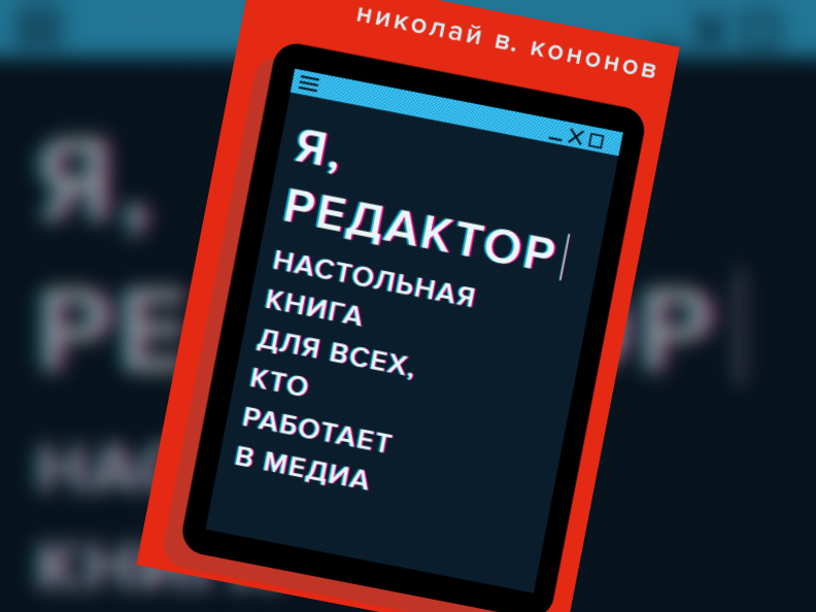
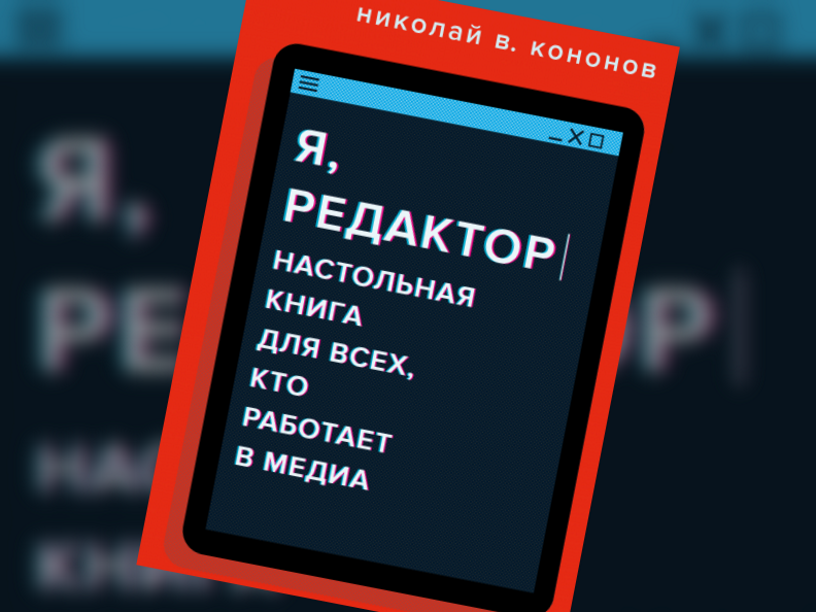
The publishing house "Mann, Ivanov and Ferber" represents the book of journalist and writer Nikolai Kononov "I, editor. A table book for everyone who works in the media. ”
The book covers all aspects of the editor's work, taking into account the latest trends in online journalism. From the basic rules of the journalistic text and editing techniques to build relations with the author, sources and owners of the publication - the author honestly and without embellishment talks about the work of media in modern Russian realities. He also pays attention to the ETICIAL Code of the journalist and the editor, the principles and values of the publication.
We offer to read a fragment of the book.
Work with the text
At first I would like to do some remark about what this section is not . Firstly, the basic guide for journalistic and even more so copywriting letter; Such a leadership may be my previous textbook “Author, scissors, paper”. There are descriptions of different copyright techniques such as “how to say on the case” or “how not to dry the text”. Secondly, he is not an ultimatic guide that implies the stylistic dictatorship of those techniques that I talk about (there are no writing standards, especially in large genres, and there are no techniques that are unambiguously outdated or, conversely, it all depends on the context of their use; conditionally outdated narratives, the manners of the story can be used as a technique). And thirdly, the collection of exercises is important to remember that even the examples considered here are not so clear and each publication has its own criteria for novelty and originality, tied to the audience and/or ideas of the editorial office about the beautiful.
I have already said that the editor is essentially a showranner of an endless film that the author makes. It can be added that he should also be a psychotherapist, and play these two roles at the same time.
His task is to inspire, not suppress; Do not instruct and indicate how it should, but ask accurate questions, listen to the author’s voice and point him to purely spaces and phrases; Do not invent for him and not to sculpt his mask, but to help look for his own language, intonation.
This is far from as simple as it seems. Below I will talk about techniques that helped not only me, but also other editors.
How to say on the case, without rolling up to a technical description
By the time this book falls on the shelves, clever developers will probably write a few more machine editing services. These services can probably be trusted. And this, by the way, is another argument in favor of finding an original style by a journalist: intonation, turns of thought and other copyright tools cannot be faked yet.
That is why the principle is this: each text should tell the story in essence and specifically, but if its topic is something more complicated than the instruction on the electronic payment of the new tax or choosing a dentist, then it is better to try to apply narrative techniques that differ from each other every time. How to do it?
Find the intrigue inside a boring story and build the structure of the text as a gradual disclosure of this intrigue. For example, with the help of the old as the world of reception "expectation - reality." The author and the reader go to the answer to the question that is more complicated and ambiguous than he was imagining at first. The reader understands that everything is not easy, the author offers him a few more scenarios, each of which seems understandable, but opens more and more developers. In this case, the text will definitely not leave the instructions, since the movement to the truth makes the author look for new ways to say “Stop, we came to a dead end” or “But we are in a trap, let's step back a step back”.
You can do the opposite and give out all the secrets - that is, to present conclusions - immediately. “We learned that (here is an amazing fact), and followed the trail (hero). It turned out that (this is the main discovery, but not its interpretation - otherwise why read). Now you will find out what this story really looked like. ” True, this is worth doing only if your secret clearly produces a wow effect.
And now unpleasant news: the editor often has to do this work himself. Due to the lack of time or, conversely, extreme fatigue from the manufacture of the article, the author can take a text that would accept Maxim Ilyakhov from the participant of his courses, but not cool enough to be printed in The Economist or at least in The Bell. This is a text in which there is no leisure reasoning, meaningless details and piles of compound, and all things are called their names, without allegories. “High -quality”, but unreasonable or simply boring text. And here the editor, sighing, sits down to rebuild it, add speeds, etc.
In addition to two of the above techniques, there is another one in his arsenal: a change in the genre. For example, often the editor looks at the article and thinks: “Okay, we assumed that it turned out to be a dynamic text, but the described essence turned out to be so complicated that now there are thirty thousand signs in front of me, broken into giant chapters, each of which is attached to a bunch of links (and explanations in brackets).” This means that the editor did not catch the moment when it should be told to the journalist: “So, you just write FAQ for me, starting from the most important question and ending with the question“ What will happen next? ” And in this case, the editor will have to do this on his own. He sits down, writes down questions from the reader and makes up the answers of the expiles, explain, FAQ. After editing each answer, shortening it three times and using more capacious, minted formulations.
A change in the genre helps when, in the process of working on the story from the text, not only the author, but also the editor, and, perhaps, even the chief editor, to whom they rolled up with the declared purpose and secret desire, to solve all their problems asking for all their problems, was tired.