
Translated material
What do we need Gertrude?
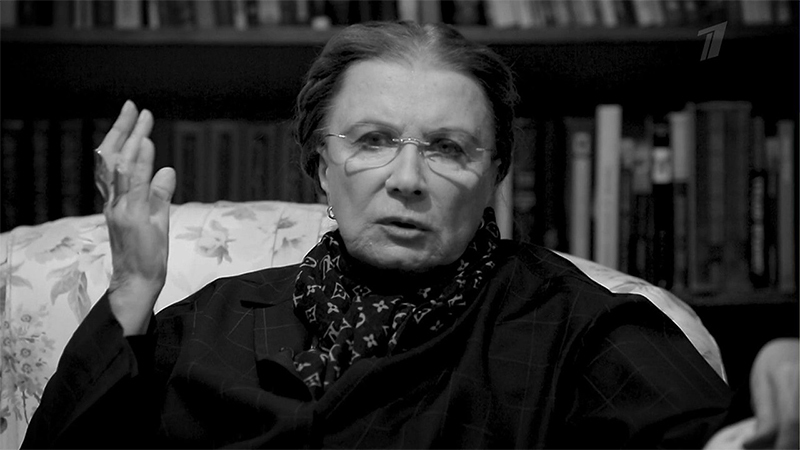
Tomorrow on the First Channel, the television premiere of the documentary of Lyubov Arkus “Who Won Nobody” dedicated to Alla Demidova will be held. After the film, the channel will host the renewed for this case, the beloved program of Alexander Gordon “Closed Detachment”, where the film Lowers will think about the film, intellectuals, film critics, friends, as well as Arcus itself with the participants of the film crew.
Today, Polina Barskova shares his gaze on the film.
In the center of Lyubov’s film Arc “who won you no one”, as is often the case with bright works of art, there is a paradox: according to various influential schools of theatrical thought, the actor has only a mask on which the director is free to apply any pattern, there is a larch, but there is no face, personality.
However, as it becomes clear as a result of the observation of Arcus behind Demidova, this case is not the same: it is a person about the person in the era that fell into her, in the circumstances that have fallen to her. Another engine of this documentary is a conflict: the observed resists observation, an observer, does not want to be an object of study, veneration, admiration, condemnation, grumbles, turns away, smiles sarcastically.
But this, possibly, is that we dare to call ourselves the Arcus method: not only the author of the film “Anton here is near”, who made a powerful impression on many, but also a film and public figure, publisher, writer, and cultural citizen. Both in the film and in other births of her work, Arkus in the first, or perhaps, in general, in all possible queues is interested in the personality with all its difficulties, unwillingness to fit and obey, with its fragility and its rudeness, with her desire to violate the rules and unwillingness to like it.
It is this unwillingness to fit, to exist in accordance with the rules of Soviet art (thaw, stagnation, perestroika and other) is the leitmotif of the narrative: according to Arkus, Demidov is another late Soviet acting.
It would seem that this inability should have to doom it into invisibility, non- and unsuccessful in the framework of the exhausting, fading Soviet art, but the complexity of this system was just that (and this is also one of the topics) that Demidov became one of the leaders, tuning forces, one of the dominant of this world. And in his popular publication (drunken angry Bergholz in “daytime stars”, Arrogant, brilliant, mistaken Spiridonov in the “Sixth of July”, which is mistaken in Laura, also a victim of the phosphorescent beast, in the “Baskerville Dog”: everyone here has their own favorite), but also among the experiments of the “arthouse” Soviet cinema. Tarkovsky and Shepipiko sought to work with her - even Herman, who did not endure the general expression on his face, thought exactly about Demidova for “twenty days without war”, but was forced to sacrifice this figure for the sake of the sentiments of Konstantin Simonov, to whom she in platinum stuck with deadly eyelashes too much reminded the one that he did not make himself too convincingly waited.
But with all this splendor of reincarnations, the central “theater novel” here is the relationship of Demidova with Taganka, with Lyubimov, with Vysotsky.
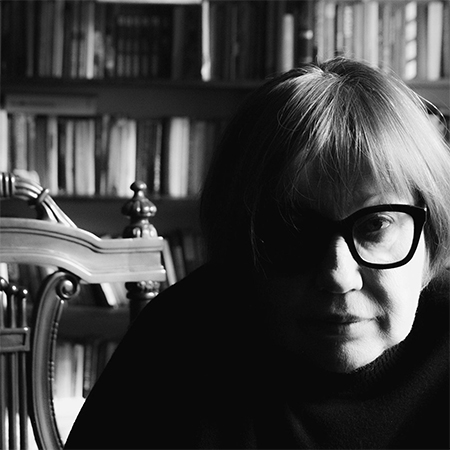 © Arcus Love / Facebook
Arkus - a master of selection and choice of chronicle personnel; Here we see already graying, fading shots, where Demidova is again in the opposition to the noisy, rejection, and most importantly, the collective process of Lyubimov - and here it is in the singular, in itself, like that very cat. This is about this quality in the film Turovskaya and Gaevsky.
Another skill of Arcus is to find absolute commentators. (We see these amazing understandors of the scene on the verge of disappearance: it seems that this is the sweetness and meaning of the union of the film chamber and scene, when the most unstable, etheric, perishable of arts with what is creating and imposing immortality is combined.)
Could the reflection on the theater process be movie generation? It turns out - maybe. For me, the thoughts of Arc, Turovskaya, Gaevsky that the Lyubimovsky “Hamlet” with Vysotsky and Demidova-Herthruda turned out to be a murderously accurate statement about the kingdom, in which something was wrong, is irresistible, that is, it is impossible to distract from the screen, according to which the queen expanded by his son is rushed in confusion, and Gaevsky explains that we have one of the most accurate, difficult, difficult The embodiments of this role and this actress: the perfect combination.
For Lyubimov Gertrude Demidova, a victim of passions and historical circumstances, the hostage of her throne, her tyrant - the more entertaining her was probably entering this image, the less he corresponded to her temperament. In life, actress Demidova completely refused to obey Rutin, what was expected from her, even (oh, incredible!) Her success - from roles of queens and queens, she moved to the roles of the elderly and ghosts, but also to her special relations with literature.
Unlike all (twice emphasized by the red line) of my friends, I do not think that acting reading of a poetic text is always a mockery and perversion (I still grew up in the theater); Rather, I believe that there may be extremely curious exceptions here: Demidova strives to merge with a poem with such a passion, with such a feeling of possession by law that this fascinates, seduces, attracts. There is a bitter-sweet scene in the film, where she has coldly and firmly comments that she will now have to read poetry among the chewers-sleepers (a separate bow to her for these words ...)
From many recently, I have already watched this film of friends, I have heard different grades of how director Arkus looks at actress Demidova. It seems to someone that this look mythologizing, it seems to me that the matter is just about love when you cannot take your eyes off: Arkus shows us to Demidov, from whom you can’t take your eyes off, and this, as it seems to me, the victory of both: we will not see, we will not hear Dietrich, Garbo, Babanov, Ranevskaya at their sunset hour, they did not allow us to do this.
The actress in the film Arcus is a completely different matter, and in this sense she lives on equal terms with her time, which seems to be exactly the unique, rare opportunity, that dazzling topic that deserves her documentation.
Periodically, I think: how exactly do directors-documentalists invent? understand? Find? - Topics for your documentary films? What deserves our two -hour attention? Usually these are troubles, wars, social evil and malice, but Arcus formulates this a little differently - her attention is attracted by a person, the Creator himself: for example, the actress, as it seems, came up with the way outside the role, outside the era, which is up to this day in searching for herself and her freedom. And the first minutes of the film, when we are allowed to observe, spy on how the heroine claims to be equal to the author, seems to me one of the best roles of Alla Demidova, the actress and our contemporary.