
Translated material
Hands and gnomes
Why is it so interesting to observe the ups and downs of their fate
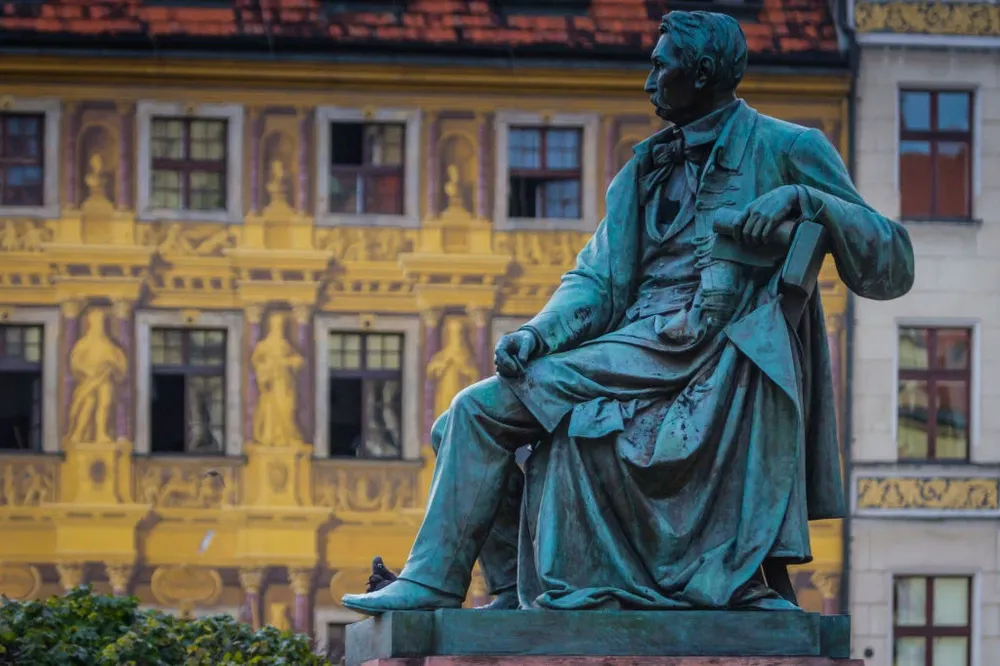
Wroclaw is a nice, elegant city, its old center was carefully rebuilt after military destruction, restoring all the facades (but, of course, not what is behind them). Having walked a little, you notice the oddity: there are almost no monuments on the central streets. Only in some places modest busts and memorial plaques in honor of honored Poles are visible, and the Town Hall itself has a strange monument to the 19th-century comediographer Alexander Fredro (someone may remember his play “Ladies and Hussars”) is strange because Fredro worked all his life in a completely different city, Lemberg, now Lviv.
The general reason was easy to guess, and the guide Mateust told the details.
There were many monuments, but German - because the Wroclaw was called Breslau for several centuries, and in 1945 it was almost empty:
The German population was expelled to the West, and the Poles began to replace it, especially those whom the Soviet authorities evicted from the eastern regions of Poland, annexed to the USSR. They removed all the signs reminiscent of the Germans from the city streets, and something else needed to put in their place-and the city authorities, created before Breslau’s capture by the Soviet Army (the newly-naked mayor waited several months when he could enter his city), moved here the Fredro monument from Lemberg-Lvov, where he was inappropriate under new political circumstances. The monument became a migrant, following the citizens of Lviv, who in large numbers moved to Breslau-Wrotslav.
So it was done seventy -five years ago. Since then, many streets of the city managed to change the names three times - first German to Polish, then “socialist” to “national” ones. In recent years, commemorative signs in honor of the German residents of the city began to appear again in some places: in the attic of the university, during the repair, a modest monument hidden there died the dead soldiers of the First World War and again installed it in an inconspicuous closed yard; In the same court there is a statue of the philosopher-mystic of the angelus of Silesius (though a quote from it on the pedestal is written in Polish), and a brand new memorial plaque hangs on one of the university’s buildings in honor of the Romantic poet Joseph von Eichendorf (the guide of Mateusa did not even know about it). In general, the process of reconciliation is underway in the memorial culture.
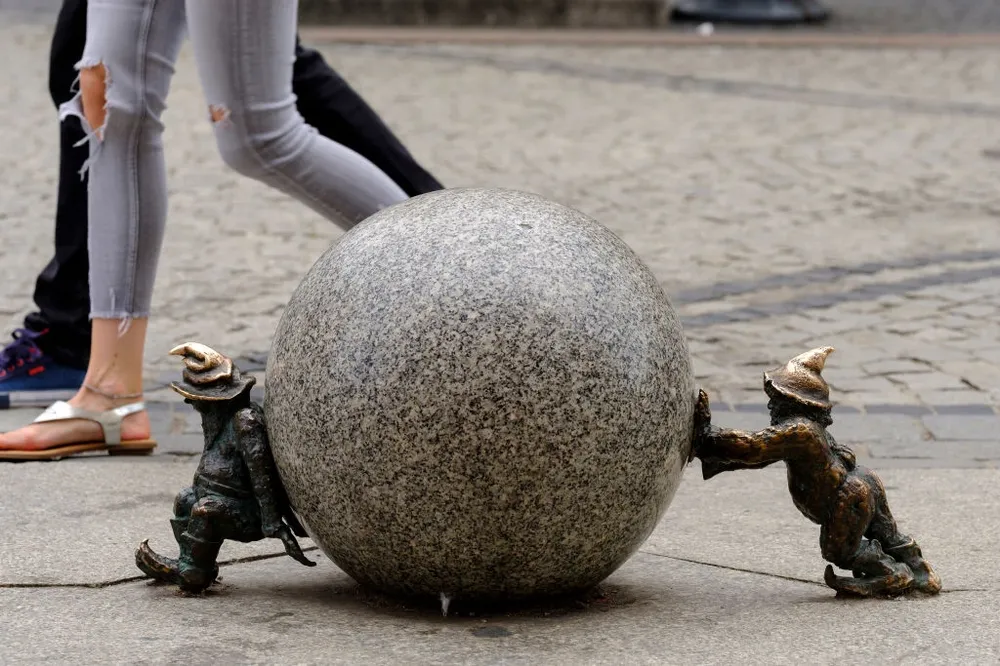
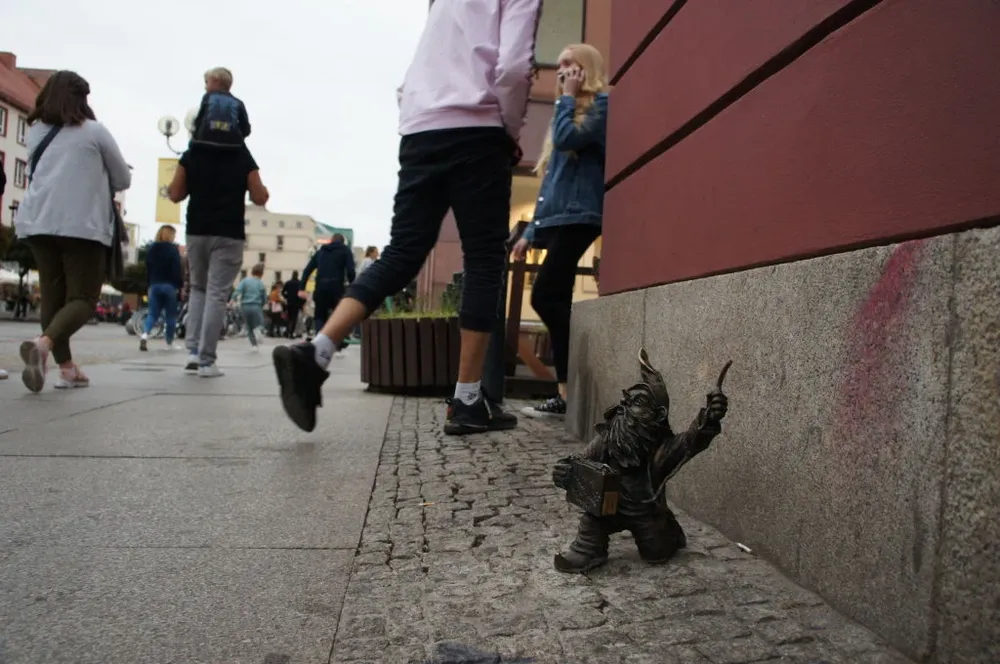
But on the streets of the Wroclaw, you can find something else: there and there are small bronze dwarves (they say there are already several hundred), they work, dance, drink ... The people's palace of music has a whole orchestra with a conductor, next to the tourist agency-the gnome-traveler with a suitcase, a guest of the hotel-a stranger, sleeping on the bed. This funny people, the latest attraction of the Wroclaw, arose for a reason. In the last years of communist power, the “Orange Alternative” state-owned group has been operating here, which painted gnomes on the walls and arranged mass costume demonstrations under the protest-abstract slogans such as “Gnomes for the Communist Revolution”. Now these artistic actions have froze in bronze figures on the sidewalk; The artistic protest, as usual, is assigned by commerce - hotels and restaurants order their gnomes for themselves, advertising themselves.
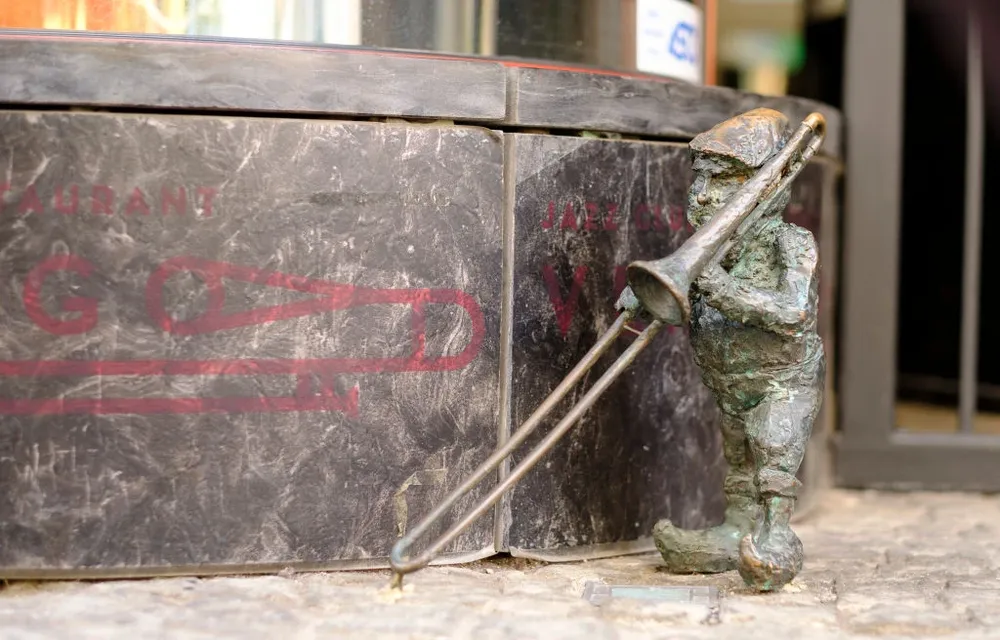
However, the dramatic memorial story of Wroclaw gives these amusing sculptures another meaning. They, as it were, replace the missing, disappeared monuments (probably not only German, but also communist) -
They parody them with their dwarf dimensions and carnival grimaces, and thereby knocking down a degree of monumental propaganda.
They remind everyone that the monuments are important, but still convention, that they arise and disappear, move and rethink, change along with the lives of people. Let us not forget that some proud idol, set on the power of those in power, is just a particularly expensive dwarf excreation. And then it will be possible to live in a love with him.
Sergey Zenkin
The author was not a tourist in Vroclav, but a member of the conference “Iconocracy: past and current issues”, which invited to observe visual images and ups and downs of their fate.