
Translated material
There is help
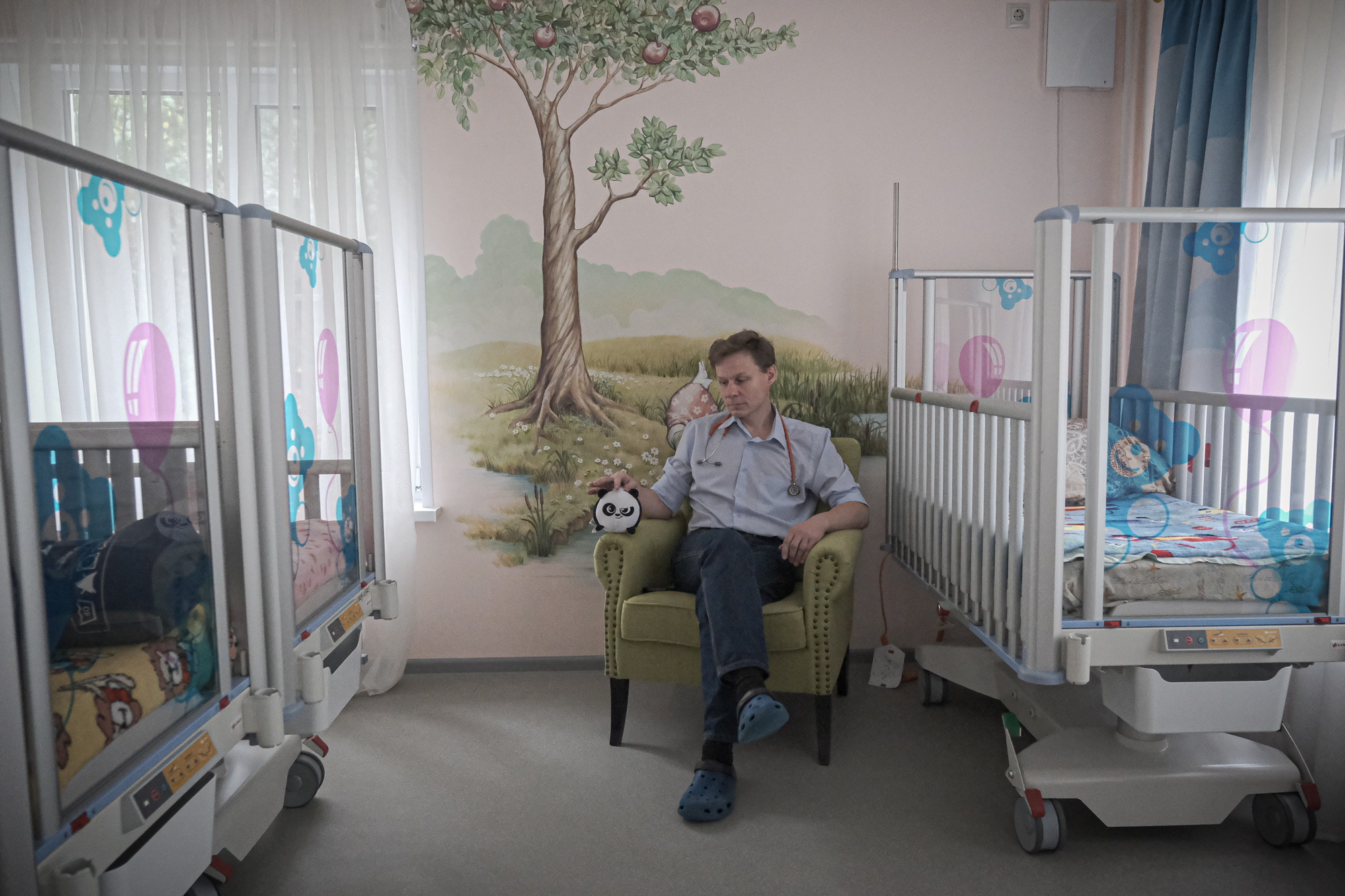
In 2019, the first Moscow children's hospice appeared in Moscow. He became the third full -fledged children's palliative department, which provides assistance to terminally sick children and their families around the clock and free of charge - not only from the capital, but also from all regions of the Russian Federation. Previously, parents of palliative children, having been in Moscow without registration and without help, did not know what to do. But now - thanks to the Hospice - everything is different
Yuri Viktorovich Sukhanov, chief physician of the First Moscow Children's Hospice, remembers almost every patient history. At the beginning of the tour of the new repaired family wards, he leads us to a cork board in the recreation area, where parents and nurses after a sleepless night can take a breath. Here, next to the soft sofas, a bright hissing kettle and a mountain of fresh summer August apples, multi -colored paper balloons are visible on the sand ribbed background, each with a name. Here is David L., here Anya S., Alexey S., Ilona I., Nina D. The nurses came up with this - in memory of everyone who left under their care, they hang a new immortal ball.
Everything is not like in children's hospitals: you can live with animals, walk around the yard right on the beds, eat and sleep when you want, and not on schedule. Here you can eat kinders and not remove your favorite toys from the ward floor, you can watch cartoons - at least all day, listen to your favorite music. On each door in the ward there is a sign with the hero of the cartoon and the name of the child.
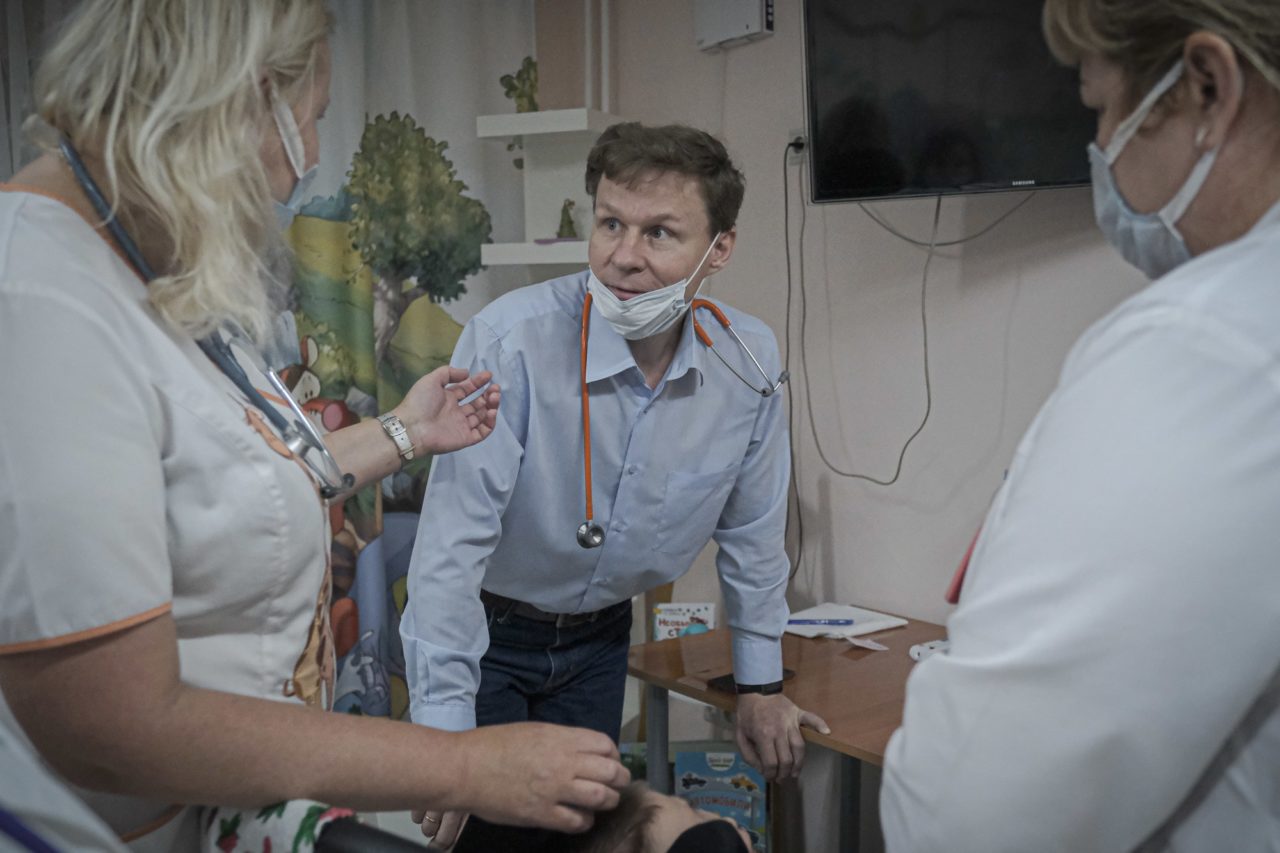 Yuri Viktorovich with other doctors while bypassing patients in the hospice photo: Julia Skorobogatova for TD
Here we go to visit Ksenia blonde, she is all in pillows and toys, nearby white thin tubes of devices that help her breathe. Ksyusha smiles when Yuri Viktorovich leans over to the bed with her nose on her hand, she is already used to such attention, but every time she rejoices at the roundwell, meets her beloved head physician with a white -toothed smile.
Outside the door with a sign “Knight” and the yellow smiling Winnie the young dad Sasha brews late morning coffee. Yuri Viktorovich nods sympathetically.
-What time did you go to bed today?
- At eight. - Colin dad smiles, straightening the edge of a knitted blanket on the bed of his son.
- At eight in the morning?
- He had a pulse for a hundred, I was scared. The girls did not pull, he himself could not sleep from the nervous. By morning it normalized, we and we fell asleep and fell asleep and fell asleep. Now we have breakfast and go for a walk.
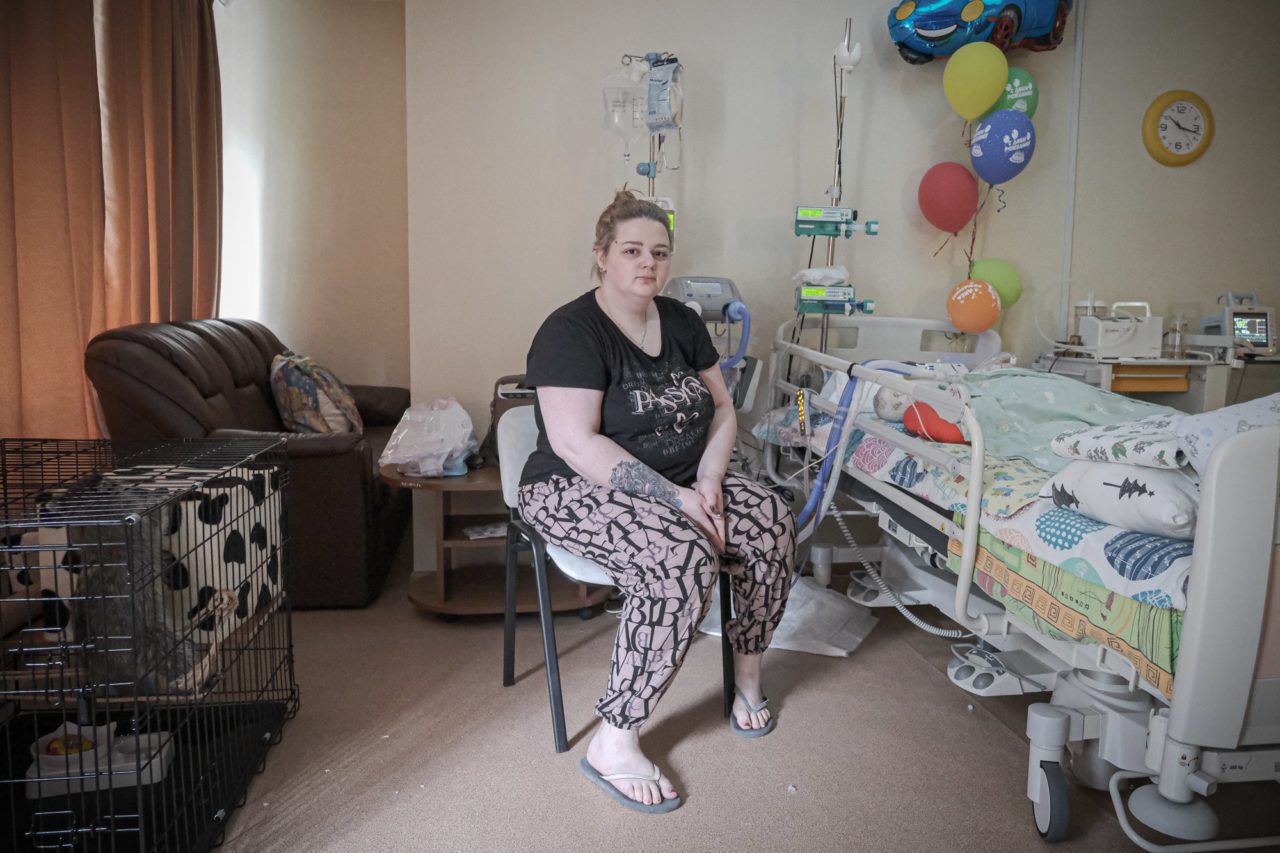 Galina in the Hospice Chamber Photo: Julia Skorobogatova for TD
In the ward, the bone of Kostya lives by the raccoon Yosya - it is occasionally released from the cage and closely monitored movements: they are afraid that the osci will tear the bone of the Ivl apparatus. Kostya lies motionless, on the fingers - a device for measuring saturation. He was invented to put a projector in his mind - so Kostya looks at cartoons directly from the ceiling. Costum is difficult to take to the street: too many devices should be next to him, but raise the raccoon in his hands over his face to please his son with a familiar beloved beast, is not forbidden here. “Here I started to get enough sleep,” says Kostya Galya's mother. - It is necessary to monitor all indicators, sometimes oxygen falls out of the blue, but nurses are on duty at night - they make their way on tiptoe, look at the monitors. I can rest, do not twitch every half an hour. "
In the hospice, life is everywhere. Somewhere quietly-the kids dozing after dinner, a cheerful girlish laugh comes from somewhere: “Mom, mother, luntika show!” There are completely different children, someone can move himself and eat, someone lies motionless-and he needs continuous assistance of devices and nurses. Moscow, Vladimir, Smolensk, Crimea - they come from everywhere to get help at the end of their life. And get it.
Go say goodbye
“Go to say goodbye” - Different doctors repeated this phrase Susanne for six months. But David, her small strong first -born, did not give up and did not leave. The monitor connected to it for a very long time did not publish the last, terrible, long beep - a messenger of heart arrest. And when he published - Susanna was nearby. She prayed.
David’s heart disease and atresia of the esophagus were found on the first screening, during pregnancy - the child will be born without a stomach and will have a disability, parents were immediately told the truth. He appeared in the 31st week, premature and without stomach, other organs were underdeveloped. It was necessary to decide what to do. David was put in boxing - try to save life.
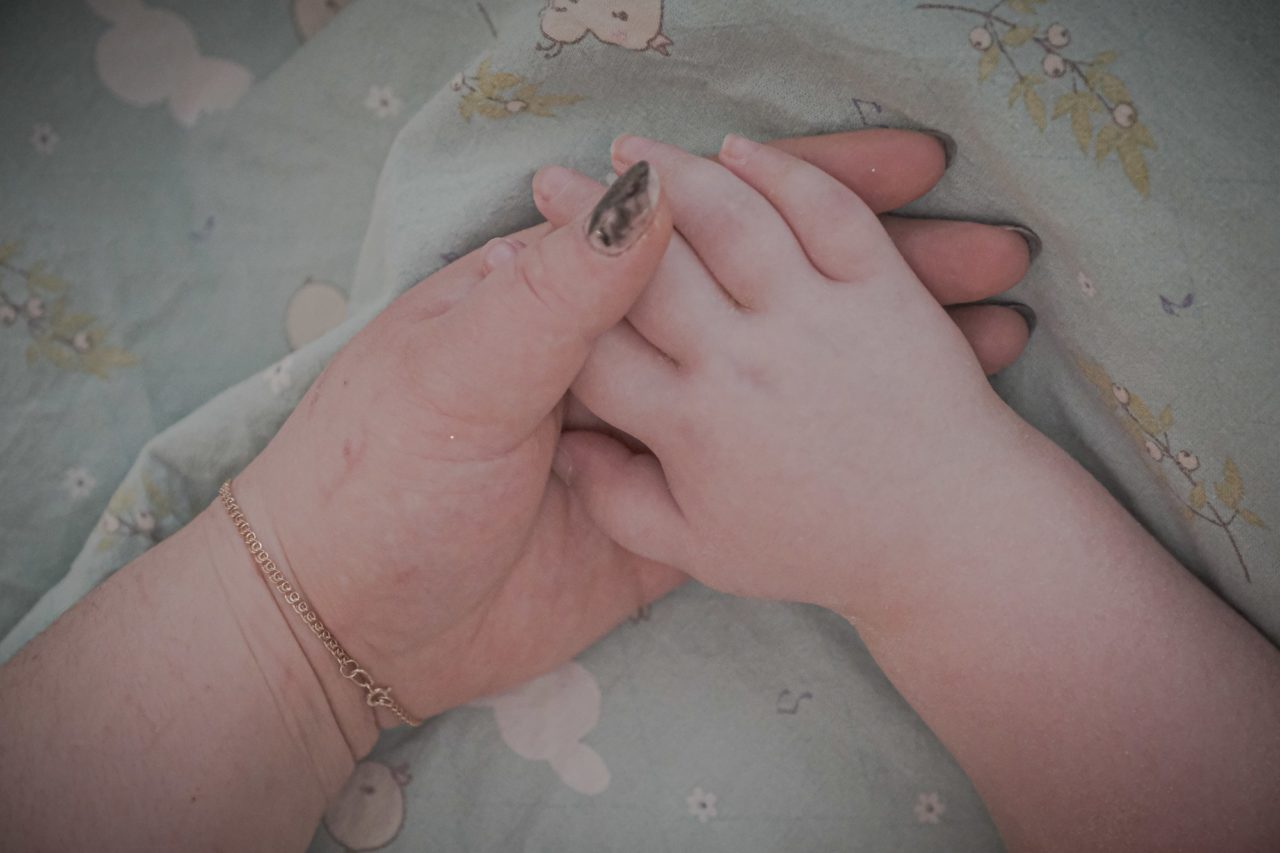 Galina with bones photo: Julia Skorobogatova for TD
 In his native Crimea, Susanne was said: "We are not assistants to you, look for doctors on the mainland." She had to move to Moscow at her own peril and risk: there was no certainty that they could help the Crimean child without registration in the capital. But under the guardianship, they were nevertheless accepted by the children's center. Kulakova. There, David transferred his first and last seven operations: they tried to blind the stomach, first from the gut, then from the esophagus, mechanically stretching it. When it was finally made a semblance of the stomach, David formed an inner fistula - an unhealthy purulent canal connecting a new stomach and lungs. This meant that due to postoperative complications, David could neither breathe nor eat.
“He was placed by the tracheostom, connected to the IVL apparatus, but, of course, everything was inflamed inside, deterioration went. A few days later he fell into a coma. All the nurses said to me: “Well, the hour will still live, well, go, look - maybe the last time you will see him alive.” I came to the ward, looked at him, stroked him. He fought as he could for this life. I said goodbye, but his heart did not stop, ”Susanna cries.
Slimmed
They could not keep David on apparatuses in the capital's hospital for a long time: expensive and ineffective. They wrote out in the palliative department, the resources of therapeutic and surgical assistance were exhausted. “He will not come out of a coma, will not begin to talk with you, will not see you and, most likely, will not hear you,” they finished off Susanna, giving her out extracts. Everything was like in a fog, from which it came mercilessly deaf "he will die, die, die."
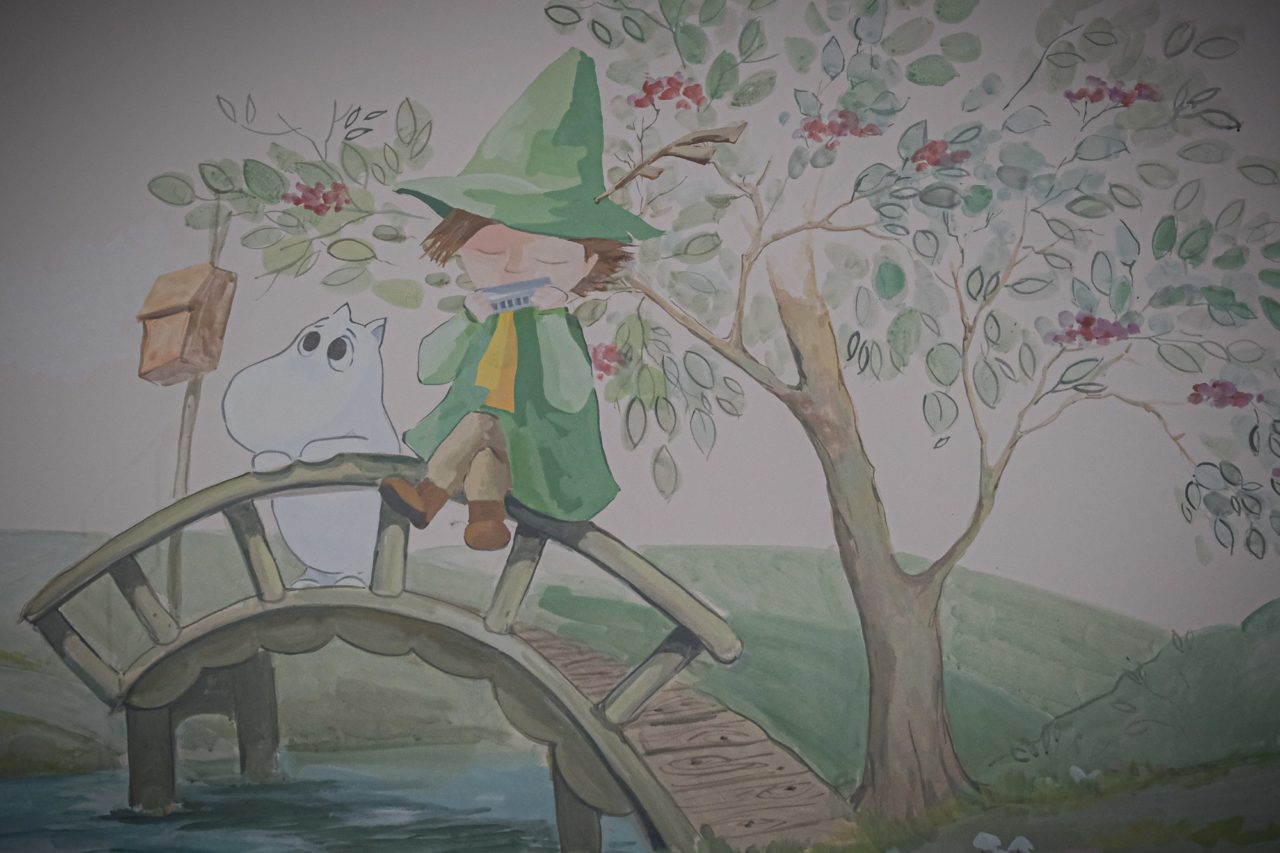 The walls in the hospice were painted by volunteers photo: Julia Skorobogatova for TD
She recalls them with David for the first day in the first Moscow children's hospice. Instead of a cold, unsociable chamber - a beautiful room with a comfortable bed and pillows for David, so that the small body is comfortable lying. Nurses bring a chair - so the back will not hurt from the long hours of sitting at the bed of their son. They have a separate ward, light and sunny, wallpaper on the walls, bright bedding and cozy curtains - all at home, you can even ventilate. David is washed, treated in the hospital bleeding undergraduates, and everyone around is kind to them.
“I did not know what happens, because we were very tightened. In the hospital, everything was banned, every extra step. Cold chambers, cold people, not a single children's thing - tubes and monitors. And here Vinnie the Pooh smiled from each wall, it became at least a little, but easier ... "
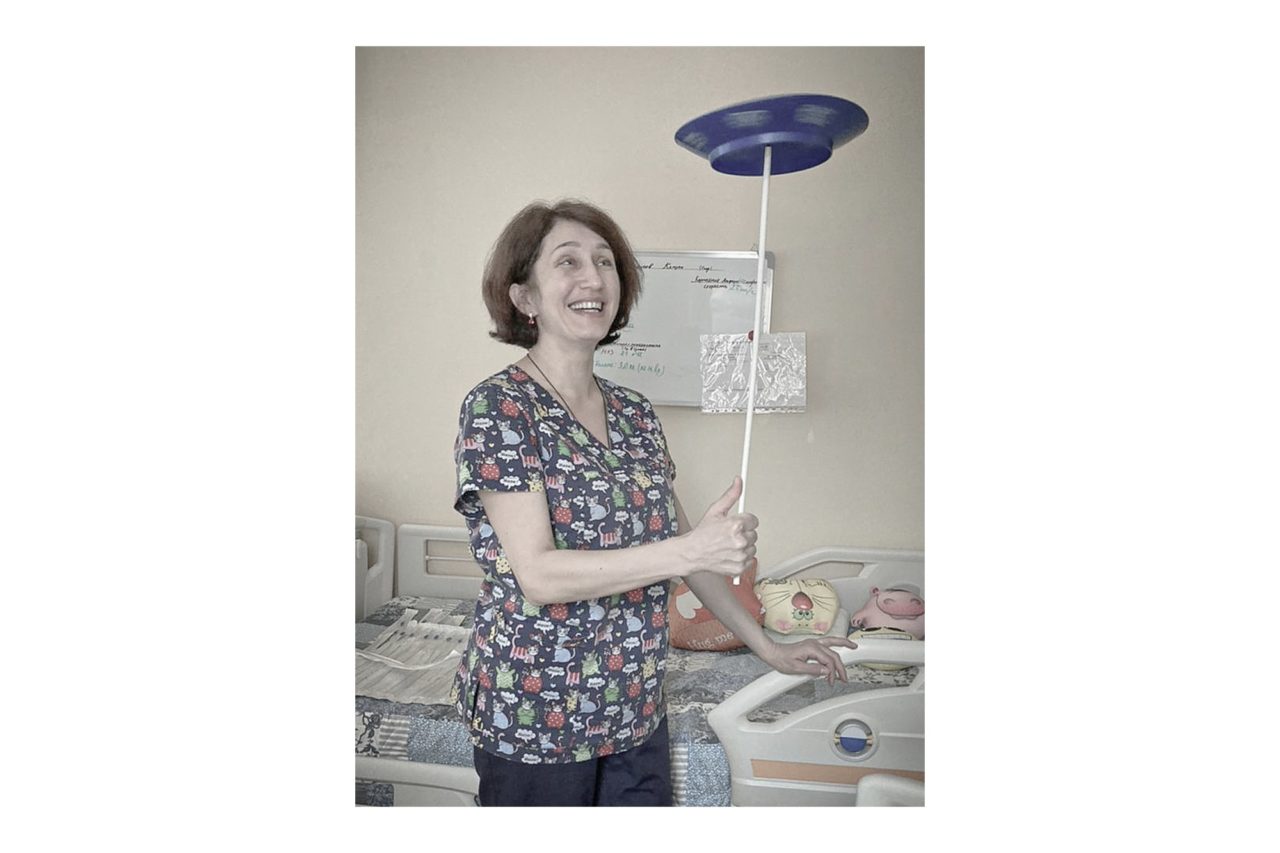 Susanna while in the hospice photo: from the archive
David lived up to a year and a half. In the hospice, they coped even with the consequences that fall into the lungs from the stomach through the fistula of bile. The nurses came to David’s bed every hour, followed his movements, made a light massage and gave Susanne a rest - there was time to communicate with a hospice psychologist who helped to accept what was happening. Susanna is sure: her son was treated humanly here, his face tone leveled out, diaper rash and wet wounds disappeared, he looked like a healthy little boy, only as if sleeping. All the time sleeping. In the hospice, she was assured: David hears you. Susanna began to read prayers to him and sing.
David went away at the end of May, without regaining consciousness. Without pain, under the song whisper of mom, in the smell of blooming May trees stretching from the window.
Go to us
The first Moscow Children's Hospice is the first budgetary institution in the capital, which adopts children from the regions under guardianship. If, according to the results of the profile medical commission, the Department of Health of the capital gives permission to hospitalize, the hospice does not refuse anyone. There are children from Smolensk, Crimea and the Vladimir region, and the places still remain. For parents, the emergence of such an institution was a salvation. Now, without even having the cherished Moscow registration, they can be sure that their child is anesthetized and not left alone: there is a round -the -clock hospital, a free hot line of assistance, there is an exit service that comes at any time, and a resource center through which patients can get equipment and consumables for free. Some parents are separated for a while: one goes to live with the child in a hospital, the other remains in the region at work or on the farm. Kolya from the second floor is now with dad, little Vanya from the neighboring chamber - with his mother. To whom it is more convenient and easier. But in help, even in the distant impregnable capital, now they do not refuse anyone.
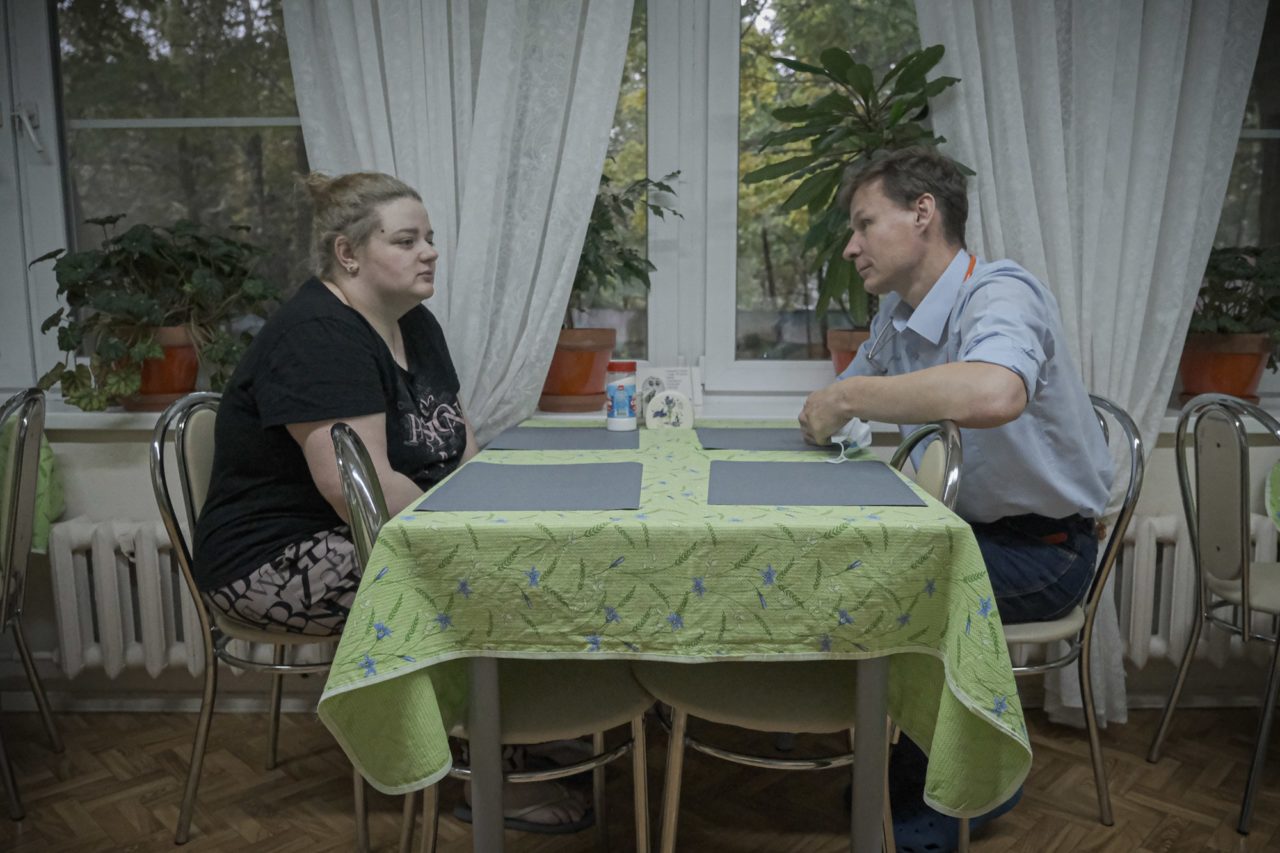 Yuri Viktorovich communicates with Galina photo: Julia Skorobogatova for TD
- Why now such a situation has developed - in the wards a new repair, manually painted by volunteers walls, new equipment, everything is there, but there are no children - we walked, half of the rooms are empty? After all, everything is free, there are conditions, hands.
- ignorance, probably, ignorance. We really have all the possibilities for hospitalization of more kids. There are hands. There are convenient family chambers. In Moscow, palliative assistance to children is provided in several institutions: there is a children's hospice “House with a lighthouse”, two palliative children's departments at hospitals - Morozovskaya and Speransky - and we. The departments at hospitals are overloaded, many seek to get there, because the hospital has more diagnostics, options - you can take tests at least every day. But we also have a lot of things in the hospital. Here, twenty -five children can accommodate with comfort, the chambers are large, new beds, there are recreation areas, TVs, maximum convenience. We have excellent equipment, an ultrasound apparatus, an electroencephalograph, there is even a device for measuring the gas composition of the blood, there is a lot of consumption, in a sufficient number of IVL devices, aspirators and oxygen concentrators. And most importantly - personnel, indifferent, thinking. And we can also provide assistance to children from the regions. This in Moscow is not always and not everywhere available.
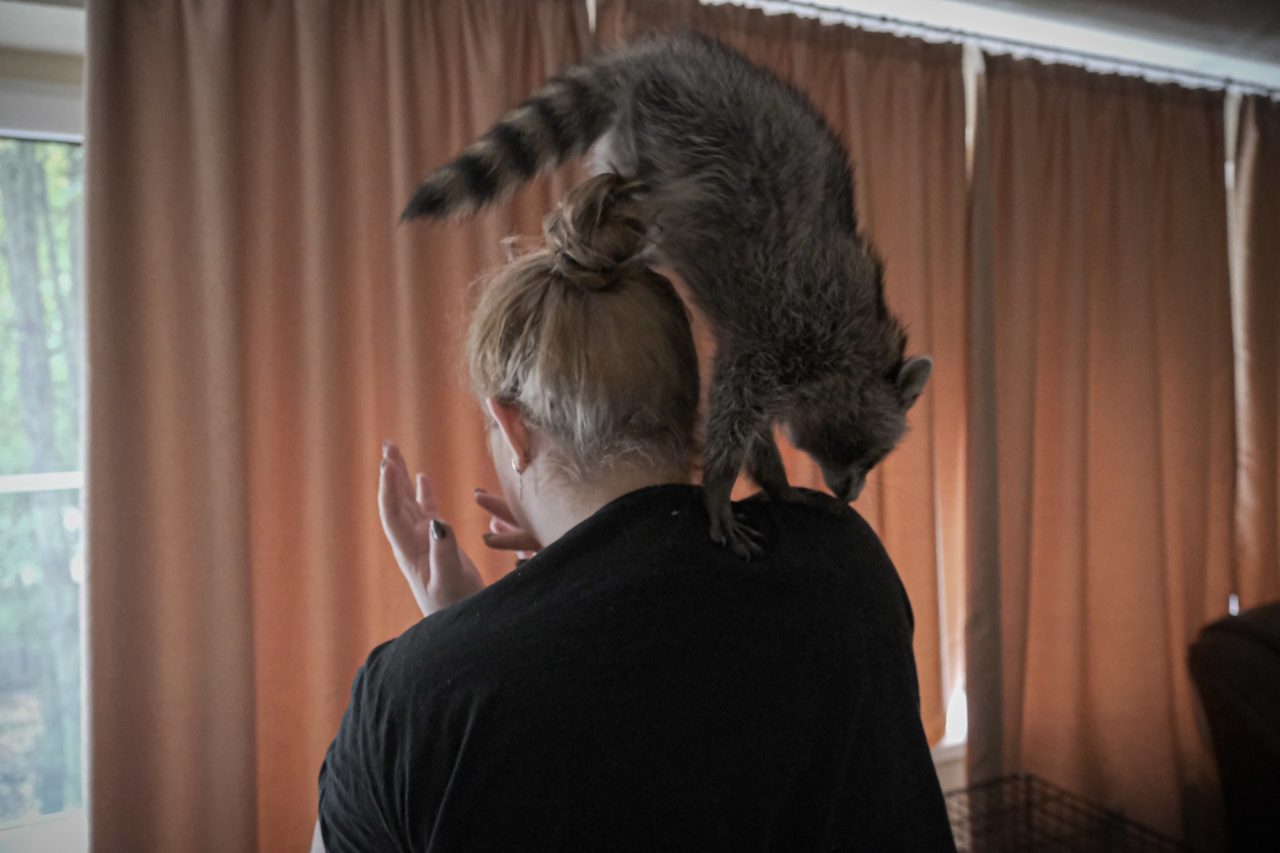 Galina with her pet photo: Julia Skorobogatova for TD
Already better
In one of the distant chambers where we visited, it is somehow especially light. This is a small room with two large windows. Only one bed is busy here, there are no familiar parental things - cans with soluble coffee, cosmetics, charges for a mobile phone and hidden from children's eyes of half -empty cigarettes. Andryusha lies on the bed, his parents immediately, in the hospital, signed a refusal. His head is twice as much as a small body and weighs six kilograms. Andryusha is only a year and a half, he is tiredly sniffing under the sheet with cubs. Andryusha is completely helpless-due to the hydrocephalus that rowed his head to the bed, he cannot move by a millimeter, taking a comfortable pose.
“Doesn't it hurt now?”
“No, he is anesthetized, of course,” Yuri Viktorovich lowers his voice. - When he came to us from the orphanage, he was all in the gorges. Huge wet wounds on the head, around the ears, behind them. To prevent this from happening, the head must be constantly shifted, the pose is changed. But who will do this in the orphanage when there are two hundred other children there? Here, our nurses treat the consequences of his stay there. Now it has already become better.
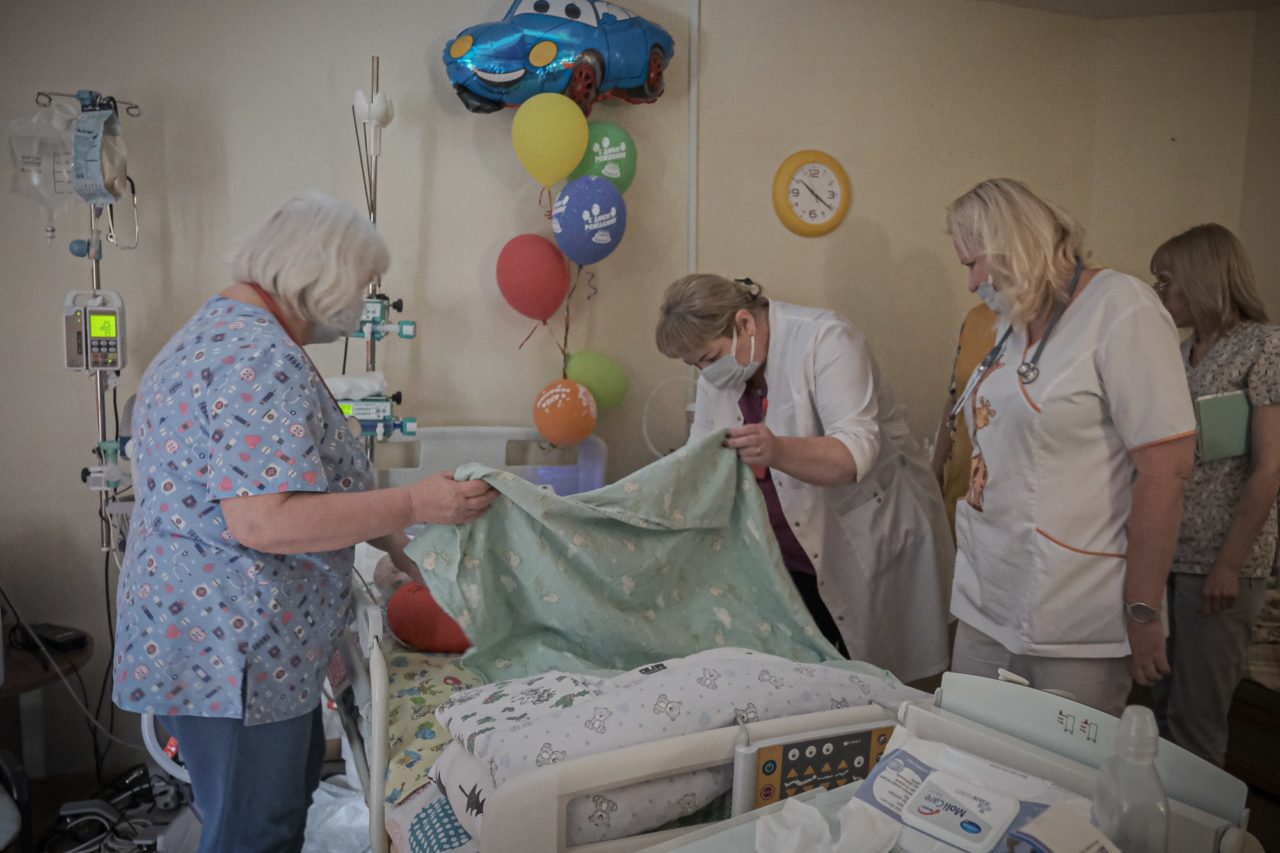 Doctors inspect Kostya while bypass photo: Julia Skorobogatova for TD
It’s scary to imagine what would happen to Andryusha, he stayed in an orphanage. It would be much more. At best, they would be lubricated with cheap treasury green and bashfully covered with sheets during the arrival of checks. It is unlikely that Andryusha would have been turned over, taking care of his convenience during sleep. It is not known who would pick him up anesthetic drugs that would definitely help. Everyone refused him, a small large -headed Andryusha.
And the children's hospice did not refuse.
* * *
Here, in the middle of colorful chambers and mountains of toys, kids often make each their most cherished desire. Hospital clowns and volunteers with multi -colored balls came to Kostya on his birthday - they were tied to the head of the bed so that he looked and rejoice when he wakes up. On the bed of Masha it is allowed to dinner with the hospice cat Polly - from the first day they adore each other and very rarely separated. The famous Russian rapper Morgenstern recently came to Van, who persistently withstood several courses of chemotherapy and brought him fashionable glossy black cars on the control panel.
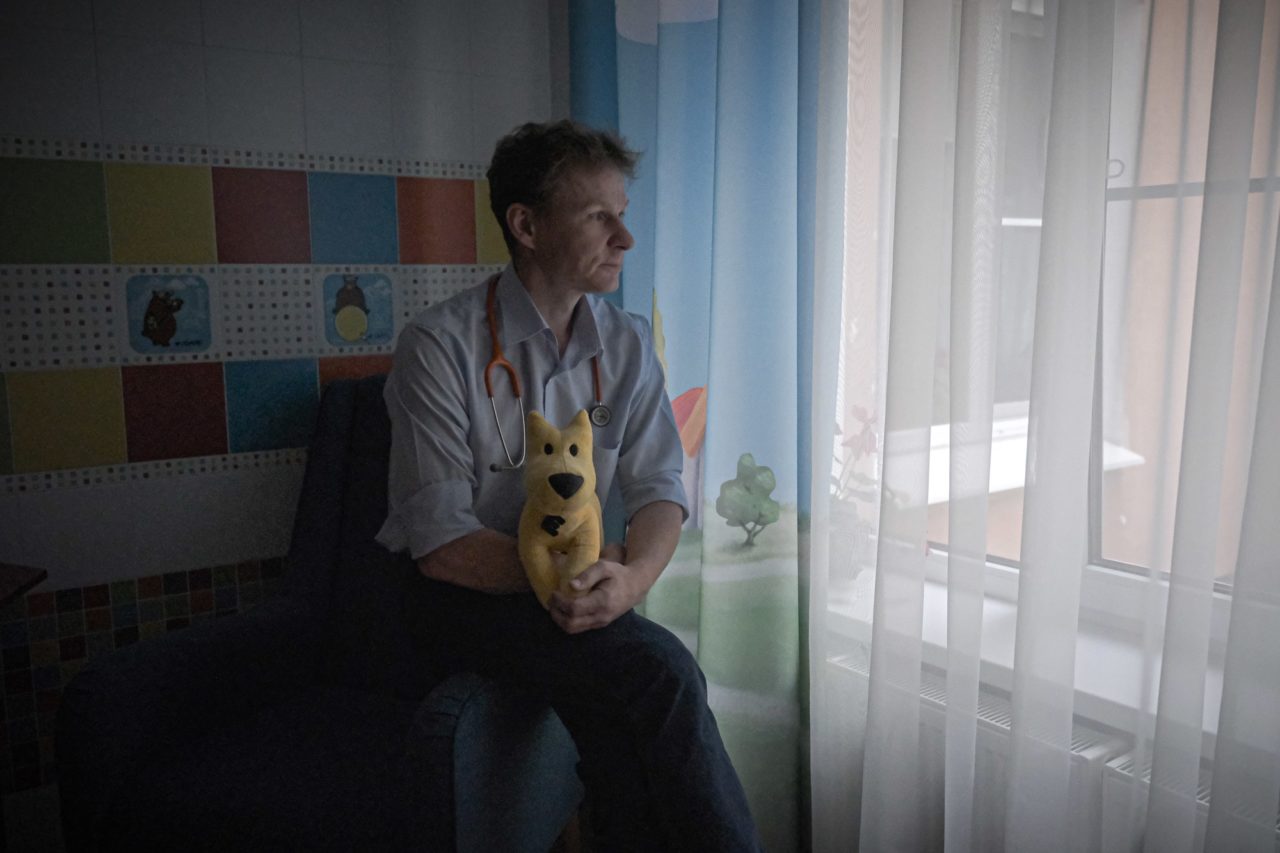 Yuri Viktorovich Photo: Julia Skorobogatova for TD
Here, the volunteers are always happy - additional hands in the hospice are very needed. And also - everyone is waiting for new patients. So that beautiful new chambers are not empty, and families do not remain without help at the end of life.
Because there is help.
If your child needs palliative assistance to the first Moscow children's hospice, you can submit documents through the Coordination Center for Palliative Aid by phone +7 (499) 940-1948, +7 (499) 940-1950 and by e-mail Lifelist@zdrav.mos.ru, 9401948@mos.ru. All palliative assistance is absolutely free for all citizens of the Russian Federation.
Children's hospice