
Translated material
“Pret” the next “Special Way”
The decision of the Constitutional Tribunal of Poland on the supremacy of Polish law calls into question the membership of the European Union of one of the most Euro -optimistic countries of the EU
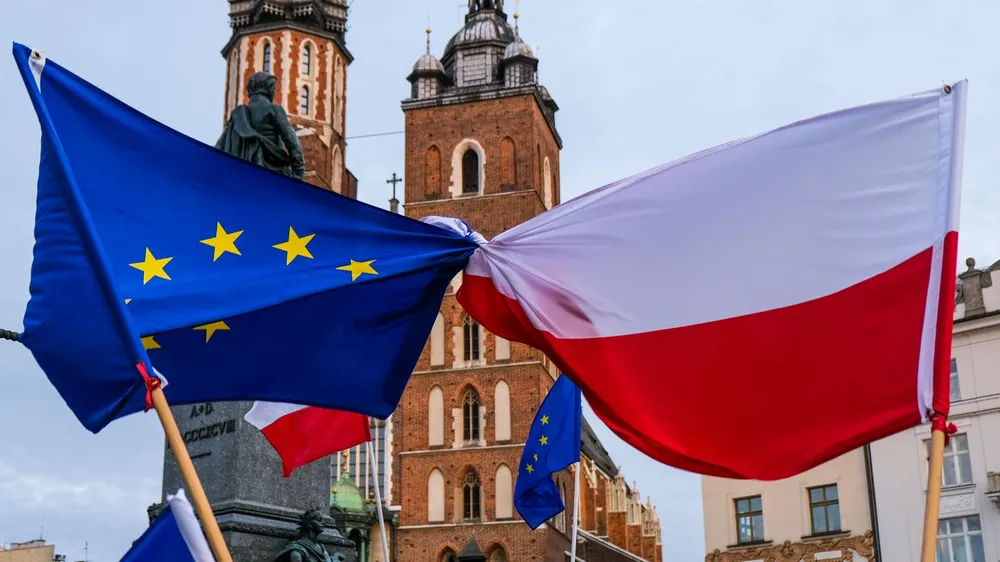
The vast majority of Poles are positively perceived by the European Union. The Kantar survey, carried out by order of TVN, in early October 2021, 65% of respondents evaluate the membership of Poland in the Union as “definitely good” and another 25% - “rather good”. Only 6% of respondents are negative to the EU. This repeats the trend of recent years: despite the migrant and other crises, about 85–90% of Poles stably speak out for membership in the Union.
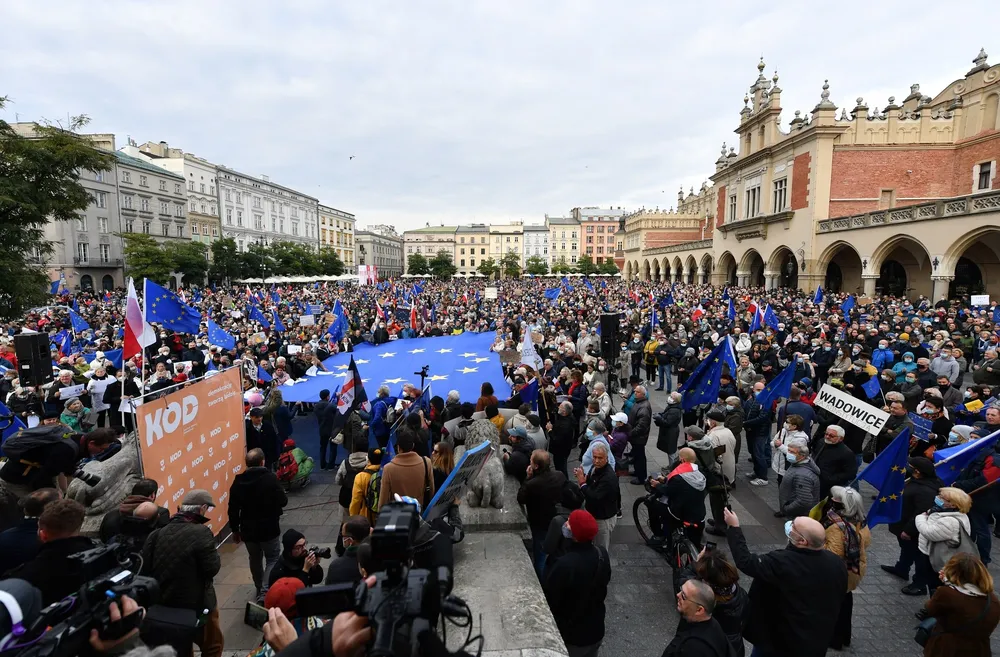
All the more illogical for the outside observer, thousands of demonstrations in support of the preservation of the country's membership in the European Union look. The shares “We stay in the EU” initiated by the opposition took place on October 9-10 in most large cities in Poland. Only in Warsaw on October 10, about 100 thousand people took to the streets.
Part of the answer lies in the actual beginning of the election campaign-2024, which was launched from the moment of returning to Poland in July 2021 of the former head of the European Council and the European People's Party, ex-Prime Minister of Poland Donald Tusk. The politician who headed the “civilian platform” is rejoicing with the deputy prime minister and the head of the “Law and Justice” (PIS) of Yaroslav Kachinsky and his associates: the emphasized prime-European opposition can delay the part of the moderate voters who worry about strengthening the control of power over the judicial system.
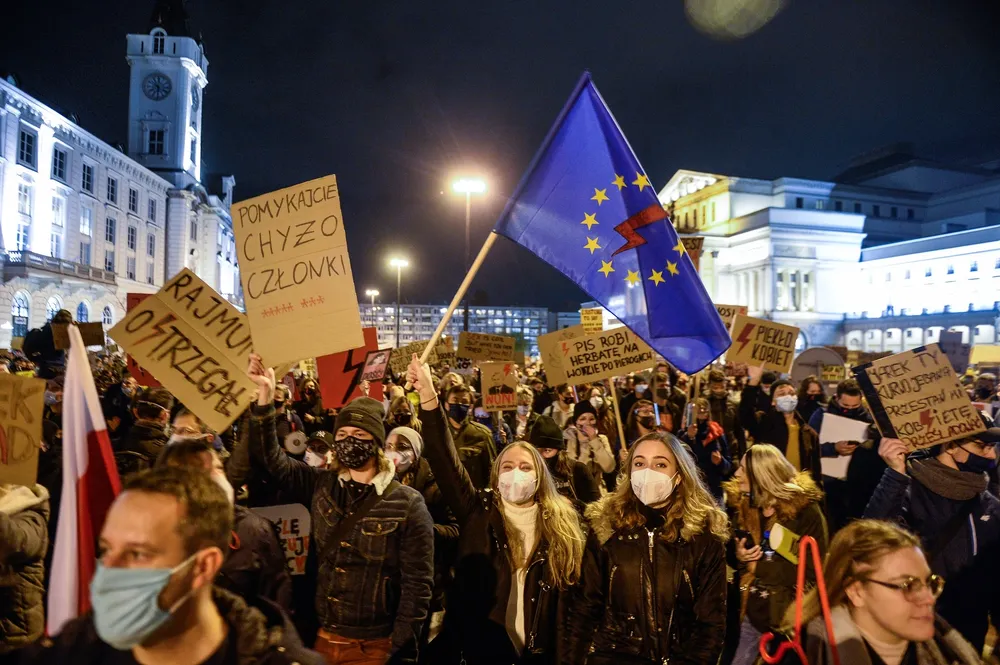
The immediate reason for the current protests was the decision of the constitutional tribunal, from which in 2016 and the appointment of the loyal to the authorities of the judges, friction began between the authorities of Poland and Brussels. On October 7, the tribunal published a decision on the primacy of the provisions of the Poland Constitution over European law, adopted by the votes of 12 out of 14 judges. The court also stated that a number of laws and some EU judicial decisions contradict the Polish Constitution. The tribunal reacted to the request of the Prime Minister of the country Mateusha Moravetsky, who in March 2021 asked if the EU bodies can turn back the reform of the judiciary. At the same time, in March, a decision of the European Union court was published that the procedure for appointing judges in the Supreme Court of Poland (the next step of the reform) may violate European legislation. “Law and Justice” claims that Brussels does not have the right to stop the government in the reform of a morally obsolete judicial system, in which there are many remnants “since the socialist system”. However, in European institutions they remember well that
It was with the “cosmetic” reforms of the judiciary that the kickbacks from democracy in a number of countries began-from neighboring Belarus in 1994 to a member of the EU Hungarian in 2010.
The European Commission harshly responded to the October decision of the Constitutional Tribunal of Poland. “For the first time we see the verdict issued against the contracts [EU],” the European Commissioner for Justice, Didier Reynder, said on October 8. He promised a detailed legal analysis of the decision and emphasized the supremacy of the decisions of European vessels, including the European Tribunal, over Member Courts. At the same time, the commissar emphasized that it is too early to say about the impact and is only a legal dispute. The Chairman of the European Commission Ursula von der Lyain said that she uses all the tools available to her to maintain the supremacy of the EU laws in all countries of the Union, including Poland.
The opposition - both the right -centric “civil coalition” and the party and movement from the left spectrum - saw in the decision of the tribunal the opportunity to declare the initiation of the authorities to withdraw from the European Union. “The current authorities in Poland are anti -European or at least extremely Euro -digital. I have no doubt that the exit from the European Union is part of the strategic thinking of Yaroslav Kachinsky. For many months I have been protecting the Poles before the possibility of Polelexitus, and this is starting to come true, ”Donald Tusk said on October 8 in an interview with TVN.
According to a survey of the Institute of Social and Market Research (IBRIS), about 43% of Poles fears that the Tribunal verdict may cause poison, 45% counts differently.
Moreover, among the first, supporters of the opposition prevail, and among the latter - the current government.
Polish Prime Minister Mateusz Moravetsky called the statement about the possible exit of the country from the European Union to the absurd and Fake News. “We are not discussing whether the Lokhnic monster exists. In the same way, it does not make sense and a certain will do, ”said Moravetsky on October 14 in the Sejm. He also personally attacked Donald Tusk, calling his bloated Eurocentrism the cause of the EU crisis and leaving the Union of Great Britain. “We must admit that Mr. Tusk rushes through life as a hurricane, destroying everything in his path. At first he destroyed the public finances of Poland and fled to Brussels. Then he brought the European Union to the migration crisis and Brexit and ran away again - to Poland. I'm even afraid to think what destruction could expect us now, ”the politician added.
If Moravetsky’s words were designed for an instant PR effect, then the chairman of “Law and Justice”, Deputy Prime Minister Yaroslav Kachinsky has a more reasoned explanation of the actions of his supporters. On September 15, in an interview with the RAR news agency, he called the statement about the possible exit of Poland from the EU "repeatedly used against us fiction of propaganda." “We definitely see the future of Poland in the European Union. [... However,] the Union violates the rule of equal rights of states. There is also a tendency to instrumentalize the EU by its strongest members, in particular, Germany. This is what we must resist. ”
The use of Germany as a symbol of injustice on the part of the European Union is designed not for the Angel Merkel, which is leaving the Chancellor’s post, but on the Pis electorate. With a return to the political scene in July 2021, Donald Tuska revived the accusations of the main political opponents of Yaroslav Kachinsky, forgotten over the past 6 years. During the reign of the Civil Platform in 2008-2015. Her opponents called the leader of the party a political vassal of Germany. In 2005, political technologists PIS launched the phrase “Grandfather from the Wehrmacht” - Santa Dusk Juzef for a long time collaborated with Polish intelligence in occupied Gdansk, was forcibly evicted from the house, but in 1944 for a short time (according to one version, forced, voluntarily) was in the Wehrmacht for four months. All this time, criticizing the European Union, Pis and personally, Yaroslav Kachinsky, emphasize Germany’s desire to “steer the rest of the peoples” - hinting that if the power is in power for a long time, Donald Tusk will present Germany Polish sovereignty in the form of a long -awaited gift.
Despite the fact that the confrontation on the Kachinsky -Tusk line is the main in the current wave of protests, another significant parties of the left spectrum are another significant. After several years of absence in parliament, the left is trying to score political glasses. Negotiations on the entry into the EU, ended with official membership in 2004, Poland led during the reign of Alexander Kvasnevsky, the last significant representative of the "post -communists" in the echelons of power. Therefore, they provided a significant part of the turnout on Donald’s stupid action in defense of Poland's membership in the Union.
The decision of the constitutional tribunal is not the only signal from the Polish authorities about their “special” position in the EU. Representatives of the ruling coalition in certain regions of Poland are experimenting with other ways not to obey the rules accepted by the Union - for example, by creating "zones free from the ideology of LGBT." Unlike Russian law, the Polish local authorities in a number of cities tried to ban any propaganda of LGBT ideology, and not only among minors. This action, which was launched in 2019–2020 in five governors and about 100 cities and regions of Poland, was declining only in September 2021 go, when the European Commission threatened to stop financial assistance as part of the regional development program of React-EU in the amount of 126 million euros per year. As a result, the regional parliaments of four of the five voivoders (the largest territorial units of Poland) canceled the “zones”, but the Minister of Justice Zbignnev Zyobrov called their actions a forced response to “blackmail” by the EU.
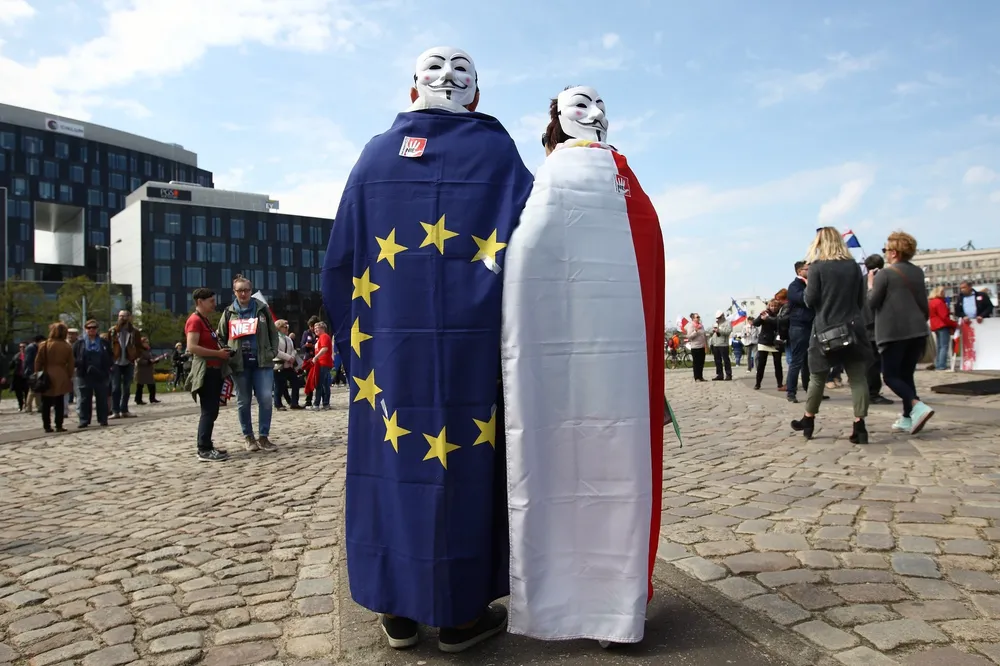
Investments in the European Union, on which Poland still depends strongly, can be the main restraining factor in the implementation of more and more bold plans for the implementation of the "Special Polish Way". The success of “Law and Justice” largely depends on subsidies from Brussels. The ruling coalition generously gives out benefits. So, since 2016, each family has the right to receive 500 zlotys (about 110 euros) per month for each child’s age, and pensioners have the right to the “thirteenth” pension once a year. In 2021, the government announced the launch of the Polish Lad program, in which families with two or more children will be able to get significant benefits in the construction of apartments and houses with an area of up to 75 square meters. m, the annual quota of income taxes will increase and many tax and social benefits will be provided, primarily to those who make up below the country in the country. For the second and subsequent child aged from a year to three years, each family will be able to receive an additional 2600 euros.
Finance for new social payments will appear only if Brussels approved the Polish plan to restore the economy after the pandemic Covid-19. This plan, which is able to bring an additional 58 billion zlotys to Poland (about 12.7 billion euros) is still considered by the European Commission. The delay in the approval of the document can be a successful pressure tool on the Polish authorities, while its too hasty approval is to de facto send the European Union to finance the anti-bryussel populist rhetoric. The following tranches of other financial assistance to Brussels may be in question, as the European Commission can take advantage of the new rule for the attachment of the allocation of funds to compliance with the rule of law.
The ruling coalition still has a support rating in the region of 35–40%, but this may change in case of loss of financial incentives. If the PIS does not have resources to finance their own promises, the support of the party in society will probably fall significantly. The uncertain status of any sentences of the Polish courts may not appeal to the Poles - it is possible that they will be endlessly challenged in European authorities or can be canceled with the advent of other political forces to power.
Maria Sadovskaya-Koruhkh-
especially for "new",
Warsaw