
Translated material
"Return a particle of dignity"
Germany first agreed to pay pensions to Jews who survived the blockade of Leningrad. But the Russian authorities are still unhappy
In early October, the German government first agreed to pay monthly pensions to Jews who survived the Holocaust. Among them are surviving during the blockade of Leningrad. The long -awaited payments for many are not the initiative of the German authorities, but the result of their negotiations with the commission on Jewish material claims against Germany (Kleims Conference), founded in 1951 by representatives of 23 major international Jewish organizations.
The Russian Foreign Ministry opposed such a gesture of the Federal Republic of Germany and said that he did not accept the separation of blockade by nationality. Why exactly the Jews of the besieged Leningrad will receive pensions from Berlin and as such a decision sought for almost 70 years - in the material of "New".
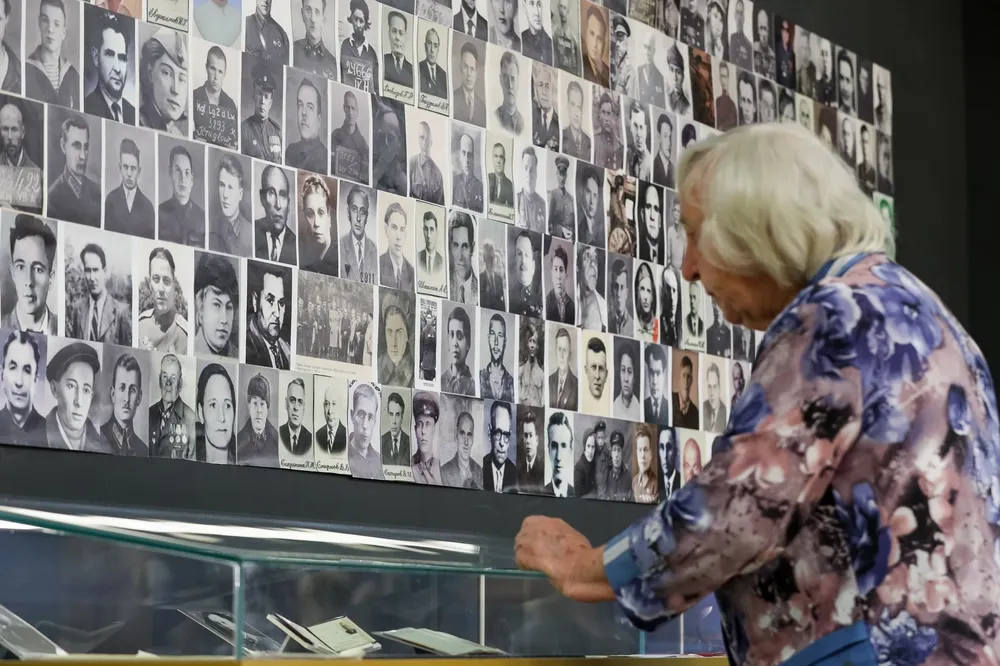
According to new, advanced criteria, Germany pledged to pay 375 euros (about 31 thousand rubles at the current rate) to Jews who survived the Holocaust at several points of the planet every month: these are Jews-residents of the Blockade Leningrad, Jews hiding in France during the war, as well as those who were persecuted in Romania due to Jewish origin. Those who spent at least three months have the right to retirement in the indicated territories and still do not receive pensions associated with the Holocaust. According to Kleims, conference, 6,500 Jews around the world can calculate these retirement criteria.
“There is a historical evidence base, the Nazis dumped [in Leningrad] from air leaflets, calling to give out and destroy the Jews and so on,” says Schlomo Gur conference, Sklomo Gur, in a conversation with the “new” vice president.
In the early years after the Second World War, the commission set itself two goals: to achieve individual compensations for those who survived to the Holocaust and return the property stolen from the Jews during the war.
“As a result of negotiations with Kleims, the conference that has been underway since 1952, the German government paid a total of about 90 billion dollars of individual compensation for suffering and losses incurred as a result of persecution by the Nazis,” Gur added.
Since then, the Jewish material lawsuit consistently expands categories for restitution. Earlier, Jews who survived the blockade of Leningrad already received one -time compensation payments. Now, through negotiations with the Federal Republic of Germany, the commission has achieved monthly pensions for them, said the vice president of the organization.
In addition, a lump -sum payment of 2500 euros (more than 206 thousand rubles) from the Holocaust Children fund will receive victims of persecution and war crimes in Leningrad, France and Romania, born no earlier than 1928.
The Blockade Jews also received one-time payments from the Hardship Fund fund and an additional 1,200 euros in connection with the pandemia of coronavirus. Kleims Conference expects that from December 1, 2021 they will receive a similar payment from the Government of Germany.
How pensions will find addressees
Germany will pay compensation to individuals who meet the criteria. As the conference specified in Kleims, pensions rely on all Jews-blockers who are currently living in any country in the world and have previously received one-time compensation.
In the next two to three weeks, the addresses of the Jews who survived the Holocaust will be sent letters with a small questionnaire, which will need to be filled and sent back to the Conference, sealed to the applied envelope. According to Gur, this will be enough to receive a monthly pension. The Vice President of the Commission noted that the addresses and numbers of bank accounts that are at the disposal of Kleims Conference are as accurate and relevant as possible, since they were double-checked before the latest coronavirus payments.
If during this time a person who believes that he meets the requirements, will not receive a letter, he will be able to contact one of the commands of Kleims Conference. The organizations do not disclose the names of the Jews-blockers, who are now laid out pensions, referring to the confidentiality of information.
“The Holocaust survivors live today in 83 countries, and our task is to ensure compensation and social care for the victims, wherever they live, including the countries of the former USSR,” explained Shlomo Gur.
According to President Kleims, the conference of Gideon Taylor, the importance of negotiations with Germany is increasing every year, since the last generation of the survivors is aging and their needs increase.
“Even 75 years after the Holocaust, these symbolic payments provide recognition and return a particle of the dignity of the survivors, taken away from them in their youth,” he said.
The reaction of Russia
Meanwhile, the official representative of the Ministry of Foreign Affairs of the Russian Federation
Maria Zakharova called the "immoral" position of Germany on payments to the Jews who survived the blockade,
And she criticized the leading Echo of Moscow, who supported this decision on the air. Zakharova noted that Russia has repeatedly called on German partners making compensation payments "not to make differences between people who were equally experienced by the horrors of those events."
The words of Zakharova were commented by the press secretary of the Foreign Ministry of the Federal Republic of Germany Christopher Burger. He recalled that at the beginning of 2019, German Foreign Minister Haiko Maas and Russian colleague Sergei Lavrov announced a humanitarian gesture to support the currently living blocks. It was about the allocation of 12 million euros for the modernization of hospitals for war veterans and the creation of a German-Russian meeting center in St. Petersburg.
What does the money go for?
In January 2019, Germany decided to allocate 12 million euros as humanitarian assistance on the occasion of the 75th anniversary of the lifting of the blockade of Leningrad. The publication Deutsche Welle wrote that about 90% of this amount would go to re -equip the St. Petersburg Hospital for War Veterans. In July 2020, German equipment was put in a medical institution worth more than 2 million euros. Michael Zibert, political director of the Department of Eastern Europe, the Caucasus and Central Asia at the German Ministry of Foreign Affairs, clarified that the Giz International Cooperation Society controls the expenses of equipment and controls the expenses of the allocated funds.
Money comes to Russia with tranches.
1.2 million euros of this amount-that is, the remaining 10%-are designed to organize trains to St. Petersburg of young German volunteers who will communicate with blockade, as well as provide them with home. In January 2020, it was reported that the first group of volunteers had already arrived in Russia and began an intensive course of the Russian language, then to communicate with the blockade. The German assistance program is designed until 2024.
In January 2021, Russia called on the Government of Germany to provide humanitarian payments to all Blocades of Leningrad, regardless of their nationality. The Russian Foreign Ministry noted that the supply of medical equipment is a good initiative, but it is intermediate and not withdrawing from the agenda the issue of making payments to all blocks.
The department said that Germany, by agreement with Kleims, conferences provides payments to the blockers of Jewish nationality, although "people of other nationalities who experienced the horrors of the blockade near the Jews, they did not receive any compensation."
“We believe that this does not comply with the principles of justice and equality,” the Russian Foreign Ministry said.
Lavrov, on the other hand, said that Berlin's efforts "do not cancel the glaring injustice."
“The Holocaust is a crime, but what the Germans-fascists did in Leningrad-there was no difference between Jews and Russians, Tatars, Georgians, Armenians, whoever lived there,” the head of the Russian Foreign Ministry added.
Burger emphasized that the financial assistance that Germany provides to the Jews who survived the blockade of Leningrad must be distinguished from other compensations. He also noted that in 1953 the issue of general compensation for military damage was closed, since the USSR authorities abandoned further German reparations.
“Individual payments to the Jews, who became victims of racist's motivated persecution by the National Socialists, should be considered separately,” said Burger.
The Chairman of the Committee on External Relations of St. Petersburg Yevgeny Grigoryev said that the initiative group of those who participated in the creation and opening of the monument to the “candle of memory” in Jerusalem are going to turn to the German government. They, according to Grigoryev, "deeply outraged by the separation of blockade by a national basis."
The Conference notes in the Kleims that new monthly payments will help many who survived the Holocaust get rid of poverty and not make a choice between foods, medicines or rent for housing.
“Every year at the negotiation table, we are working on the identification, recognition and achievement of justice for each survivor and we will continue to do this until at least one survivor remains with us,” Greg Schneider, executive vice president of the commission, said.