
Translated material
Chipped among us
More than a thousand people in Russia sewed a device for reading information under the skin. But the gadget-implants who simplify people and help work are still “invisible” for Russian law
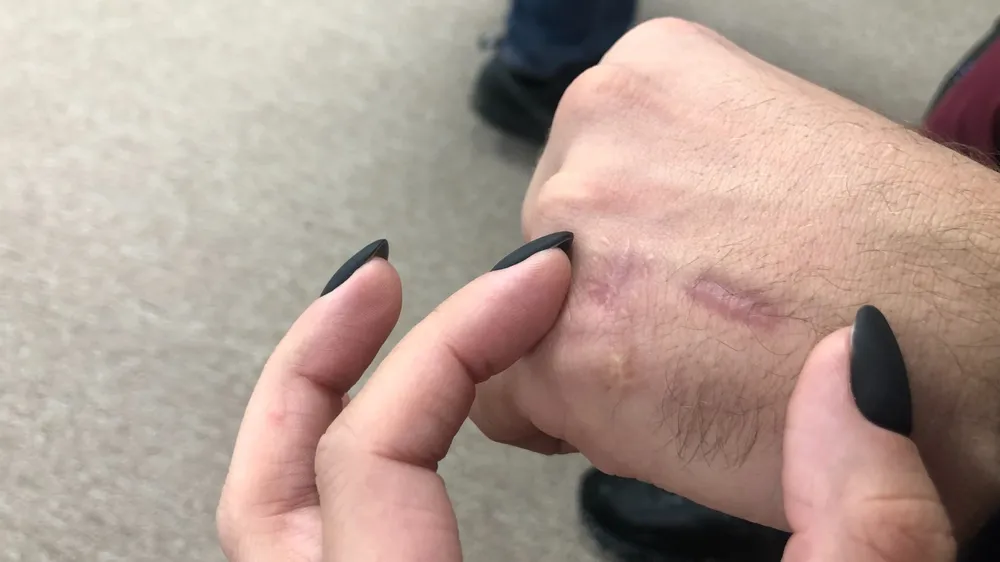
Zhenya Nekrasov is a blind programmer from Vladivostok. He has a pair of small implants in his hand, which work as a cold password storage and the keys to the intercom, there used to be a payment chip. And in this, frankly, there is nothing like that. But in the future, science could partially return his vision. It is only a pity that studies of this kind are very complex and expensive. And besides, from the point of view of the law, all these technologies are “in the gray zone”, and certification and official research will cost expensive and are unlikely to pay off quickly. The "new" talked with people who are engaged in the installation of non -medical and non -amous implants.
Blindness is not a sentence
Evgeny Nekrasov is a graduate of the Far Eastern Federal University (direction - “Software Engineering”), undergraduate of the University of Information Technologies, Mechanics and Optics (St. Petersburg State University). In childhood, near the school, he picked up an unexploded shell out of curiosity (in Vladivostok in 1992 the main arsenal of the region exploded, about 100 thousand citizens were evacuated then, ammunition within the city was still not uncommon). Now the guy has almost no vision (only a reflector), there is no sense of smell, hearing is partially reduced due to the lack of drum memos, the right brush is lost along the wrist joint inclusive, the left is badly damaged.
After the injury, in 2013, Eugene entered a regular boarding school for children with a 3-4th-type vision in Artem with a regular school. In teaching such children there are their own characteristics, some of the subjects can generally be removed from the program. It is allowed to cut the same programming, leave only “wrecking”, that is, studying the Word program.
The guys, as a rule, pass the final exam and even without the exam enters the Kursk Musical College-boarding school or for masseurs in Krasnoyarsk. But Nekrasov went the other way and continued to study with zeal, although there were problems with mathematics, for example, there is no audiobook in algebra and geometry. “The first steps” in computer science was led under the guidance of a school teacher, also blind. He entered the university according to the quota, but he would have passed by the exam (would be the third “in the general list”) - in total he had 234 points for three subjects: 91 points in mathematics, 89 - in the Russian language and 54 in computer science.
- In the computer science exam, I came across pictures. It was not very cool, ”Zhenya laughs. It uses the computer using Screen Reader screen access programs - “screen reader”. The program reads everything that is in text format, in an accelerated version. But the picture cannot be seen in any way.
For the second year, Zhenya has been leading the Google community at the university, gives a lecture for students, knows many programming languages. It has been engaged in commercial development for six years, five of them-DevOPS Engineering, and has been working in SPARKLINGTIDE since August.
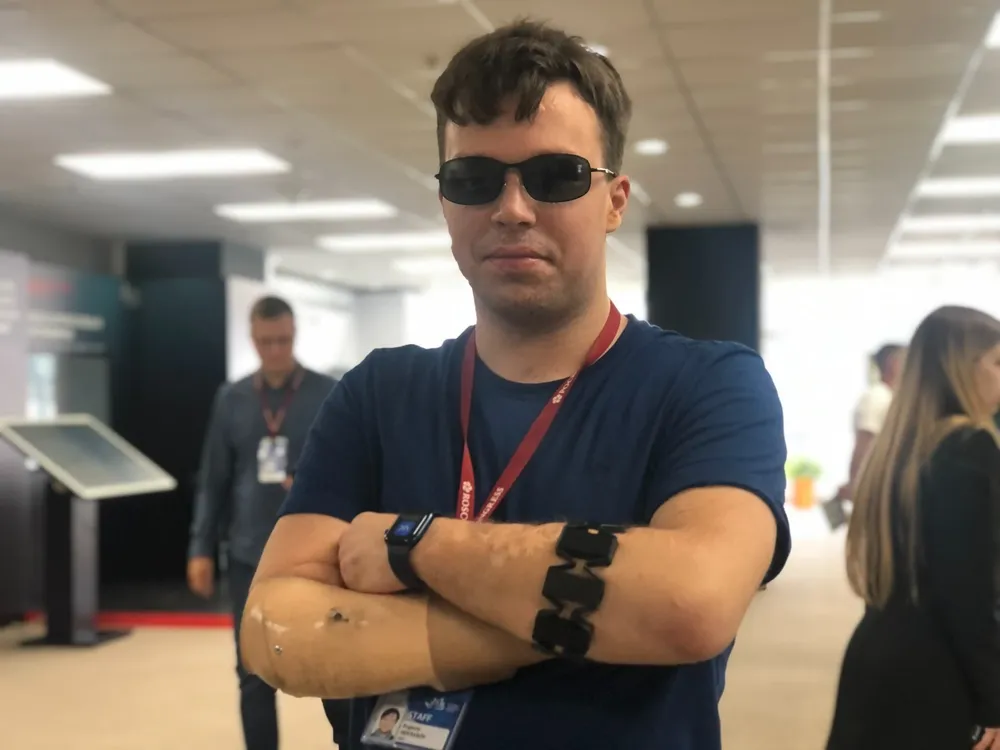
When I got a job, many companies, having learned that the future employee is blind, simply refused to take it even after perfectly passed tests (or even without explanation). But in the new IT agency, they just looked at the professional level. Not everyone knows that the new employee does not even know, the team lives in different cities, or even countries, and works on the remotes. By the way, Zhenya does not suffer from the difference in time zones, sleeps for 2-4 hours a day - apparently, also the consequences of injury.
- My studies at the university were aimed at creating affordable interfaces for people with disabilities and not only. Focused on them, as this applies to myself. He defended his diploma on this topic: "Creation of a prototype of a program system for the development of available web interfaces for people with disabilities."
Simply put, this is a program that checks the developer for errors and throws slippers at it or tells him that everything is fine.
But what this program does, which any other existing in the market does not, - deduces a visual representation of how a person, using assistant technologies, interacts with what the developer created. The program shows the developer how I behave on the Internet. After all, let's say I do not use the mouse - only the keyboard. To do this, have links, buttons, navigation areas. My program is based on this. But how she works is not visible, only heard, we must understand and represent this. I just made a visualization of how a person with visual impairment works.
On the right hand of Zhenya is a special bracelet that reads impulses when he tries to move the absent brush. With the help of a special program, this device Zhenya can, for example, turn over slides or manage data on a monitor.
Chips - simple and complex
In 2017, when Eugene was acting, he still did not have chips, only his hand prosthesis. In 2019, the programmer Vlad Zaitsev came to Vladivostok. He told young colleagues about implants. In March of the same year, on Hakaton, the guys discussed how to change the legislation in order to introduce, for example, on the island of Russian (there is a technopark) legal status, which would make innovation products through invasive fastening, implantation.
“Then I realized that I want an implant,” says Nekrasov. - I walked for four days, and Vlad put it to me. I implanted the second implant in December 2019. I have two marks in my hand now. They have a small amount of memory that I use as a cold password storage. So, purely for verification and interest, because this mark can be encrypted. Plus, it has its own unique number, which allows you to use it as an electronic keys: for example, from the intercom (this version of the tag works at a frequency of 125 kHz) or, for example, as a hotel card (there is a common system in which the number is recorded and it is set by Time-to-Live).
In addition, on December 27 last year, I set myself an implant of a bank card (5 cm long and 1 cm wide): now I have one scar parallel to the knuckles for installation and the second for extraction. Payment type implant is made of hours, soldered; The guys made him in Moscow, drove him here. They put it here, and I was calculated with my hand in stores. If I saw, I would tell how people reacted. There was a moment: I went into the DSU dining room, I calculate.
The cashier asks where I have a card. I say, in the hand "sewn up". “Yes,” he is surprised, “really?” Do not lose? "
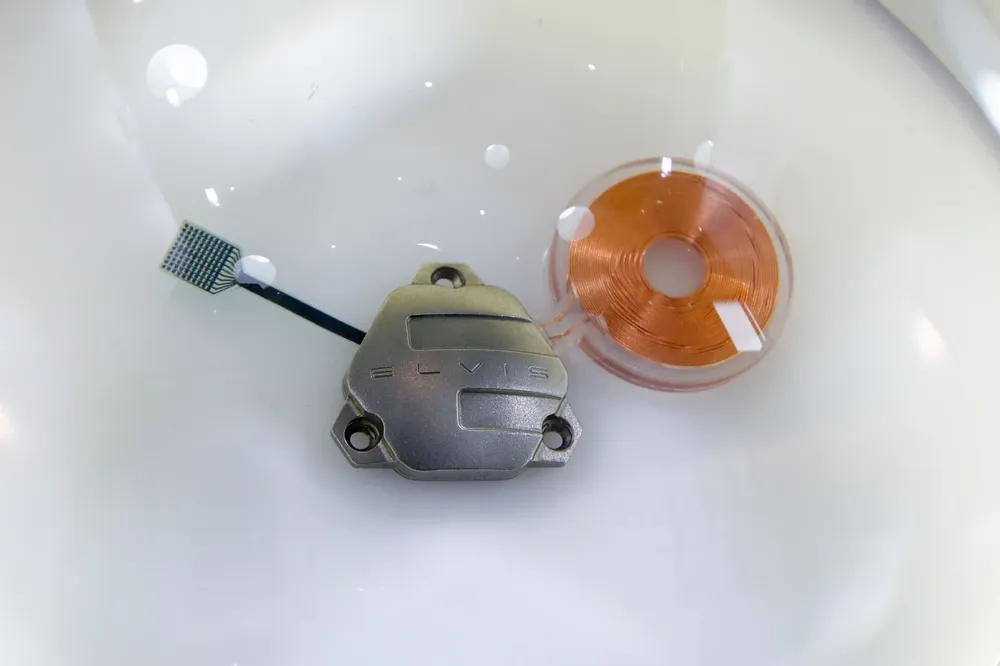
True, they cut the card to me: apparently, the implant shell burst. Blood got there, the oxidation of the board went, this caused reactive edema. It hurt me. Two marks were placed without anesthesia: they simply put their hand on the table, pressed the elbow, inserted the injector, introduced an implant and withdrew the injector. You can implant any chips as you like, but you need to look at the dimensions. If the implant is more than a five -ruble coin, problems are possible. There should be holes in large ones so that the tissues can grow together and provide itself with oxygen, otherwise the risk of necrosis is great.
But the main thing is that Eugene and his colleagues also talked about this at the Eastern Economic Forum - such technologies can become a new type of digital economy, provide disabled people with socialization and integration into society. Including the development of prostheses. Suppose a prosthesis of the hand of Zhenya costs 1.5 million, and he has no functionality - he broke.
- Of course, they ask me questions about vision. In the first courses, we raised with Bogdan Bogdan Shcheglov the theme of creating an autonomous personified device of the retina. 20 million rubles were required only for research to check whether our theoretical model would work. In 2018, they flew to Skolkovo, presented this project there and received a comment by Gleb Andreyevich Turichin, rector of the Marine Technical University engaged in optical devices. He said yes, it really is possible. Olga Valerievna Velichko, doctor, head of the Center for Laser Technologies, confirmed: now there are devices that allow this to do this. But it costs tremendous money. And just in the conditions of capitalism, this may be unprofitable.
Matrix on the tongue
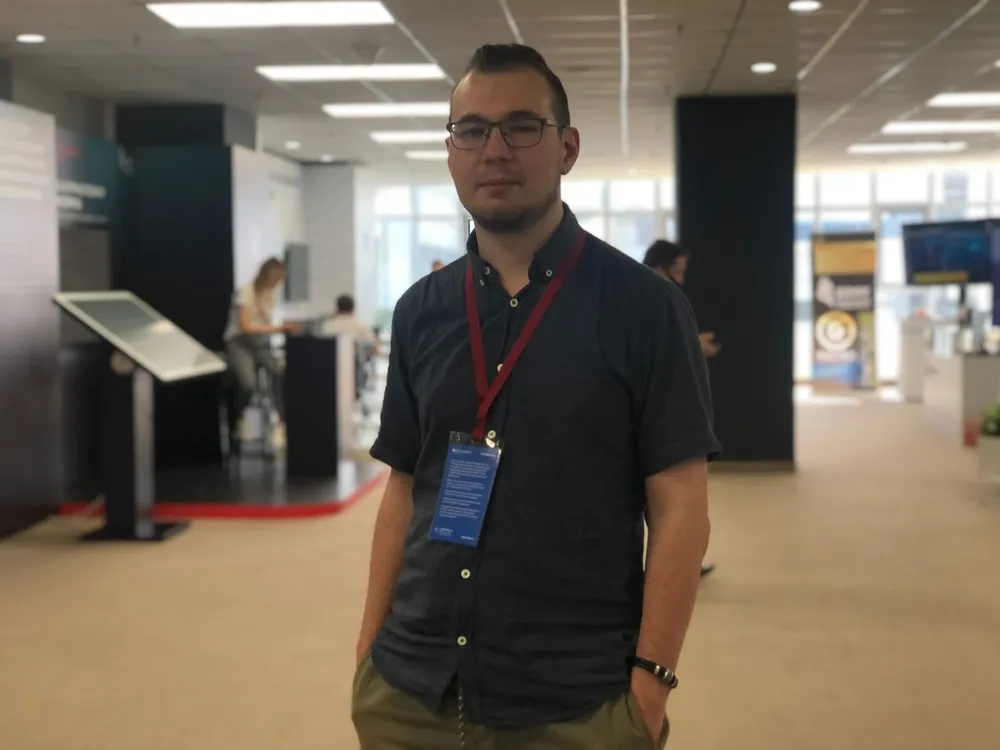
“One, two, three ...” says the chips in his body Vladislav Zaitsev. He is an engineer, a system architect.
About ten years ago, Vlad stumbled on the Internet on the "pioneer" - American Amal Graufstra. He first suggested implanting “animals” of chips at first, then developed more suitable ones. Prices for implants were then high, and the Russian thought had the idea to do something of his own. Let also not very cheap, but with a large set of functions.
- Having moved to Moscow, I met with Maxim Yampolsky. He is a body-modifier, creates jewelry from silicone under the skin. We have developed a series of implants from bank cards. You take a map, remove a chip out of it, wound a new antenna. All this is poured with a biocompatible silicone and placed under the skin. There are also small glass chips ( capsules of 2 x 12 mm. - V.F. ) - I have two, they are sealed, it is difficult to break inside. They are placed with a large syringe and are needed, for example, to store information or open the doors. There is still any exotic such as implantable thermometers, cryptographic pieces, storage facilities.
We also want to work on the interface "Man - Computer". I will explain. There were scientists in America who rehabilitated the blind, placing an electrodes matrix on the tongue. A signal from the cable was given to it, and after some time they began not only to feel pinching in the tongue, but to see. It doesn’t matter to the brain where the signal is from, it can overcome. This, of course, will not be a full -fledged replacement of vision, but a pretty good rehabilitation, because the 16x16 pixel matrix already allows you to see a dark column or a person in front of you. This is a serious step forward if a person does not see at all.
So the brain can be taught a lot. For example, we set up experiments with magnets. They put a magnet in my finger. At first I took up the handrail on the bus, the finger was magnifying - at first I felt it, then I thought: so, probably, this metal pipe. A month later, I take the handrail, and the idea arises in my head: "So, and the handrail is not magnetic, but yesterday there was magnetic." And then I think of that the brain itself began to understand - magnetic or not, bypassing the sensation of a finger. At the subconscious level. A new sense of magnetic field appeared - not through a long chain. But magnetic fields exist in many objects. Thanks to this effect of neuroplasticity, you can on some area of the skin, which is not particularly used in real life, to display the electrodes matrix, and, for example, send the text of the SSEMES. In fact, I will read it with skin, continuing to walk along the street - no need to get the phone for this. And on the contrary: straining my muscles, I can write an answer with an alphabet of Morse. It is easy to do this, the brain will learn. And this is the first step to the full -fledged interface "Man - Machine".
Tag, but not a beast
With the help of chips sewn in his hand, Vladislav could pay in stores (however, the bank has not been withdrawn at the bank, so now the “device” does not work; the next “payment implant” the engineer wants to make a relief and score a tattoo). The old version of the chip would have to be displayed when the bank card expires, but the new ones are almost eternal - they are made on the basis of Swatch Pay, which releases a watch with a payment module. He can also “be one left” can open the doors to work. Moreover, the "keys" can be reprogrammed without taking out. Also, he says, electronic documents can be placed in implants. A passport that is always with you, driver’s license, medical book ...
But to add information to the chip is one thing. But to equip the infrastructure with which at least emergency services will be able to work with these data is another question. Moreover, after all, people in Russia are different, each has their own cockroaches in their heads. Electronic passports - and then it cannot be promoted ...
You can track a person through a chip in the same way as through a regular card. If you do not use it, then you will not do this.
She does not transmit the information on its own. But if you use an ATM or pay in the store, then the electronic trace will remain. Despite this, the word "chipping" in a certain category of people causes almost horror. Well this is the "Tag of the Beast"!
“There is such an opinion,” Zaitsev agrees. - But the developer team and I approached the business responsibly and went to church in Novosibirsk. They asked the priest, explained to him the whole essence and asked how much this could be taken for the “beast mark”. In the Revelation of John the Theologian there are lines that every description of the number of the beast will be laid and that it will not be possible to sell, nor buy, and so on without it. He looked at us and replied that this has an absolutely accurate definition: it is such a thing that will be implanted by everyone, without consent, and without it it is impossible to lead a normal life in society. That's when it will be, he said, then come and talk about the “Tag of the Beast”. In the meantime, come from here the boys, we have a service. Despite this, on some radio, an Orthodox woman tried to beat me, who screamed throughout the studio that I was in the conspiracy with Satan and approaching the Day of Judgment ...
How much does it cost
The chips are implanted, as a rule, under local anesthesia. The cost of glass is 1.5-2 thousand rubles, “cards” - 2-3 thousand. And another five thousand will cost the installation. Although the price is not so hard-there is no market. But not every surgeon will take up this. The fact is that the equipment is not certified.
“All this activity is now in the“ gray zone, ”explains Vladislav Zaitsev. - On the one hand, we do not have a ban, as in the Netherlands. If you want, put it. On the other hand, these are not medical implants at all and not cosmetic. And we have not yet understood how to certify them.
Both the special services and commercial companies were interested in passes into buildings sewn in the hand. But there are no certificates, as well as clinical research. It costs ten millions - where to get this money and how to recoup - it is unclear.
By the way
In Russia there are absolutely legal implant markets. Cosmetic (breast augmentation operations, let's say). Or medical (when electrodes are installed in the brain, and microcomputers are implanted under the skin with which control is used). There is such a direction of functional neurosurgery - neuromodulation. With the help of neurostimulants, various diseases of Parkinson, epilepsy, incontinence, pain syndromes can be treated ... This type of intervention in the body improves the quality of life of a person, and sometimes saves it. Operations are done on federal quotas.