
Translated material
Rosstat is wealth
Why in Russia there will be no increase in income level, and how officials replace it with manipulations with statistics
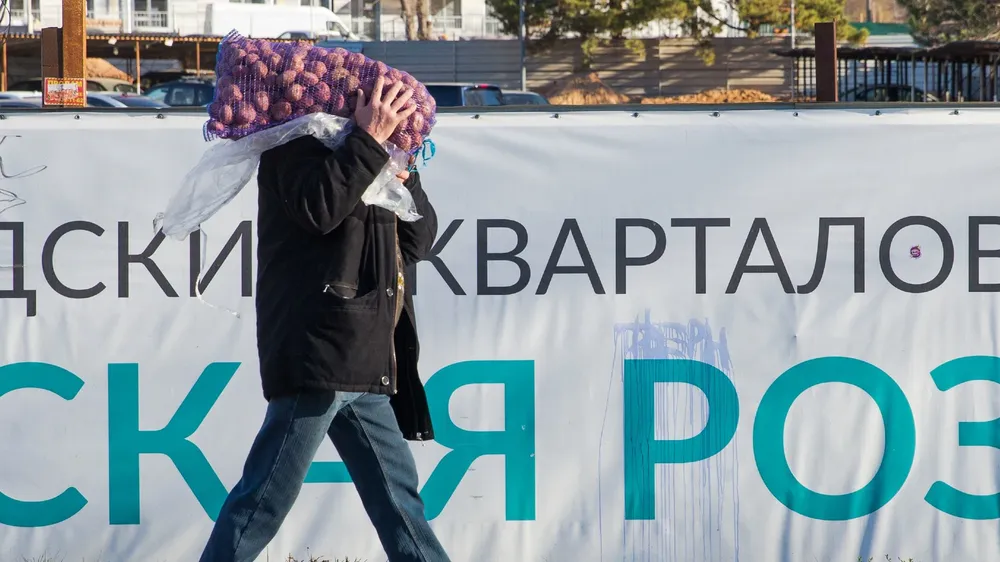
You can’t envy the Minister of Economic Development - they are primarily asking for the development of the country's economy and for the growth of people's income. However, speaking on October 18 at a meeting of the State Duma Committee on Budget and Taxes, Minister Maxim Reshetnikov admitted that the economy ceased to recover. Accordingly, people do not have to wait for the growth of people's income - in any case, in the near future.
“... Given the development of the situation, we estimate the growth of GDP for the current year at 4.2%. ... In the last two months ... Business activity has slowed down, restoration in general has exhausted itself, and now the economy has reached its trajectory ... We can hardly count on a higher pace this year, ” Interfax quotes the words of Reshetnikov.
The minister still promises 4.2% growth. But these high numbers are considered from the results of the past "failure" of the year. And the Russian economy “pulled out” a sharp increase in energy demand.
“The dynamics of industrial production is now almost 80% formed at the expense of the raw material sector, primarily hydrocarbons,” recalls the institution of the national economic forecasting of the Russian Academy of Sciences in the last “quarterly forecast of the development of the Russian Federation”.
So for growth we must thank the economic policy of “our Western partners”. The Ministry of Economic Development also says this in the “forecast of socio-economic development of the Russian Federation”: “... stimulating budget policy measures implemented in the largest developed countries (primarily in the United States) support global growth. According to the growth of global GDP this year will be 6.0% after a recession by -3.2% in 2020. ”
Income at zero
I would like the growth of GDP and profits of the state and business to transform into an increase in people's income. But what will not happen, that will not, and the officials honestly recognize this. Instead of the previously promised 3% increase in income for the year, the department expects 2.5%. This is less than a decline recorded by Rosstat in 2020. The initial decline was estimated at 3.5%, then reduced to 3%, after the final recalculation received 2.8%. In the forecast of socio-economic development, the mayor involves an increase in income by 2.4% in 2022, by 2.5% in 2023 and the same in 2024. It turns out that, according to the calculations of the department of Reshetnikov, only three years later, citizens can return to the standard of living of 2013. And according to the results of the decade, the growth of real incomes of the population will be about zero.
Inflation, which this week, Rosstat will not allow to lie , updated five -year maximums this week.
In October, the mayor for the fourth time from the beginning of the year increased the forecast for inflation - to the record for five years 7.4%. Initially, the mayor predicted inflation in 2021 at 3.7%, in April increased the estimate to 4.3%, in July to 5%.
But from October 12 to 18, consumer inflation was 0.26%, and the annual indicator accelerated to 7.78%.
For the first time since December 2015, official food inflation became two -digit (10.36%).
Vegetables are the fastest: cucumbers cost 51.75% more than a year ago; Tomatoes - by 53.18%, potatoes - by 71.06%, cabbage - by 85.99%, carrots - by 37.72%.
And what's wrong? - The ministers could say. "Sovereign" agriculture is an expensive pleasure. The Russian food market is isolated from imported products, but not from energy prices and fertilizers. “As a result of rising prices and the reduction in the general production of fertilizers, we see the risks of a new round of price growth for agricultural products ...” , Deputy Prime Minister Alexander Novak explained at the government meeting on October 20, reporting on the situation in world energy markets.
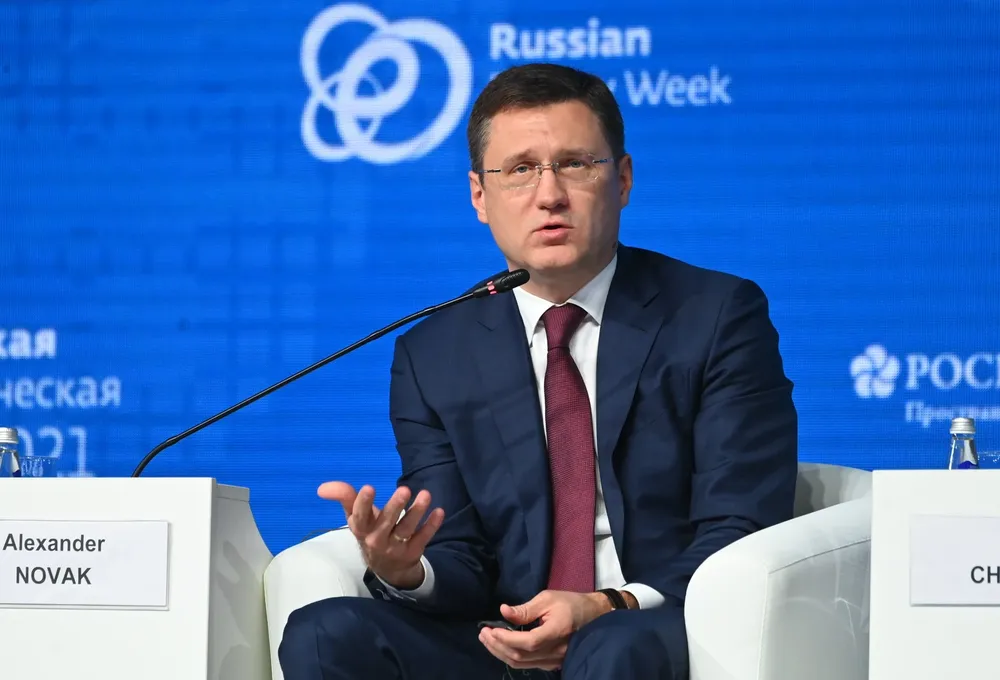
“We are observing a significant reduction in the production of nitrogen fertilizers and the closure of the capacities of the oil and gas industry. To date, about 40-50% of ammonia capacities have been stopped in Europe - this is a very high level that led to an increase in the prices of nitrogen fertilizers by 2 times, ” said Novak, a former Minister of Energy of the Russian Federation. So do not rejoice at victories in the gas war and paintings of “freezing Europe” - Russians honestly pay potential super -profits of the owners of the gas pipe, only do it indirectly - through the increased products.
The deputy chairman of the Central Bank of Russia Alexei Zabotkin warned about this situation on October 6. Speaking at a press conference, he explained that “the increase in energy prices in Europe and in other countries really causes concern ... Even if it is a one-time phenomenon, the scale that occurs, will affect the cost of goods and services produced in these countries, and to some extent it can strengthen what is usually called“ imported inflation ”for Russia.”
Contrary to the entire demagogy about the “import substitution” of the European Union, they remain a key supplier for the Russian Federation. According to the FCS, for the first 7 months of 2021 from Germany, Italy, the Netherlands, Poland, Finland and France, goods were received by $ 37 billion (only imports from China - $ 37.3 billion).
However, Alexei Zabutkin told how to cope with inflation, noting, according to Interfax, that “the scale of transferring“ imported inflation ”to the dynamics of domestic prices largely depends on the intensity of demand within the country, and this can be influenced by the measures of monetary policy.”
Translated from "banker" into Russian - if you do not give people loans, then they will not buy imports.
“Of course, the growth of world energy prices is one of those factors that the board of directors will look at at his meeting on October 22,” added Deputy Chairman of the Central Bank. The key rate, hints to us, will be increased, and there will be drawn up and rates on loans.
The last cubes
At the same time, unlike the Central Bank, the Ministry of Economic Development just counts on the growth of the loan as a factor in economic growth. The budget plans have an increase in retail turnover - by 2.8–2.9%. That is, higher than income forecast (2.4–2.5%). It does not happen, retail turnover can grow in parallel with an increase in income or slightly behind it (if people consume less and invest more). Even the auditors of the Accounts Chamber in the official “Conclusion on the draft budget” drew attention to this discrepancy.
Due to what can the retail turnover can grow if the income does not grow?
Answer number one - due to consumer lending. But this does not want the Central Bank, they are guided by the cooling of the market of unsecured loans and take appropriate measures.
Answer number two - the fall in income in combination with growing inflation will force people to “climb into the cube” for the remnants of savings and begin to turn money into goods. I do not want to think that the government is counting on such a scenario. But people, by and large, have nowhere else to take money from people.
The “conclusion of the Accounts Chamber of the Russian Federation for a report on the execution of the federal budget for 2020” states that according to the results of 2020, the well -being of Russians was “approximately at the level of 2010-2011”. The report has a good wording - "In connection with the weak dynamics of income after the crisis of 2014-2016, the income did not have time to return to pre -crisis meanings, and 2020 only aggravated the situation."
Social payments helped to avoid the growth of poverty in the country, the auditors of the Accounts Chamber conclude, but this is not an increase in the standard of living. This growth has not been 10 years old. There is an increase in prices, an increase in budget revenues, an increase in the number of billionaires and an increase in the value of their assets. And the growth standard is not.
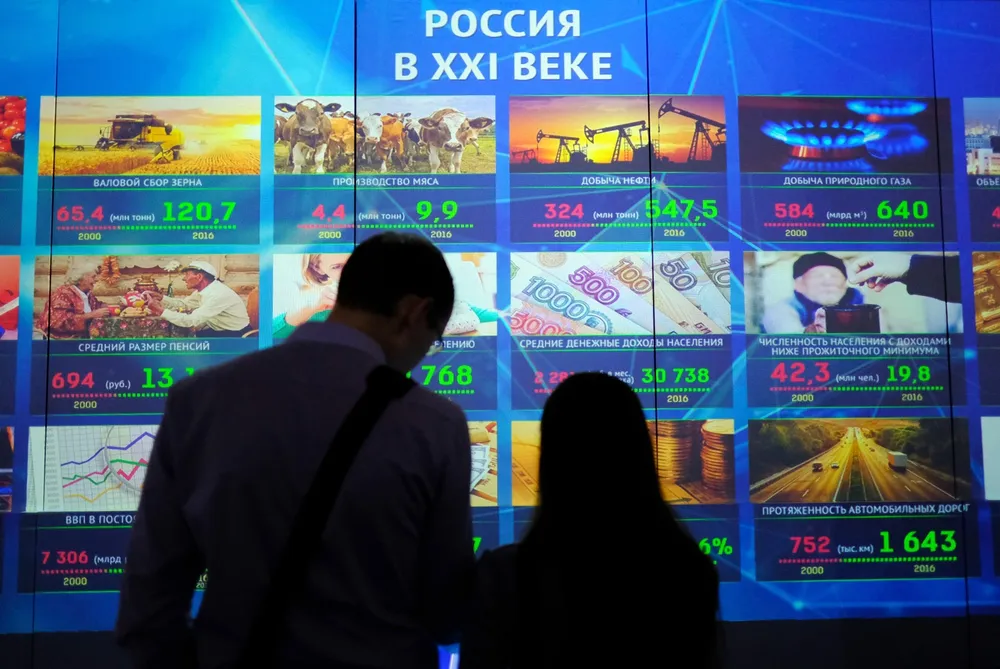
Where could this growth come from? According to the assessment of the analysts of the Internationalale Nederlanden Groop (ING) bank, in 2021, 42% of the Russian population (more than 60 million people) were pensioners, civil servants, law enforcement officers, military, doctors, teachers and other Secretary workers. The share of the “budget” in the income of Russians is more than a third, the share of “social benefits” exceeds 20%. Maybe citizens' incomes will grow thanks to budget expenditures?
It doesn't look like. Of the budget documents, the exact opposite follows - consolidated expenses will be reduced by 3.0% of GDP, which will limit direct support for household income.
If in 2021 the authorities planned to spend an amount equal to 21.3% of GDP on such support, then in 2022 its size should be reduced to 19.6% of GDP.
However, the Ministry of Economic Development suggests in its forecast that income from property and entrepreneurial activity will grow by a leading pace in the structure of the population’s income.
The auditors of the Accounts Chamber doubt this, indicating that both of both income articles do not occupy a significant share in the total budget of Russians. “In the period outside the crises, the total contribution of these components was about 11%, and in the medium -term forecast, their share will be 10.7% only in 2024.” So even the accelerated growth of income from property and business is unlikely to become a driver of sustainable growth of both real incomes of people and consumer demand.
And in general, Russians have a difficult attitude towards entrepreneurship, Russian authors of the Global Entrepreneurship Report - 2019/20 (Global Entrepreneurship Monitor - GEM - leading a worldwide study of entrepreneurship in different countries).
If in 2018 only 5.1% of the Russian population announced that they plan to open a business in the next three years, then in 2019 there were already 14%. At the same time, the “opportunity to start a new business” is considering 9.4% of Russians who are not entrepreneurs. However, for many years, the value of the level of entrepreneurial intentions in Russia has been one of the lowest. What happened? According to GEM experts, an increase in the number of people wishing to do business can indicate both the popularity of the businessman’s career and the absence of alternative employment options.
In 2020, according to GEM, 13.1% of the country's working population was engaged in business in Russia. In 2019, this share was 14.4%. Entrepreneurs who closed the business due to quarantine turned out to be three times more than those who opened it.
Wheelchair as income
However, to increase the growth of citizens' incomes, ministers have mathematics. Revenues can be considered differently. Therefore, Rosstat posted on the state procurement portal a contract for the development of “recommendations for improving programs and methods for conducting selective observations on socio-demographic problems in order to develop a system of statistical indicators characterizing the financial situation and living conditions of various target demographic groups of the population”. The term is December 2021, that is, urgently.
Translated from the bureaucratic - all the income of people will be taken.
Instead of selective research (who got into the sample, they interviewed, once from once) will be longitudinal - that is, household income in the sample will be studied for a long time
Further more - now the incomes of the poor are considered “for money”, but they want to add an assessment of “non -monetary payments”.
It can be free medicines, crutches and strollers for the disabled, food in the dairy kitchen. All this can be evaluated and recorded in income. The poor in such a scheme, of course, "get rich."
There is such an idea in plans - to take into account income from investment activity. This is how I imagine the poor people who hold Gazprom's shares. Interest on deposits - in the same piggy bank.
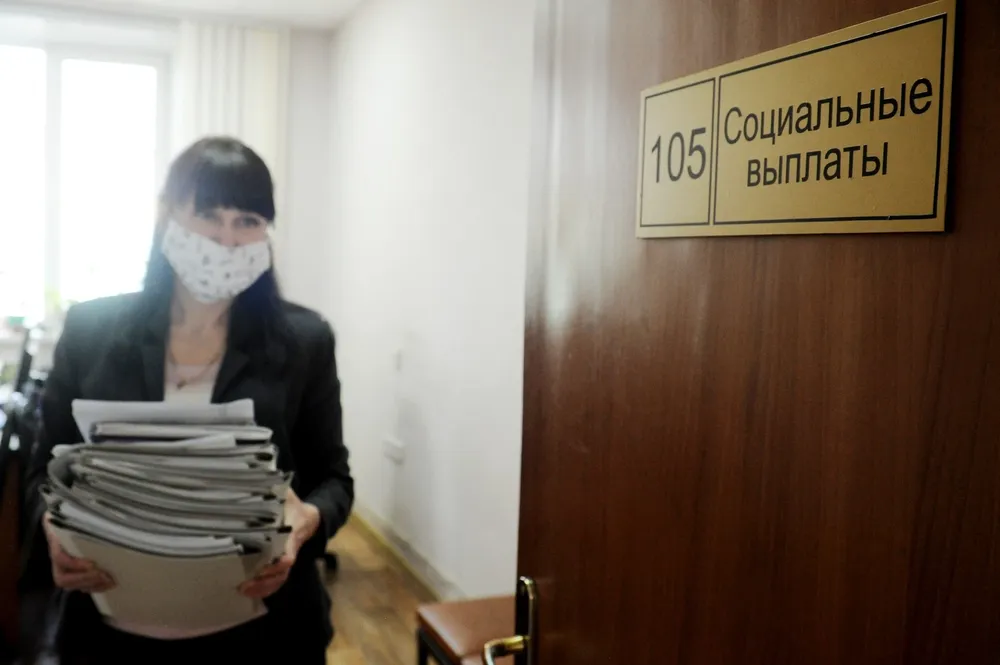
In addition, Rosstat plans to test the methods for the formation of indicators of population income and poverty levels based on the administrative data of the Federal Tax Service and the Pension Fund. This is a step towards the total accounting of income - they will start with the poor, then they will get to everyone else, except those who are supposed to be rich.
And, of course, accounting for the income of the poor "with all transfers" will reduce the number of recipients of "social assistance"
Since 2021, Rosstat has already changed the methodology for calculating the poverty level, having begun to calculate the living wage in a new way. Previously, it was tied to the cost of a minimum set of goods and services, and now the minimum is considered from the average income of the population. As a bar, a mark of 44.2% of the median average per capita income was chosen.
As a result, the poverty level becomes relative: that is, only those who are poorer than the others are considered poor. According to the new methodology, if, for example, median income for one person in Russia will decrease to 1 ruble, but no one will receive less than 44 kopecks, then the poverty level in the country will be zero.
Changing the approach to poverty calculation has already given the results. So, despite the record food inflation in six years, the cost of living in Russia in 2021 was increased by only 1.6% to 11,653 rubles per month.
This allowed Rosstat to fix a sharp decrease in poverty levels. At the end of the second quarter of 2021, it amounted to 12.1%, or 17.7 million people - 2.2 million less than a year earlier.
Inequality as an obstacle to growth
Here it would be possible to gloat to officials trying to replace the real growth of people's income games with statistics. But we will not do this. There is a systemic reason that does not allow realizing the most good intentions of the government. And the task of increasing the income of people, while maintaining the existing level of inequality in Russia, is insoluble in principle.
Why so, back in 2012, the wonderful economist Alan Krueger, co -author of the current Nobel laureates David Kard and Joshua Angrist, explained. In his famous report “The growth of inequality in the United States and its consequences”, Kruger demonstrated the “Veliky Getseby curve” - a graph that illustrates the relationship between “inter -ocated elasticity of earnings” and “level of inequality”. If simply - the higher the value of the level of interchangeable elasticity of income, the higher the likelihood that the children of the rich will be rich, and the children of the poor will remain poor when they grow up. No matter how much the poor work, they will not succeed in getting out of the bottom. The higher the coefficient showing inequality in the income society at the moment, the higher the likelihood that the children of the poor will become poor, and the children of millionaires - millionaires, Kruger said.
The inequality of income in the country poses a threat to economic growth - it does not force the poor to strive for wealth and does not launch social elevators, Kruger explained. Vice versa,
Inequality preserves society, prevents the rich in impoverished, and to get rich poor. And the poor understand this very well. Then why work?

No need to deceive yourself, Kruger said - yes, inequality can force the poor to work intensively in the hope of coming to success. But the same inequality of income gives such advantages to children of millionaires that these advantages outweigh all the efforts and efforts of the poor. If you want to change the situation-you will need some system solutions.
But what about the story of the American dream? - objected to Kruger. What is the fact that the richest entrepreneurs of the United States - all these gates, buffets, tsuckerbergs, Bezos - earned their states themselves? No way, Kruger proved, exceptions do not cancel the rules. It is wonderful that these people were able to find a new niche in the market, but in general, the well -being of the American lower and middle classes is growing unacceptably slowly against the backdrop of the rapid growth of the welfare of the richest. This is destructive for long -term economic growth - people understand everything and lose their motivation for work.
Why is it important to us? Because the level of inequality in Russia is colossal. So, all the conversations about the “growth of income” will remain conversations. In the best case, government efforts will keep the standard of living at the same level. And the fact that “social elevators” cost is not a cause of income gap, but its consequence.
This does not cancel the opportunity to succeed for an individual - people achieve it, however, the further, the less we see such success stories. But the economy as a whole - “stands” and will “stand” further. Together with the income of people. An extraordinary gap in the level of income between the rich and everyone else is one of the reasons for the economic stagnation.