
Translated material
With us Victor and Samsung
How in Russia “smartphones” were banned ”the Korean company
So that the prosperous class does not relax after vaccination and kept itself in good shape, the media threw a serious fright to the noosphere: “In Russia, they banned the sale of the 61st model of Samsung smartphones.”
Can you imagine the horror of fans of Korean mobile technologies, who were not fingering (yet 95 thousand rubles) were saved to buy a folding flagship Samsung Galaxy Z Flip?! And here it is: “The Moscow Arbitration Court forbade the Korean Samsung Electronics and its Russian“ daughter ”imports into the territory of Russia, the offer to sell, sell and store the 61st model of Samsung smartphones, including the latest Samsung Galaxy Z Filp” (quote from the same).
My imagination exhausted by metaphors instantly removed from the memory a video of a video with the heads of French cheese, along which bulldozers and rinks are permanently ride: did they want to make a “cot”? Take a bunch! "
The mosquito shook off: Samsung is the Koreans. And no one announced sanctions. True, he quickly realized where the wind was blowing from: “The lawsuit against Samsung Electronics Co Ltd. And its subsidiary of Samsung Electronics RUS Company LLC was submitted by SKWIN SA, registered in Switzerland. The reason is the use of the invention in the patent No. 2686003 without the consent of the copyright holder, which is the Skvin CA itself.
The publication of RIA Novosti, entitled “In Russia, banned the sale of the 61st model of Samsung smartphones,” is a sequel. This sequel in the same edition on July 30, 2021 was a prequel . With the identical name: "In Russia, they can ban the Samsung Pay service."
The difference is that in July they could “ban”, and in October they “banned”. In fact, they were “banned” already in July, but simply did not indicate a list of smartphones that cannot be sold in the Russian Federation due to a violation of the patent of the “Swiss” company. And now, in October, this list was approved and released, thereby bringing the “ban” to the logical end.
It is no coincidence that the word “prohibition” is earned, because the court’s decision has not yet entered and enters only if Samsung does not appeal it within a month.
There are a number of circumstances that leaves no place for doubts:
Samsung will not only appeal the solution, but the case will win in any situation.
I hope to completely dispel these circumstances, which, I hope, will completely dispel the fears of the public.
To begin with, the lawsuit of the “Swiss” company Skvin Sa with Samsung has been stretching since February 2020. I also put ironic quotes, I also put it by chance: this company is the same Swiss as I am a Martian. Well, that is, SQWIN SA, of course, exists and even registered in nature at: Route de La Gare 36, 2012 Colombier Ne - Auvernier, Neuchatel - Switzerland. The company has a telephone, e -mail, a nominal Swiss man at the gate and even a site.
The weakest link in this design is the site of the “payment system”, in which Samsung allegedly stole the technology protected by the patent No. RU2644128C2. One look at this site is enough to understand: there is no “payment system” as a product in nature. All that exists is a patent, proudly laid out on the case on the title page of the site. The patent is registered in Germany, Japan, the USA, South Korea, the Russian Federation and China.
The author of the patent is a German citizen (for this reason in this country, the first patent application was issued in December 2012) named Viktor Gulchenko. He, as it can be assumed by all indirect signs, belongs to the Swiss SQWin SA, which acted as a patent holder in December 2013, when an application for registration of a patent in Russia was filed.
All this information is in the public domain. Anyone can get acquainted with her, read the full text of the patent application. Compare it with related patents. Draw your own conclusions. Of course, I do not impose anything on anyone, but only translate my considerations, using the privileges of the genre of the author’s column.
I did not delve into either the German or the American text of the patent Viktor Gulchenko, reasonably believing that he was similar to the Russian application. Patent No. RU2644128C2 is called the "electronic payment system".
The entire Viktor Gulchenko patent comes down to one idea: instead of the traditional scheme of online payments based on a centralized database containing the payment information of individuals, it is proposed to use two non-intersecting communication channels-one connects with the payment system (for example, VISA or MasterCard) of the seller, the other as the buyer.
The highlight of the solution is the presence in both independent channels of the general element, a one -time unique number of the cashier check. The payment system compares the information received from the seller through the first channel, with the information received from the buyer on the second channel, and if the unique code coincides, the data is combined and processed.
As a result, we get a successful purchase and sale transaction, which is deprived of flaws in security with a traditional approach, when we have to spend large funds and efforts to protect the centralized database.
The scheme described in the patent of Viktor Gulchenko would probably look even revolutionary if it appeared at the beginning or middle of the zero years.
However, already at the dawn of cryptoeconomics (2008-2010), finding something original in sharing communications between the seller, buyer and payment system would be difficult. Against the background of how metabolic operations are carried out today in decentralized finances (Defi), in particular, with atomic swaps (that is, the exchange of assets directly between users without intermediaries and in conditions of complete absence of trust), patent No. RU2644128C2 looks hopelessly outdated.
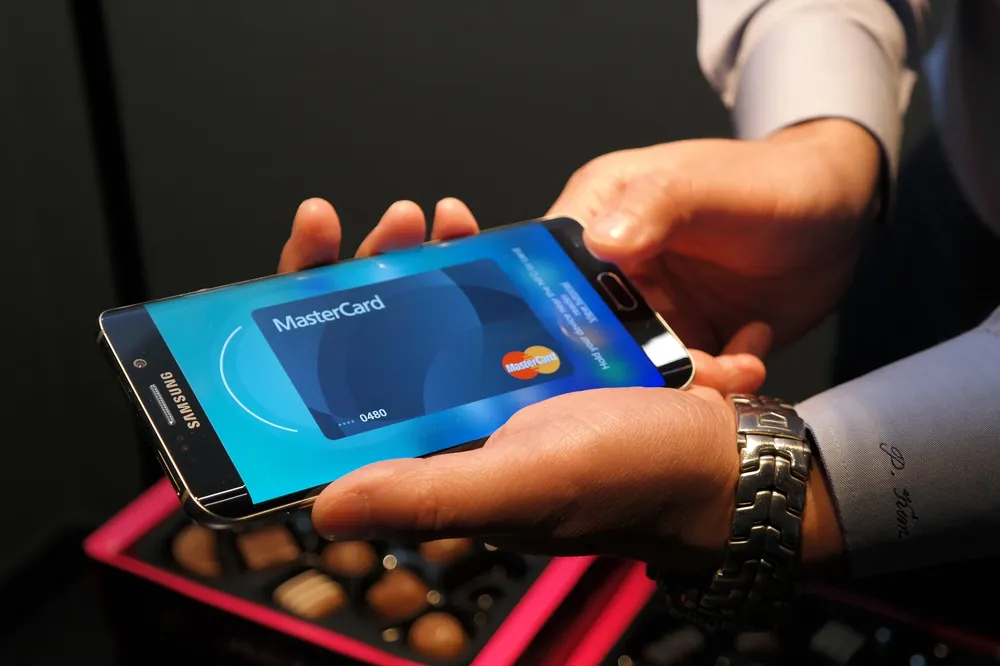
Nevertheless, the patent contained ideas that were recognized as original in the not very latest states - Germany, the USA, Japan, and Russia. Accordingly, the question arises: where did Samsung look when I realized the scheme of online payments in my mobile application Samsung Pay? Why the patent ignored No. RU2644128C2.
In order to understand where Samsung watched, it is enough to look into any patent registry, for example, at Google . I suggest that the reader scroll the page with a description of Patent Gulchenko to the end and evaluate the section entitled Patent Citations. This is such a kind of “list of literature”, in this context - a list of patents, related or relatives of the patent of Viktor Gulchenko. There are 64 of them there!
I do not want to say at all that they all duplicate Gulchenko’s invention. In no case. Here, for comparison, patent No. US7533065B2, registered first in Finland (2001), and then in the United States (2002). It is called "advanced methods and the procedure for conducting electronic payment transactions." Its brief description:
“The credit party provides the client with a certificate fastened with an electronic signature, the client stores this certificate on his electronic device. At the time of purchase, the client present his certificate of an automated service or a trading machine, which checks the certificate. If the information is confirmed, the purchase is carried out, and the information about it is saved in the memory of the sales machine. The collected information is then organized in packages and sent to a credit institution. ”
Doesn't it remind you anything? Surely reminds. Only it is not clear what. This happens because in this patent the primitives of trade operations that are used today are used to everyone and everywhere in the world. Something very close in the procedure we observe not only in vending machines, but also in ATMs, in electronic box office, on turnstiles, etc.
Similarly, things are with the patent of Viktor Gulchenko. The laws of the patent genre require that the technology is described as blurred as much as possible and cover as many existing areas of application. For example, as describes the principles of creating a unique disposable code in patent No. RU2644128C2. It turns out that this code is not at all obligated to coincide with the number of cash receipt! The code can be generated by the “Seller’s cash system”, and maybe the “mobile device” of the buyer.
A mobile device can be anything: “A smartphone, a computerized watch with the ability to enter the Internet (Digital Watch / Smartwatch), a tablet computer (Tablet), a computerized bracelet with the ability to enter the Internet (Digital Bracelet), a computerized ring (Digital Ring), a computerized ring computerized key fob (Digital Key Fob), contactless RFID card, etc.
Exactly the same multiplicity and vague is characterized by patent No. RU2644128C2 and in all other aspects of the description of the “electronic payments system”.
As I said, this approach is not Viktor Gulchenko’s evil intent, but the specifics of the patent genre, designed to fulfill the only task: to increase the patent holder’s chances to knock out the largest amount of money from who someday undertake the opening to realize in practice.
Remember the Finnish patent described above? Its author is an inventor named Lauri Piikivi. In 2001, he registered it, and a year later he uncorked champagne: the patent bought Nokia! In 2018, the patent bought Beijing Xiaomi Mobile Software Co Ltd. A typical fate of a typical IT patent.
Viktor Gulchenko came up with his two -channel payment not in order to independently implement the “electronic payments system”. For this, one glance at the SQWin Pay web page is enough. On this page, some schoolboy mounted one hand in “Photoshop” (apparently, the buyer), which holds out a smartphone with an open application by SQWin Pay, with the other hand (apparently a seller) holding a card terminal with a confirmed payment.
Do not rush, however, in the Apple Store or Google Pay, load the SQWin Pay miracle application. This does not exist in nature. It is better to scroll down the page down and admire the only product of the “Swiss”: the Patent “Electronic Payment System”, registered in different countries. This is the source of income.
Since no one voluntarily buy a patent No. RU2644128C2 is torn, you have to sue. Than SQWIN SA and is doing. Given the decision of the Russian Arbitration Court - quite successfully.
From the very beginning, I suggested that the chances to at least change something in the status quo sales of Samsung’s “daughter” in Russia, our patent holder is negligible. And that's why.
Analysts write that Samsung has three scenarios of further actions: to appeal the court decision (1), challenge the patent itself (2), agree with SQWIN SA, that is, give money and redeem the patent (3).
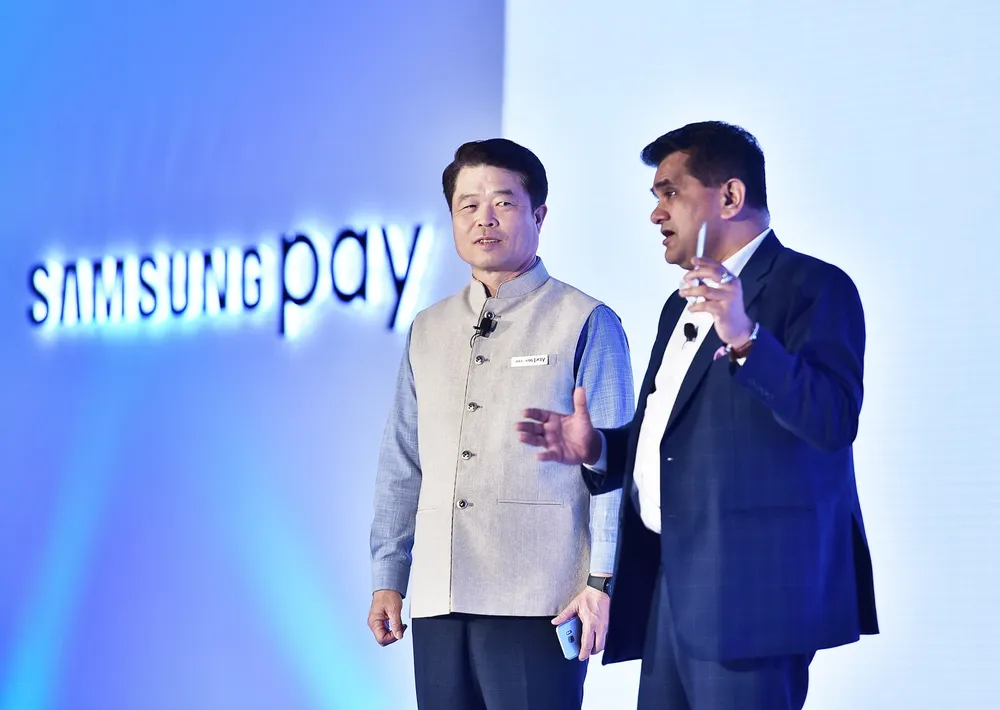
For the "Swiss" the ideal option is the last. Samsung can not have any a priori preferences. Not because the icebreaker of Korean sales in Russia at point blank does not notice the SQWIN SA and - that’s exactly what you can doubt! - It will not deviate from the course for a mile. But because the only criterion for the functioning of any business is money. Therefore, Samsung will always choose only the script that will be the cheapest.
If the “Swiss” do not lose touch with reality and request a sane amount, then Samsung will buy a patent and go further. If they begin to wring something fantastic, Samsung will appeal the decision of the Russian court (the path is obviously less invoice than contesting a patent) and will go further the same way. If it is not possible to get the desired verdict in the Russian courts, well, you will have to dispute the patent.
The last script for the SQWIN SA is the worst, because Pastushka David has no chances to win this dispute. Full zero.
If only one Samsung was opposed to Viktor Gulchenko, it was possible to give free rein to fantasy, to recall the fairy tale about the sling and stone, which once a small shepherd successfully threw a giant Goliaf in his forehead.
The tragedy of the modern Swiss David is that more than one Goliath will wait for him on the battlefield, but ... three.
Yes, the reader, you did not disgrace: the technology of payments made in the Samsung Pay application and, by decision of the Russian court, owned by SQWIN SA,
It is present both in Apple Pay and in the Google Pay application.
So that the reader does not have a temptation to doubt the words of the author-Philologist, I give the words of a specialist, deputy head of the Roskachestvo Anton Kukanov: “Absolutely all payment systems that work according to identical technologies fall under the description of the patented system of electronic payments. This is Apple Pay and Google Pay. ”
Well, that is, everyone now understands: any trial that disputes directly by the Patent No. RU2644128C2 itself will turn out for SQWin SA by the fact that she will have to deal with the three most powerful IT-imperials of the planet! And the existence of key payment applications will be put on the card, which are today installed in smartphones.
It’s scary to even imagine what this judicial battles will look like.
However, this is no longer our concern. The task of my replica was more mental: to calm the reader and assure that absolutely no hairy will fall from the Goliath Samsung! The sale of not a single smartphone will not be stopped for any hour. The Samsung Pay application as it worked and will work.
And under the curtain. Great temptation to recall the ultimatum of the Russian Duma, set by the same Samsung, Apple and Google for the compulsory pre -installation of Russian software smartphones. We all remember well that there was no hint of resistance: everyone was pre -installed as nice.
I believe, however, that this analogy in our plot is completely inappropriate: after all, where is the Duma, and where is SQWIN SA.