
Translated material
Give a sign - waves from the sky with your hand
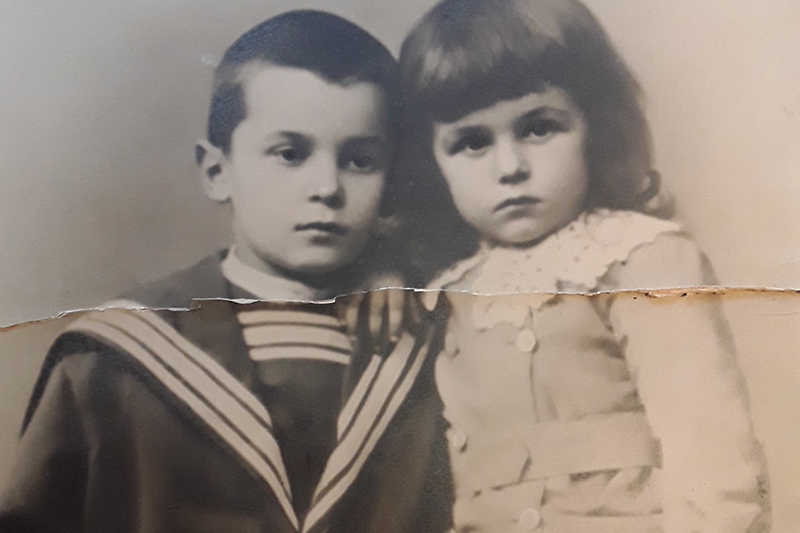
Tomorrow, October 30, is the day of memory of victims of political repression.
My son Nikita read or, working as a malarus at a construction site, listened to the Gulag Archipelago, and when summer came, he gathered for Solovki. And he asked if I want to make him a company. No, I didn’t want to at all, but the consciousness suddenly pulled out a Solovka bunch from the pit - a concentration camp - grandfather. He appeared in me tall, strong, standing among the snowdrifts in crackling frost and harsh, like that icy winter, after which he was gone.
The image was so clear, convincing and close that I agreed, and soon we set sail to the island in search of the shadow of my grandfather, who was called a sword in the family. Why was they invested in his name, as in a scabbard, a sword and glory, doubleting them of the middle name (his father is also a sword and glory, with a shock “and”)? Maybe like the memory of the Polish and Lithuanian ancestors, brilliantly defeated the knights of the Teutonic Order under Grunwald and stopped the invasion of the Germans to Slavic lands? I don’t know, only the sword was updated by a hammer and a shovel - an instrument, which at the beginning of the thirties was digging and hollowed by Stalin’s white -shit. Zeka Mechik and Zek Shurka, the younger brother and the protagonist of this story, was distributed to the channel from Solovkov.
From the worker, the former shipping and distribution point in the Bay of the White Sea, twice a day-in the morning and in the evening-motor ships to the Solovetsky Islands depart. And although Nikita and I appeared at the marinage still warm, from the shelf of a night train, there were no tickets for the archipelago - an island that was associated exclusively with a concentration camp in my mind, turned out to be Orthodox Mecca in fact. The thought of killing the day in anticipation of the boat did not inspire - the locals advised to look for a private trader. We were picked up by a cargo barge.
We dragged on an eternity, swinging terribly, and we had to run out onto the deck, listen to gastric cramps, beg overboard to relieve ourselves. Sometimes the White Sea spit on us frantic ice spray. But somewhere on this day at the end of July there was a real summer, warm or even hot. I remembered our magic warriors on the yacht, jumping from the bridge in gentle water-at sunrise, sunset and between them-and thought: after all, for something I was given this swimming, this cargo barge. Maybe that at least a little bit, at least a tiny iot approach the sensations that the unfortunate and many of them were innocent people? They were delivered to the island as a kind of load, as a thing.
On the archipelago, where the frail lilac banged, we went to the Gulag museum, who got into a former camp hut, and learned from the guide that they could leave a request for their relatives who were serving the deadline in the elephant (so the abbreviation, for convenience, called the Solovetsky special purpose camp). They answered my application: we do not have information about Mecxilavovich Tulllo. They don’t have a lot about whom, but the idea to get to the bottom of the documents, to some written certificates of ordeals that fell to the share of the family, did not leave me. In the end, I received the P-5416 number from the Vladimir archives, from which I found out that on Solovki, Machik worked as a mechanic on a steamer and, probably, made the same path many times, went into the same swimming as we.
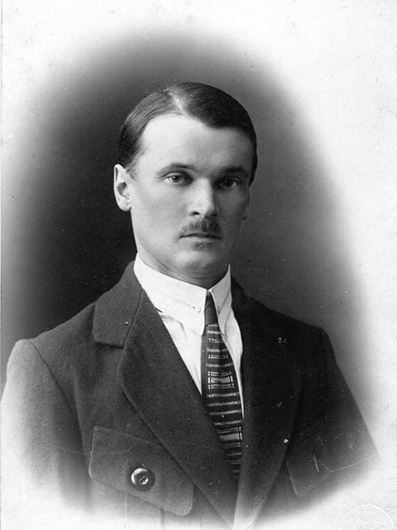 © from the archive A.M. TULLLO MESCHELAV MESCHELAVOVICH TULLLO
I read about the mechanic with relief - I imagined that he was appreciated or even respected. But the Poles there were kept especially inhuman. Who knows, maybe Shurka was driven to the Balans at this time? And he stood in icy water for hours, rafting logs on the mainland? But he is the youngest and, although he was a healthy, thirty -year -old man, still weaker than Machik, more tender. They also tried to re -educate Shurka in an elephant, only so that black and white, in the documents - we don’t have this yet. But Kolyma - alas, everything is hopelessly clear. It is enough to dial in the search engine “Alexander Mechislavovich Tulllo”, and if you scroll the page, ignoring my father, full namesake of Shurki in the address bureau of St. Petersburg, then data will be released in two criminal records, and by shooting, and in rehabilitation.
I think the fate of the brothers was predetermined by their origin. The accused of counter -revolutionary activity was called political, and, unlike “criminals” or “households”, these were people of a completely different blood. Machik said that the convicts on Solovki turned to each other “Your Excellency” or “Your Excessiveness”. They were taken according to the 58th article , according to which several million people served in the Leninist-Stalin period. The country as air required slave labor, due to something it was supposed to exist, and the Soviet government seriously engaged in the extermination of the noble estate. And all the others, too - enthusiastically, with full dedication, serving: what is the only one worth the dispossession of the peasants! But I am now telling our story. My grandfather and his brother were political, counter -revolutionaries, Kaerovtsy on Solovetsky slang. They are from the nobles and landowners.
***
At one time, the family had many lands and many estates. Once upon a time, they belonged to the Grand Duchy of Lithuania, during the Commonwealth were on the territory of Poland, and in the XVIII century, after the Poland section, in the Minsk province. It is curious that the first documents with the mention of our surname - and they date back to 1550 and are stored in the Central State Historical Archive in St. Petersburg - are just connected with the sale of one of the estates. So, after all, the content of birch bark letters is also very mundane - wills, receipts, merchants. The act of sale (he is in Polish) was invested in papers to confirm the Russian nobility. They confirmed, introduced, and in the 6th genealogy book-to ancient noble surnames, in the pillar nobility, "as those births, of which evidence of the noble dignity rises in a hundred years and higher."
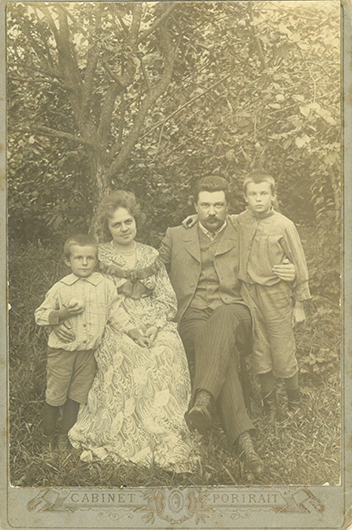 © from the archive A.M. TULLLO MESCHELAV Ivanovich Tulllo with his wife Evgenia Yulianovna and sons
And also from the facts. The Tulllo clan enters the coat of arms of Srzhenyava, uniting 175 noble clans: among them Mendeleevs, Pushchins, Princes of Lubomirsky, Ponovsky (Stanislav August Ponatovsky - the last Polish king). Machik said that under this coat of arms, originating in the XI century, our ancestors fought under Grunwald, in the landmark for the Middle Ages: there, in 1410, the Kingdom of Poland in alliance with the Grand Duchy of Lithuania defeated the knights of the Teutonic Order.
***
In front of me is the genealogy of Tulllo, my genealogy. From the ancestor of Matvey (almost like from the evangelist) to my brother Cyril, I counted fourteen direct ancestors along the male line. How old is this? Three hundred? Four hundred? Grandfather for the turnip, grandfather for grandfather, granddaughter for a grandmother ... So many names are power. Matvey, Ivan, Stanislav, Yuri, Krishtof, Yakov, Joseph, Mikhail, Ivan, Yang. Yang. Here on him, the father of my great -grandfather Mecxilava, I will stop. After the suppression of the Polish uprising of 1863–1864, two brothers were exiled as sympathetic: one in Tomsk, the other - to Verkhneturinsk with confiscation of estates. Another brother from sin escaped to France, having bought a weaving factory in Lyon for money from the sale of the estate. And now he lives in the vicinity of Bordeaux and somewhere in the Loire Department of our relatives under the name de Tulllo. And Yan Tulllo sold his estate and moved to his wife Alina Petrovna Povyako, a relative of the legendary lawyer Povyako.
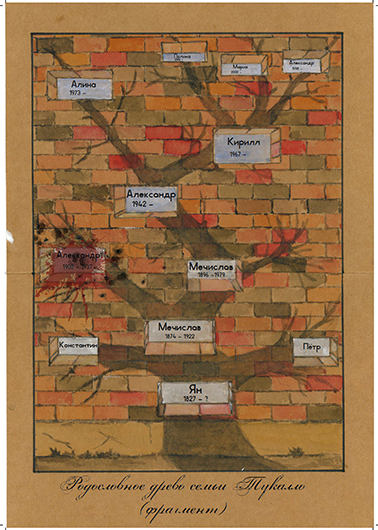 © Nikita Shperry Fragment from the pedigree Tulllo
There were more lands on the estate of the Polevako family than in the entire Petrograd side where I grew up - more than three thousand acres. Grandfather, who, along with Shurka in childhood, was visiting his grandmother, said that the area there is very picturesque - hilly, covered with forests. What, probably, gardens were defeated and flowers bloomed. It was in the Moskalevshchika that Mecxiwav Placil Flavush was born, and, adhering to family traditions, he was baptized into Catholicism. Then he grew up. And then, like his brother Peter, he graduated from the medical faculty of Moscow University. Peter received the post of head of the mentally ill in Pskov (this is what psychiatric hospitals were called then), and my great -grandfather, converted to Mashklavychy, became a zemstvo doctor and head of the hospital in Gorokhovts on Klyazma.
***
My grandfather was born in 1896 already in Gorokhovts (exactly one hundred years before Nikita, my first -born, and under the same zodiac sign). Four years after Mechik, Shurka was born. The year of birth is a new century, and it is very convenient to trace his life in numbers. Until 1914 - with parents, in a house with a fruit garden purchased from the local leader of the nobility of Bulygin. There at Tulllo on Blagoveshchenskaya Street, Nevsky Prospekt of the district town, cream of society gathered.
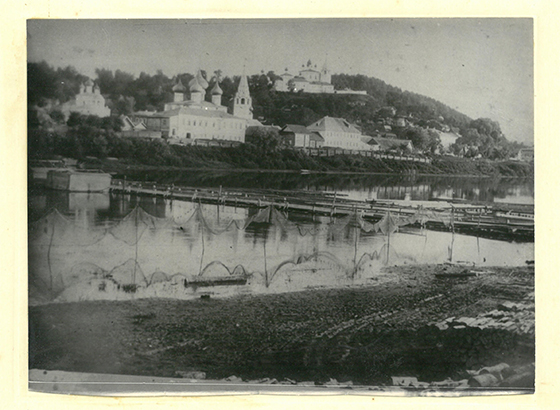 © from the archive A.M. Tulllo this photograph with a look of Gorokhokets always stood in the room near Mecchalwo Tulllo
From fourteen to seventeen, Shurka studied at the Vladimir gymnasium: education in it was considered more thorough and serious than in his hometown. So I had to settle with strangers, looking up from my mother, a secular woman, in an old manner - a “ton” who played perfectly on the piano. Shurka, they say, went into her - a handsome man, sophisticated features, a soft, non -conflict character.
And the sword is in the father. And the names coincided, and appearance, and character. Moshchelav Ivanovich (father) was ninety meter, physically very strong, decisive, sometimes he was rude or sharp. In the era, after the seventeenth year, a story that played, may not be the main, but one of the leading roles in the biography of our family, is connected with it.
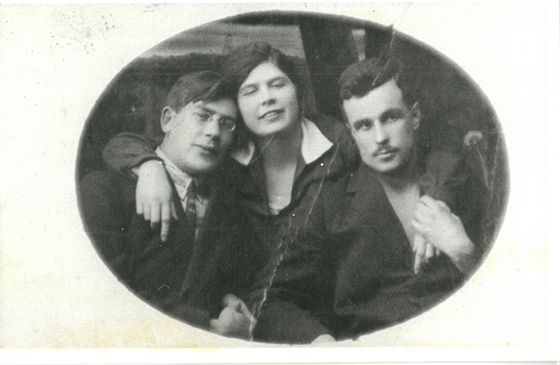 © from the archive A.M. Tulllo Alexander Tulllo (Shurka) - on the right
One night, a local boss burst into their house and rudely, peremptorly began to demand that Tulllo urgently go to his wife - she felt ill. When the official thought that the doctor was not in a hurry to the patient, he began to yell at him and threaten a gun. Then my great -grandfather swung and hit the representative of the authorities with such force that he flew through the entire room. For clarity - a few more words about Mechislava Ivanovich. He was the head of the cadet party of the city. In October, the seventeenth he was elected as a candidate for deputies of the Constituent Assembly of the Vladimir province. When he went to the house call - and it was necessary to pay extra for this - he did not take the money from the poor for the call. The doctor Tullelo died in the twenty -second year, infecting from the boy whom he tried to save from the typhus, and then three -day mourning was declared in the city. He was not one of those who neglected the oath of Hippocrates. But he had a character. And self -esteem.
***
"From the October Revolution, I have been working on the present day." This is from the investigation of Shurki of the thirtieth year. I have the impression that both brothers are waiting until the Soviet government extends their feet. Either they are afraid to be accomplices in her crimes, or they are looking for a darker angle - so that they only leave at rest. About the exploits, about valor, about the glory inherent in the name of Mecherslav, I had to forget. What was my grandfather, a pillar nobleman who received a classic education in the gymnasium, which, in addition to sciences, included knowledge of several European languages and Latin? Cleaner at a shipbuilding plant. Laborer on laying firewood in the factory "Trud". Water carrier. Forest watchman. About Alexander Tulllo on the sites of the Memorial or the Immortal Barack they write: Kotelchik. It was a kind of hermit, departure from the world of Soviet realities. Without a celibacy: the witness Zueva reports that there are always a lot of people in the house, play preference either to the piano, and the brothers have women almost every night. Feast during the plague? Every night may be the last, so why put it off for tomorrow?
Machik and Shurki did not have his families, and this brought them closer. They lived in a house with a mother on the same Blagoveshchenskaya street, at some point renamed Leninskaya. And then misfortunes poured. In the thirtieth year, the brothers were exiled to Solovki. The mother confiscated the house with a fruit garden in the tasks, and, having lost this breadwinner (the rooms were handed over to the visitors), she was left without a livelihood. Maybe one of her acquaintances took her out of pity, but grief killed her in the literal sense of the word, and once again she was not destined to see her children. When the brothers left for the deadline and returned to their hometown, they settled with a friend of Krotov family. In the summer - the autumn of the thirty -fourth, the pea residents met at the bazaar of my grandfather and “its master” selling baskets, which they themselves weaved. Shurka writes in questionnaires - dependent in his brother. It is convenient to be the youngest, I know this by myself.
They returned to the thirty -fourth, in March thirty -fifth they are already in custody. Scammers report that Kirov Shurke spoke like this: “What is so many conversations about? One bastard is less. ” Actually, Shurka is more quiet, behaves not defiantly. And in statements much more carefully than my grandfather. But several phrases were enough to send five years to the zone. Mecherslava - in Ukhtpeclag in the Komi Autonomous Soviet Socialist Republic, Alexander - to Kolyma. You are only to blame for the fact that I want to eat. The country needs slaves, otherwise a soap bubble called the Soviet Union will burst.
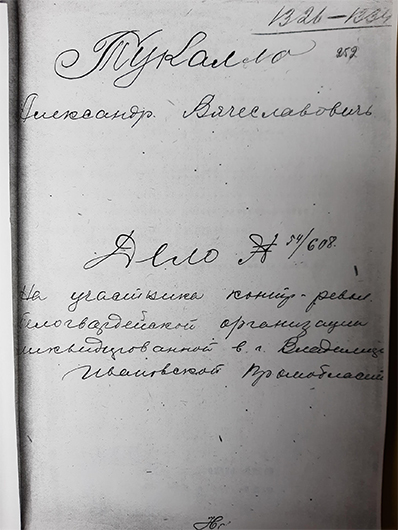
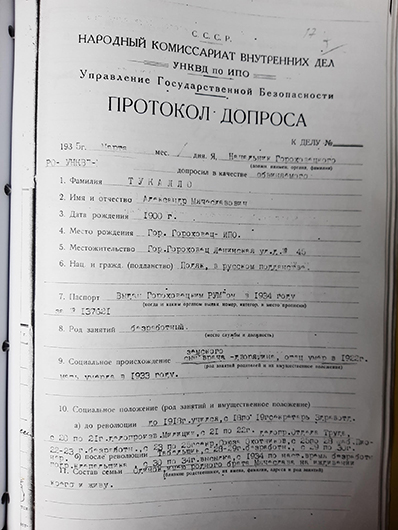 © from the archive A.M. Tulllo from the investigative case of Alexander Mechersilavovich Tulllo
My grandfather lived for more than twenty years in settlements - first with a zek, then civilian: to return to get another term. In the forty -second, my dad, who was named Alexander, was born in Ukhtpeclag - in honor of Shurki. In the forty -fourth, when the Germans retreated and it was possible to return to Moscow, my grandmother brought him from the north to her home to Prechistenka. He saw his father once every two years - the former convicted entry into large cities was prohibited. After the fifty-third year, it became better to live, life became more fun, and my dad’s parents even gathered for some time, however, already in Leningrad. Until the last days, Mechislav cursed when the party members and their congresses were shown on TV, and until the end of his life he remained strong, healthy and hardy. At eighty years, he, unloading the car of firewood, easily threw them through the fence. He did not love and even avoided people, but his heart could not stand it when Toby's favorite dachshund died. And he faded very quickly.
***
And Shurka has his own life. He was accidentally shot at the thirty -seventh on Kolyma. He turned thirty -seven, a fatal figure. There was such a practice: when the prisoners were released, they were looking for relatives of those who died in the camps to report them and their death as much detail as possible. The man who was serving time with Shurka found Machik and told him such a story. Shurka was visiting his friend in the hut, where the Trotskyists were sitting, late for the preference, and at night they brought everyone out without questioning and proceedings, put it to the wall and shot.
Sadly, but we know negligently little about Shurka - the sword was in this respect, to put it mildly, taciturn. And it turns out that the story of Shurki is the story of the family. Having deprived him of physical life, at the same time left without his own biography, except "born, judged, shot." But after all, his life consisted not only of NAR, Baraks, deprivation: there were a rod, support, support, scrapps in it - in childhood, the past, education, in the people surrounding him. In the history of his family, finally, then alive and almost dead now. And probably there was love.
I tried to restore the life of Shurki a little, but the material is still a little-although I made a request to Magadan, they didn’t send anything, offering to ask archival documents at a personal reception. But this is so far, and there is probably so cold there. Is there a lilac? And if there is, is it really blooming? Shurka, have you seen a lilac on Kolyma?
Thank you, Dud, for your movie "Kolyma". Thank you, Nikita for taking me to Solovki.
Shurka, we remember you, we think about you! We love you. If you hear me, give a sign - wave a hand from the sky!
PS in February 2020, the Foundation "The Last Address" installed in Gorokhovts on the former Blagoveshchenskaya street a memorial sign to Alexander Moshchelavovich Tulllo. How surprised I was to learn that the sign with his name turned out to be the anniversary - thousandth in Russia.