Date
Author
Ирина Корнеевская, Юлия Любимова, Анна Козкина
Source

Preserved copy
Translated material
"Mom, we are from the Akulg'ag'vig'yt!"
People of different nationalities - about pride and fear for their ethnic group
In Russia there is a census of the population. The organizers suggest that, according to its results, the number of nationalities named to the respondents will increase, as this happened in past censuses. “Cold” talked with the Eskimo, Jew and Udmurt about their national identity and how their attitude towards their roots changed.
In order not to miss the main materials of the "cold", subscribe to our Instagram and telegram .
“If we want to fly on an airplane, we ask for our spirits to have good weather, and feed them through a bonfire.”
Elena Kaminskaya, 51 years old, teacher, Chukotka Autonomous Okrug
I live in the village of New Chaplino on the shores of the Bering Sea by the Bay weaned. Initially, this village was an Eskimos, and now the Chukchi, Eskimos live here, there are a certain number of Russians, although in the 1990s many of the Russians left.
My eldest son is married to a Chukchian. When my daughter -in -law gave birth to a son, I asked them: “What nationality will the child be - how do you decide?” Andrei with my humor, he says: “Mom, I said to Nadia:“ You, Chukchi, are a lot, and we, Eskimosov, little, let there be a sons of an Eskimos! ”” So they decided.
According to recent studies, the word “Eskimo” comes from the languages of the indigenous population of Canada and means either “the one who makes snowshoes”, or “the one who speaks another language”; Before that, it was believed for a long time that this word means “one who eats raw meat” - in connection with this the word “Eskimim” began to be considered offensive. In Canada, the word “Inuits” is used, “Eskimo” is still widespread in Alaska, but the use of this definition is reduced. Russian Eskimos, according to the researcher Dmitry Oparin, do not consider the word "Eskimo" offensive.
I work as a primary school teacher at the school and the head in the kindergarten - they are in the same building. Less than 500 people live in our village, and everyone knows what kind of nationality a child is, but anyway, when the children go to the kindergarten, we ask parents to indicate a nationality in the documents in order to know what language the child will be studied later by the Chukotka or Eskimo language (there is a single Eskimo language, but there is a hacker-aleout language group, which includes the Chaplinsky language; speaking of hacker, Elena means Elena. Chaplinsky. In the elementary grades we have one hour native language per week, in the elders - two hours. We have mixed marriages - families in which the father of the Chukchi, and the mother of the Eskimosk, or vice versa. In some of them, one child may want to study the Eskimo, and the other - Chukotsky.
When I was little, my grandmother and her sister spoke only at Eskimo. My mother also knew Eskimo well - she talked with her sister, with the villagers, with her grandmother. But there is no with us. We did not understand them. When my sister and I were with my grandmother, she spoke Eskimo, asked - “Give tea”, “Pour”, “Bring”, “Give the bread”, “Close the door, open”. We involuntarily remembered these phrases. Grandma died when I was in the third grade. Then I asked my mother: “Mom, why didn’t I teach?” And she was not interested in talking to Eskimo, because we knew nothing. And there was no time to teach us, and there was not enough patience.
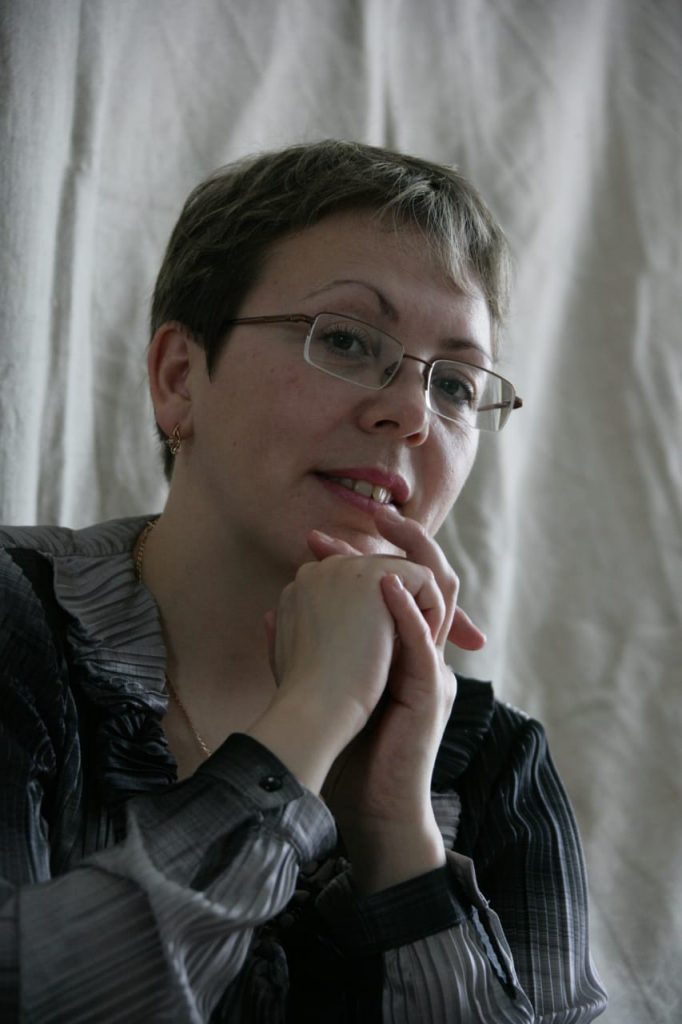
On Eskimo, I can only make the simplest offers. People of 60-70 years know the language, we, 50-year-olds, practically do not know or understand, but do not speak. And youth of about 20-30 years old practically does not know at all. But we have guys who study the Eskimo - and judging by how they try to revive it, there is a little hope that he will live.
I seriously delved into the history of the people - and my pride took me that I was an Eskimosk - thanks to the anthropologist Dmitry Oparin. He came to Chukotka in 2011 and began to tell us about the past of the Eskimos. And then it became interesting to me myself to know what kind I am.
The family, or clan , among the Eskimos is a group of families that are not necessarily connected in blood, but have lived in the same territory for centuries, hunted, fishing and had a common ritual calendar of holidays. From an economic point of view, the clans are now irrelevant, but local residents keep historical memory of them.
Mom said that we belong to Lakagag'mit , but she certainly did not remember. Oparin helped me - he brought me to the Eskimologist Igor Krupnik. I wrote to him, and he sent me his book, saying: "Look at such and such a page." It turned out that we were not at all Lakag'mit , but Akulg'ag'vig'yt . I say: "Mom, we are Akulg'ag'vig'yt !" Then my mother remembered that my grandmother had a brother who was from this kind. It became very interesting to me, I decided to find out which of those living in Chaplino belongs to the family of Akulg'ag'vig'yt - and found a lot of people. These are not relatives, but we are from the same kind.
Mom remembered the holiday of our family from childhood: “They got up very early, when the sun was just beginning to rise above the horizon. They cooked fish - it turned out like a jelly, it seems that it was cooked for a long time. ” As prepared, she did not remember, was small. Then the adults went away from Yarangia and threw slices of this fish. Mom did not remember anything else about this. Most likely, this is just a custom associated with the beginning of fishing Saiki-we are caught in January-February. It seemed to me then that the holiday with fish was not very beautiful. I read in the book of Krupnik “Let our old people say” that each clan had its own holiday - or, more precisely, a rite. Here the other kind had a holiday with dancing, one more has a legend that their ancestor stole a stone at a white bear. And we just have a holiday with fish. Of course, I will tell my grandchildren that we had such a rite. But in order to reproduce it, you need to know exactly how it was carried out. And there is no one to ask - my mother was the oldest of our family.
We no longer have shamans as such, but customs have been preserved and there are people who can conduct rituals. For example, if we want to fly on an airplane, we ask for our spirits to have good weather and feed them through a fire.
We believe that the dead ancestors return to the family with descendants. And one person can return to five times. My second grandmother is Kiva, the sister of her own grandmother, after death returned to three relatives. When my middle sister was pregnant, she dreamed of grandmother Kiva. According to our customs, this means that a person wants to return - and my niece was called a civa. Then my other sister was pregnant, and she also dreamed of my grandmother, again wanted to return - and the daughter of the second sister, we also called Kiva. After that, our daughter also returned to our other relatives with her grandmother ( that is, the grandmother returned to the newborn girl, but the Eskimos use the grammatical structure “The new man returned to the dead.” - approx. “Cold” ) - she was also called a civa. And so they grew up - and just like a grandmother, they love earrings, handbags. Straight grandmother and grandmother.
Many Eskimos have Eskimos names that elders give them. This custom is preserved and observed. For example, my older sister gave a sketch name - my sister returned to her grandmother Yayak. My brother and I have no, my mother did not give and told us that she did not know why. And all the rest in our family with names - my children and grandchildren have them. My older son was given my mother and her acquaintance when he fell ill - he is Itkhutak, “brought”. When the youngest son was sick, the elders also said that it was necessary to give a name - he is and hyl -uku, “little finger”: in childhood, he was very much attached to me, nowhere from me. The grandson was also given the name of IXYLLSUK - my grandson returned to my son ( several years ago, the youngest son of Elena died. - Approx. " Cold " ) .
.mgl-tiles {display: none; } #mgl-gallery-640e8e5498477 {margin: -2.5px; Width: Calc (100% + 5px); } #mgl-gallery-640e8e5498477 .mgl-box {Padding: 2.5px; } @media screen and (max-width: 768px) { #mgl-gallery-640e8e5498477 {margin: -2.5px; Width: Calc (100% + 5px); } #mgl-gallery-640e8e5498477 .mgl-box {Padding: 2.5px; }} @Media screen and (max-width: 460px) { #mgl-gallery-640e8e5498477 {margin: -2.5px; Width: Calc (100% + 5px); } #mgl-gallery-640e8e5498477 .mgl-box {Padding: 2.5px; }} 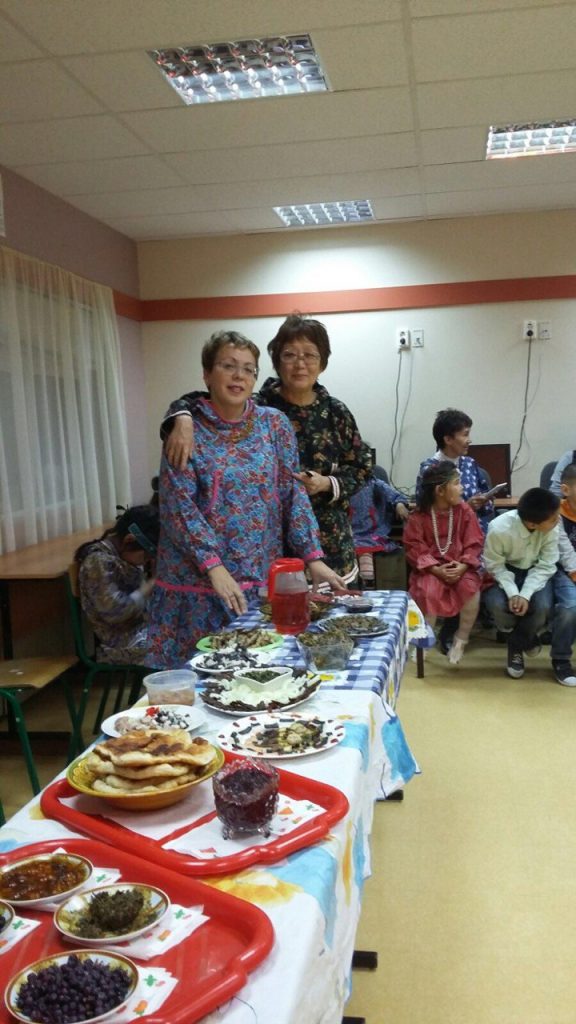
I gave the name only one granddaughter, because no one could choose a name for her. When she fell ill, I noticed characteristic signs in how she behaved - she screamed like a miter. I told about this an elderly woman who could advise something, asked if I could call her that? She replied: “Yes, you can. This is probably a warehouse. ” This is my granddaughter to think.
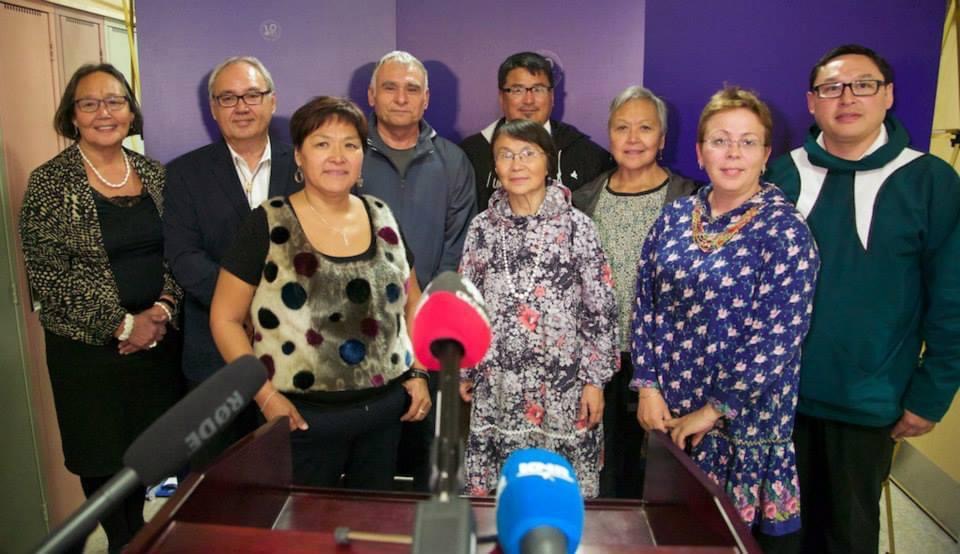
In 2018, I was at the General Assembly of the Inuite Subpolar Council - the Eskimos of Russia, Denmark, Canada and the United States arrived. We gathered in Alaska in the city of Utkiagvik, a former Barrow. The events were going on for three days, and in the end many Eskimos participated: they climbed the stage with tambourines, walked and knocked - there was such a roar! And such pride took me such a direct. I felt power, power, as if we were all united - these are four countries and one culture. I am very pleased to review these frames , it becomes warm in my soul.
In the censuses of the population, I always indicate my nationality - the Eskimosk. When I look at the sea, when I go to the tundra, I feel unity with nature. And our ancestors talked with nature, fed spirits. They are harsh, strong, our hunters are the best. Pride takes me that we were the first to come up with a rotary harpoon. We have beautiful songs, we have beautiful dances. Our women are wonderful craftswomen, they sew slippers, mittens, earlier sewing for hunters equipment from the skins of seals, sewed stone ( outerwear. - approx. " Cold ") from the skins of the tank. I know that I belong to the Eskimos.
"Lech, what a Jew are you!"
Alexey Klinkin, 33 years old, guide, Moscow
I often say that my sister and I were born thanks to state anti -Semitism. My dad in 1978 wanted to become a surgeon and entered the Perm Medical Institute. The city said that the rector Evgeny Wagner is an anti -Semitic person. Jews, of course, were taken to the medical institute, but not all-there was some unofficial quota. Dad was overwhelmed at the last entrance exam in physics, which he knew perfectly. He went to the chemical faculty of PSU - and entered there very easily, having handed over the physicist for five.
Mom in 1980 wanted to enter the History Faculty. Friends of the family dissuaded her from the very beginning, because Jews were not taken there, and Jews were taken to the chemical faculty. Grandfather bought her a textbook, mother became interested and went to the chemical faculty. So the parents met.
The fact that we are Jews, my sister and I learned very early - I was five years old. In the family on gatherings and in conversations, the issue of Jewry was constantly being discussed-they were looking for “their own”: that one and this one too, yes. There are a bunch of jokes on this subject, for example: two Jews are found, one says to the other: “Have you heard for the English Queen?” He replies: "Are you sho?"
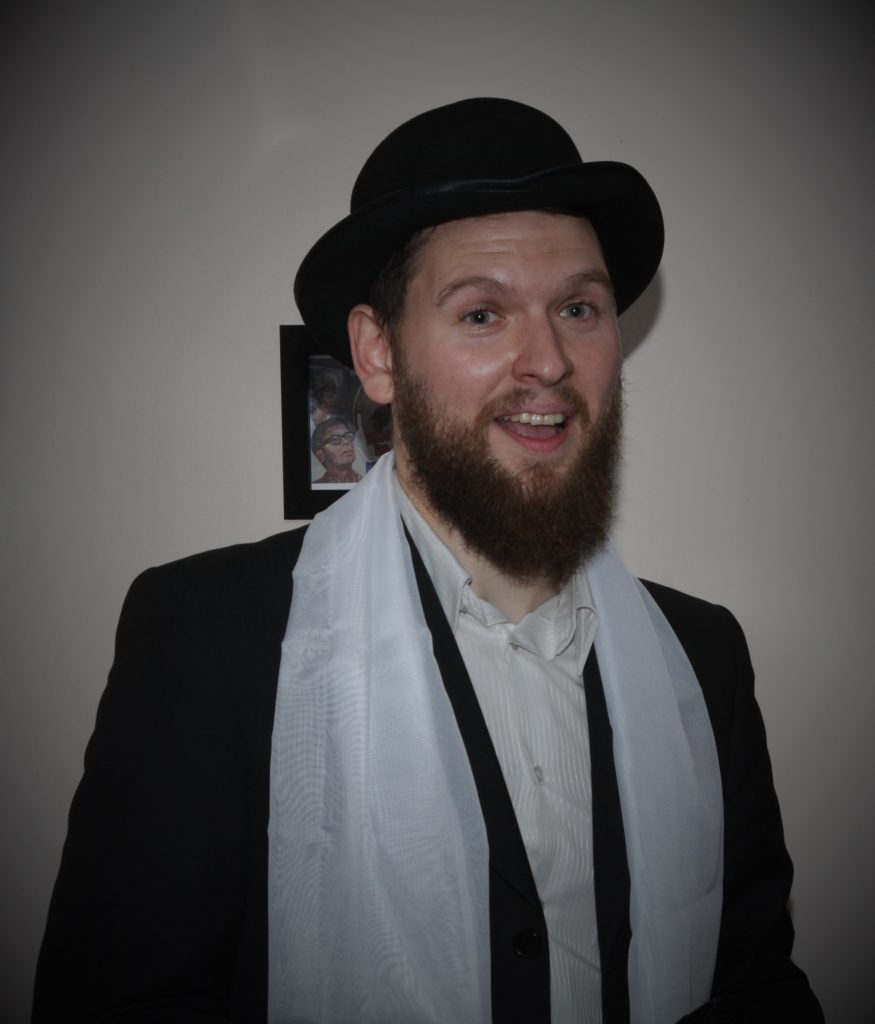
My sister and I were lucky to be born in a free time in terms of national policy. But the story of the parents was reflected in our upbringing-I remember the words of the pope that if someone calls you a Jew, you must immediately beat in the face. Of course, I did not have to do this, although my friends called me so much as a joke - but, of course, this is a joke, especially if you know the history of their people in Russia. Black people call each other nigers, but do not give b-g ( the rabbis explain such a spelling by an attempt to avoid the desecration of the name of God: for example, when it is mentioned on paper, which can subsequently be thrown into garbage, which means it is desecrated. Incomplete spelling desacrates this mention. This practice moves on the Internet. From the outside. The same thing with Jews: in a Jewish party, young people call each other Jews-everyone accepts this as a joke, but do not give Gd someone from the outside will call you a Jew.
The most stringent story associated with anti-Semitism happened to the parents of my grandmother: my great-grandfather on my mother’s line, Girsch Veniaminovich Black Sea, was a police captain-caught criminals, had some rewards. The year 1952 came, marked by the famous " case of doctors ." The consequences affected many Jews, there were national cleaning in different instances. Girsha Veniaminovich was fired from the police, deprived of his title and all regalia for one reason - he was a Jew. The great-grandmother Esther fell asleep with depression because of this-she was officially diagnosed-because she was afraid that her husband would not be taken to work and the family would have nothing to eat. After the “case of doctors” in society, the level of household anti -Semitism increased very much: people were afraid to go to Jewish doctors, they were afraid to deal with Jews at all. Because of this, the great-grandmother quickly faded away.
However, due to the peculiarities of my nature of the story about how my relatives were touching due to nationality, I was not very influenced by me. I always liked to differ, to be original, and my nationality in this regard pleased me. When I was eight years old, my parents came to visit us from Simferopol. I say to Grandmother Rae: "I am proud that I am a Jew." She stopped me: “What is there to be proud of? You didn’t choose who to be born. This is not your achievement, it is just a given. ” Then I thought that she was actually right, but soon I returned to my beliefs.
Once in the first grade, the teacher issued the phrase: "We are all Russian people." I raised my hand, I say: "I'm not Russian." She fell into a stupor: "Who are you?" - "I am Jewish". She was very confused. And all the same: “Well, you are an upstart! I should tell you this? ” In the third grade in the drawing lesson in the spring we were told: "Draw a drawing about Easter." Children draw Easter cakes, painted eggs. I drew a box of Matsa and show the teacher. She looks: "What is it?" I say: "This is Matsu." She is: "Four." I just don't draw very well.
At school, friends told me: “Lech, what a Jew are you! You are a Russian dude! You look like Russian, you speak Russian. ” I dismissed everything: “No, no. I am Jewish". But already being an adult and having received a linguistic education, he realized how much language and thinking are interconnected. I realized that I really love Russian, he is my dear. And the language in itself carries an awesome cultural code. This makes me a Russian Jew, I belong to Russian culture. The only element of the Jewish culture that was in the family in my childhood is Matsu. She was just always in the house, but no one told us what the custom is connected with.
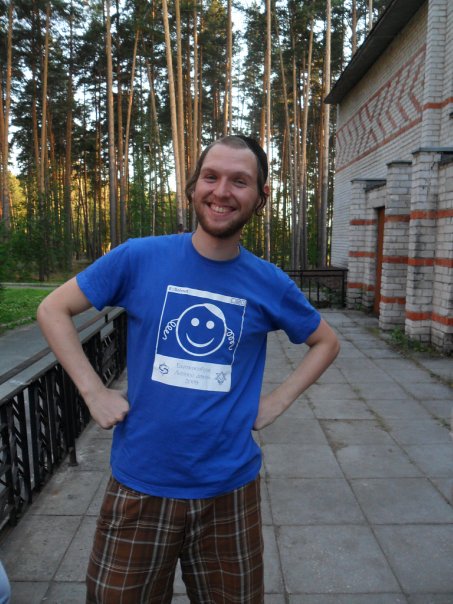
But behind the same there is a whole culture - interest in it came to me by itself when I was 15 years old. I was very fascinated by the language- not Hebrew, but Yidish ( Hebrew- a revived Hebrew language, the state language of Israel, Yiddish- the language of the eastern, central and Western European Jews.- approx. "Cold" ). After school, I entered the faculty of Romano-Germanic languages of PSU. On the day of my 18th anniversary, dad called me and said that he sets the task of learning Hebrew before me, because they are not serious about Yiddish in Jewish circles, no one says on it. I went to study Hebrew in the synagogue to the rabbi, then I studied the Torah for a year, learned a lot about religion, rites. I am not a religious person, but I am fascinated by a form, external manifestations. I began to grow a beard - not for religious reasons, but because I always liked what my pope’s beard looks like. In addition, the Jews are customary to wear a beard. By the end of the university, I grew up paces - I defended a diploma with lands. At the same time, I did not curl them and did not cover my head, but simply walked with two curls on the temples. It looked, of course, absolutely terrible. Now I look at the pictures and I think: Lord, what is you an idiot, what did you do at all? But then I just wanted to experience it on myself - besides, I liked to shock.
From the age of 15, interest in Jewish culture did not leave me for a second. I continue to study it and I think that this can be done endlessly. And this interest did not come to my sister. Our family is absolutely secular-these are people who have received a natural science education. For them, all these Jewish traditions are a gloomy forest that I do not want to meddle in. And I'm interested. I am even called a family rabbi, because I understand the traditions a little deeper.
For example, I came to my parents at Rosh Ha-Shana ( Jewish New Year.-Approx. " Cold "). By tradition, there should be apples on the table in honey on the table. I say to loved ones: let's get together, and just put the chopped apples and honey on the table. You may not care, you may not eat it, I do not ask you to praise Gd. It’s just that it reminds us of the holiday, you yourself constantly say that we are Jews. Dad looks at me strangely at such moments as a fool.
I am 33 years old, but I don’t want to marry yet, and I don’t need children yet. Mom says: “We will accept any of your choice, it doesn’t matter who, the main thing is to get married, make children.” And dad says: “Come on, live as you want. But if you get married, it is great if she is a Jew. ” His parents said the same thing to the dad: "Lennya, we would like to be a Jewish wife." Dad specifically chose his mother - he told how he came to the trade union committee, watched students' lists and looked for Jews. I looked after: you can talk with this one with this one. He told me repeatedly: "Well, yes, it was a marriage by calculation - I needed a Jewish." Directly "needed." And they also put it in my head.
I feel that I have a great responsibility: our family had only Jews, not a single mixture - and this is a rarity. Therefore, I was soared that my first girl was a non -Jew. Then I met another girl who was also a non -Jewish one. Now I have been developing relations with a girl for four months already, and she is also a non -Jew. As a result, I realized that relations with a person of any nationality are cool. Но если я решу жениться, то все-таки предпочту еврейку. Причем желательно, чтобы девушка была еврейкой с обеих сторон. В Москве для молодежи, которая хочет составить настоящий еврейский брак, существует приложение Jewwish — «еврейское желание». Работает оно не так, как Тиндер: там не смахиваешь направо-налево. По сути это цифровой шидух — еврейское сватовство. Для того, чтобы там зарегистрироваться, нужно выложить документы, подтверждающие еврейство по материнской линии. И если у меня все-таки будут дети, мне очень хочется, чтобы они не смешивались, не ассимилировались и сохранили свою культуру.
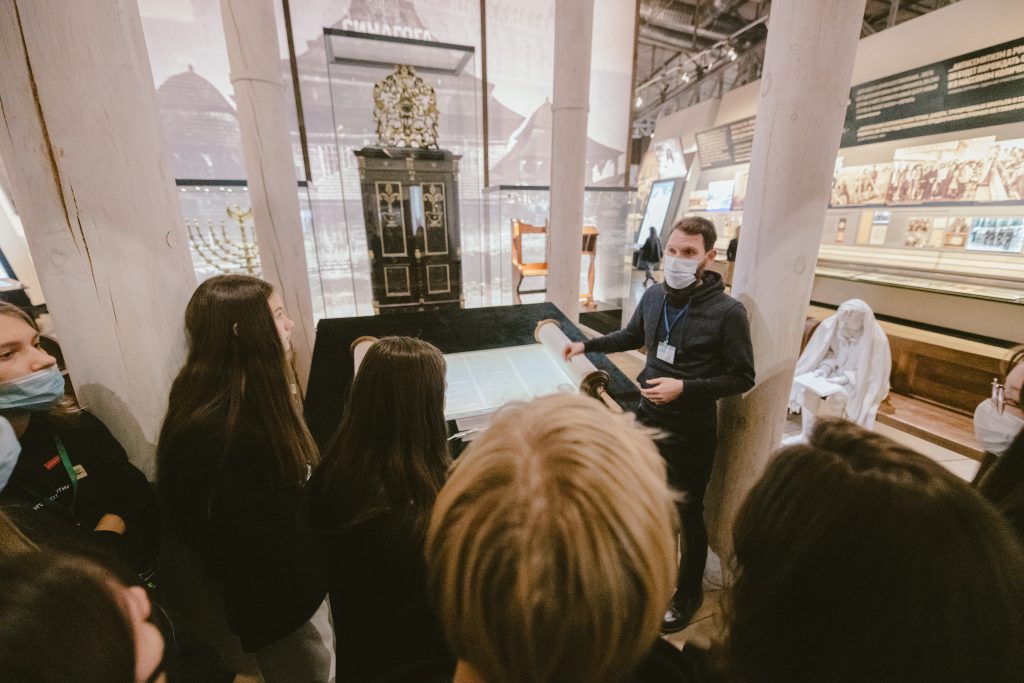
Сейчас я работаю экскурсоводом в Еврейском музее и центре толерантности в Марьиной роще в Москве. В этом районе есть целый еврейский квартал — евреи начали селиться там чуть ли не в конце XIX века. Там была старейшая в Москве деревянная синагога. Когда я переехал в Москву в 2019 году, я сразу захотел там работать. Я чувствую себя там на своем месте, занимаюсь делом, которое мне реально нравится, резонирует с моей душой. Я вижу миссию музея в том, чтобы рассказать всем, кто живет в России, что есть в нашей стране вот такой народ, который здесь живет давно, почти 300 лет. И еще миссия музея в том, чтобы рассказать российскому еврейству: ребята, это ваша культура, это ваша традиция. Здорово, если вы будете ее знать.
Сложно точно посчитать, сколько евреев в России, так как многие не говорят, что они евреи, потому что боятся: никто ведь не знает, куда попадет информация в будущем. В 2002 году, когда проходила перепись населения, я был еще маленьким, но помню, что родители не пустили переписчицу на порог, даже не открыли ей дверь. Тогда им еще было как-то не по себе, что попадешь в список. Еврейский народ это уже проходил, хорошо знает, что это такое. Но в 2010 году, когда была следующая перепись, родители, видимо, решили, что уже стоит о себе заявить. У родителей проявилось самосознание — и они пустили переписчицу. Она прошла в гостиную, ее посадили, мы все собрались. Она задавала вопросы, мы отвечали. Она спрашивает: «Национальность?». И мама, улыбаясь, на меня смотрит и говорит: «Какая у тебя национальность?» — «Еврей». Она записала: «Еврей».
О том, что в этом году будет перепись, я узнал неделю назад. С одной стороны, мне интересно заявить о себе, но в тоже время, поработав в музее и изучив вопрос, я опасаюсь: стоит ли это делать? Я хочу быть учтен в этой стране — я русский еврей, я живу в России, я здесь родился. Но в тоже время задаюсь вопросом: сейчас власть лояльно относится к евреям, но что будет после Путина? No one knows. И папа тоже говорит: «Представь себе, придет кто-нибудь, кто не будет любить евреев, кто будет урезать их в правах, устраивать гонения. И тебя найдут — есть списки переписи населения, и там указано, что ты еврей». Это непростой вопрос, я в раздумьях.
«Раньше люди стеснялись говорить по-удмуртски в трамваях»
Богдан Анфиногенов, 31 год, поэт, вокалист, Ижевск
В крупных удмуртских райцентрах — Малая Пурга, Шаркан, Игра — считается престижным говорить на русском языке. Доходит до забавного: удмурты, владеющие родным языком, даже между собой общаются на русском. Удмуртский свободно и хорошо живет только в деревне, в своей естественной среде.
Мои родители всегда общались со мной и братом на русском языке. Мама родом из маленькой деревни Арляново. Ее мать — прямо удмуртка-удмуртка: она плохо понимала русский язык, всю жизнь прожила в этой маленькой деревне, где нет смысла знать русский. Приезжая в деревню, мама говорит с родственниками по-удмуртски — она хорошо знает язык. А папа с раннего детства жил в Малой Пурге, где с советского времени больше говорили по-русски, и от него я намного меньше слышал удмуртскую речь.
В Малой Пурге, где я родился, я и все мои одноклассники-удмурты в конце 90-х общались на русском языке — большинство моих школьных друзей почти не владеют родным языком. Мама рассказывала, что в школе хотели набрать класс, в котором будут изучать удмуртский язык и литературу. В итоге класс набрать не удалось — желающих было недостаточно.
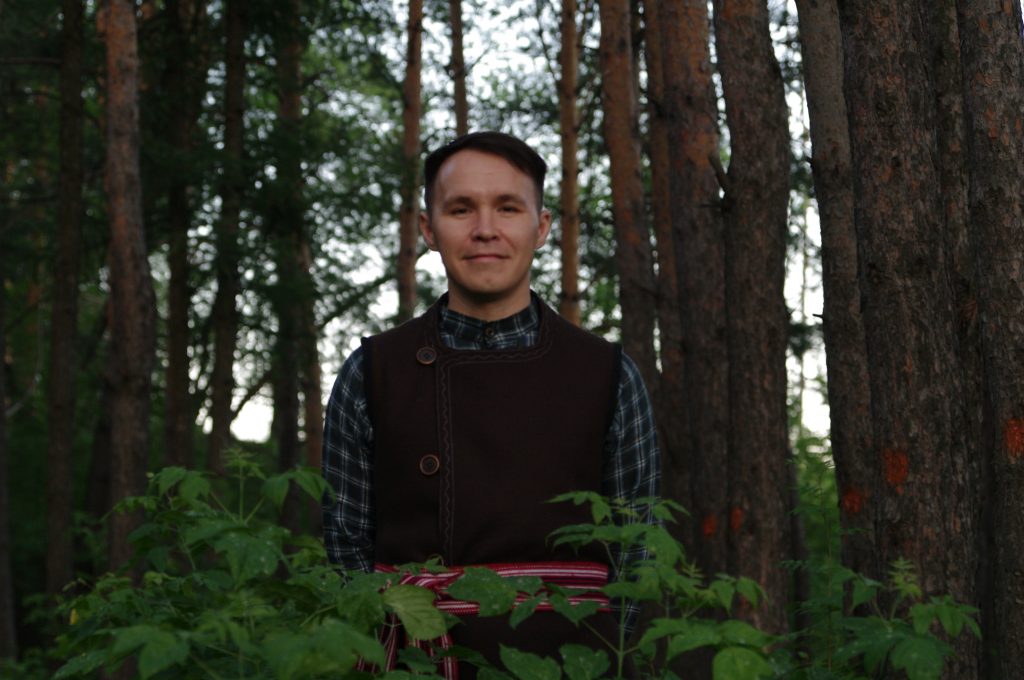
В нашей школе был класс «А», где учились дети из деревни Миндерово, которые разговаривали на русском языке с акцентом. Мы с ними нормально общались, никакого буллинга, как сейчас говорят, не было. Но, поступив в вуз и переехав в Ижевск, я стал слышать от других людей рассказы о том, насколько жестче с этим было в позднесоветское время. Например, в 80-е годы люди стеснялись разговаривать на удмуртском в трамваях.
В 2008 году в Ижевске началась молодежная культурная революция. В клубе «Авиатор» начали проводить «удмуртские дискотеки»: там выступала первая в истории рок-группа, поющая по-удмуртски, Silent Woo Goore, первый удмуртскоязычный рэпер MC Pavol, группа «Электроники DJs» играли миксы на наши народные песни. Это стало популярным явлением. А когда «Бурановские бабушки» спели Цоя на удмуртском языке, это по всей стране пошло.
Переехав в Ижевск, я тоже стал интересоваться своими корнями. Мне было прикольно, что удмуртская культура наконец-то стала свежей, интересной. К тому же я учился на историческом факультете УдГУ на кафедре этнологии — преподаватели там были глыбы удмуртской этнографии. Благодаря им я начал читать много книг об истории моего народа.
После книги Маргариты Гришкиной «Удмурты. Этюды из истории IX–XIX вв» у меня в душе что-то перевернулось. Там написано, что в эпоху Ивана Грозного, когда Казанское ханство присоединили к Московскому княжеству, было Арское княжество, которое принято считать удмуртской территорией — татары называли удмуртов «ары». Получается, у нас было свое средневековое государство, была крепость в городе Арск. До сражений знать Казанского ханства пыталась урегулировать все мирно — в переговорах с войсками Грозного участвовал арский князь Богодан. Договориться не вышло, Казань пала. Но даже после этого Арское княжество продолжало оказывать сопротивление. В итоге очень много людей погибло, удмурты с этих территорий бежали в леса, как раз в сторону современной Удмуртии — и сумели сохранить свою культуру.
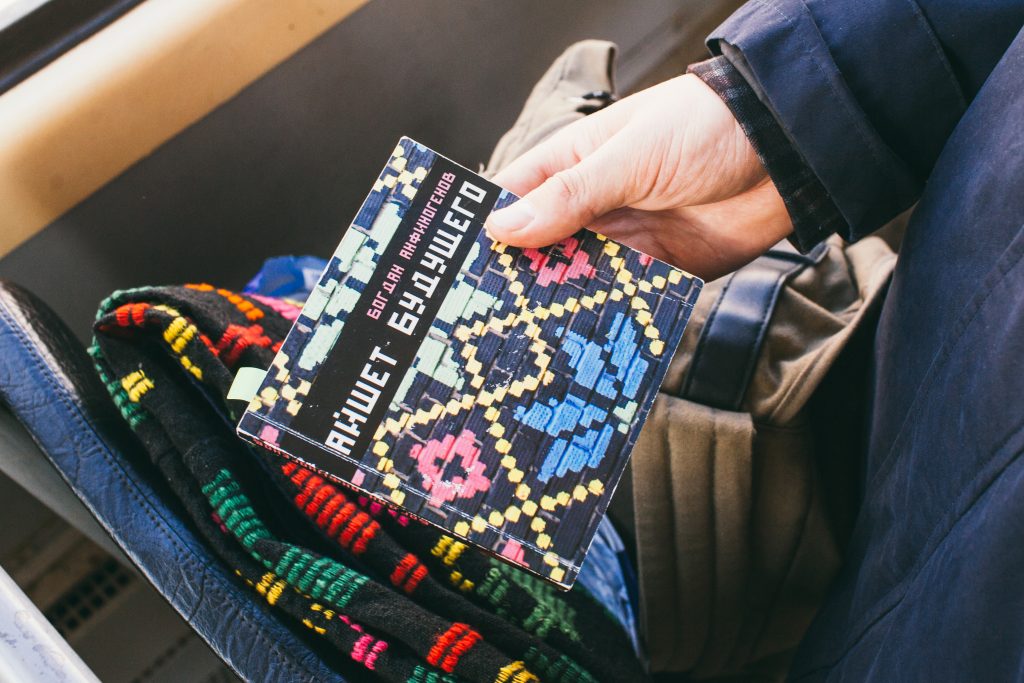
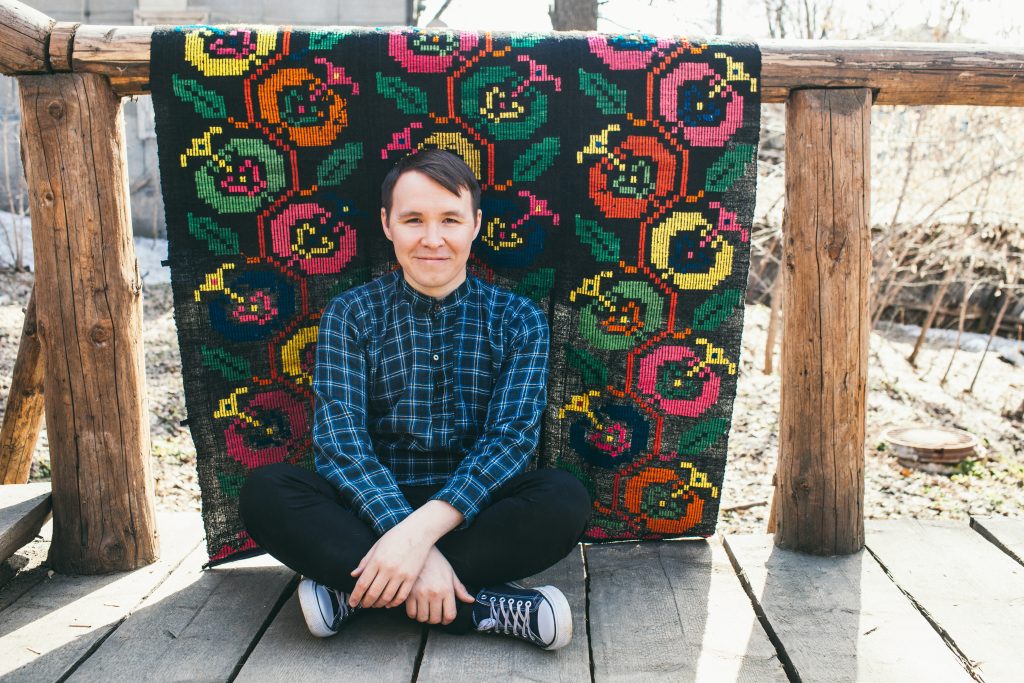
Когда я закончил читать эту книгу, буквально на следующий день пошел и купил словарь, чтобы начать учить язык. Я пытался за один вечер запомнить все слова, настолько сильное у меня было желание. Мне стало стыдно перед самим собой, что мне 18 лет, я удмурт, но не знаю своего языка, что я езжу к бабушке в деревню Арляново, где наши дяди, тети, мама общаются друг с другом на нем — а со своими детьми тут же переходят на русский. Как будто удмуртский — это не родной, а какой-то иностранный язык.
Я общался с удмуртской молодой тусовкой в Ижевске и совершенствовал язык. С детства я писал стихи на русском языке. А тогда начал использовать в них удмуртские слова, потом фразы, строфы, а потом стал писать стихи полностью на удмуртском и выкладывал их «ВКонтакте». После того как я выучил язык, я с огромной радостью приезжал в Арляново и общался с бабушкой на удмуртском. Она не была удивлена, просто сразу приняла это как факт. Не так давно она умерла.
В том же 2008 году я стал солистом удмуртской панк-рок-группы Amiso Wott. Я перевел песню «Tik-Tok» американской певицы Кеши, назвали ее «Удмурт-пати» — песня была про «макмыр», похмелье после удмуртской дискотеки. Потом и в других проектах я переводил иностранные и русские хиты на удмуртский язык, делал песни с использованием старых народных песен, удмуртской гармошки. Самой популярной стала песня «Super Удмурты» .
В 2010 году, когда была предыдущая перепись населения, я уже активно участвовал в удмуртской движухе. Конечно, тогда я записал себя удмуртом и родным языком указал удмуртский, хотя тогда еще не знал его в идеале. В нынешней переписи я тоже запишу себя удмуртом и родный язык укажу — удмуртский и русский. На удмуртском «родной язык» — «анай кыл», дословно — «язык матери». О себе я в шутку говорю, что для меня родной язык — русский, а удмуртский — «ӵужанай кыл» — язык бабушки.
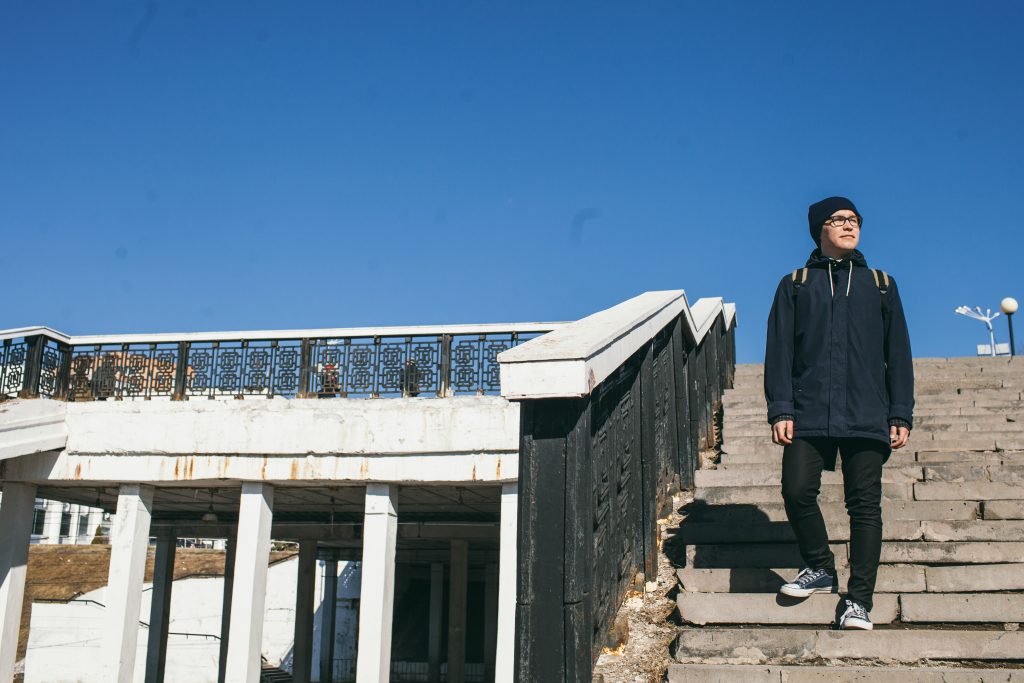
Сейчас я работаю в Доме дружбы народов методистом и продолжаю сочинять и исполнять свои стихи и песни. Я занимаюсь этим прежде всего потому, что ощущаю долг по отношению к предкам. Мне хочется, чтобы удмуртский язык не был музейной редкостью, а стал языком нормального общения людей. Чтобы он не был чем-то хрупким, а был молотком — крепким инструментом. Чтобы его можно использовать не только в литературе, но и в интернете. Например, «ВКонтакте» переведен на 100 языков — и один из них удмуртский. С 2010-го я был активным пользователем удмуртского интерфейса, а в 2018 году как-то зашел в соцсеть и увидел, что удмуртский язык пропал. Представители «ВКонтакте» объяснили, что процент перевода упал ниже 80, на удмуртский язык интерфейс давно не переводили, поэтому его удалили. Я предложил свою помощь и до сих пор практически ежедневно занимаюсь этим.
Сейчас удмуртоофобии стало меньше, но в республике есть места, где она остается. Те, кто делают удмуртские проекты в интернете, знают, что паблики Воткинска и Глазова — самые нетерпимые. Любой контент на удмуртском языке там вызывает жесткую негативную реакцию — люди поливают авторов грязью, пользуются словом «вотяки» ( дореволюционное название удмуртов, сейчас воспринимается ими как обидное. — Прим. «Холода» ). Видимо, так сложилось исторически в советское время. В Ижевске благодаря новым культурным явлениям все это сгладилось, смягчилось, но и здесь полностью не исчезло.
Мне кажется, дело в том, что у нас нет и никогда не было городов, удмуртских по своему духу, атмосфере, с большим количеством людей, говорящих на удмуртском. Ижевск — абсолютно русский. Глазов тоже, хотя и основан на месте удмуртской деревни. Воткинск — город-завод. Сарапул — купеческий русский город. Можга — вообще больше татарский город, чем удмуртский, хоть и имеет удмуртское название. Проблема в том, что современной городской удмуртской культуры до сих пор не существует. Все мои творческие искания и проекты — попытки создать эту культуру.
Автор благодарит антрополога Дмитрия Опарина за помощь в подготовке материала.