
Translated material
We went the top
The vertical of “public power” and epitaph of Russian federalism: how even mayors ceased to choose in Russia
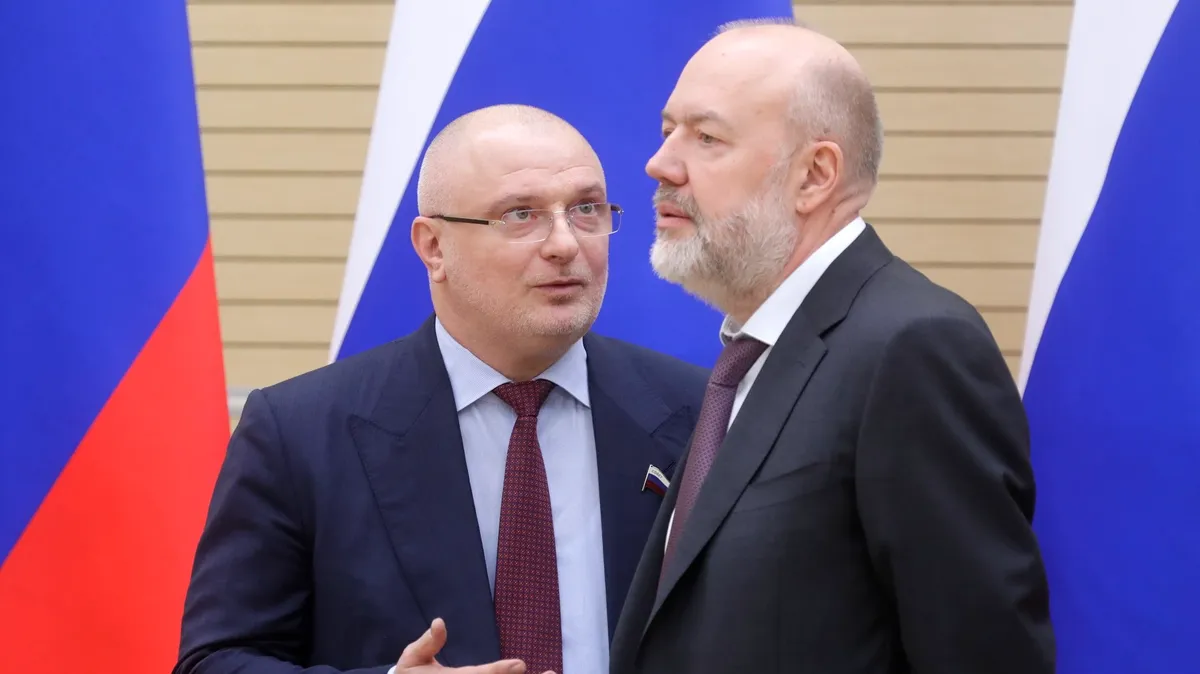
At the end of September, the active senator Klimshas and State Duma deputy Krasheninnikov introduced the draft federal law “On the General Principles of the Organization of Public power in the constituent entities of the Russian Federation” to the Russian parliament. Both authors a year ago stood at the head of the process of amendments to the Constitution. Then, in the main law, a new norm appeared (part 3 of article 132) that local governments and state authorities of regions are included in the “unified system of public power”. As well as the new norm of Part 2 of Art. 80 that the country's president ensures the "coordinated functioning and interaction of bodies that are part of a single system of public power." Now the novels of the Constitution are clothed in the form of laws (the same authors have recently announced a similar bill on local self -government).
The idea of the authors of constitutional amendments regarding the organization of power in the country has now completely cleared up.
The introduction to the Constitution of a unified “public authority” resulted in practice in the final construction of a “vertical of power”, which the Kremlin has been consistently engaged in the beginning of the 2000s.
The adoption of the laws of Klimshas - Krasheninnikov will complete the process of dismantling Russian federalism.
The Federal Center (Government and the Presidential Administration) will actually appoint key regional ministers. The system of authorities in the regions will be unified, as well as their powers. The possibilities of regions to influence the process of adoption of federal laws on joint management subjects will be extremely emasculated (now only 15 days, and not 30, as it is now), will now be reviewed).
The possibility of the election of the head of the region is legalized by deputies of the regional parliament (that is, the abandonment of popular elections). At the same time, the president will be paid to the candidates at the suggestion of political parties (three candidates chosen by him). In the popular elections of the chapters, a prohibitive “municipal filter” is preserved. All regional leaders will be called exclusively “chapter”, and will also become federal civil servants. True, one can add to the “chapter” the local name of the position, except for the word “president” (the latter directly hits the republics in Russia).
Governors become officials subordinate to the president. The president will be able to remove them from the post “For the loss of trust” - without explanation. And even make them reprimands and warnings. The settled for five years will not be able to occupy such a position in any region of the country. When leaning from office, the president will appoint. O. Before the appearance of a new chapter.
The federal government will actually appoint key regional ministers (finance, education and healthcare and several others). Thus, ministers who dispose of the formation and execution of budgets, as well as the lion's part of the expenses, will be subordinate not only to the head of the region, but also to the federal government. The independence of the regions in the planning and spending of budget funds in the implementation of its socio-economic policy is abolished. The power of the heads of regions from the political is to the managerial-executive. Under the strict supervision of the federal center and the prosecutor's office (the powers of the latter are significantly expanding). Regional Ministry of Finance become units of the Federal Ministry of Finance.
Deputies of regional parliaments will also turn into civil servants. Disciplinary measures can now be applied to them, including removing the mandate in an extra -triumphant out -of -parliamentary manner on blurry grounds. The struggle against the "unaccounted" deputies-oppositions will be greatly simplified and will turn into a routine procedure for punishing the execution of Buzoters by the majority. At least a quarter of the deputies will be elected everywhere on party lists (for example, in Moscow today all the deputies of the Moscow City Duma are elected in single -mandate districts).
The President receives the right to dissolve regional parliaments. The regions will be subjected to regular prosecutors and not only checks (planned and non -planned). They have a huge amount of reporting to the federal center. Their own powers and powers in the subjects of joint management are extremely regulated and unified.
All this means the completion of the project for the formation of real Russian federalism. Remaining nominally the federation, the country becomes a unitary and centralized state. The vertical will include both regions authorities and local governments.
The main government vertically is assigned to the president of the country.
Governors finally turn into politically insignificant managers appointed by the federal center. The sovereignty of the people of the regions on the formation of their regional authorities is diminished by the wide capabilities of the center in federal intervention and personnel appointments. The governors are also weakening: a significant part of their administrations will not be subordinated to them, but to the center.
The regional initiative in the field of economics and the social sphere is stopped by detailed regulation in federal laws, national projects, inspections, reports, orders of the Center, including in matters of joint management. In such conditions, the development of competing best regional practices is unlikely. The regions will be built according to the same patterns and put in one common discreet system. The federal authorities will have more influence and power in the provinces than regional ones.
All this resembles a revived Soviet model of the power vertical (I recall that the USSR and the RSFSR were also nominally federations) with a complete dictate of Moscow over the provinces. Only the Presidential Administration will take the place of the CPSU Central Committee (by the way, in the same complex of buildings on Old Square in Moscow as the Central Committee sitting, by the way).
Unification, centralization, weakening of the political and economic independence of the regions are poorly knitted with the unique variety of Russia and the tasks of its development. The chosen course to complete the construction of a hard power vertical generates (as it was already in the USSR and the Russian Empire) new system problems and conflicts. The next generation of Russian leaders (both federal and regional) will have to make them out of them.
Vladimir Ryzhkov,
politician, historian,
November 6, 2021