
Translated material
"Not a single more"
After the death of a pregnant woman who refused to have an abortion due to a legislative ban, tens of thousands of protesters entered the streets of the Polish cities
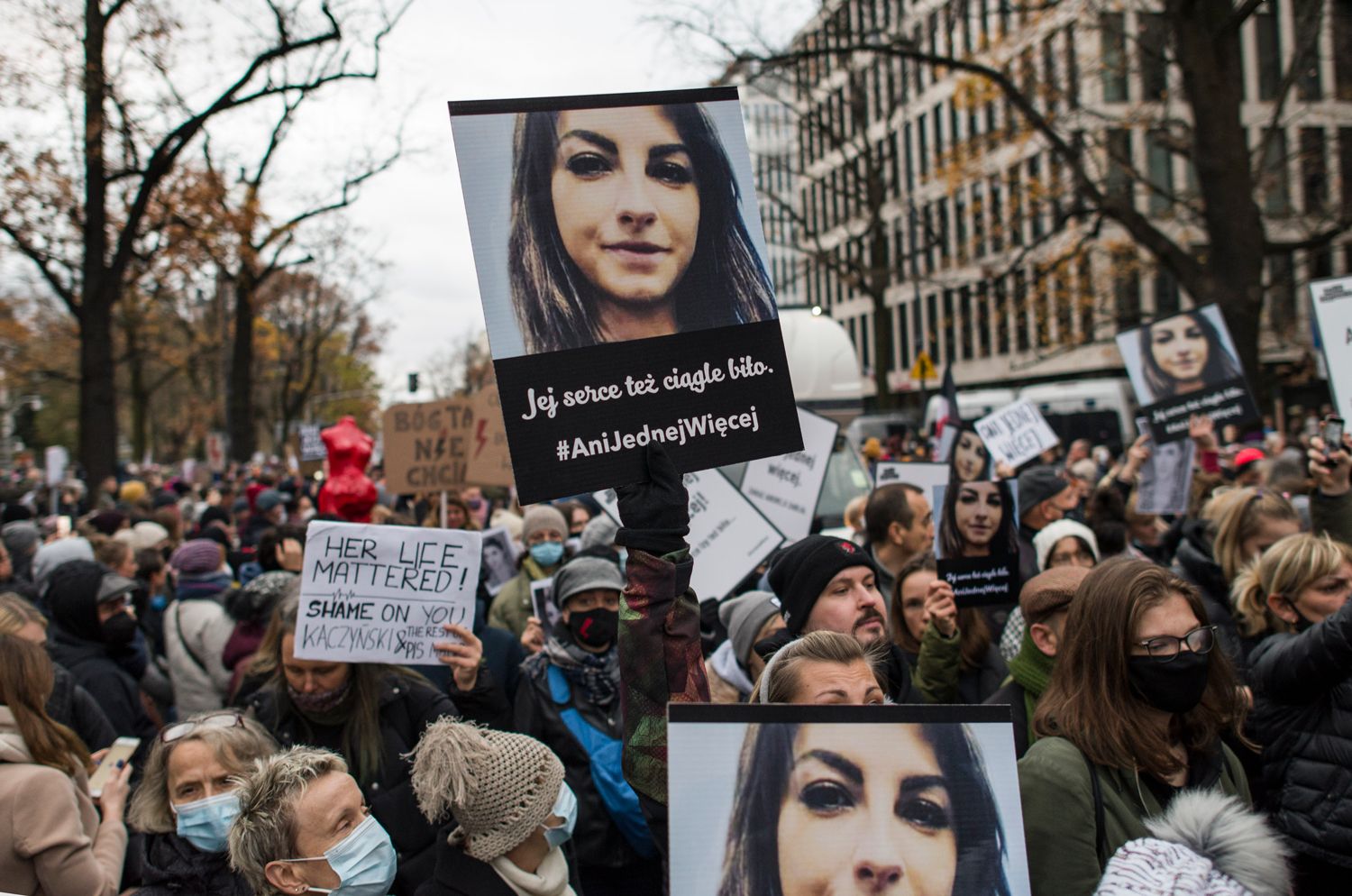
On November 6, in Warsaw and several more cities of Poland, mass demonstrations of opponents of local laws were held, which for a small number of exceptions have actually banned abortion in the country. The reason for the mass shares was the death of 30-year-old Isabela S. (her surname is not called) in one of the hospitals of the city of Pshchi in the south of the country at the end of September.
The lawyer of Iolanta Budzovsk, representing the interests of her family, told the press that the woman entered the hospital at the 22nd week of pregnancy with the departure of amniotic fluid. Doctors confirmed the pathology of pregnancy. Only when the fetus died, in the hospital decided to make a woman a cesarean section. The patient's heart stopped when she was taken to the operating room. The cause of death was a septic shock, she spent 24 hours in the hospital.
It became widely known about the death of the woman in early November, and this raised a new wave of disputes about the decision of the Constitutional Court of Poland, which in October 2020 even more tightened the anti -abortion legislation in the country - already one of the most severe in Europe. Previously, women had the right to abortion, when pregnancy threatened their life and health, conception happened by force - or if a child with a high probability is born with a serious and irreversible defect or an incurable disease that would jeopardize his life. The judges decided that the latter does not give women the right to terminate pregnancy.
The Constitutional Court was significantly reorganized in 2015, when the conservative party “Law and Justice” came to power in Poland (it received the majority of places in the Sejm, and its representative Andrzej Duda was elected president of the country), and it was its protesters who blame the offensive to reproductive rights.
The main slogan of the demonstrators was the phrase "not a single more." According to the organizers and the participant, it was the court’s decision that condemned Isabel S. to death: doctors, they believe, were afraid to have an abortion, knowing that theythreaten up to eight years in prison. The Polish media distributed the text of the message of the Poto, which she sent to her parents after hospitalization: “The child weighs 485 grams. So far, thanks to the law on abortion, I just have to lie here. And there is nothing that they can do. They will wait until he dies or something begins, and if not, then I can wait for the sepsis. ”
“I could not believe it, I thought it was not true,” said the mother of Barbara in an interview with the Polish television channel TVN24 (Reuters quoted her). - How could this happen in the hospital? Well, she turned there for help. ”
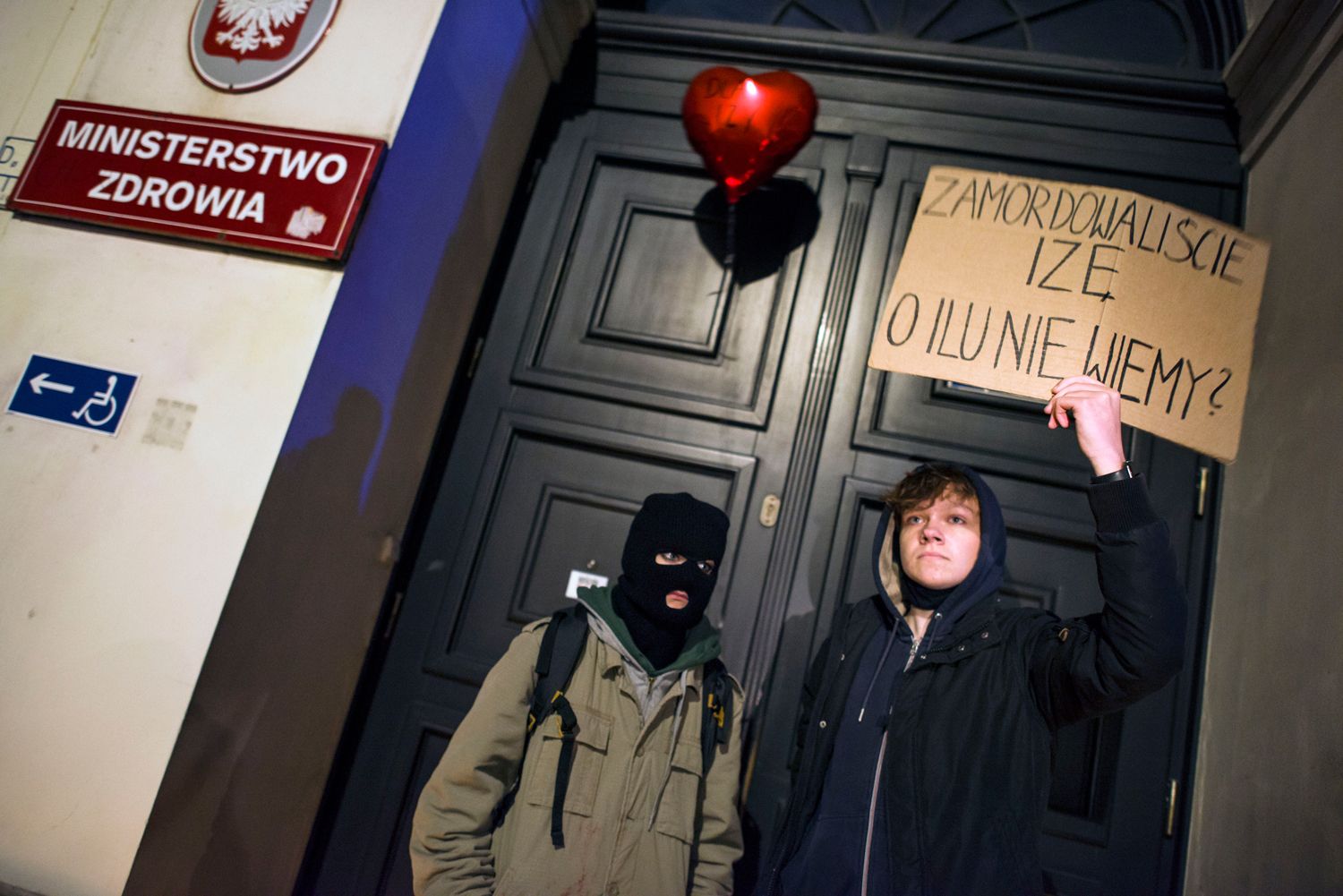
The hospital itself actually tied the death of the patient with the current legislation. “At this stage, it should be emphasized that all medical decisions were made in accordance with the laws and standards in force in Poland,” the statement said on the official website of the hospital. At the same time, on the eve of mass performance, the clinic announced that two doctors who were directly responsible for the treatment of Isabel S.
It is by the medical error, and not by legislative prohibitions, representatives of the ruling party “Law and Justice” explain the incident. So, the country's Prime Minister Mateusz Moravetsky said: “When it reaches the life and health of the mother, when they are in danger, then the termination of pregnancy is possible and the decision [of the court] did not change anything.”
The deputy of the Sejm Bartolome Vobroblevsky said that the death of Isabel S. should not "instrumentalize and use in order to limit the right to life and kill all sick or crippled children."
But supporters of the liberalization of reproductive legislation are hoping that the death of Isabel will become the same for Poland that for Ireland the death of Savita Halappanavar in 2012. Doctors also refused to conduct the operation, referring to the current legislation, and after her death in the country, a civil campaign began, which ultimately led to the abolition of the ban on abortion. Two countries are united by a large and influential Catholic community that opens against abortion.
Ursula Grichuk from the Polish federation for women and family planning told Reuters that in practice "even cases that should not be questioned - when it comes to a threat to the health and health of the mother - are not always recognized as doctors who are scary."
Right now, two bills are under consideration in the Polish Sejm. President of the conservative Andrzej Duda proposes to allow abortion if the fetus is not viable, but other representatives of his party at the same time plans to tighten the punishment for abortion of up to 25 years in prison or lifelong imprisonment under aggravating circumstances.
Now in Poland less than two thousand legal abortions are carried out a year, while, according to human rights activists estimates, about 200 thousand women commit an abortion illegally or go abroad for this.
Dmitry Kartsev