
Translated material
Reading Dostoevsky
Kim Smirnov. From a personal diary
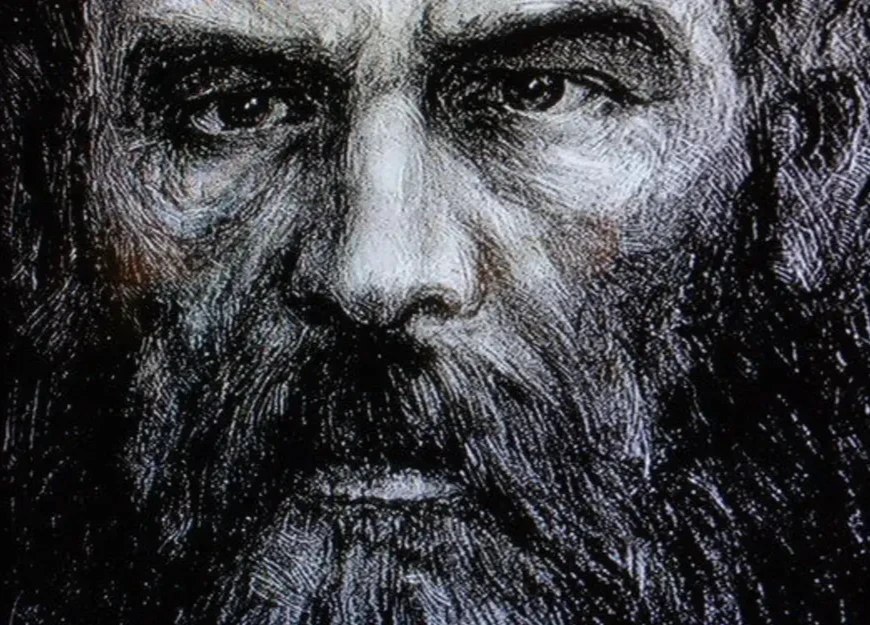
January 3, 1996 Wednesday
"Bobok". "Writer's Diary." VI. "Citizen", 1873, No. 6.
*The roy of granites of the grave,
Princes equalization and beggars.
And on the split cemetery
The dead bosses about the living.*
What is the under -exploration of the living during life sounds in this - vying! - The conversation of the dead, even in a phantasmagoric form! What is the desire of Dostoevsky himself to break out of the framework of human being and non -being narrow for the genius! How closely his spiritual universe in an imperfect physical membrane, which was bestowed by his nature (or, in his personal perception, - God)!
November 10, 2021 Wednesday
Here he wrote then: “re -read”, and now I grin. Everyone says so about the classics when they actually read for the first time. But I really read it many, many times. And then, in the 96th, he re-read the collected works from our home library, published back in the 19th century. And then I re -read it. Not by virtue of spiritual predisposition, as, for example, I re -read the “white nights” and Pushkin speech that I lovedly from Dostoevsky. And because of a certain mystical riddle that is programmed in this “bobka” and which everything is strongly strongly solved by my (and only mine?) The brain “on the days of doubt, in the days of painful thoughts”, not so much, maybe “about the fate of my homeland”, if according to Turgenev, how much about the fate of the human soul in this homeland, if in Dostoevsky.
For the first time he discovered it for himself shortly after the war - according to a huge that. Then, so solid, thick, perfectly published, printed on good paper somewhere in the Soviet zone of the occupation of Germany, the folio of our classics, came out. Yes, then he was already called a great Russian writer (however, they never called him otherwise), but also a obscurantist and reactionary, and Alexei Maksimych Peshkov, he is Maxim Gorky, at a higher and intelligent level - a sick with our conscience, which in itself is the truth. But we read it ourselves, without looking before this in the “protocols” of the then critical “Lynch ships” over Dostoevsky. And no one forbade us to do this, as some Ivan are now believed from journalism that do not remember kinship.
Such an episode. We were given a homework at school: about the book that read the latter. And I just had a “crime and punishment”. What thoughts arose about this, I do not remember. But obviously not very consistent with the then educational standards. However, they still put the five. Without any accusations of dissent and an unhealthy interest in the Dostoevshchina (there was such a “literary” term).
But I will return to re -reading "Bobka". For me, he in some strange, but inevitably echoing with one place from the "village of Stepanchikov and his inhabitants." However, why strange? The dominant Duma of Dostoevsky pass after all, ripening, thickening, through all his work, through everything, very different novels, novels, diary notes.
In Leo Tolstoy, the interaction of man and nature is not the interaction of two equal worlds. Late, the green oak expresses the then spiritual state of Prince Andrei, for the sake of this he is needed in the “war and the world”, and not to say at all: the life of this oak remains something objectively valuable and in itself, with its internal forms and laws that are different from our human ones.
Or remember in his "childhood":
“So charming this wonderful smell of forest after the spring thunderstorm, the smell of birch, violets, a healing sheet, wrinkles, the birds, that I can’t sit in a breach, jumping off the steps, running to the bushes and, despite the fact that I show off with rain droplets, dilated wet branches of the blossomed pitch, I beat myself in the face and they beat myself in the face. I revel in their wonderful smell <...> ... I run to the carriage window.
- Lyubochka! Katya! - I scream, giving a few twigs there, look how good! ”
The magnificent, delightful lines about the admiration of the surrounding nature in the bright years of adolescence, from which (and there are a lot of similar ones in the gold, nineteenth century of Russian literature) then, already in the next century, many wonderful pages of Prishvin, Paustovsky, Leonid Leonov began. But ... would the hero break these Cheryomukhov branches if he realized, or at least felt their equal person, a person, the right to life?
But Dostoevsky’s humanization of the surrounding world (when, for example, an uncle in “Selo Stepanchikov” says: “After all, you will think that the trees also understand something to themselves, feel and enjoy life ... Is there really no ...”)-this is not only the expansion of the universe of man himself. Uncle recognizes the right of trees to his own, special life. Although it is said that it is immediately obvious: it is he who “revives” them with his attitude and spiritualizes them.
And, perhaps, not so much uncle, a literary character as Dostoevsky himself. All the time he, as it were, seeks to expand his personal universe into the surrounding universe of nature and other people, to penetrate into it, as the metal penetrates into another metal with close contact under high pressure - the longer, the deeper the interpenetration.
But this is not the absorption of other worlds by the world of my own "I". This is doubling, tripled, multiplication of worlds. Why so?
The universe of the genius is so compressed in itself to a fantastic, extraterrestrial share that it cannot - under a giant internal self -deduction - do not expand to the size of the external universe. It is not expanding that it absorbs other, other people's spiritual worlds, but by the fact that it recognizes these worlds, whether it is the life of a tree, a beast or man, for new, self -valuable spiritual universes, thereby really doubleting, studying, multiplying to infinity the universe of his, personal spiritual world ...
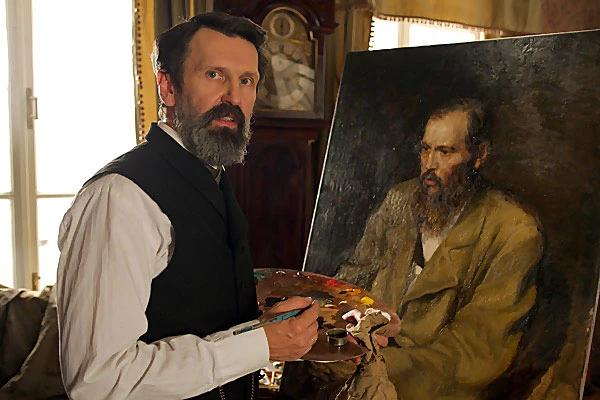
Sometimes this happens on the verge of different "weather" fronts. Sometimes with watercolor sensitivity and not tenderness to the surrounding outside world. As in the same “white nights”, in the perception of the hero of desert St. Petersburg, his channels, his houses:
“I am also familiar to me at home. When I go, everyone seems to run forward on the street, looks at me in all the windows and almost says: “Hello; How is your health? And thank God I am healthy, and the floor will be added to me in the month of May. ” Or: “I almost burned down and at the same time frightened”, etc. Of these I have favorites, there are short friends, one of them intends to treat this summer with an architect. I will deliberately go every day so that they do not heal somehow, save him Lord ... But I will never forget the story with one prejudice, light pink house. It was such a small house, so friendly I looked at me, so proudly looked at my clumsy neighbors that my heart was happy when I happened to pass by. Suddenly, last week, I walk along the street and how I looked at a friend - I hear a plaintive scream: “And they paint me in yellow paint!”
The villains, barbarians! They did not regret anything: neither columns, nor cornices, and my friend turned yellow, like a canary. My bile almost spilled on this occasion, and I still could not see my disastrous poor ... "
The flickering, ghostly sadness of the white St. Petersburg night ... And-deep, hopeless loneliness, when there is no one to talk to a person, except with houses. The houses themselves are deserted. The owners may simply not. For the summer cottage, let's say, left. But each house has a soul. Your own? Yes, of course, its own. But the fact of the matter is that not only his own-the invented hero, too, but most likely-the writer himself. For, of course, there is no such multiplication without a person himself, without the writer himself. His personality in this case is a catalyst for an increase in spirituality in the world. And this one human person, one soul was enough to populate, spiritualize an entire city that does not coincide with the glossy-opening second capital of Russia, but nevertheless lives in millions of other human souls, and in mine, Petersburg Dostoevsky. The city is the universe. Like everything else, with which the soul of a genius is in contact, becomes a separate universe.
Well, if she is in contact with the soul of another genius? Then a double star flares up in the sky of our lives, for example, the Pushkin -Dostoevsky star, as happened at the opening of the Moscow monument to the poet. When Dostoevsky, in the speech read that day, grabs in the depths and makes the internal connection between Aleko and Evgeny Onegin into the light of the Light and dating the prophetic thought of the Russian wanderer, who “needs universal happiness to calm down: he does not reconcile”, his, Dostoevsky, torments his own Duma, penetrating and “crime” and “demons” and “demons” and “demons” and “demons” and “demons” and “demons” and “demons” and “demons” "The Karamazov brothers." About
Is this idea of worldwide happiness, a triumph of justice and the legality of at least one human life, one childhood tears.
After all, no one except Dostoevsky looked at the death of Lensky as a bloody trail in Onegin's fate. Yes, in all his work, in the entire worldview - and in Pushkin’s perception, too, the scales of Libra are fluctuating. On one - the world concepts of all -human happiness, on the other - just one drop of blood, just one tear of the child. And the second bowl outweighs.
Dostoevsky made in literature what Lobachevsky made in mathematics and Einstein in physics: he transferred it from three-dimensional space to the N-dimensional.
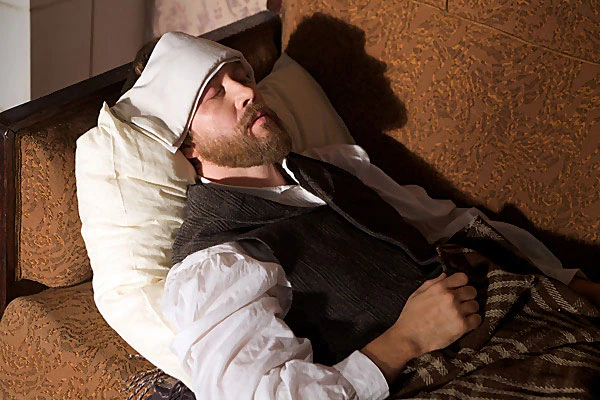
Perhaps there was not a single significant person in the world culture who did not try himself in the field of the Dostoevan studies, who-Dostoevsky-Jackets. I recall my long -standing conversation with one of the classics of the XX century philosophy by the Riker field at the World Philosophical Congress in Moscow. He called Dostoevsky the greatest Russian philosopher, and when I asked if he often rereads him, replied: “The only book that I took with me to Congress,“ The Karamazov brothers ”.
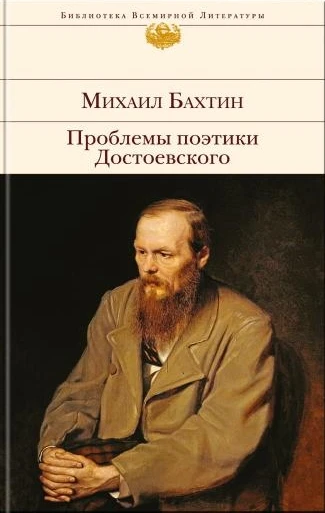
But still, from everything that is written about Dostoevsky in our world, Mikhail Bakhtin turned out to be closest to the truth. He was the first to understand that Dostoevsky discovered a completely new, polyphonic type of artistic thinking, “created a new art model of the world”:
“Not many characters and fate in a single objective world in the light of a single author’s consciousness are deployed in his works, but it is the multiplicity of equal consciousnesses with their worlds that is combined here, preserving its unconsciousness, in the unity of some event.”
In this regard, Bakhtin directly refers to Einstein (though stipulating that "a comparison of the world of Dostoevsky with the world of Einstein is only a comparison of an artistic type, and not a scientific analogy"): "as if different counting systems are united here in the complex unity of the Einstein Universe."
Well, in the final “Problems of Dostoevsky’s poetics” - already without any reservations:
“The scientific consciousness of a modern person has learned to navigate in difficult conditions of the“ probable universe ”, is not embarrassed by any“ uncertainty ”, but knows how to take them into account and calculate. The Einstein world with its multiplicity of the reference systems, etc., has long been familiar to this consciousness, etc. But in the field of artistic knowledge they sometimes continue to demand the rude, most primitive certainty, which obviously cannot be true.
It is necessary to renounce monologic skills in order to get used to the new artistic sphere that Dostoevsky discovered and navigate the incomparably more complex artistic model of the world that he created. ”
However, that Bakhtin’s comparison of these two brilliant personal spiritual worlds is not “only a comparison of the artistic type” confirms the deep interest of Einstein himself in the work of Dostoevsky.
Remember his famous: “Dostoevsky gives me more than any thinker, more than Gauss!”?
At the same time, I think, Bakhtin is not quite right when he does not agree with Leonid Grossman, who considered the “vortex composition” an important feature of Dostoevsky’s novels:
“... hardly the vortex movement of events, no matter how powerful it is, and the unity of the philosophical plan, no matter how deep it is, are sufficient to resolve the most complicated and contradictory compositional task, which L. Grossman so sharply and clearly formulated. As for the vortex movement, here with Dostoevsky the most vulgar modern filmuroman can argue with Dostoevsky. The unity of the philosophical design in itself, as such, cannot serve as the last basis of artistic unity. ”
This refers to the following statement in the "Poetics of Dostoevsky" by L. Grossman:
"... The basic principle of his romance composition: to subordinate polarly unrealizable elements of the story of the unity of the philosophical plan and the vortex movement of events."
You can understand Bakhtin. Its penetration into the innermost philosophical and artistic-composite treasures of Dostoevsky is much more voluminous, deep than that of L. Grossman and many of his other contemporaries. And yet, the latter, and especially the later domestic researchers and interpreters of what the sick Fedor Mikhailovich wrote and even thought about and even thought a lot of his own, self -expert discoveries.
It is unlikely that “any vulgar modern film -romance” can actually argue with the brilliant vortex composition of “demons”. For it was inseparably fused precisely with the philosophical knot, tied (or untied?) The writer here, which is originally, obviously not in these most “vulgar modern films”.
The architectonics of the “demons” are far from that ancient compositional harmony, which marked the prose of Pushkin and Lermontov, and from that free growth of figurative fabric into the dome wide -skinned crowns of high -centuries, which I would likened to the architectural vaults of “wars and the world” and “Anna Karenina”.
In the architectonics of “demons” there are, in fact, no architectonics, no music frozen in stone. In it - the music of the demonic, who took over, spinning the whole world of snowstorms. The second epigraph to the novel - from the Gospel of Luke - obviously exposes the title thought of the writer and even emphasizes it, repeating the gospel quote in the text, on the pages preceding the deaths of Stepan Timofeevich and are of key importance for understanding the author’s position. But there is another, the first epigraph:
*“At least kill, you can’t see a trace,
We got lost, what should we do?
The demon leads us in the field, apparently
Yes, circles around.*
<...>
*How many of them, where they are driven,
What is they singing so plaintively?
Whether they bury the brownie
Do you marry a witch? "*
Well, of course, Pushkin. Of course, his "demons". The key to the name of the novel. This is on the surface. But - Copinies are deeper, and suddenly you will understand: these quatrains to the rubber in the eyes for sure, focusingly highlight all the attachment that is happening on the pages of the novel.
In the Chernobyl tragedy, one of the most difficult troubles was the flying concentration of radiation. Where there was no half an hour ago at all, the wind can be sustained by its deadly nest. And after half an hour in the same place, nothing will happen again. This is the composition of the “demons”, where evil is in the worship of the plot, demonstrations are unpredictably concentrated here and there in home foci and in souls, in order to break down to dust, and the day after tomorrow, thickened again into the new spiral of the universal blizzard that gives rise to the universal evil.
“Everyone belongs to everyone, but to everyone. All slaves are equal in slavery. In extreme cases, slander and murder, and most importantly, equality. First of all, the level of education, sciences and talents decreases. The high level of sciences and talents is available only to higher abilities, no higher abilities <...> should be equality in the herd. ”
No, this is not a hidden symbol of the faith of the current “USE-Modernizers” of Russian education and education, through the knee breaking its system, which has developed over the course of three centuries, starting with the Petrine Triad: the university is the Academy (Nobel Laureate, academician Zhores Alferov said: “If in the eighteenth century there was in the XVIII century The Nobel Prize, it should be given to Peter the Great. The system, as necessary, successfully improved in response to new challenges. So today, such new challenges are obvious, for example, in the form of the so-called "computer-digital revolution." Our woe-modders assure: their Unified State Examination Reform is the answer to ZTI new challenges. But every year it becomes more obvious that their attempts are only a lost time for true reforms. And in the educational system itself, and in the bowels of the entire Russian society, an “underground rumble” is growing, which is ready to break out: “they have been pammed up - and will be! It's time to return to common sense. ” However, let's pay attention: the notorious USE has to improve and rely everything almost every year, returning back and further to common sense ...
But Dostoevsky, of course, knew nothing about our future USE reformers. Pyotr Verkhovensky says this - about the theoretical research of another hero of the “demons” - Shigalev. And this is the worst thing, like the lightness with which we already in the 30s of the twentieth century at rallies and meetings, the crowd blessed power to political killings.
And far from all the same under the pressure of fear. More often - under the pressure of a herd of a realized civil debt.
In the novel, on a small time about the area, several plots, ties, climaxes and interchanges are accumulating at once. The climax suddenly explodes immediately at the beginning, shortly after the leisurely deposit of the exposure, at the time of the appearance of young Verkhovensky and Stavrogin. Zhalechina Nikolai Stavrogin - what is it: a tie or a climax? Rather - the last.
But then, throughout the novel, such climax explosions follow one after another. And so - to the very end, to the suicide of Stavrogin. Moreover, this, it turns out, is not the end. Because there is already previously included in the canonical text of “demons” (in the latest publications this injustice is corrected) the head of “at Tikhon”. And in it is the culmination of all climaxes.
Nothing of the kind was neither in the theory, nor in the practice of building both Russian and world classical prose. This embarrassed and even shocked the thinnest connoisseurs.
Although they understood (in any case) that in front of them was the creation of a genius, it nevertheless seemed to them that Dostoevsky did not create according to the rules, against the rules, mixing genres and plots, squeezing several, at least several, at least.
In a word, this spiral, vortex composition is not so unambiguous in Dostoevsky. Thus, this applies to the unity of the philosophical plan.
In my opinion, two of our spiritual guards came to understanding this conflicting unity from two different sides. Orchestrated by faith in God, the mind of Sergei Bulgakov, first of all, identified the biblical principle in the writer’s worldview dominant, Calvary in his heart. This is especially clearly in his Kyiv speech at the evening of Dostoevsky’s memory on February 25, 1906:
“To hear and understand, and therefore to divide, and carry all the sorrows and sins of the whole world is the work of God, and we are approaching here to the terrible secret of the Gethsemane night, bloody struggle and sweat. But to the sacred fence of the Gethsemane Garden, from which there is only one path - to Calvary, everyone approaches to the best of his suffering for other disinterested, selfless sorrows of pain for man. And close, closer to many others, Dostoevsky came to her, and this was also felt in him by his unexplored hearts. Dostoevsky, <...> The “cruel talent” of which torments this torment of his flour, is plusing tears, burning with his fire, this Dostoevsky is not able to sincerely reject a person, he can obscure him, prevent him from his mind, but he cannot consciously reject this human suffering and love for a person, as he could not consciously reject the people and prayed for people and pray Gethsemane Garden. And Golgotha, who was in the heart of Dostoevsky, the cross that was erected in him, this is what imperiously inclines us before Dostoevsky. "
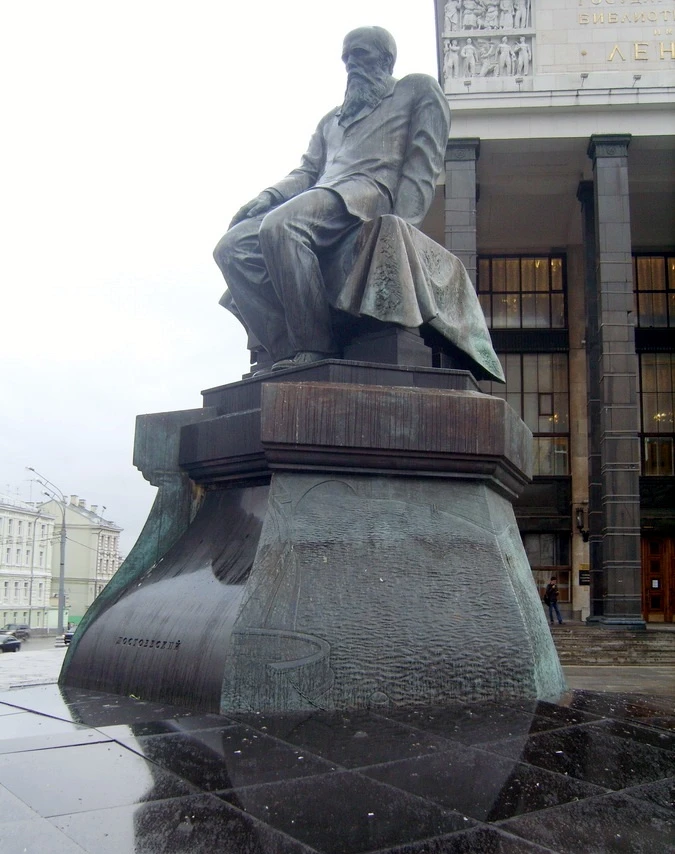
But Vissarion Belinsky, the central, according to Turgenev’s definition, the figure in the spiritual life of the 30-40s, was generally the first to discover in Dostoevsky both for his contemporaries, and for us, who were not yet born, the same, but on the other, the realistic, socio-life side, writing about the very first published novel by Dostoevsky “poor people”:
“Honor and glory to the young poet, whose muse loves people in attics and in basements and tells them to the inhabitants of various chambers:“ After all, these are also people, your brothers! ”
True, True, Dostoevsky did not manage the frantic energy with which Belinsky sought to captivate him under the banner of the “natural school”-even young, to the “execution” (by the way, one of the accusations brought to him in the Petrashevites process, there was a public reading of Belinsky’s letter to Gogol), Dostoevsky was, nevertheless, wider than any social, aesthetic, and ethical frames to which, then, and then, and then and then. Later, many tried to narrow it.
However, later, already in the “Writer’s Diary”, he will leave the lines “with an expression of love and appreciation for the idols of youth” - J. Sand and Belinsky. And in mature diary entries, it will be very consonant with Belinsky:
“I could never understand the thought that only one tenth of people should receive higher development, and the remaining nine tenths should only serve as only material and means, but to remain in the darkness.”
Nevertheless, neither Belinsky, nor S. Bulgakov expressed the truth about Dostoevsky in its entirety, in all the abrasion. For in his relationship with the Christian creed and with the democratic vector of intellectual self -development of Russian life, Dostoevsky has always been in itself, by itself. Was a person. He was an expanding and multiplying universe, which, in spite of any “necessary”, has not yet been “narrowed” by anyone. Even Dostoevsky himself.
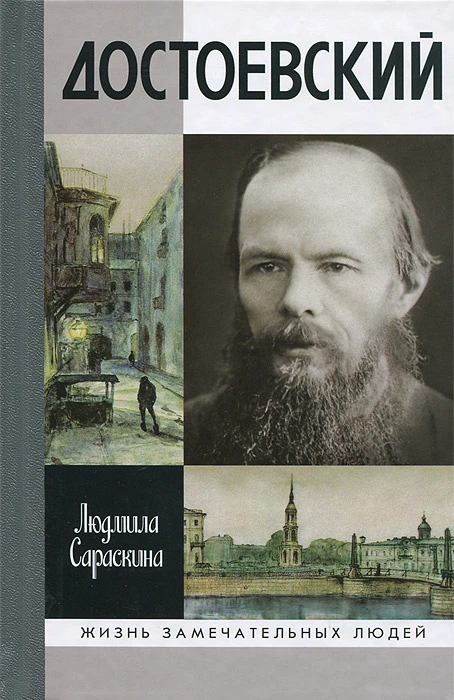
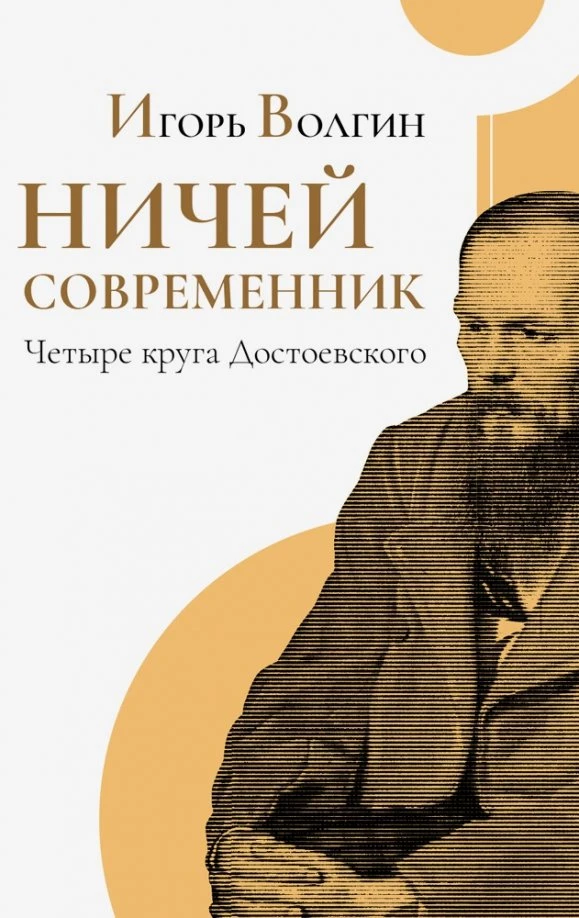
Today, the study of his influence on the spiritual searches of a person, human communities, and all modern humanity have reached our extremum in our works primarily Yuri Karyakin (read Dostoevsky and Apocalypse !), Lyudmila Saranskina (her book in ZhZL , already a third about Dostoevsky in this series - different authors; see, not even so remote from us, but all that was distinguished from us, but everything is allotted from us. Different times require their understanding of his work, his personality, his fate, and lifetime, and posthumous), Igor Volgin, Karen Stepanyan, Tatyana Kasatkina, and other researchers.
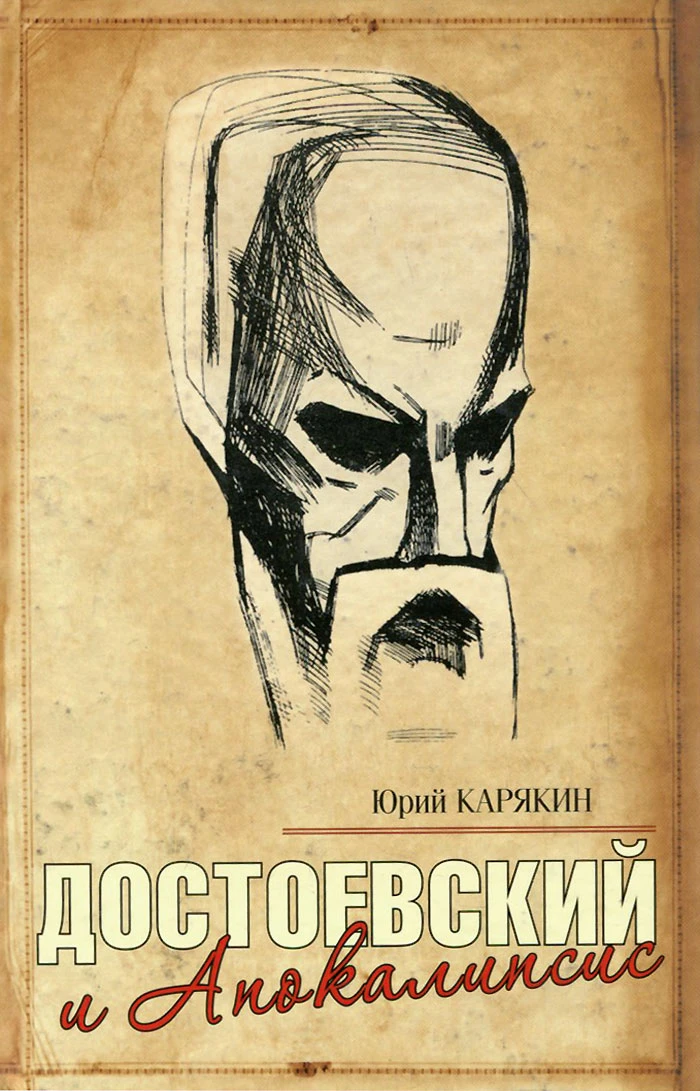
I recall what revelation to me in the perestroika years the first acquaintance with such lines of Karyakin:
"Long live the sun, may the darkness be hidden!" - Under these Pushkin words there is a signature and Dostoevsky <...>. And one word cannot be pulled out of the text - “darkness”, and even with an exclamation mark, and even read the whole text like this: “Long live the darkness!” Another thing (and the most difficult) is that few people got as expensive as Dostoevsky. Is Goye still <...>.
The more powerful the vitality was, the life of Dostoevsky, the more sensitive he became for mortal dangers for the human race. And vice versa: the more obvious, closer, more terrible these dangers became, the more he found in himself and in people, the more frantically he searched for the strength of saving, the forces of resistance to death.
That is why he is one of the most courageous people in the history of mankind, who does not recognize hopeless situations. He is not only a genius of warning about deadly dangers, but also a genius of overcoming them, a genius of exit, and not a dead end. ”
It also crashed into memory what Lyudmila Saraskina said in twenty years ago a conversation with Lena Dyakova on the pages of our newspaper:
“And while Raskolnikov is only busy with himself and one goes to business, this is a“ crime and punishment ”.
And when the five schismatics are united into a group and decide that the percentage can be killed in a beneficial people, this is already “demons”.
And then the world of dirty money and vile circumstances destroys any pure person who falls into him - and this is already an “idiot”.
And so we still live in the atmosphere of Dostoevsky.
I do not see some socio-psychological leveling. Unfortunately. I probably would like Dostoevsky from this point of view to be a writer already belonging to the history of literature. I would be happy ... It would mean that Russia has recovered. That Russia has learned Dostoevsky's lessons. And she does not absorb them. "
Then it was the 180th anniversary of Dostoevsky. Today is the 200th anniversary. Of course, there will be scientific conferences and solemn evenings. But - if by large, Hamburg account - what has changed in decades? Did we finally learn the lessons of a brilliant compatriot? Or? .. I have no direct answer to this question. For here are the most recent data about the most read authors from us (according to the issues published - and not read the current book entrepreneurs will not print), which is regularly published by the Russian Book Chamber. For a long time, the leader here was Daria Dontsova. Today, Stephen King is in the first place, in the second - George Orwell. And only on the third-Fedor Dostoevsky (some kind of progress: in 2019 he was only in sixth place). But Leo Tolstoy is generally on the 16th ...