
Translated material
Lavrov protection
Than the recent public statements of the Russian minister about Kazakhstan are dangerous
The head of the Russian Foreign Ministry Sergei Lavrov wrote the other day the article “Russia and Kazakhstan: Cooperation without Borders”. It is not even anniversary-dedicated to the 29th anniversary of the establishment of diplomatic agents between the two countries. It was informative to read it, there about the growth of trade and institutional dialogue, about the Eurasian project and the bright future of the space power, which Kazakhstan will turn into Russian assistance, about the coordinated foreign policy and the “sense of elbow”, and finally, about the “live dialogue through civil society” ...
But where is about separate shortcomings, because such a large text cannot be the whole “for health”, why should the minister himself write it then?
That's right, about “rest” - at the very end, where we are talking about “ethnic harmony”:
“Unfortunately, recently we have witnessed a number of resonant manifestations of xenophobia against Russian -speaking citizens of Kazakhstan. Certain cases are largely a product of the use of special information techniques from the outside aimed at cultivating town nationalism and discrediting cooperation with Russia. ”
Since the Minister does not indicate the specific “manifestations of xenophobia” that bother him, we will assume that he has in mind a story that has been a story, which was made up of his emergence of a certain Kuat Akhmetov and his YouTube channel. It posted a video interview with Kazakhs working in the field of service, who were not able to maintain a conversation with their customers in Kazakh and spoke only in Russian. Ignorance of the Kazakh language was strictly condemned, and the authorities of Kazakhstan were criticized for not contributing to the implementation and development of the state language. In the Russian press, these videos were called linguistic patrols, and their authors were called by fascist Kazakhs.

The reaction of the Russian authorities was immediate. “Language patrols” were regarded as manifestations of Russophobia. Kuatu Akhmetov was banned from entering Russia for 50 years. In Kazakhstan, the authorities opened a criminal case against him, accusing of inciting national razor. Dauren Abaev, Deputy Head of the Presidential Administration of Kazakhstan, called Akhmetov’s activity by “cave nationalism” manifestations, saying that “to talk about infringing on the Russian language in Kazakhstan is at least unfair.”
It would seem that the incident has been exhausted, what prompted Minister Lavrov to return to him again? Indeed, in Kazakhstan they try not to recall the conversations in vain, who had recently been led by famous Russian politicians and deputies, about the “gifts of the Russian people”, who, when leaving the USSR, would be good to return to Russia ... It is known how tough obstruction these attacks were subjected to Kazakhstan, including from representatives of its leadership.
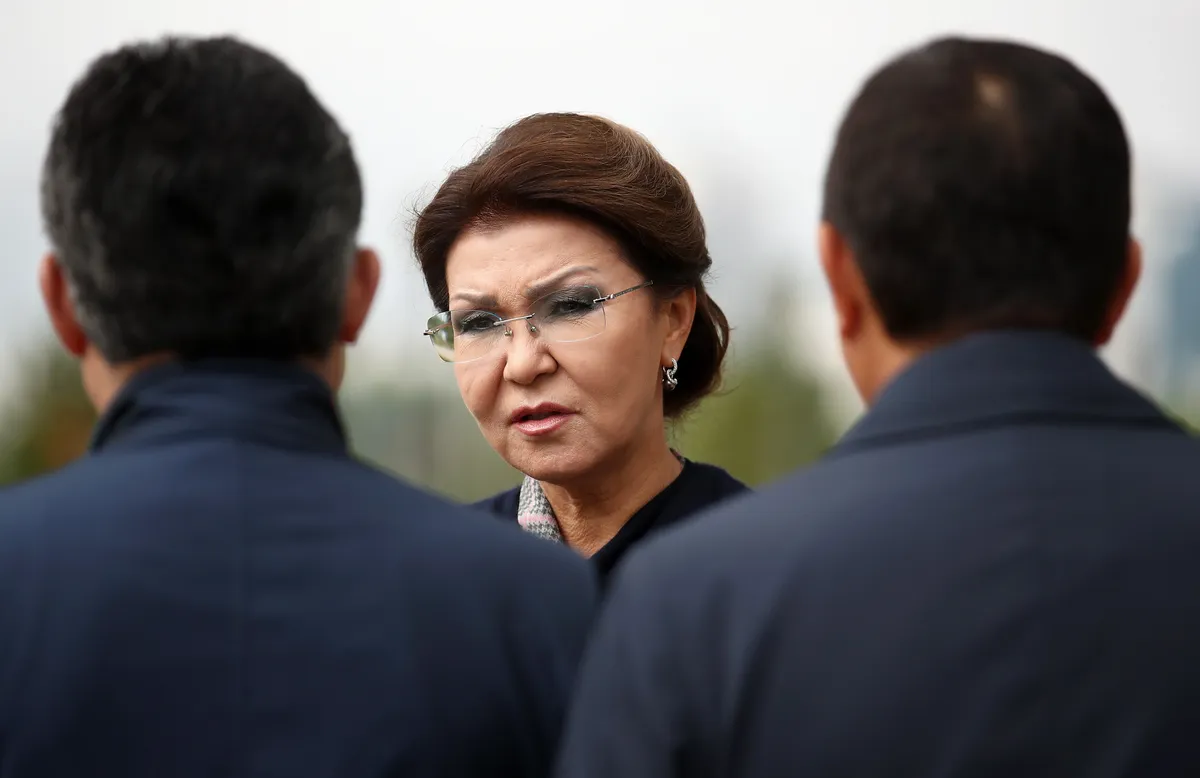
And now, even the eldest daughter of the first president of Kazakhstan, Darig Nazarbayev, hardly hid irritation, commenting on Lavrov’s words: in Russia there is no, no, and “xenophobic manifestations” happen that cause resonance ...
With a cursory look at the text signed by the Russian minister, it may seem that he, as it were, justifies the “town nationalists” in Kazakhstan - they say, they themselves would never have thought of opposing the Russian -speaking and Russia, they are zombies from the outside with sophisticated “information methods”. In other words, they make foreign agents from them, as in Russia.
My acquaintances of Kazakhs, well acquainted with the current Russian realities, respond sarcastically to a similar “Lavrov’s defense”: your minister offends us, does he really believe that we ourselves will not find harmful in Russian politics for us without an extraneous hint?
Then why did it take such a non -humor, as if without reason, the performance of the head of Russian diplomacy?
Kazakh interlocutors agreed with one assumption on this subject. It is no coincidence that the article by Lavrov appeared a few days before the Summit of the Turkic Council, which took place on November 12 in Istanbul and established the organization of the Turkic states (OTG), in which the President of Kazakhstan-Zhomart Tokaev also took part. In Moscow, they decided to remind Nur-Sultan, which of them is the “older sister” and who is the “younger brother” that Kazakhstan is considered as the closest ally of Russia, and his status of the OTG member should not contradict his obligations as an axial participant in the CSTO and the EAEU. This is understandable.
Another explanation of Lavrov’s speech, which is given by influential representatives of the Kazakhstan elite, looks more alarming.
They believe that the purpose of Russian policy in relation to Kazakhstan, part of which is the escapades of Russian diplomats, and the instrument is artificial injection of the atmosphere of Russophobia, is the desire to push Russian -speaking people living in the country (today, according to various estimates, about 3 million people) to the final resettlement to Russia. This, on the one hand, will solve the demographic problem of the country where the share of the Russian population is rapidly decreasing, and on the other hand, it will allow you to compensate for the decrease in the number of labor migrants from the CIS countries. Vladimir Zhirinovsky frankly spoke about the setting of such tasks this summer, who proposed without delay to issue Russian passports to compatriots in Kazakhstan, and the chairman of the Duma Committee of the CIS Leonid Kalashnikov repeated after the leader of the LDPR.
If this version is fair, then counting on a confidential or at least respectful attitude towards Russia from the part of building its sovereignty of Kazakhstan, and most importantly, it does not have to live in the management of the country of generation, which does not know the training with Russia in the same empire, is not necessary.
It is interesting that in China, whose leadership is aware of the historically determined moods of synophobia in Kazakhstan, found their way to overcome them. Beijing began to publish an online version in the Kazakh language of the main Chinese newspaper Zhenmin Zibao. For some of the Kazakhs, this is perceived by a signal that in the Middle Kingdom they are already ready to perceive their country as Kazakhoid, and not Russian -speaking ...