
Translated material
Schwabra is hung!
FSB vs. Memorial Memorial
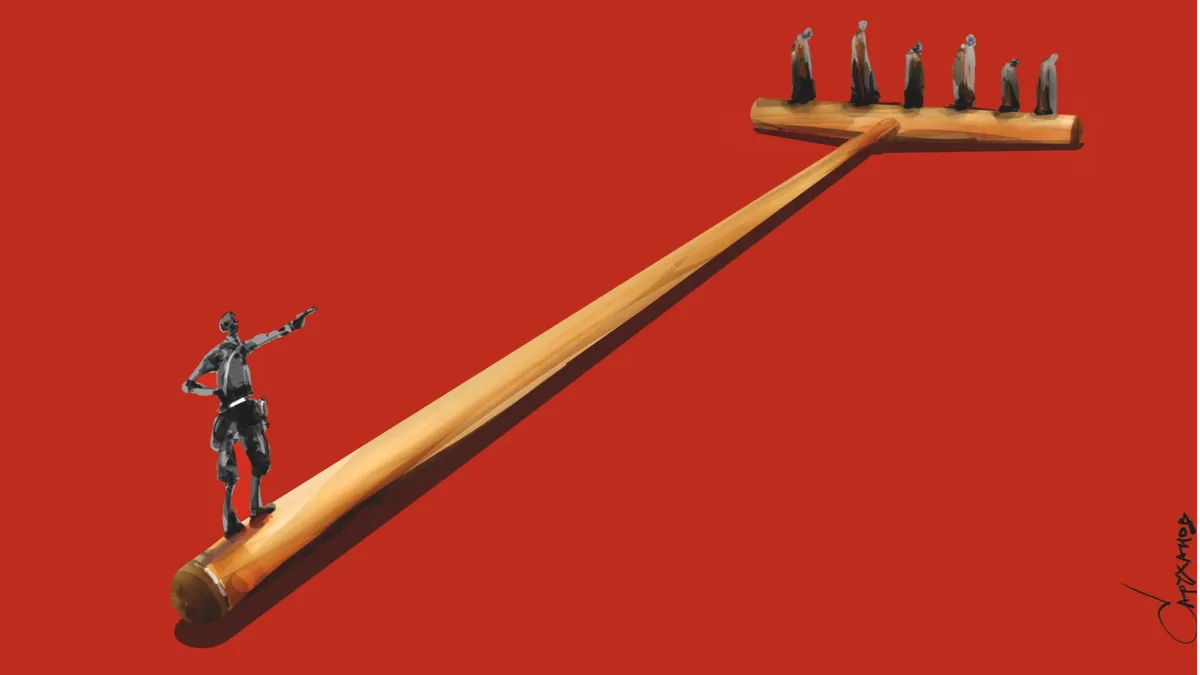
Speaking about the “memorial”*, you can not indicate its “foreign service”, since you are talking about, as I am now, not about the institution, but about something much more-about that huge sociocultural phenomenon associated with this name for millions of normal people in Russia and around the world. Nevertheless, I will designate it - both for myself and for the correct brevity - the abbreviation: mm, “my memorial”.
This is not the meta -combined Tsuckerberg or Putin, but a whole “ecosystem” of real human rights, educational, humanitarian and historical projects, initiatives and organizations, at the very upper origins of which Yuri Samodurov (with his initiative group “for perpetuating the memory of the victims of political repressions”), Andrei Sakharov, Sergey Kovalev, Arseny Roginsky and others.
Sergei Parkhomenko accurately called mm the true focus and the house of Russian civil society, the successor of the traditions of his first chairman - academician Sakharov. This house and this house are also presented to me by the mainland - a firm tectonically soil, the support of historical conscience and civil liability.
The metaphor of the mainland is fundamental here, it emphasizes: mm is not an archipelago! Unlike the Gulag Archipelago, which he has been engaged for a long time and stubbornly, and unlike the FSB Archipelago, which has been engaged in it for a long time and stubbornly.
So what is mm as I know him, I remember and love for more than three decades for more than three decades?
First of all, some incredible and distressed enthusiasm of the initiators and employees themselves, high intellectual intensity, optimism, hot disputes. Immediately, the main missions of mm were indicated on the move.
The first is the identification and socialization of the victims of the Stalinist repressions, the versatile assistance to those who were still alive. Today, this is the legal support of children of repressed, to whom the Russian courts, wiping their legs on the Constitution and the Constitutional Court, refused the right to decent housing at the place of arrest of parents.
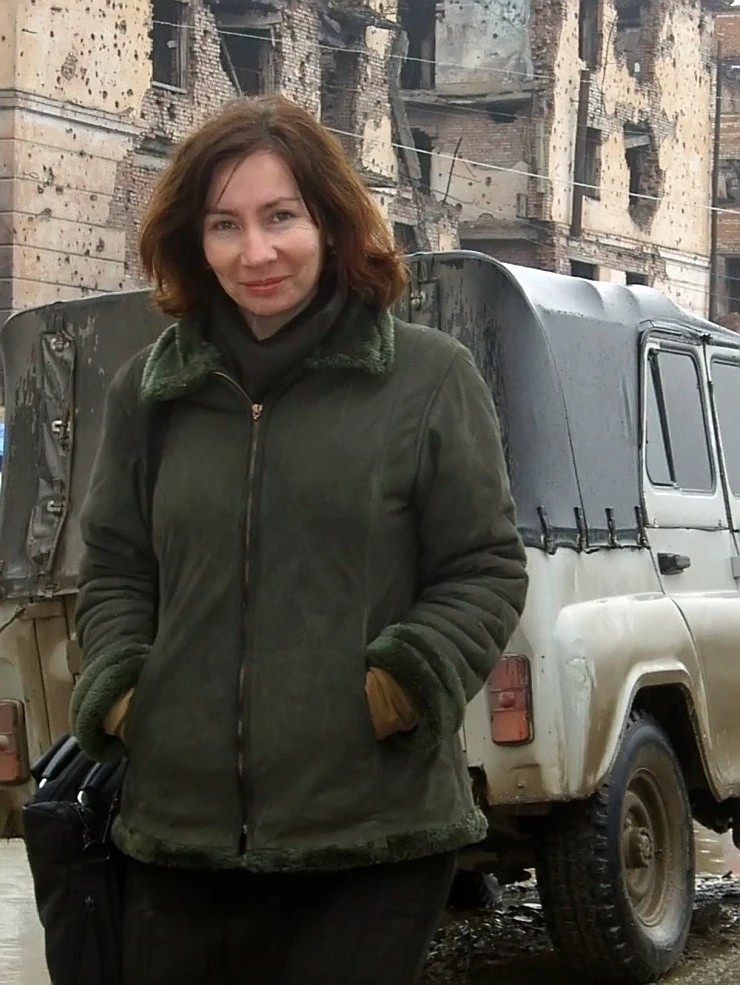
The second mission is the current human rights activity, anywhere in the country. Including in Chechnya, under the deadly risk, in military, in peacetime: stolen and killed by “unknown” Natalya Estemirova was a representative of the Memorial. Today this is the qualification of other court sentences as political and recognition of their victims by prisoners of conscience.
And finally, the third mission is a thorough, painstaking work with historical factual and memory. If "My Memorial" and the agent, then Madame Clio! In essence, a whole school of free historians, different from most of their academic colleagues, has developed here not only the subject of study (pioneers of details), but also with the courage to set questions and skill in obtaining answers to them. Irina Shcherbakova, Arseny Roginsky, Nikita Okhotin, Nikita Petrov, Alexander Guryanov, Jan Rachinsky - Pleiades!
What did MM do besides studying the Stalinist "Heritage"?
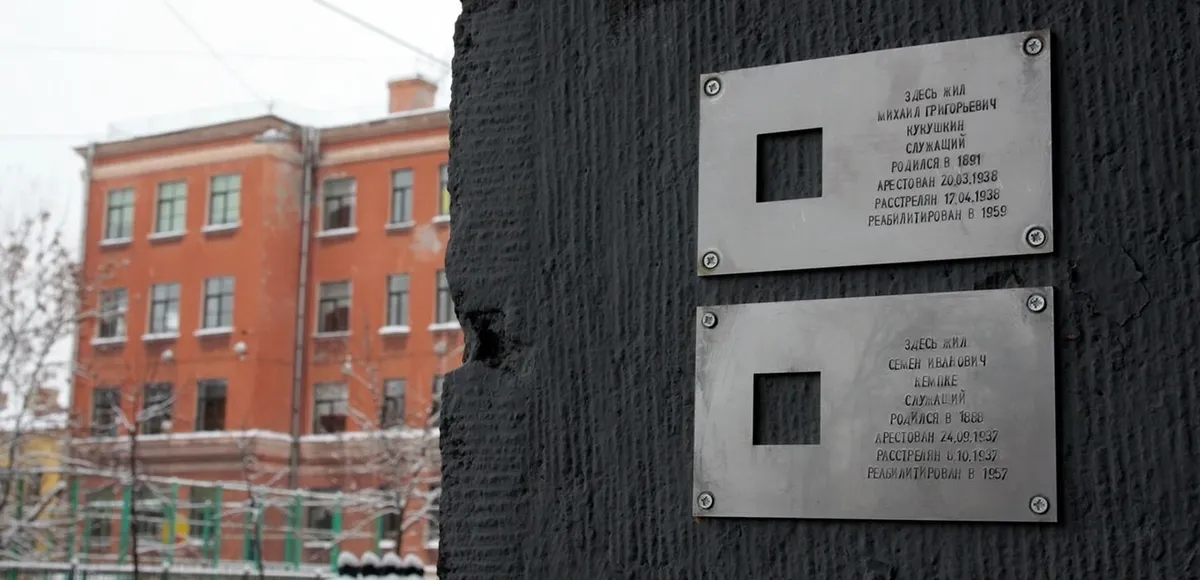
Here is the collection of a paper archive about repressions, and the collection of a unique library, and own publications, and the newspaper “October 30”, and permanent expositions. Here is an oral history (interviewing the repressed), and the annual educational competition for schoolchildren “Man in history. Russia is the XX century. " Here, immersion in the Kremlin’s archives on the eve of the court over the CPSU, and the struggle for the opening of the archives, as well as for the illegal inaccessible inaccessible to what is open. Here is a crazy, but therefore no less wonderful project about Ostarbeters. And the local history of terror, and the “last address”, and the “October 30” campaign - a memory relay from the Lubyansky stone and throughout the country on the day of memory of political repressions.
Databases
A separate conversation is deserved by branded memorial databases of historical data. Here are their brief and, possibly, an incomplete report available on the site .
Undoubtedly, the largest and most important of them is the base of victims of political terror in the USSR, which incorporated regional books of memory and did not reflect in them the author’s bases and materials of various archives. In December 2017, the base moved to the updated, including And by navigation, site . But its earlier version remains accessible, where the “neighbors” of the desired person in alphabet are also visible, which is often important for a specialized search . Initially, this database was produced on CD (four editions came out). The very first edition was published in 2001 and included “total” 300 thousand names. The current version contains already 3.1 million names and does not get tired of replenishing.
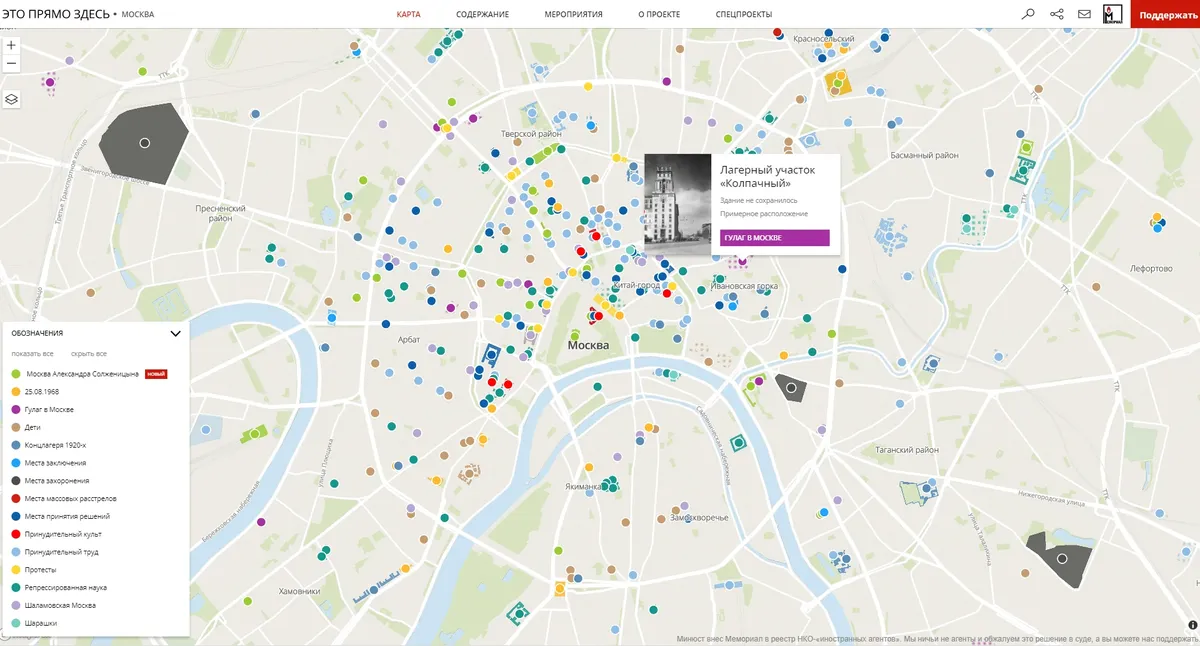
A modified fragment of the initial database of victims is a database of Moscow , which provides for the search, grouping and even cartographic visualization at residence at the time of arrest. Here, however, “total” 12 thousand addresses are less than a third of the total number of executed in the capital. The site is closed with it - the digital version of the Topography of Terror, a reference book related to the history of political repression in Moscow and the Moscow Region with a description of more than 740 locations related to terror.
A separate database was Stalin's shooting lists of the era of large terror.
383 of such regional lists with “autographs” of Stalin and other members of the Politburo contain 44.5 thousand names.
An interesting database is “the personnel of the USSR State Security Organs. 1935-1939 " . It opened in 2016 and contained about 40 thousand names, today there are already more than 42 thousand (at the same time, many initial references are significantly clarified and supplemented). Here, of course, not only executioners, but they are not a minority (however, among the executioners there were many repressed-the historical and ethical conflict).
There are many invaluable collections on the site: according to dissidents (“Chronicle of current events”), according to the dissident movement and on samizdat, according to the executions of Polish officers and about the Ostarbeters.
Ostarbaiters project
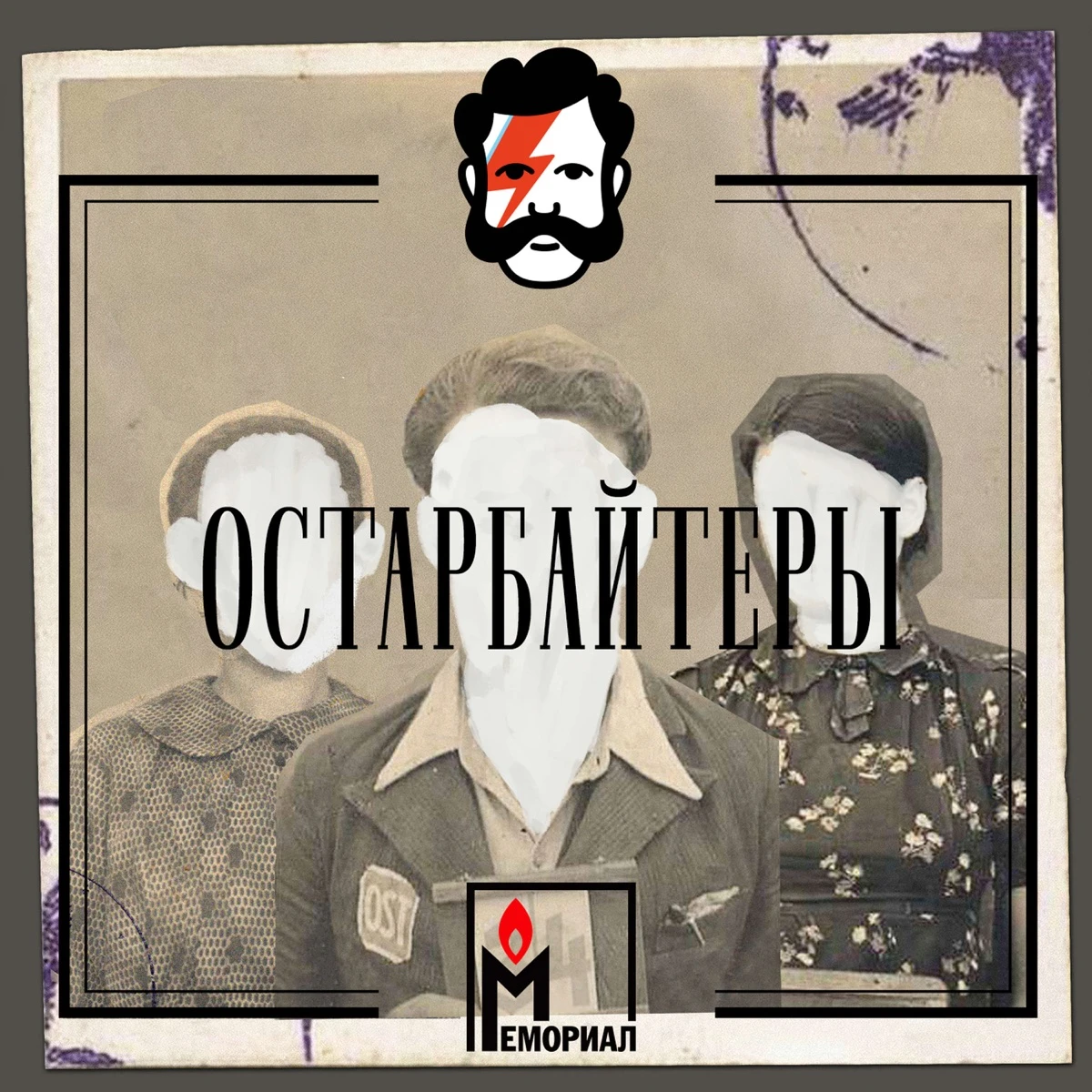
In 2017 and 2019 Two memorial products related to the Ostarbeters were awarded the Enlightener prize: in 2017, the book “The sign will not be erased. The fate of the Ostarbeters in letters, memoirs and oral stories ”A. Kozlova, N. Mikhailov, I. Ostrovskaya and I. Shcherbakova (M.: Agey Tomesh, 2016), and in 2019 - in the nomination“ Enlightener. Digital ” - the Prize received a joint“ Glagolev FM ”project“ Ostarbaiters ” - a multi -part podcast, mounted from the interview with former“ oriental workers ”stored in the international“ memorial ”. In full form with the archive of the oral history of the Ostarbeters and prisoners of war (about 300 interviews) can be found on the website “That Party” .
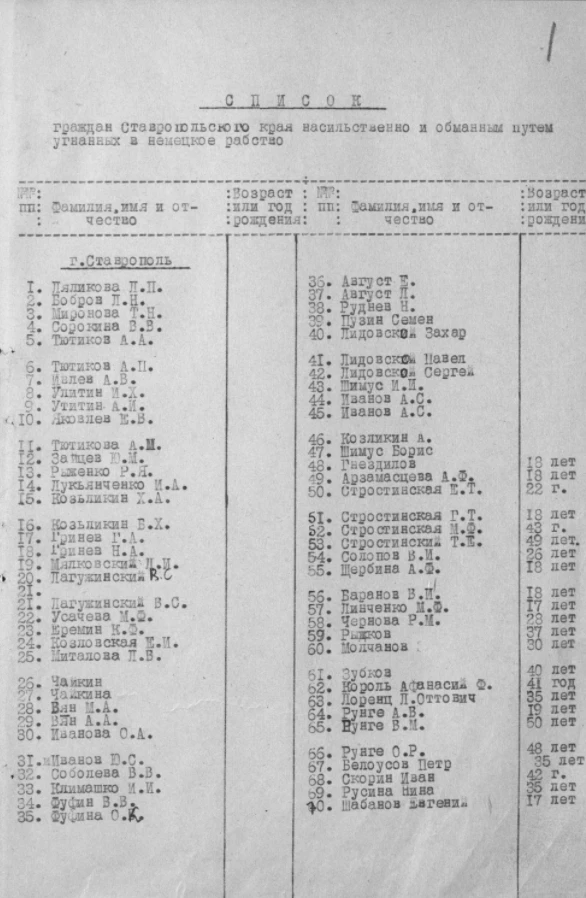
In 2020, another database of unique data was launched on the new site - “Ground Lists” . It contains information about several hundred thousand Soviet citizens deported to forced labor in Germany during the war.
More than 30 years ago, I witnessed the emergence of this base. Everything arose, in essence, from the curiosity. In March 1990, Andrei Zhdankin “Pension from abroad” [1], immediately reprinted by dozens of newspapers of the entire USSR, was released in the “Week”. Nine paragraphs were really dedicated to pensions from abroad, but out of 10 lines-as follows: “A letter from the deputies of the Bundestag of the Federal Republic of Germany-members of the Green Party came to the Memorial society. They invited the “memorial” to find people who during the war were taken to Germany as labor, Ostarbaiters (there were about four million of them). "Green" offers to pay compensation to such people. A detailed card was necessarily started for each eastern worker, these archives have been preserved. The proposal of "green" is accepted. " All!
It was perceived so. First: Germany was ashamed and was about to pay compensation to all former Ostarbeters! Second: all those interested in milkmaids are asked to send their statements to the "Memorial".
And then the “memorial” went in an endless stream, no, the letters of those who, in fact, were addressed to this article, - letters of former Ostarbeters, or Ostovtsev. Most asked with interest where to receive money, but many also talked about their hijacking, and some even with details, with copies or originals of preserved documents and photographs.
The avalanche of letters received by the Memorial - their number then approached 400 thousand! - I prompted to start the work on registering the applicants:
Registration magazines were instituted, a computer register was created, and a large international humanitarian and scientific project “Eastern Workers in the Third Reich before and after 1945” was organized and implemented under the auspices of the Memorial Research Center and the Foundation named after Henry Bell. As part of the project, already in 1990 and 1991, several working meetings were held, and the former Ostarbeters took dozens of interviews, gathered a collection of personal documents and photographs.
An array of letters accumulated in the Memorial from living participants in the events provided an elusive opportunity to get the most valuable information. But letters did not contain and could not contain systematic information in a unified form leading to generalization. Therefore, it was decided to carry out the overall registration of the applied and representative surveying of the Ostarbeters. Which was carried out by Zhanna Zayonchkovskaya and me with the support of the Memorial as part of the mentioned Soviet-German project. A generalization was an article published in German and Russian [2].
The letters of the Ostarbeters and the work on the questionnaire immediately identified a wide and then still poor field for research activities. A scientific temptation arose to reconstruct the historical outline of the collective fate of the Ostarbeters as a historical phenomenon. Which, in fact, was dedicated to the book “The victims of the two dictatorships”, in which approximately the same number of Soviet prisoners of war were added to 3.2 million OTARBETERS as an object of study. The book was published twice, in 1996 and 2002, with various subheadings, a kind of reward for the second edition [3] was a call from Alexander Solzhenitsyn and a half -hour conversation with him about the book, about the Ostarbeters and the prisoners of war.
The new memorial site is a joint attempt with the state to combine and make materials available from its funds. From the side of the Memorial is a sample of approximately 320 thousand profiles and letters sent by former Ostarbeters in the early 1990s. All documents are tied to the settlements, so anyone can search for “their own” by names and addresses, including And at the proposed place of work in the Third Reich. From the side of Rosarchiv, these are the settlement lists of the Extraordinary State Commission to establish and investigate the atrocities of the Nazi invaders in 1943-1945. In Garf. They have already been identified for many hundreds of thousands, the account will inevitably go to millions.
Revenge of the executioners
MM, as we see, a lot has succeeded, and this is decisively like those who steer in modern Russia.
It would seem: Russia is the successor of the USSR, and nothing obliges it to be responsible for all Stalinist crimes. Why does she need this - in essence, unbearable - a load and a shame?
Is it really that in order to cleanse the Tyran’s uniform from the mud, from the hands of which the main screening today is obtained - Madame Victory?
And it is not for nothing that the FSB celebrates its anniversaries, counting the age not from 1991, but from 1918, not dissocating from the Cheka, nor from the OGPU, the NKVD, or from the NKGB, or from the MGB. The unity and continuity of the Order of the Mosque and Mocenesites is not only hiding- it is emphasized!
And therefore, a kind of mm - that is, an independent center, which allows himself to monitor both the past and the present of the country - it is not just a belibo in the eye, which can be neutralized by brushing the “foreigner” and cutting out fines on this with a mockery. He is also an obsessive reminder to the heirs of the executioners that they are the heirs of the executioners and that they themselves are more and more like those whose heirs are. And therefore, mm is the most enemy. Maybe the most important enemy is because deep and heart.
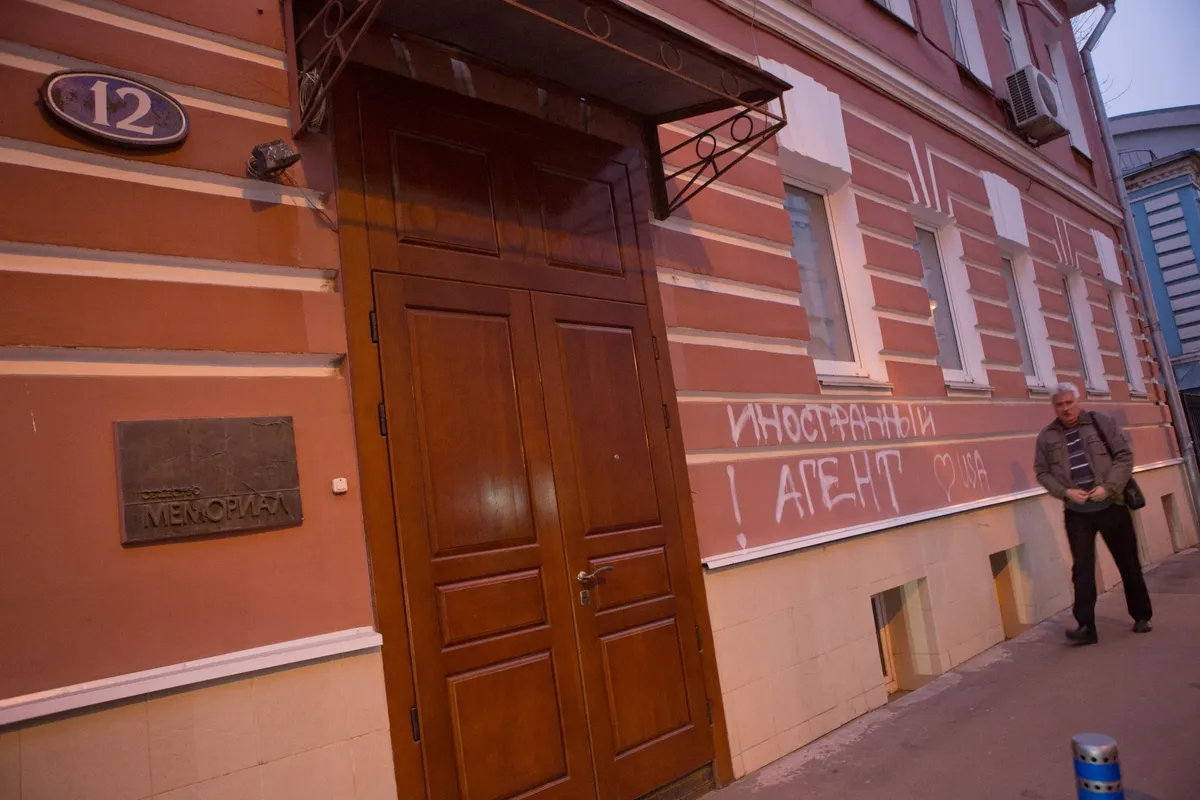
The demarche of the two prosecutors - the federal and Moscow - with the requirements for the elimination of key memorial institutions - the human rights center "Memorial" and the international "memorial" (both, in the optics of the Ministry of Justice of the Russian Federation, "foreign agents") - not the thunder among the clear sky. Hybrid, gradually, but quite systemic and focused preparation has been conducted for a long time.
This is also the Ulyulying and impunity Serbians, and even with them, mummarly nodists, in caps, in Harmoski boots and green for Lyudmila Ulitskaya. And NTV+Gopota, breaking the staffing film examination in the carriage and melting in the air on someone’s order. And the specific grief archaeologists of the RVIO in Sandarmokh, who seek to find military tickets of prisoners of the Red Army soldered in the Gulag burial grounds. And experts on calling from the Center for Sociocultural Expertise-with a magnifying glass from the Prosecutor General’s Office, which is so clearly visible both by Yuri Dmitriev’s Saturnalia, and extreme terrorism of the main defendants from the carriage (experts here in business!) [4]. And spare airfields - funds for basing the officiaificial, well agreed with the power of "memory".
Now, after the prosecutor’s demarche, the masks are removed and neatly put in the pockets of the French. Well, the sleeves are fed, and the investigative mop and the judicial island is always at hand. They were well impeded by the prohibition and defeat of Jehovah's Witnesses ** and the structures of the Berlin patient, he is also the Pokrovsky site, he is a witness to the beautiful Russia of the future.
We are present with a frank revenge of the executioners, followed by a symbolic: the return of the monument to Dzerzhinsky to his Lubyansk place and deportation from the Lubyanka of the “Solovetsky stone” as alien in the prevailing historical and architectural ensemble of the square and in connection with covid and urban planning restrictions.
The revenge’s unlawful and inadequate nature that gave rise to the acute protest and petition reaction around the world-state (higher politicians of the United States, the EU and many countries, even single state bodies in Russia itself) and civilian (scientists, writers, human rights activists, Western historians, Natalya Solzhenitsyna, Vladimir Lukin, Yeltsin-Center and many others).
Perhaps in the Kremlin they will change their minds-if they decide that it is cheaper not to eliminate, but to leave a "memorial" hostage or exchange a domestic mop for some overseas gingerbread. Alas, other mechanisms for optimism are not visible.
But this is purely organizationally. Surrif implicably, on the contrary, everything worked out for Clio will undoubtedly preserve and develop, seriously affecting our lives and actions.
That's why he is the mainland!
[1] Zhdankin A. Pension from abroad. Week. 1990. No. 9 (February 25 - March 4). S. 5.
[2] Zayonchkovskaya Zh.A., Polyan P.M. Ostarbaiters: in Germany and at home (based on a questionnaire). // in memoriam. Historical collection of memory F.F. Perechenka. SPb, 1995. P.396–413.
[3] Polyan P.M. Victims of two dictatorships. Life, labor, humiliation and death of Soviet prisoners of war and Ostarbeters in a foreign land and homeland. / Pre -sizd. D. Granin. M., 2002. 898 p. (Ed. 2nd, processes and additional.).
[4] “Special Experts” , “New Gazeta”, No. 102 of September 15, 2017