
Translated material
From the split of the elites to the revolution: about the book of historian Kirill Solovyov "Union of Liberation"
Why are those who have not only refrigerators, but also a shibusta storage with monarchical and authoritarian regimes?
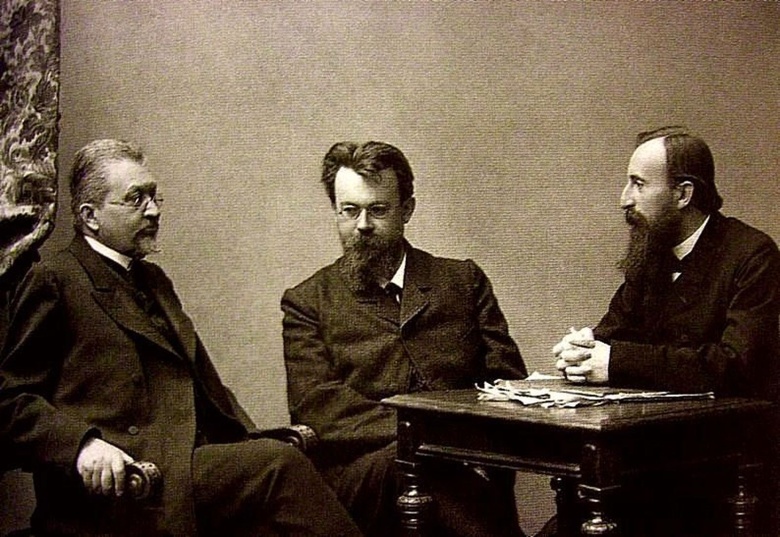
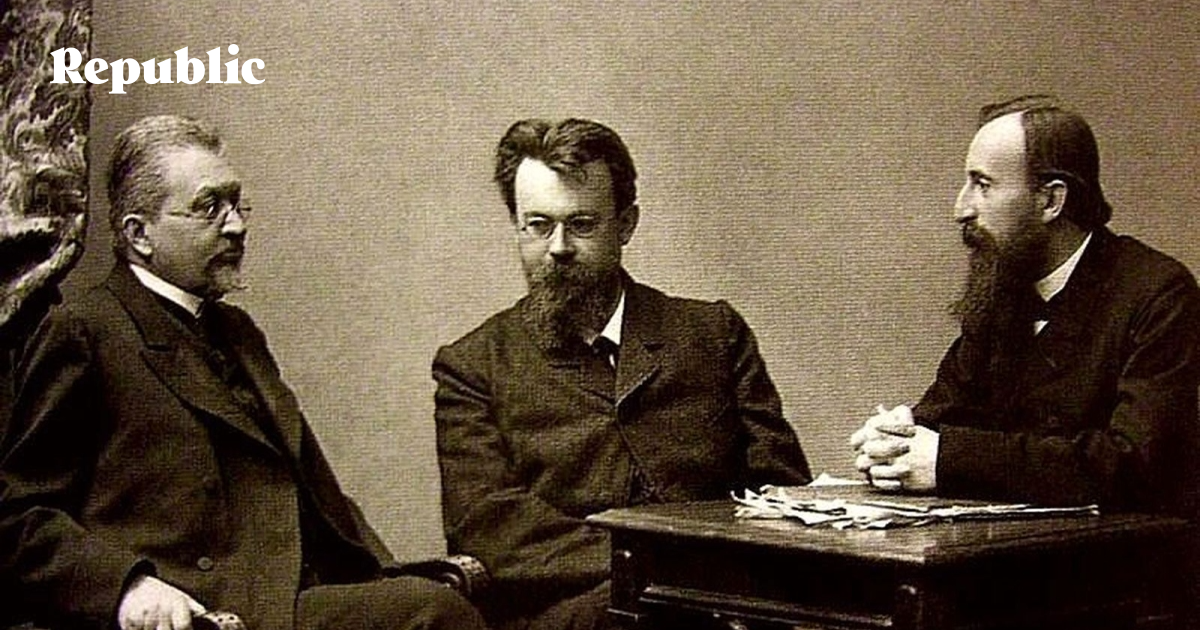
Leaders of the Union of Liberation: I. I. Petrunkevich, V. I. Vernadsky and D. I. Shakhovskaya
The first thought that I had when reading the book by historian Kirill Solovyov “The Union of Liberation: the liberal opposition in Russia of the early twentieth century” (New Literary Review, 2021) was rather strange: how interesting it would be to go with an excursion in Moscow and St. Petersburg to the places of the most important political events of the past! After all, the author carefully prescribes not only the history of the formation of the “Union of Liberation”, but also his geography, accurately calling the addresses of leading politicians, houses and apartments in which they lived, collected ally for meetings and disputes, held congresses.
In St. Petersburg, where I live, you feel the history of Russia with some sixth or even seventh feeling. For example, when you go from my European University to Nevsky by the Summer Garden, where Peter lived in a modest palace, past the powerful Mikhailovsky castle, where it seems that the spirit of the murdered Paul is still wandering past the mansion of the military minister, where Dmitry Milyutin worked on the army’s reform, and past the monument to Pushkin, who has been looking through the square at the noble assembly as if he wanted to Get off the pedestal and slam a glass of vodka there, which will warm him with a cold spring night.
This whole story is found for us for twenty minutes when walking with a leisurely step. But this is the fact that we all know well. And how many more houses on the way, where an invisible story was happening! More precisely, invisible only until historians tell us how, for example, a meeting of several intellectuals in a modest apartment (where some new Russian, “rising” in the trade in vodka lives), laid the foundation for the political party, which played a huge role in the revolutionary years.
The “Union of Liberation” is, in fact, there is a story (or, more precisely, a background) of the Constitutional and Democratic Party-the Cadet Party. The book is not dedicated to what the Cadets did during their heyday, but how this political force was formed from the amorphous mass of Russian intellectuals who wanted to transform Russia.
It seems that in front of us is a very successful book with an unsuccessful name. Kirill Soloviev simply and intelligibly talks about the important and little -known events of our history, but why did he “hide” from the potential reader what will be about the formation of a key political party?
Subscribe to read the whole
Make a subscription Redefine.media to read Republic
Subscribe [you can pay for a Russian or foreign card. The subscription is extended automatically. You can unsubscribe at any time.]
Where are the money subscribers going