
Translated material
Sex and Big Muslim City
How the tradition of female intimate poetry Urdu was born and died
Today it is difficult to believe that at the beginning of the 19th century, Muslim poets in the north of India sang the same -sex love, high crafts of courtesans and, in general, created works far from patriarchal literary canons. The relaxed morals of the era found expression in the Rechti genre - poetry created from a female face and painting the intimate background of life in the female half. The anthropologist and orientalist Gleb Stukalin talks about the rise and fall of Rechti.Edward Said's "Orientalism" saw the light in 1978. Since then, the fashion for post -colonial research has been growing, but the orientalism itself, which has developed in the colonial era, has not gone from our life. We still look at the mysterious East through the prism of romantic ideas about the centuries-old wisdom of Indian hermits, the tradition of Muslim families and the egregious luxury of the Sultan Serallai. Another option for a simplifying gaze is to bring the high Muslim culture to the seedling of fundamentalism, the infringement of minority rights and the refuge of angry beards. Looking from the 21st century, it is hard to believe that not so long ago Muslim poets sang the same-sex love, hot eroticism of polyamoria, spiritual visions and high crafts of curtain-Tawaif. Today we are armed with a volume of Gender, Sex, and the City: Urdu Rekhtī Poetry in India, 1780-1870, the main Indian specialist in the field of gender research of Ruth Vanita, electronic library of poetry of Urdu, near the scientific articles and delve into the amazing world of the poetic genre of Rechti.
Rechti’s poetry blossomed in the north of India at the beginning of the colonial era, when local rulers lost real political power step by step: after the battle of Plessi in 1757, British merchants first gained control over several provinces of Bengal, and in 1856, under the pretext of “unworthy rule”, the principality of Audh annexed; At that time, the English crown has already owned more than a half of the Indian subcontinent. In this troubled time, many rulers (especially the great Mogols in Delhi and Navaba Audha with the capital in Lakkhnau) directed rapidly spitting resources to the development of elegant arts, music, theater, literature. Nowadays, large corporations do this that invest billions in charity in order to save money from fiscal services. From this period, a huge amount of literary material has reached us, which is still waiting for its researchers. The morals in the “cities of the eternal holiday” were quite frivolous, and an unambiguous testimony - poetry in the Rechti genre. Famous poets found in it the opportunity to shock, master new metaphors and plots, use unusual lyrical heroes. For literature in the language of Urdu, the innovative genre has become a sip of fresh air. How did it happen?
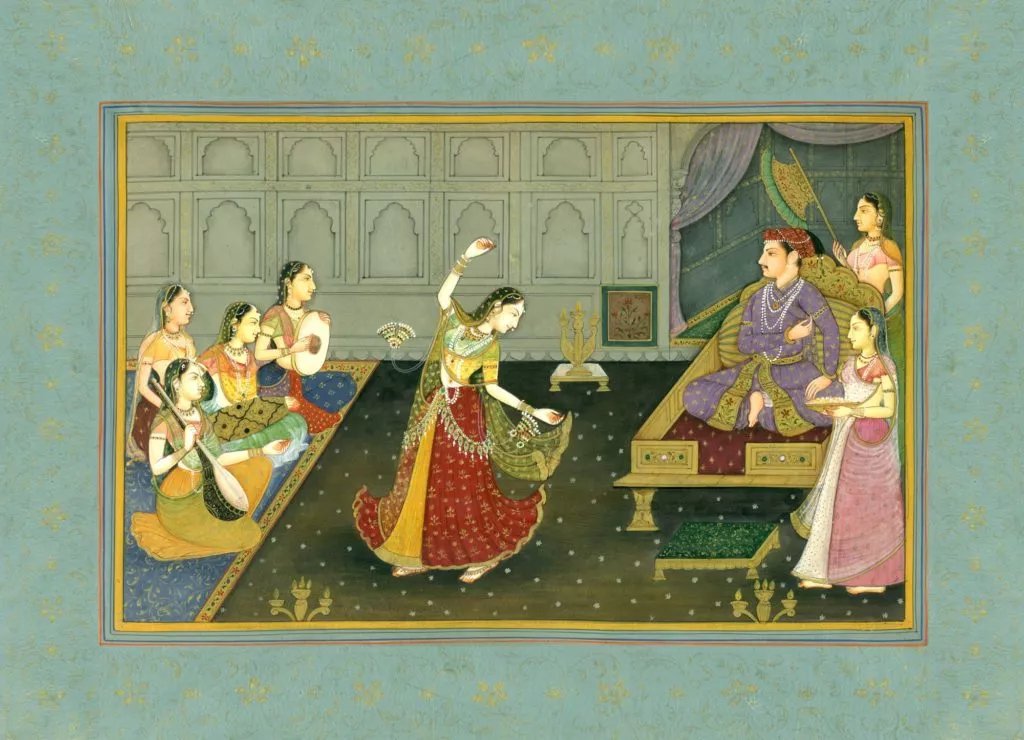 The poetic form of gazelles (the most common form of the poem in the Arabic, Persian, Pashtun and many more literature-a small poem with a monograph and the signature of the author included in the final stanza) once developed in the midst of mystics and therefore, even in more secular times, was replete with the Sufi vocabulary and differed in extreme allegations. However, the multiple meanings of Persian and Indian gazelles are closely associated with the extreme limitations of the arsenal of sustainable metaphors.
(Here, an inquisitive reader can ask: why doesn’t I distinguish between Urdu and Persian literature? There is no great need for this, since India was the largest center of Persian literature until the 19th century, Persian was used as the language of office work in the state of the Great Mugles, numerous principalities that arose in the ruins of their empire, and even for some time in the dominance of the Estish company).
What metaphors are we talking about? Moth and candle, nightingale and rose, cypress behind the high wall of the garden; Views-shots from eyebrows, curls-networks, into which the Dushy bird fell; The elder who discarded all the decency and drinks the wine in a brothel, hypocritical ascetic, boasting of his reputation, causing erotic experiences of a little boy with a fluff above his upper lip, a strict Mukhtasib, representative of the morals. To the devil, all decency, distillery, bring wine! All this originates in a high mystical feeling, even if most of the authors who wrote on Farsi and Urda had no special relation to religion. The characters of the Arabic (Majnun and Leila, the departed caravan) and the Persian epic (Rustam, Jamshid, Khosrov and Shirin, the Bird Simurg, Fairies-Peresa) and the Koranic tradition (beautiful Joseph, wise Moses, the evil pharaoh, Jesus wise) should be added to this list. The natives of India allowed themselves to have a fucking and add to the unshakable canon of the characters of Indian mythology. On this general, the permissible set of metaphors and heroes ended and the virtuoso juggling so beloved by connoisseurs began with meaning.
Let us give an example a classic poem by Hafiz in the translation of Marina Reisner:
My chest from heartfelt heat in a longing for my beloved burned down.
This house was covered by a flame, it burned down the dwelling.
My body melted in separation from my beloved,
My heart was burned in the fire of beauty.
In everyone who saw the curls of the curls with that railing [Peri - a beautiful fairy],
The suffering heart from pity for me, madman, burned down.
Take a look at the compassion for my fuel tears the heart of the candle
In the evening from love, like a moth, burned.
Close, not a stranger, sympathizes to me,
[After all], when I broke up with myself, my heart,
[The stranger who has become me, burned down.
The turnover of abstinence took from me the water of the Harabat [Harabat - Tavern, the water of the Harabat - Wine],
The dwelling of my mind was burned by the fire of a drinking house.
Since the peel of the heart from the vow of this I broke,
My soul, like a tulip, burned out without wine and without a bowl.
Do not look for adventures, come back, because the pupils of my eyes
They broke the turnover and burned out of gratitude.
Leave your fairy tales, Hafiz, cut a sip of wine,
After all, we did not sleep all night, and the candle burned to the sounds of a fairy tale
The search for metaphors in such a text is an interesting quest in itself, and as new works, the joy of recognition is growing. Can you find all the images?
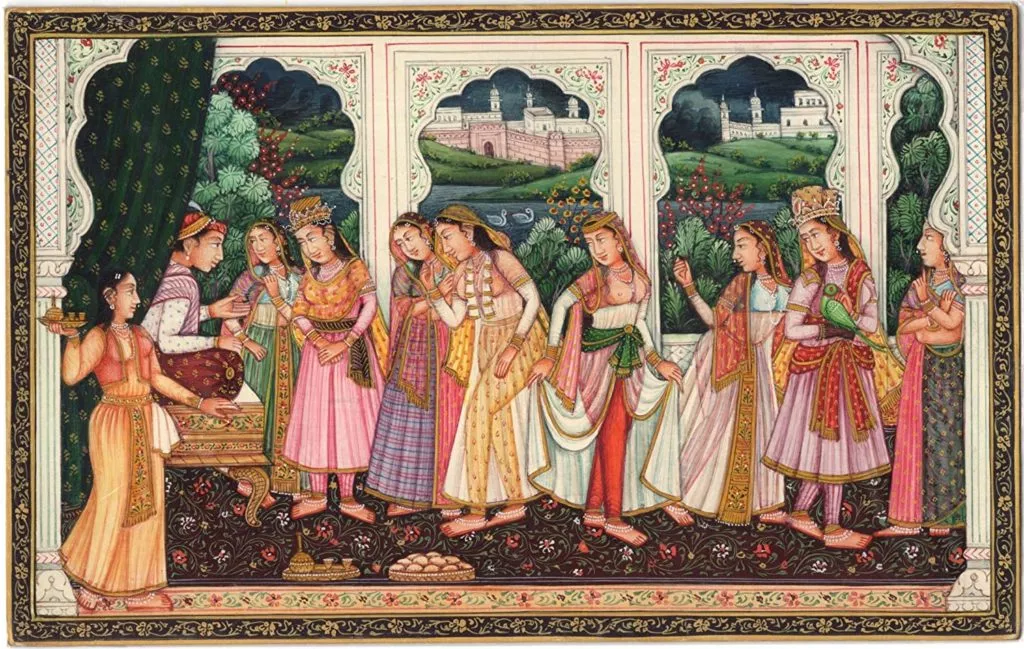 The originality of the Rechti genre, in turn, consists in belonging to conditionally female and therefore “homely”, private sphere of life. The very word "rechi" is a female family from the term "Recht", which is called classical poetry in Urdu. Most often, the works of Rechti are written from a female person, and it is said about what was hidden from prying eyes: events that unfolded in the female half of the house, relations with neighbors, household problems and troubles, sexual relations with men and women - not high tragic experiences of unrequited feeling, namely physical connection, languishing the flesh. And although almost all the poetry that has survived to the present day is written by men (below we touches whether this is diminishing their emancipation value), surprises and delights the details and liveliness describes the little things of the “domestic” life. The male authors learned in detail the terms and turns used in the female half of the house, then to use them in their gazelles correctly and to the place, and thereby discovered the huge world of new imagery for themselves and the listeners, and modern researchers are a huge and almost unlearned field of material culture of the eastern city of the 17th-19th centuries.
The heroes of Rechti’s poetry are women of all social regulations and professions, starting from servants and respectable housewives to the artist and courtesan, as well as men of different social status: market merchants, mystics, poets, jailers, officers who usually act as interlocutors, friends, spouses or lovers of the main characters. Speaking in formal terms, the classic form of Recht’s poetry involves (grammatically) a male voice addressed to a lover or lover, whether a person or creator (usually also in a male gender), while Rechti’s poetry is (grammatically) a female voice.
The extensive material of Rechti’s tradition, in addition to undeniable literary virtues, also serves as an unexpected and very frank illustration of how personal freedom, sexual independence and horizontal social relations of oppressed women germinated in difficult ways. Numerous dialogues, monologues and sketches are formed in the colorful mosaic of the life of the Muslim city.
Rechti’s poetry is full of descriptions of city topos, which distinguishes it from Recht's classical poetry, where a set of locations is limited by a mosque, a palace, a bazaar and a drinking shop. More “mundane” “female” poems paint the shops of artisans, internal rooms and courtyards, roofs, where, by this time, Asia, the border space between private and public, gardens and rivers, the pagan temples and the graves of Sufi sheikhs, the places of poetic musaras and colorful festivities in Delhi and Laknau are located.
Collections of verses of Rechti have come to our time, and, as I said, almost all of them are men. And the visitors of the Mushairs, as a rule, were almost exclusively men: poets and musicians, higher officer and administrative ranks, noble patrons of elegant arts. But you should not make hasty conclusions that the appeal to the female voice served exclusively for the implementation of male sexual fantasies or ridicule.
So, for example, the poet Abid Mirza, who performed under the pseudonym Begum Lakhnavi, lady from Lakhneau, sang women as owners of privileged access to the very source of poetry (translation by the English -language source in the book of Ruth Vanita):
A woman is a nymph in a paradise
If she is from the Lakkhnau garden
Woman is a coin in the country of a language that is valuable all over the world
Women are a real language source
Where does the unfortunate men get human speech?
The original law of women is knowledge of the language.
How can you fight the language with the help of language?
According to Ruth Vanita, the authors of Rechti’s poetry, playing with gender roles, violating social norms, changing clothes and images, created a new city identity. Thus, despite its indisputable entertaining and entertaining nature, Rechti’s poetry contained a powerful emancipation potential, providing votes to women, sex minorities and other oppressed layers of society.
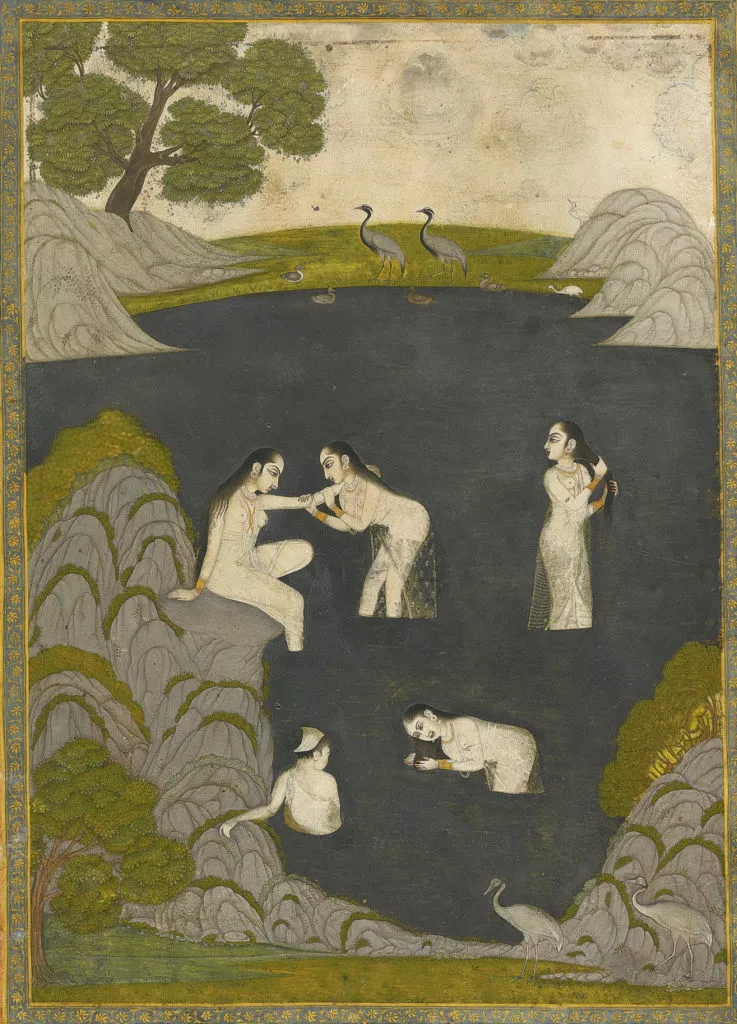 It is possible that women also wrote in the Rechti genre, and the fact that their works did not reach us - an accident and a mockery of fate. Another researcher Karl Petievich believes that such works, if they were, are extremely few, and for what reason: most poets, in order to legitimize their invasion of social space and conquer a place in the male hierarchy, wrote in a “more serious” genre of Recht. In the XVIII and the first half of the 19th century, there were many poets in North India. Most of the authors came out of among the courtesans, but sometimes married ladies wrote poetry. In 1864, edited by Khakim Fasiuddin Range, the Printing Anthology “Bakharistan-I Nazi”, “The Blooming Garden of Coques”, which included the best works of 174 poets, wrote to Urdu and Farsi, was published. The Mach Laca Chandi, the collection of her poems as a gift to one of the heads of the East India Company, John Malcolm, that is, in fact, established political ties, and also invested in conducting several major religious celebrations. And the name of the most famous Curtain PESTUSS is probably familiar to many Russian readers: based on the amazing and tragic biography of Umrao Jan, several novels were written from Lakkhnau and almost a dozen films were shot, including the Musuffara Ali, extremely popular in the USSR “Beauty Umbaro”.
The figure of the curtain-Tawaif is generally key to the literary and musical culture of that time. The patriarchal Muslim society suggested one way for a woman - marrying a closed female half of the house. A complex quarry of the courtesan often turned out to be the only alternative. Famous Tawaif were poetesses, dancers and musicians who skillfully used the location of men, fell to where ordinary women were ordered - for example, to palace techniques, Mushairs, and hunting trips. In other words, Tawaif simultaneously realized the potential of their talents, perseverance and female seduction. Having reached adulthood, successful courtesans could accumulate a significant condition, establish their Tawaif school or “fit” and get married. Unable to overcome the patriarchal foundations or to exist outside them, the dancers used them as a career instrument. And of course, such a path was thorny and full of dangers. The threats of unwanted pregnancy, rape and the prospect of ending life in a cheap brothel were always persecuted by Tawaif.
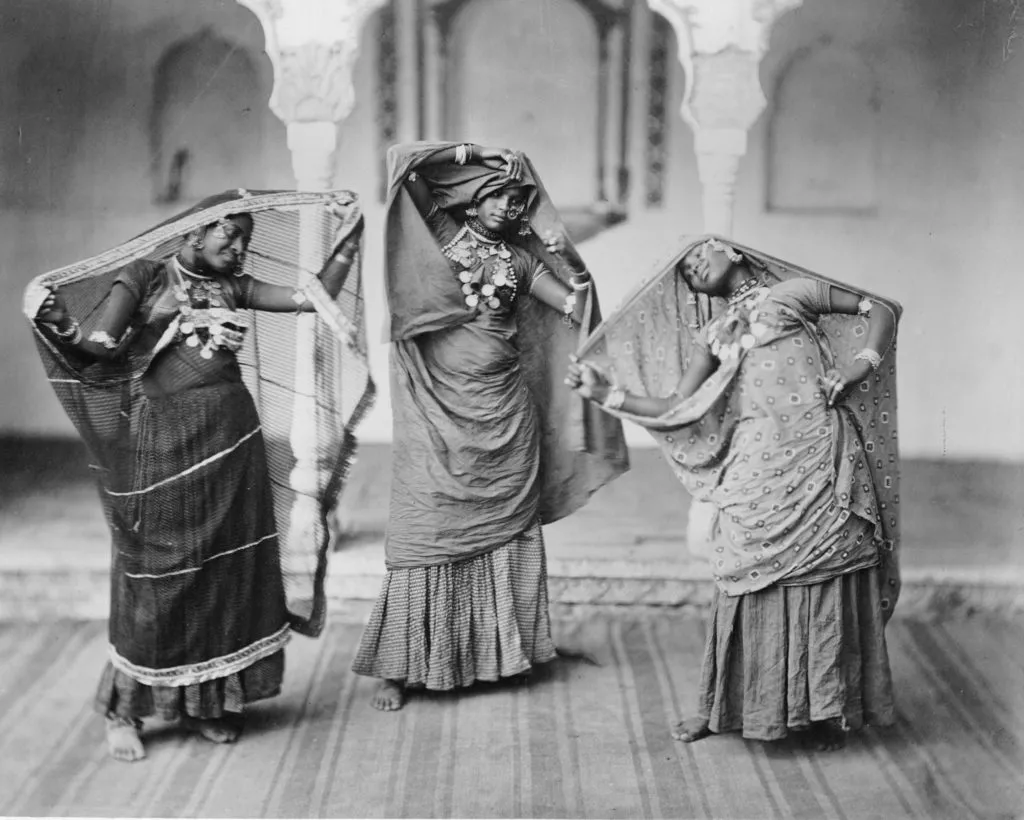 In such an atmosphere, an amazing poetic genre was born. What came out from under the kalam of bold poets Urdu? (For the sake of scientific honesty, it is necessary to mention that, due to the low availability of the works, about a quarter of the given examples was translated by the author of this material from the original to Urdu, the rest from the English settop).
Some verses are, as the literary critics of the Soviet school said, “playful scenes of household life”, similar to this fragment from Ruggin:
When she brought the bodice that she sewed for me, Beloshweik
Proud of the result of her labors, she laughed, Beloshweik
To moderate her pride, I said:
Listen to me, come, Madame Beloshweik!
How badly you cut out this bodice behind!
He hangs freely, no matter how tight I dragged him, Beloshweik!
Others describe love difficulties. In this fragment on behalf of a girl undergoing governess from the vigorous supervision of governess, the same author tells how difficult it is to secretly spend an object of his love to the house:
I wish you to die, nanny,
Let the news of your death reach your house, a nanny
You do not allow me to step and step, alas, alas,
How can I escape from your hands, nanny?
I would like someone to crush a lot of red pepper
And he poured him into your eyes, a nanny. . .
I would get my dolls today,
If only the nanny went home in the morning. . .
Yesterday you said that you will give me a day off today
What should I do now if you could not hold back the word, nanny?
You don't let me go to the roof
I would go upstairs, if only she went home, this nanny
And if I send you a message, Rangin,
She will come right away and cut you, this nanny!
The heroines of Rechti’s poetry express ordinary desires that are understandable to any modern person, and thereby violate the literary convention, in which only pure unrequited passion was a worthy theme - not to the mortal object of their love or love for the Lord. So, the heroine of the poem of the poet, who wrote under the pseudonym, is looking for oblivion in the arms of a former lover (or mistress, since the author hides the floor of the partner):
For the sake of cordial proximity, it occurred to me to leave for a while
To spend time enjoying the acquaintance with the former lover
Bites for fingers, swollen nostrils, desperately
He said: enough, be good and mercy on my years
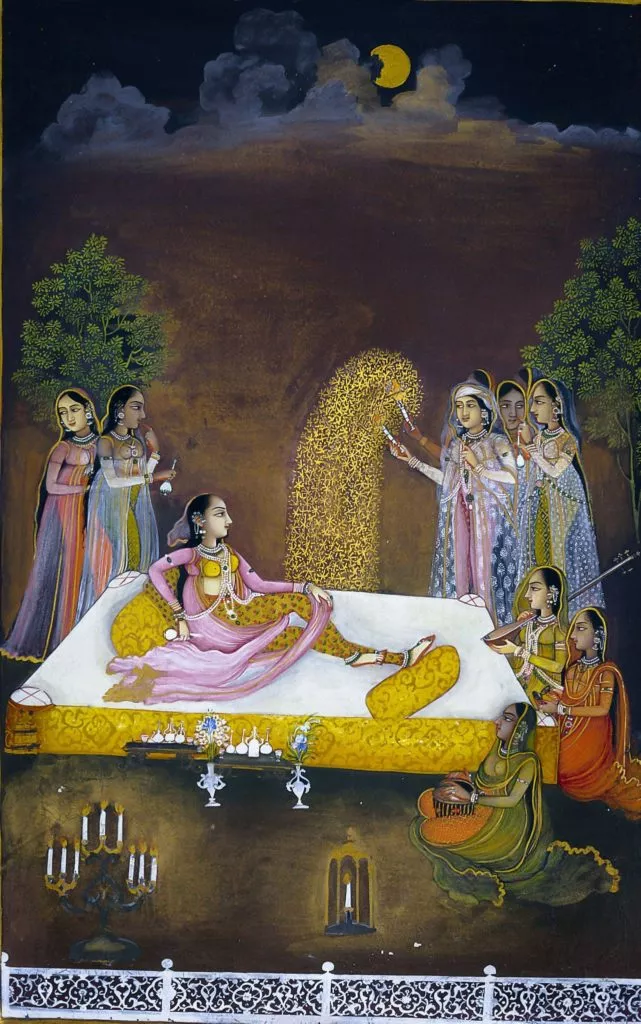
 A significant part of the poetry in the Rechti genre - both gazelle and smaller forms - is devoted to love and sexual relations between women. In this Gazelle Rangina, a married woman is preparing for a friend's visit:
I will send for jewelry and make an appointment,
I have to dip my dress in pink water,
I will spread an untouched white carpet
And on it will be a dagger, like a hint!
I will order floral jewelry, cardamom and cloves,
As well as a new hookah and a clay bowl for tobacco.
The desire is insurmountable:
Butons and flowers do not attract me,
My girl, your alleys attract me.
Cardamon and Betel [chewing mixture] do not attract me,
Only those pearls that you hide in your mouth attract me!
(Inha)
Meetings are held violently. The mistress of a married woman is usually indicated by the words “bunnacha” or “Du-Gan”.
When you tie the sabur [dildo] to the waist,
I am excited and cannot control myself, Du-Gana
How can I not sing my Du-Gan?
I swear by you, he is so short and complete mischief, Du-Gan
When you glide slightly below and tearing me,
I am fascinated by you, O my innocent hobby, Du-Gan
(Rangin)
I am dirty and unknown, let me take a bath, my girl.
Have I ever refused this at least once?
(Kais)
Any relationship can end with a painful gap:
Since my Du-Gana abandoned me,
My house is empty, and the city seems to be abandoned.
(Kais)
In general, the poetry of Rechti has enough passages that sound exclusively topically:
Madam teacher, how is it possible that this is still prohibited?
My Du-Gan and I committed the rite of Mut'a [the form of a marriage contract adopted by the Shiites, often with the prolonged duration of the Union in advance]
(Nisbat)
As I said, the Rechti genre shook the canon and discovered the symbolic potential of previously not involved trifles. Here's the lyrical hero, the Inha flirts with his mistress:
When, playing, I run in a black cloud
The lace of your pants breaks, blinding me like lightning.
But the same image uses a rank from a female person:
About the peri, what can be said about your lace?
Your lace is the most beautiful of all the laces.
It seemed that lightning flashed before my eyes!
Your lace has untied in dark clouds.
In the poem of the same author, a friend advises the poet how to win a lover:
Occupy it with chatter and disputes,
While you tear off completely different flowers in her bed,
While trampling herbs and bushes in her flower garden,
While secretly squeeze the juice from a pair of oranges.
Город как социальная сеть держится на слухах, сплетнях и кривотолках. Защитить свою честь и скрыть связи было насущной необходимостью для большинства горожанок:
То, что занакхи приходила ко мне вчера вечером, — это неправда.
Как мы вообще могли встретиться? — это неправда
Моя лежанка стояла во дворе — какой дорогой она могла прийти,
Перебраться через такую высокую стену! — Это совершенная неправда.
(Инша)
Молодые девушки в страхе перед осуждением общества вынуждены сдерживать свои желания:
Сестренка, ты хочешь от меня близости!
Невозможно быть двум девушкам в такой близости,
Прекрати соблазнять меня, уходи!
Что ты называешь любовью, эту возможность близости?
Эти игры в жениха и невесту, о Инша,
Лишь для падших женщин, желающих такой близости!
А более искушенные, наоборот, не стесняются своих желаний и ищут единомышленниц, как в поэме Джураты Лакхнави:
Давай позовем в наш дом всех «играющих» женщин,
Пригласим их в залы, полные цветов и бетеля, обнимем,
Окропим их розовой водой, а когда они начнут жаловаться на своих мужей,
Мы с тобой затянем песню, научим их нашей припевке:
«Приходи, ду-гана, давай поиграем!»
Еще один представитель жанра, Джан Сахиб, писал в более позднюю эпоху, в начале XIX века, когда над Индией уже реяло знамя Ост-Индской компании и повсюду ощущался кризис и упадок. Эти обстоятельства отразились во многих стихотворениях, например, в этом, где поэт от лица старухи оплакивает ушедшую юность и красоту:
Я теперь того пола, которому не достается любви
Кто меня купит, покупателей не осталось
Чей взгляд остановится на погасших глазах?
Наполненные нектаром очи исчезли
Цветочное лицо, ароматные локоны исчезли,
Что показать — слова остались, но посмотреть не на что
Ни тонкой шеи, ни упругих ягодиц
Приятная талия и чресла исчезли
Холмы, когда-то похожие на сдобные булки, теперь плоские лепешки.
Груди уж больше не круглы, подобно сладким сахарным шарикам.
. . .
Где женская притягательность, ради которой мужчины привыкли умирать?
То, что было раньше во мне, о подруги, ушло
 К середине XIX века жанр рехти стал клониться к закату. Это особенно видно по произведениям позднего поэта Джана Сахиба и его учеников, в которых все чаще звучит менторский тон и осуждение фривольного поведения. Смертельный удар рехти и всей индийской литературе нанес 1857 год, год Сипайского восстания, которое в английском языке называют Великим мятежом, а индийцы — Первой войной за независимость. Солдаты колониальной армии, сипаи, сбросили английское командование и стеклись в крупные города, где к ним присоединялись все новые и новые группы недовольных оккупантами. Восстание, которое могло обернуться крушением Британской империи, потерпело сокрушительное поражение из-за разногласий в стане повстанцев. Хотя большинство солдат колониальной армии исповедовали индуизм, колониальные власти назначили главными виновниками восстания мусульман. Вероятно, дело в том, что значительная часть местных князей была мусульманами, а возможно, потому, что сипаи принесли клятву верности последнему Великому Моголу, падишаху Бахадур Шаху Зафару II, который на момент восстания был глубоким стариком, обнищал и с трудом контролировал даже собственный гарем.
Княжеский двор в Лакнау был упразднен британцами за год до великого восстания — колониальные власти обвинили правителя, наваба Ваджид Али Шаха, в недостойном правлении и развращенности. Шокированный правитель еще несколько лет требовал вернуть себе земли, оббивая лондонские пороги и требуя аудиенции у королевы Виктории. Великий Могол Бахадур Шах Зафар II закончил дни в ссылке в Рангуне, так и не поняв, почему британцы — вчерашние вассалы — вдруг обвинили падишаха Индии в измене. Его могилу колониальные власти стерли с лица земли, чтобы избежать возможного паломничества. Схожая участь постигла значительную часть княжеских дворов, уничтожив среду, в которой прежде рождалась высокая литература. Участь куртизанок была незавидна: британским офицерам прямо запрещалось иметь романтические связи с туземными женщинами, кроме дешевых проституток, и таваиф оказались вне закона, согласно своду правил, известному как Anti Nautch Bills, Законы против танцовщиц.
Осознав поражение, индийские мусульмане принялись искать причины, почему они не смогли выстоять в битве с колониальной властью. Ответ, который предлагали антиколониальные и вместе с тем фундаменталистские течения, удивительно резонировал с пуританской этикой: мусульмане изнежены и развращены, сочиняют декадентские стихи об однополой любви, курят хукку, забыли Божьи заповеди и не могут держать в руках меч! Во второй половине XIX века новое поколение мусульман, вооружившись печатной прессой, многотиражными памфлетами и идеями очищения ислама, начало наступать на неудобные литературные жанры, музыкальные бдения и другие, по их мнению, неприглядные стороны общественной жизни. Критик Мухаммад Хуссейн Азад, составитель истории литературы урду, по которой до сих пор учат большинство студентов в Индии и Пакистане, оставил за бортом своего учебника весь пласт женской литературы — и рехти в том числе. Моральным камертоном в индийской мусульманской среде стали пуритански настроенные реформаторы, презиравшие «туземные» проявления религиозного чувства — поэзию, музыку, популярный культ святых — и поддерживающие идеал патриархального семейного уклада.
Любопытно, что Инша, один из важнейших представителей жанра рехти, предсказал подобный конец:
Угнетенное сердце страстями разграблено.
Моя кибла [направление на Мекку, метонимически — святилище] ваххабитами разграблена...