
Translated material
The science of dying
Life and disappearance of Ambrose Birs
Ambrose Birs is known primarily as the author of laconic innovative prose, which had a huge impact on the development of American “dark literature”. One of his most famous successors was Howard Phillips Lovecraft, and Hemingway admired his ability to handle a small uniform. The life of Birsa itself could become the plot of his sophisticated stories, and the death of the writer was his last artistic gesture. Read about all this in the essay of Victor Lapshin.At the very end of 1913, the border between the United States and Mexico crossed Old Gringo. He was already exceeded in seventy, when, throwing his body into the saddle, he rushed to his last war. “As for me, I go from here tomorrow in an unknown direction,” - these are the lines from his last letter. Nobody heard more about him. His name was Ambrose Gregory Birs.
“There are different types of death - with some the body remains, but with some it disappears with the soul. The latter usually takes place without witnesses (if the will of God), and we, not seeing everything, say that a person disappeared or went on a long journey - which, in essence, is happening, but sometimes this happens with a large coincidence of the people, and there is enough evidence. It happens that the soul dies, and the body remains awake for many years, ” - this is how his story“ Resident of Karcosa ” begins .
Being aesthet (in San Francisco, he is one of the organizers of the Bohemia Club, Columnist and an intellectual despot, flanting the streets of the city with a revolver in his pocket and a cane in his hand), Birs wanted to give his life completeness. Well aware of the price of this gesture and seeing that the mosaic is developing, he took the last step that turned it into a “horseman in the sky” and made it possible to coincide to the end with his fate. And then, sighing with full chest and spurring the horse, he moved towards death.
His younger contemporary Jack London will name one of his stories "Love for Life." Birs is deployed in the other direction, he will always peer into the face of death. For him, this is the most important meeting. In the “case, on the bridge over the owl stream” Birs will write: “Death is a significant person!”
Human
With the silent majesty of the Sphinx, he looks from heaven, recalling the nickname Almiqhty God Bierce-“Almighty God Birs”, composed of his initials, about the San Francisian light given to him.
Carey Mquilims in the book “Ambrose Bierce: a Biography” gives more than twenty -five words that characterize Birs: “Great, biliary, idealist, cynic, gloomy, irritable, joyful, bad, sadist, obscurant, a pervert, famous, cruel, kind, God, god, mizanthop, mizanthop, mizanthop. A poet, a realist who wrote romantic works, a skilled satirist and to some extent charlatan. ”
The independence of his judgments, the unwillingness and inability to adapt to anyone, the sharpness and peremptoryness of the statements served him of the bad service. He treated democracy in disbelief, did not believe in socialism and saw the English monarchy with the ideal of social structure. Patriotism, religiosity, as well as the suffrages that appeared then, fighting for their rights, caused him only a crooked grin. About his faith, he said: "My faith is to hate villains!"
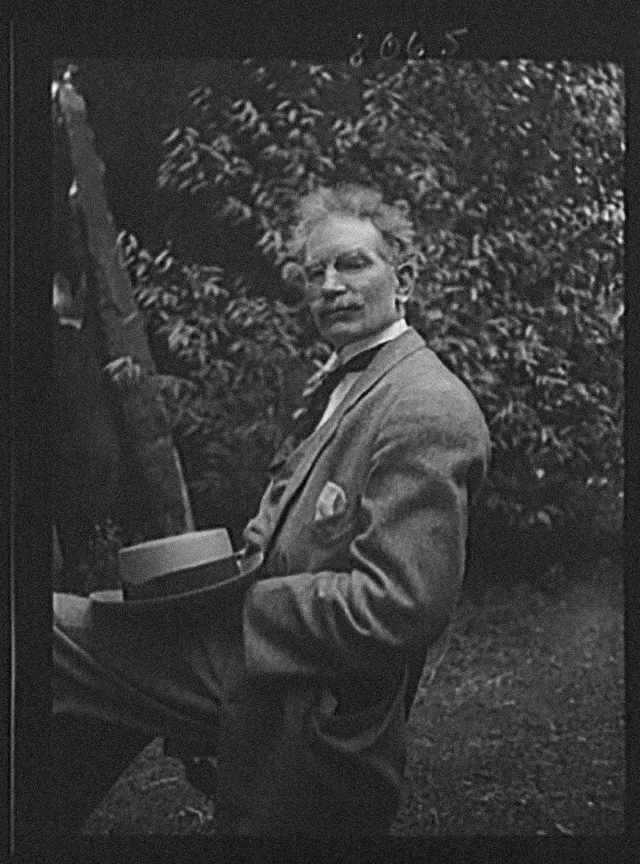 Ambrose Birs in the Bohemian grove (San Francisco), approx. 1896–1913.
Photo: Library of Congress
Writer
Once, someone Follett said: “I think that hardly more than two stories will be known in the future.” A hundred years after the death of Birsa, I ask: "Who is Mr. Follett?" And I do not hear the answer. And then, not particularly straining, I can name at least two dozen Birs' stories.
His first story “The Valley of Ghosts” will be released with a very characteristic name for Birs, but will turn out to be unnoticed by the reading public, which will not confuse the author at all. Neither journalism nor writing stories will bring him money. And if Edgar Allan Poe agreed to become a teacher and official, then Birs will work in a monetary court, then accompany other people's stagecoachs with money, then get gold.
The world of Birsa’s stories will be so gloomy and extra -human that not everyone can go through this universe of mysticism and deaths, in the very air of which the spirit of caustic mockery of the man over the crime is spilled .
The instruction “Write well” comes out of the pen of Birs, in which Birs, creatively developing the short stories, gives lessons of how to write, if not a masterpiece, then at least a tightly knocked story. Here, he reveals the secrets of how to treat the layman of the horror expected by him. Then Birs takes a magnifying glass in one hand, and the other grabs the dead grip of his hero and drags him to the reader. And if, say, in Hemingway, the heroes gain an internal victory through external defeat or become “only stronger on the break”, then Birsa’s characters are not able to replay their fate, they can only coincide with her, they die, no matter how good they are.
All the novels of Birsa are one continuous megatext about the unknowable of the world and in addition of human efforts before rock. The heroes of Birsa are not powerful over their life. Everything is destined. In the story “missing” a boy born in the mountains of the Carpathians, who grew up in an artillery officer and found on the other side of the world, a random shot from the gun will break off the life of a well -aimed shooter and a brave intelligence officer, continuing a chain of a progress of things that was intended and not subject to a person. The literary critic Andrei Astitzaturov will call this the God of the heroes of Birs.
Birs has a single happy time, it is the time of childhood, which is described only by “lost paradise”, a garden with the sounds of “Aeolian Arph”, the world to the fall. Although in the Chikamoge Birs as a writer attacks her, taking this world from a deaf -mute boy, depriving the world of speech and in the end forcing the child not to speak, but “kuldy”. In the final of the story, we look through the eyes of the child at the burnt house, at the corpse of a mother with a split skull, falling out of the brains and pulsating blood bubbles. And the point here is not the bloodthirstiness of Birs. Having survived the war and gaining the experience that he compared later with the loss of innocence, he could no longer write otherwise.
The critics who wrote about Birs in the Soviet years, in order to introduce the reader to him, were forced to attribute his views that he never had. This uncomfortable writer of “horrors” from an ideologically verified positions declared either the opponent of the entire “American”, then a pacifist, or the singer of the mystical darkness of life under capitalism. In fairness, it is worth noting that in the preface to the two -volume about Joseph Konrad, published in the Union in 1959, such statements also took place, but without this, any publication about the Western writer became problematic.
The story of the large families and poverty of the family of farmers from Ohio, from which Birs came out and where he was the twelfth child, has already stolen. Meanwhile, in English there is the word "gentry". It denotes a "small, unrealized nobility that is not engaged in agriculture." Mother Ambrose Birsa came from this from this owl . So an attempt to make the “socially close” Soviet Russia from the Bears was doomed to failure. But then the wellness of Father Birs, like his craving for literature, does not look so unusual. Recall that the first work of fifteen -year -old Ambrose was the work of an assistant printer in the printing house. He managed to contact this side of the printed word, which certainly found himself in a burden. Many years later, we read with him: "... he languished in inglorious idleness, trying to attach his strength, dreaming of a fascinating life of a warrior, seeking to excel." Often they talk about the lack of Birs of education. And at the officer school in Kentukki Birs (although without finishing it), did not study?
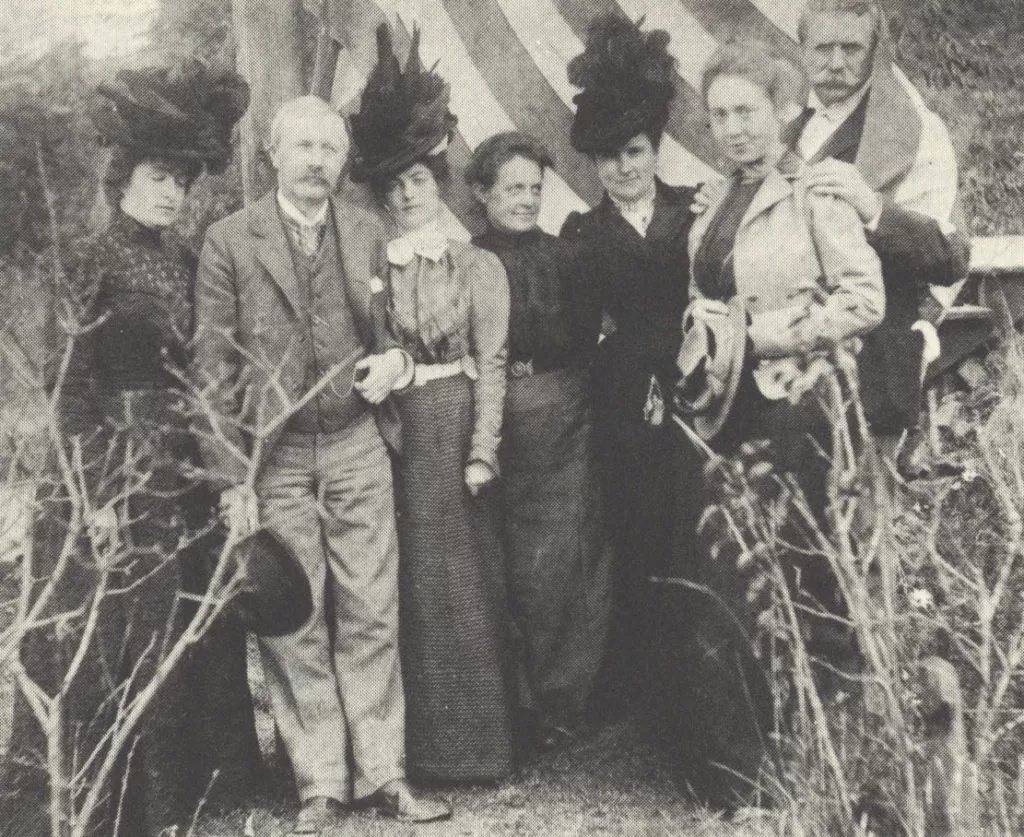 Ambrose Birs (on the right) with the family, approx. 1913.
Photo: The Ambrose Bierce Letters Project / University of Cincinnati
Mockingbird
The ideas of the then fashionable Social Darwinism and the attempt to transfer the laws of biology and the theory of Darwin to the laws of the development of society influenced the worldview of Birs and were reflected in his stories. As, however, the naturalism of Emil Zola and Guy de Maupassana.
All these Birsa -adopted and adopted by the then fashionable theories of development later in another part of the world will respond with a wave of the wings of the beliber bird, which, due to American specifics, will turn into a mockingbird. The theme of the mockingbird, so important for Birs, is transformed in American literature into the desire to kill this mockingbird. Birs himself, having become like him, will mimic all and all: life, death, and man.
Despite the gloomy tones made in the literature with Ambrose Birsa brighter and most beautiful than all that was subjected to cutting by De Beers. It constantly reminds us of how briefly and unpredictably our earthly existence. And as if he repeats behind the Japanese “Hagakur”: “I realized that the path of samurai is death.”
Reading the military stories of Birsa, sometimes it is difficult to understand on which side the author fought. So, in some of the stories of Birs, “South” are described by him at least with sympathy. They are "gentlemen." They teach us the most important, according to Birs, the ability to die.
Birs forces Lermontov’s “Fatalist” and Pushkin’s “Fattion”, from Europeans - Merim and his “Redut”. But if in the “overthrow in Malstrom” and “well” and the pendulum saves its heroes, forcing them, firstly, as the plot develops to fight to the end and, secondly, giving them a gift to life and a clear head, then a feature of Birs’s prose will be that his hero is always doomed to defeat. And at this time, Birs is almost the only one in the world literature who allows themselves to look in this way at a person.
Car
In the "Master of Mokson" B IRS will touch the topic of unfriendly robots, violating the "first law" of Isaac Azim Ova much later. Graving her from the German romance of Hoffmann with his “sand man”, Birs, unlike Merim and his “Venus Ill”, will turn not backward, deep into the centuries, but forward, in the impending automation and robotics. The reader, who loving, will immediately remember his two stories: ““ Chess ”of Meltsel” and anticipated the theme of cyber stages “The man who was chopped into pieces”, in which the servant, completing the evening toilet of his master - handsome officer, deprives him of everything, even voices, leaving only his head and a troops of the body without limbs. Yes, and the “mockingman” with the theme of “doubles” by Birsa is nothing more than the development of “William Wilson”, transferred from the European University to the fields of the Civil War in the United States.
Major
Shortly before his death, Birs will visit the places of his military youth. During the civil war, he began the ordinary ninth infantry regiment of the northerners and rose to the officer, becoming a reconnaissance topographer. Major Birs, with his personal courage, seems to be mocking himself, speaking to the “missing”, that the desire to “die a fellow” is commendable and that this is often the only thing that remains a simple person. And then it is debunk this last attempt by a person to control his life, forcing the hero to die of fear. And punishing him by the fact that he, who fell “like a rat in a trap” into the western of the wreckage of a collapsed house, will not even recognize a brother who will see in him only an “week ago” of an enemy in an dusty gray form.
Ambrose Birsa freely moves his heroes in time and space from death to life and back. From the hell of earthly suffering and fear that a person is unable to cope with the heaps of memories of the golden pose of childhood or the exacerbation of the inner optics in an extreme situation, a second before his death: “The terrible shock transferred by his body increased and sophisticated them (feelings) that they noticed that they used to not reach them. He felt his face in the rippling and in turn distinguished the sound of every push of water. He looked at the wooded shore, saw each tree separately, each leaf and veins on it, all, up to insects in the foliage - cicades, flies with brilliant backs, gray spiders stretching their web from a branch to a branch. He saw all the colors of the rainbow in droplets of dew on millions of blades. The buzz of midges, dancing over the whirlpools, fluttering the wings of dragonflies, the blows of the paws of a swimming beetle, similar to a boat raised by oars-all this was intelligible music. The fish slipped at his very eyes, and he heard the noise of the water dissected by her. ” ("The case on the bridge over the owl stream")
And all would be nothing, if you don’t know one thing: this slow cinema passes before the inner gaze of the newly hanged Pacuer.
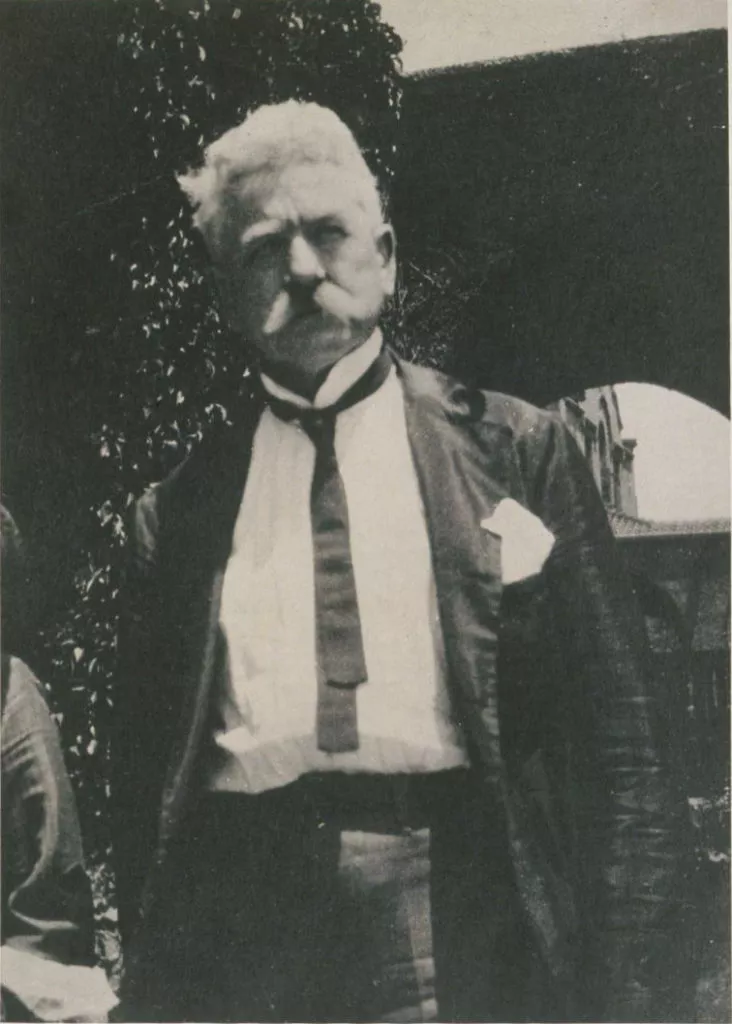 The last famous photo of Ambrose Birsa, approx. 1914.
Photo: The Ambrose Bierce Letters Project / University of Cincinnati
Grey
Gray color carries a certain semantic load in Birs. “A man in the water saw a man's eye on a bridge, looking at him through the gap of the aiming frame. He noted the gray color of this eye and remembered that the gray eyes are considered the most keen and that all the famous shooters of gray -eyed. ” A spy, a scout-Sverean who provoked the death of Facuer, will act as a devil, a tempter: “One evening, when Facuer sat with his wife on a stone bench at the gates of his estate, a soldier drove up to them in a gray uniform and asked to get drunk.” These are the gray eyes of death, and a gray uniform from dust, and a gray face in which the brother does not recognize the deceased brother. In the first of the three portraits of Captain Cooleter, Birs pays attention to his gray eyes. Moreover, if we carefully look at the name of the protagonist of the story “Mockingbird”, “Private Greirok” (Greyrock), then even here we will see this playing the theme of “gray” color.
Birs and the motive of the river is also interesting, which, depending on the context, can be sticked, and rubon, and summer.
The motive of the clock - and wider, time and fate, indifferent and not obeying a person - passes through many stories of Birsa. So, the ticking of the clock goes into the pulsating rhythm of the knock of blood in the head of the hanged man, which, of course, is the fate itself: “Some kind of sound, annoying and incomprehensible, interrupted his thoughts about loved ones-a sharp, distinct metal tapping, like a hammer on an anvil: there was the same ringing in it. He listened, trying to determine what kind of sound it was and where it came from; He at the same time seemed infinitely distant and very close. Blows were heard through the right intervals, but slowly, like a funeral ringing. He was looking forward to every blow and, not knowing why, with fear. Gradually, the gaps between the blows lengthened, the pauses became more painful. The less often the sounds were heard, the more power and distinctness they acquired. They seemed to cut an ear with a knife; He barely restrained himself from a scream. What he heard was the ticking of his watch. "
Fear of looking at the watch, accompanies the character of the story "John Bartyn's watch." And in the "jug of syrup" the time living its own life provides family members with the opportunity to think, an event occurred - in this case death - or not.
Missing
Returning to the question of the death of Birs. Roy Morris very convincingly claims that a trip to Mexico was never taken by Birs and that all this is no more than a carefully planned suicide that occurred in a large canyon. Meanwhile, there were witnesses who did not want to give him death and supposedly seen him in Europe on the battlefields of the beginning of the First World War (on the side of the French).
Although the point of view still exists, according to which this bright and original life broke off in the battle of Okhinaga January 11, 1914.
The daughter of Birsa many years after his disappearance made unsuccessful attempts to find her father, and there were people who wanted to help her in this.
He is still considered "missing." By his very death, repeating the name of one of his best stories.